The Future of Senior Care May Be AI
The Future of Senior Care May Be AI
Updated:



Key Takeaways
- 57% of Americans over 55 have used ChatGPT.
- More than 1 in 10 people over 55 would trust AI to suggest medication dosages.
- Seniors would pay the most for an AI conversation app, an average of $9 per month.
Bringing AI to Seniors
Artificial intelligence (AI) is rapidly developing, with scores of new AI products, software, and tools used to simplify daily tasks. With this innovation, AI has the potential to substantially increase the quality of life for seniors, providing them with independence that may otherwise be difficult to gain.
We surveyed 1,000 Americans over 55 regarding their thoughts on AI, current AI usage, and interest in hypothetical AI senior care apps. Let’s explore our findings.
The Current State of AI Usage
Some seniors can feel intimidated by new technologies, but many are already using AI for personal and professional use. Let’s discover how older adults incorporate AI into their daily lives.
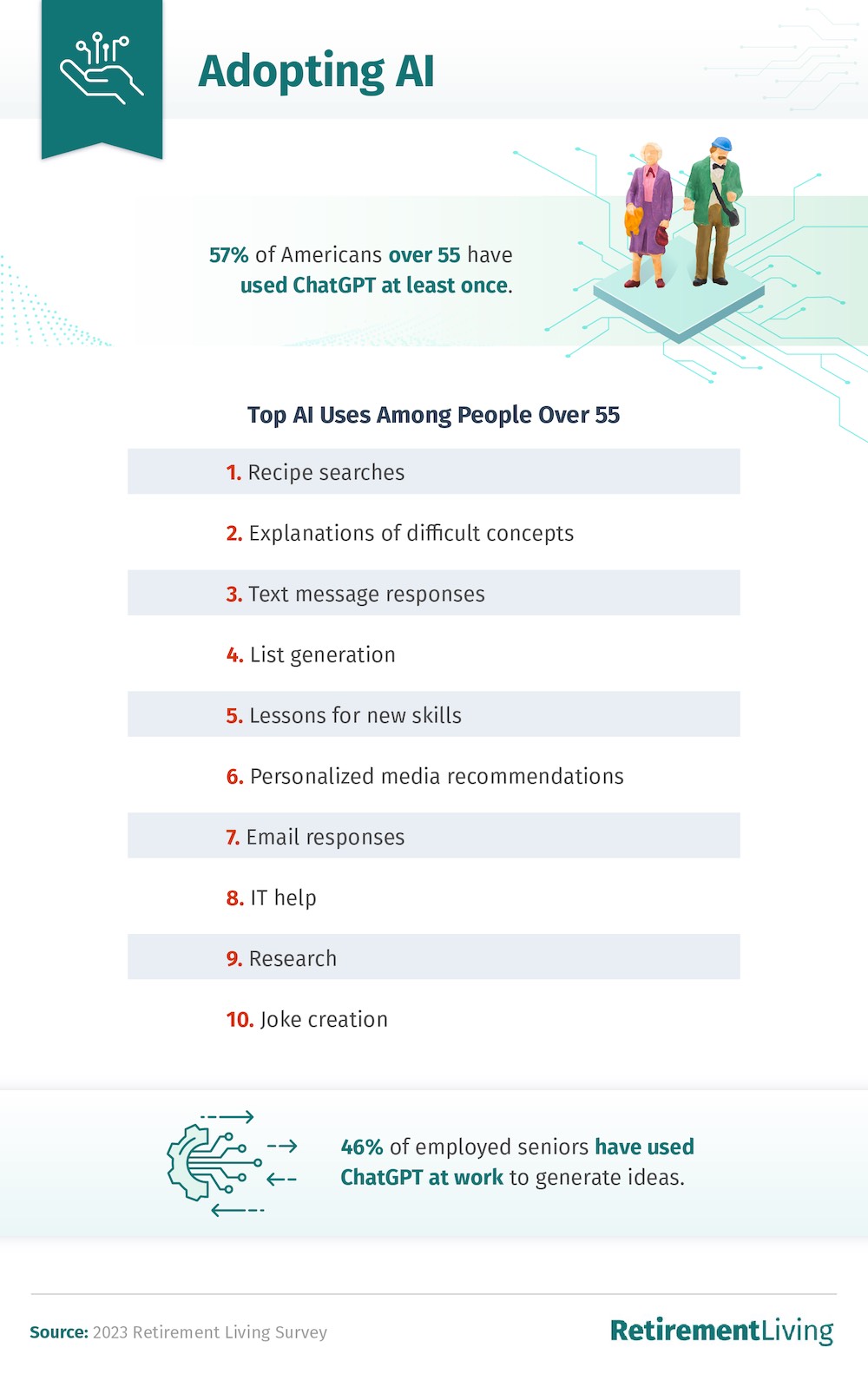
Over 57% of seniors reported using ChatGPT at least once to see what it was all about. Seniors also embraced AI professionally, as 46% used AI for idea generation at work. Seniors most often used AI to find recipes, understand difficult concepts, and draft text message responses. Others used it to learn new skills, get personalized media recommendations, and help write jokes: Why did AI go on a diet? Because it had too many bytes.
Tools of the Future
Senior living can be very fulfilling, but it comes with unique challenges. Almost half of the older adults we surveyed experienced boredom at least once each week, and roughly one-third struggled with loneliness, anxiety, and brain fog. Other experiences and feelings reported by senior respondents included:
- Forgot someone’s name (66%)
- Wanted more meaningful conversations (61%)
- Wanted to talk to someone without leaving home (49%)
- Forgot to take medicine (40%)
- Needed more knowledge of personal health (40%)
- Forgot important dates (39%)
AI innovations could help seniors manage these experiences and remain more independent. To explore the possibilities of AI in daily senior living, we generated five hypothetical AI apps to help with news, health tracking, daily organization, games, and conversation. We then presented the apps to seniors and asked about their interest in using these tools.
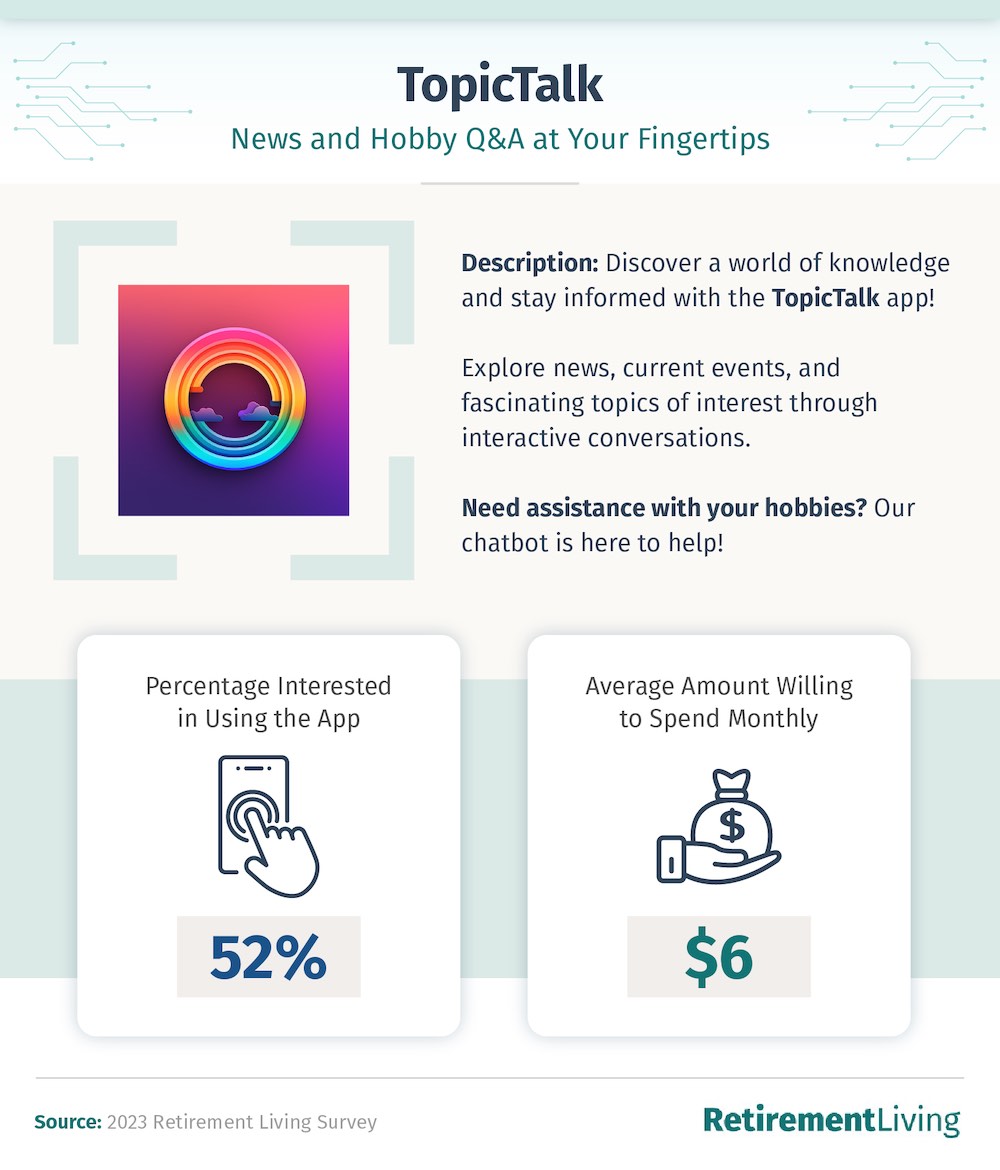
TopicTalk, a conversational news and information app, was one of the most popular AI tools; 52% of respondents expressed interest in using it. On average, seniors said they would pay $6 monthly for this app.
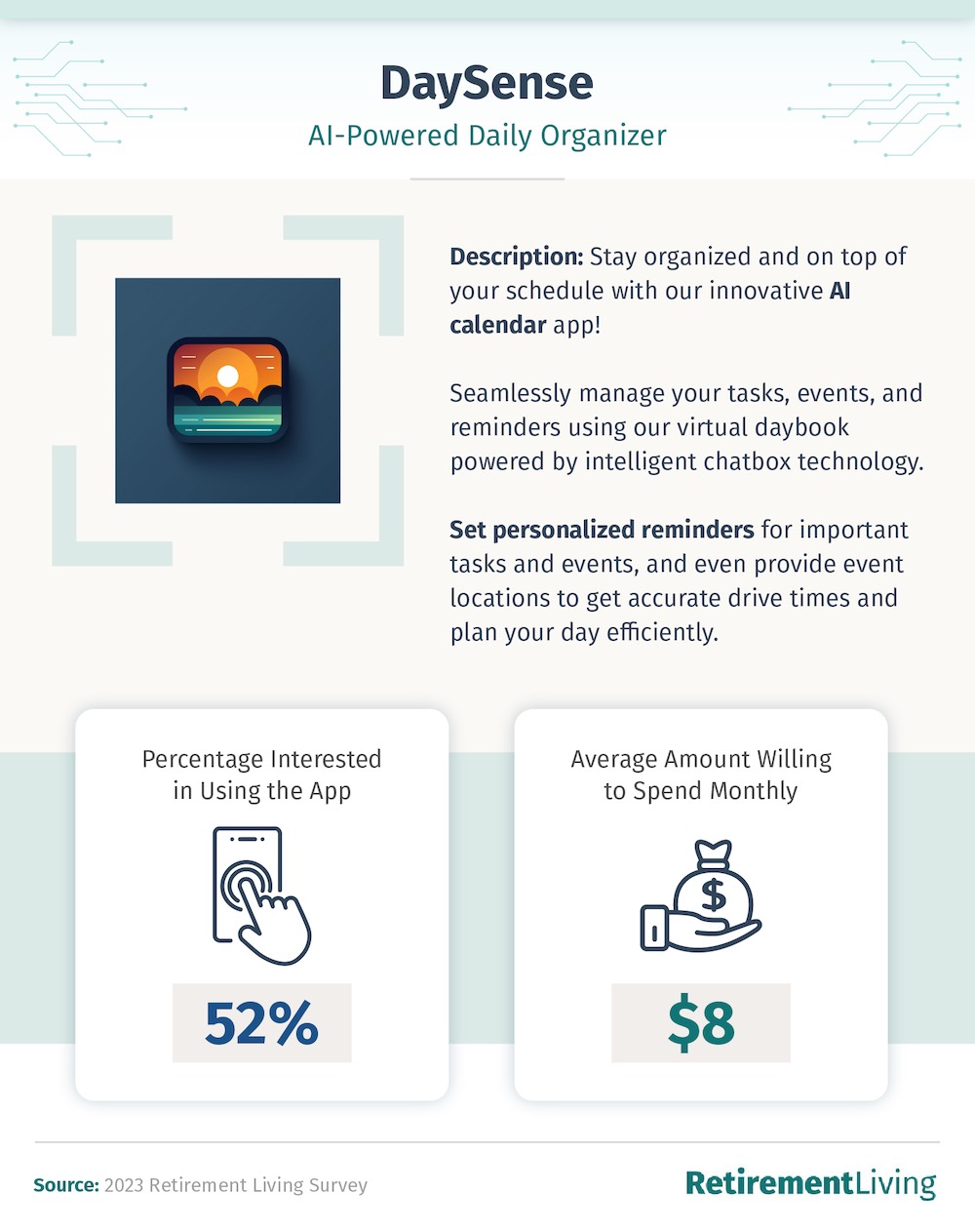
DaySense, an AI assistant and daily organizer app for reminders, also had a positive response. Over half (52%) of seniors were interested in the app and would pay around $8 monthly to use it.
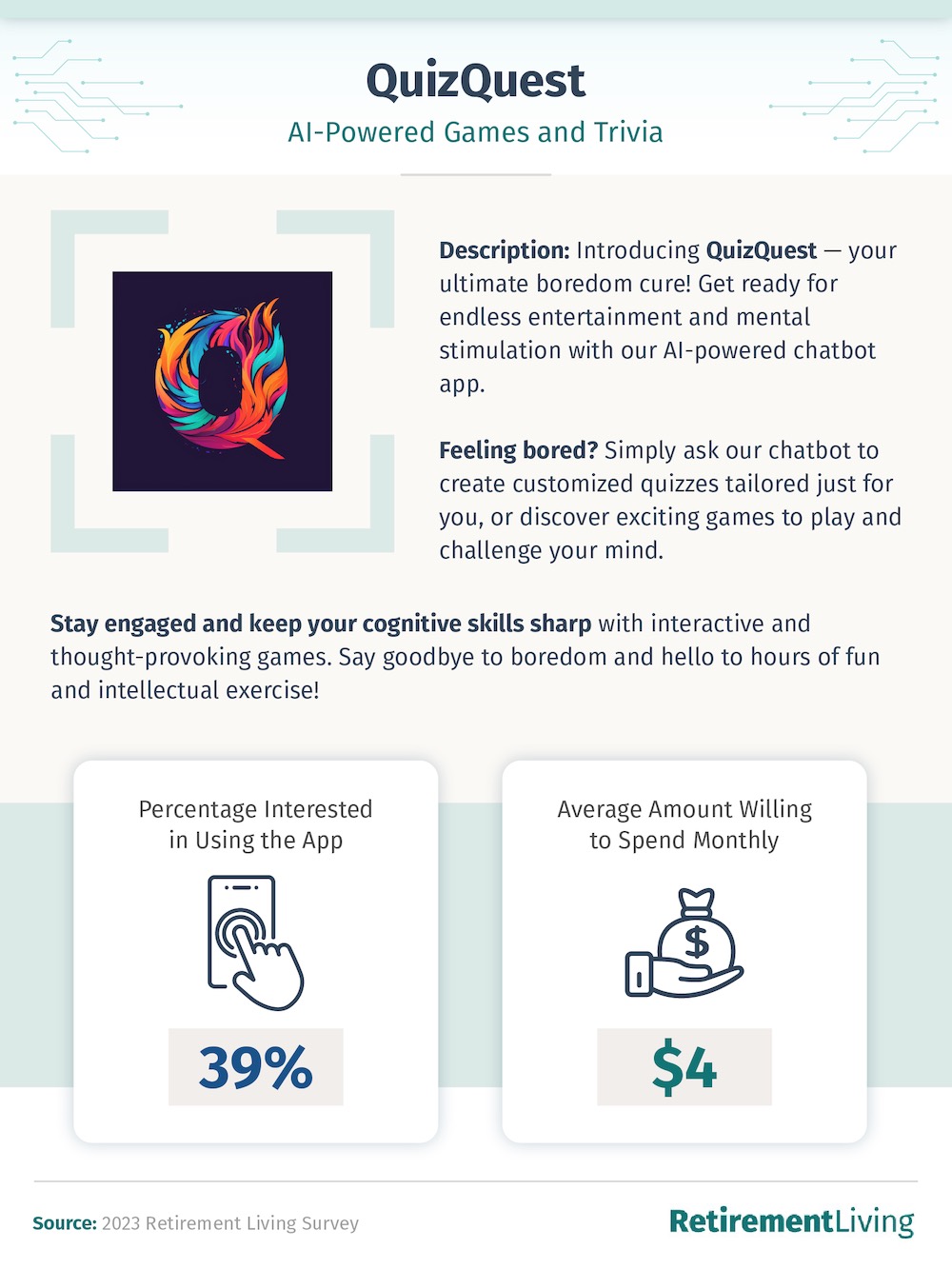
QuizQuest, the AI entertainment app providing games and trivia, was slightly less popular. Only 39% of respondents were interested in engaging with this app and valued it at just $4 per month, the lowest payment amount among all five apps.
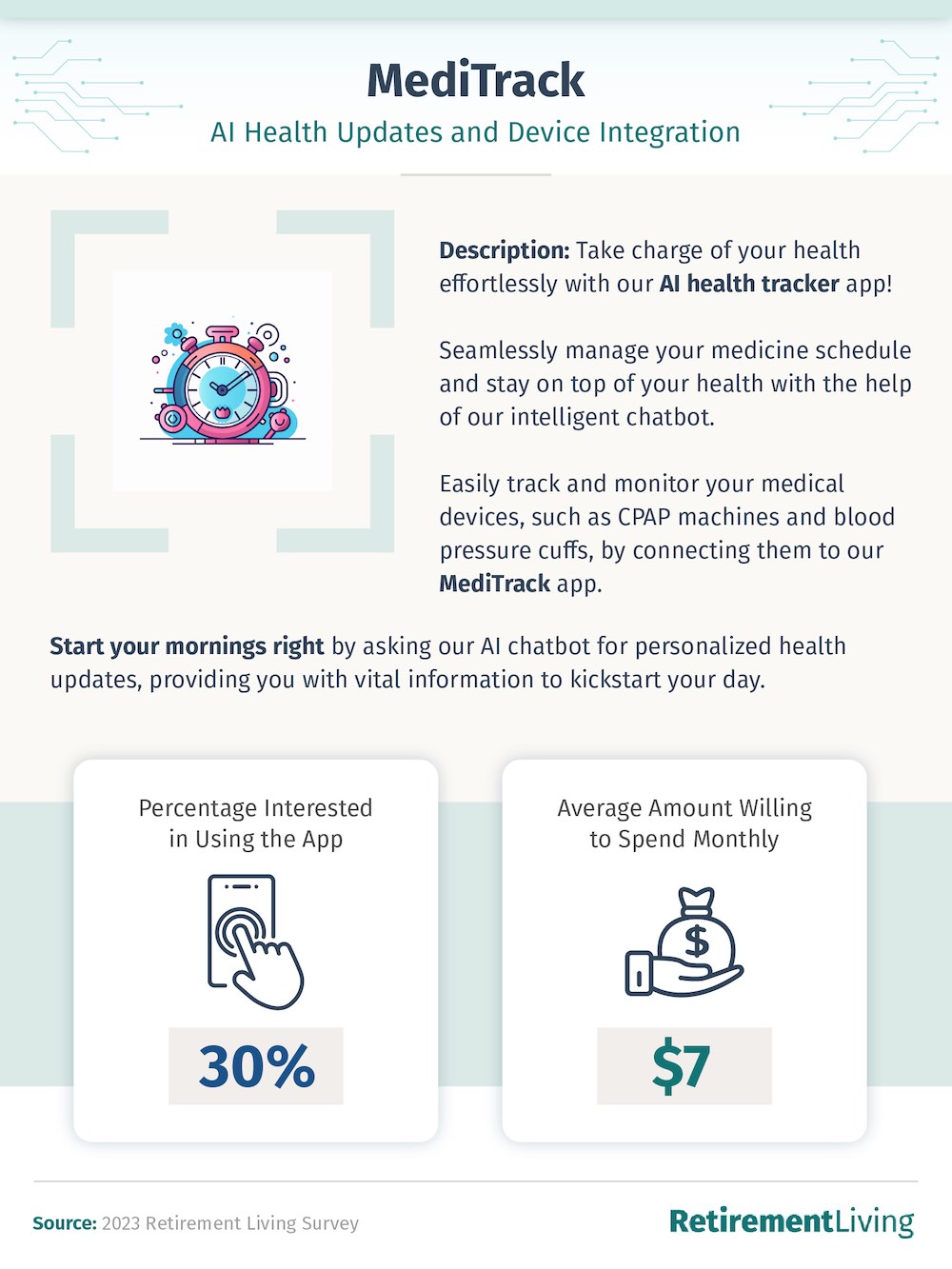
Seniors weren’t very trusting of MediTrack, a healthcare tracking tool, as only 30% were willing to use it. On average, respondents said they would pay $7 per month for this AI app.
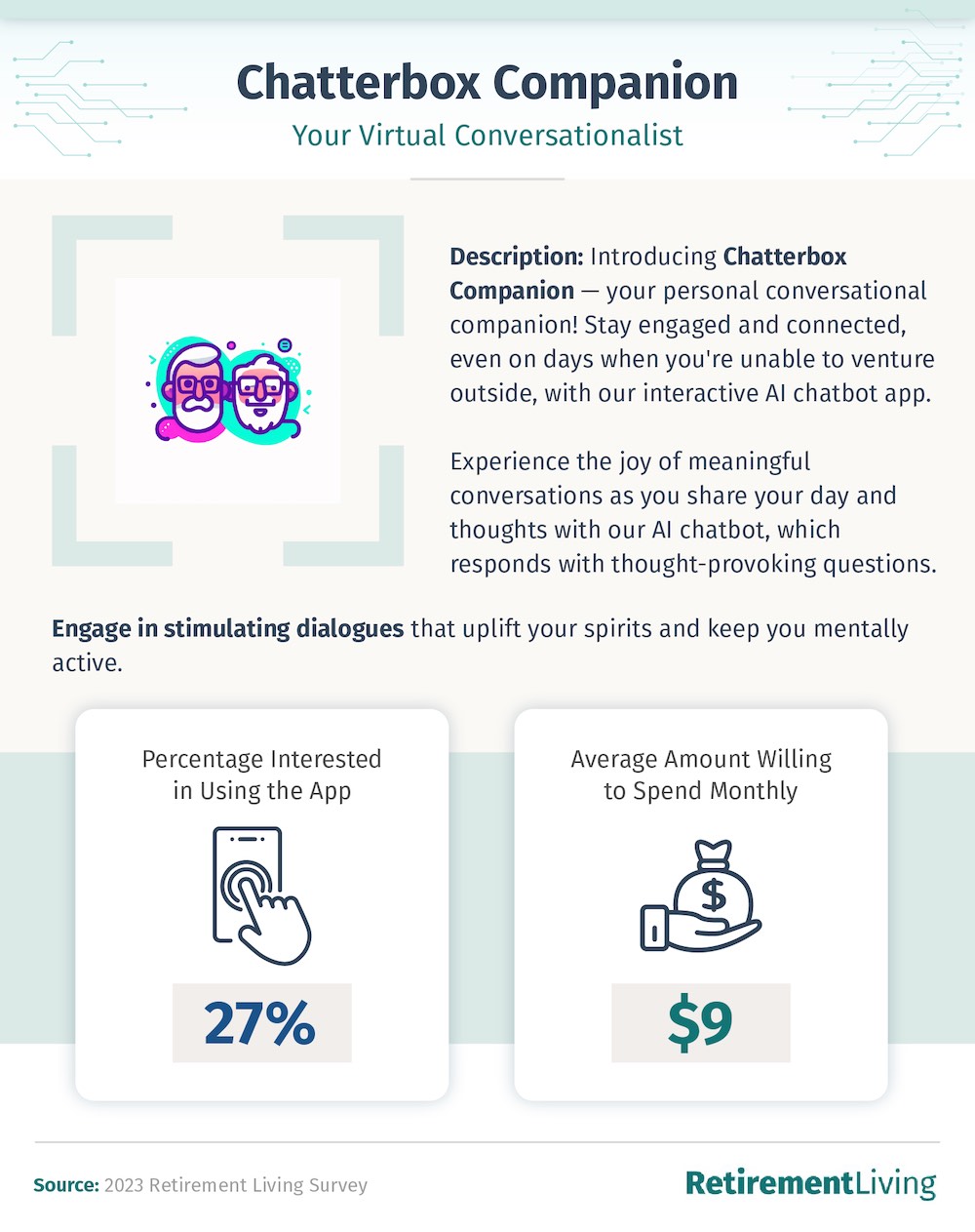
Chatterbox Companion, the virtual conversation and interactions app, was the least popular app among respondents. It garnered the least interest at just 27% but—interestingly—was valued the highest at $9 per month.
Senior Trust and AI Safety
With the potential for life-changing AI tools comes the question of trust and the dangers of new technology. How do seniors feel about trusting AI with aspects of their daily lives?
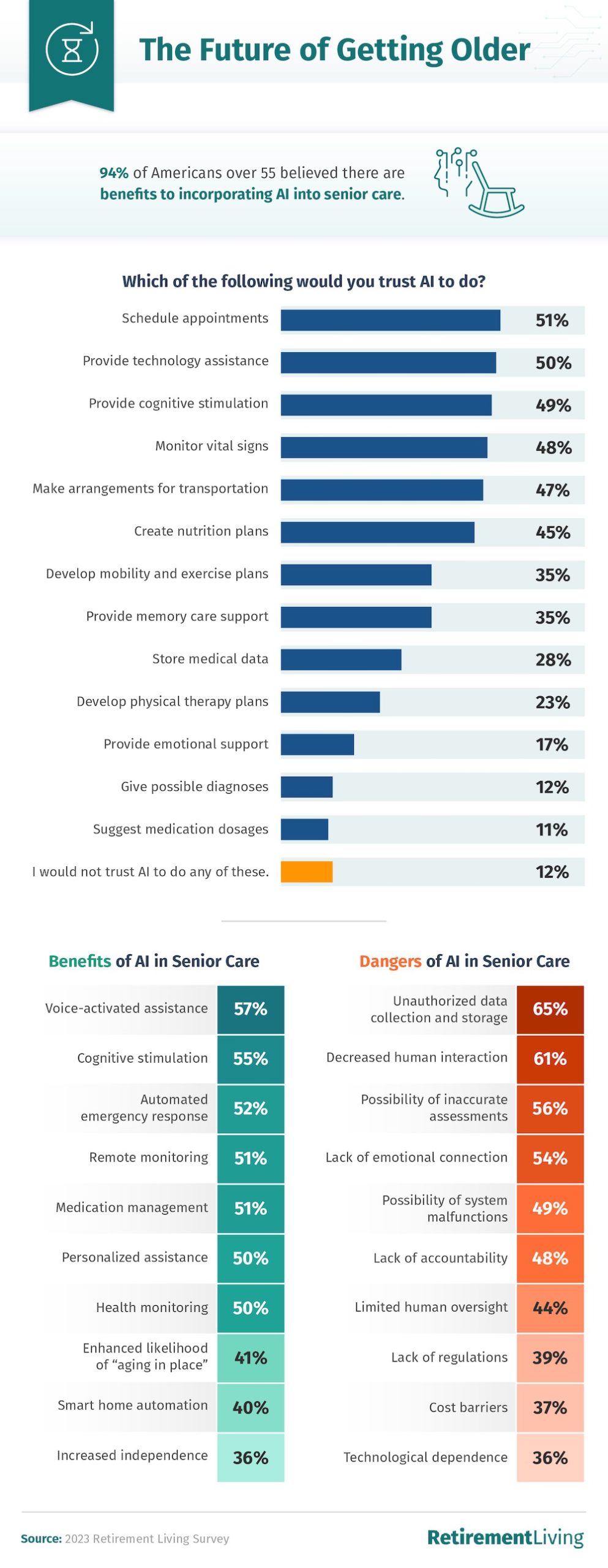
An outstanding 94% of Americans over 55 believed AI would benefit senior care. Respondents were willing to trust AI with simple tasks like scheduling appointments (51%), technological assistance (50%), and providing cognitive stimulation (49%). Seniors were far less likely to trust AI with more critical tasks like providing emotional support (17%), offering medical diagnoses (12%), or suggesting medication dosages (11%).
Older adults saw many benefits to AI in senior care, including voice-activated assistance (57%), cognitive stimulation (55%), and automated emergency response (52%). Over 2 in 5 older adults also believed AI could improve their ability to age in place, and 1 in 4 thought it could help with at-home dementia care. The benefits of AI in senior care also extended to caregivers; 31% of seniors felt AI could offer caregiver support, and 29% believed it could improve care coordination.
However, there were also several concerns regarding AI in senior care. The biggest concern was unauthorized data storage and collection (65%), which can be especially sensitive as it relates to private medical information. Seniors were also apprehensive about decreased human interaction (61%) and lack of emotional connection (54%). Many older adults also expressed unease over some broader dangers of AI, including ethical dilemmas (31%), difficulty of use (29%), and bias and discrimination (24%).
Despite these concerns, only 12% of respondents said they would not trust AI with daily tasks.
A New Era for Senior Care
AI has the power to improve senior care significantly. Almost all older adults recognize the potential benefits of AI and are interested in using it to counteract common aging experiences and help with daily tasks. With tested integrations and real human oversight, AI tools could bring senior care into a new era, enabling independence and making retirement even more fulfilling.
Methodology
We surveyed 1,000 Americans over 55 about their AI usage, what AI tools they might be interested in seeing in the future, and how much they trust AI in senior care. We also used ChatGPT, 11Labs, and Midjourney to create potential AI tools, including logos, descriptions, and sample audio.
About Retirement Living
Retirement Living is dedicated to providing resources, information, and products to help those in retirement enjoy a healthy, active, and secure lifestyle. Our mission is to empower retirees with knowledge, resources, and a deeper understanding of their options so they can make informed decisions about retirement living.
Fair Use Statement
If you found this information on AI in senior care interesting, please share it with anyone you’d like for noncommercial purposes only; you must provide a link back to this article so readers can access our full findings and methodology.
The Loudest Cities in America

Measuring Noise Pollution in Cities Across the U.S.
Key Takeaways
- Los Angeles, Houston, and New York are the noisiest cities.
- Newark, NJ, has the highest noise pollution index at 78.
- 1 in 8 Americans filed a noise complaint in the past year; the top noise complaints were loud neighbors, barking dogs, and car alarms.
- More than 1 in 4 Americans don’t believe their local government is doing enough to address noise pollution.
Sounds of the City
Bright lights, bustling crowds, and jam-packed cars—the sights and sounds of the big city. Noise pollution is a significant part of city life that can impact residents’ well-being. Are all cities teeming with noise, or can you find some quieter metropolitan streets for retirement living? To answer this question, we analyzed noise level data from cities across the U.S. and surveyed 1,005 city residents. This article will explore our findings and determine America’s loudest and quietest cities.
The Loudest Cities in America
We synthesized data across seven noise-related variables to determine the loudest and quietest cities in America. Use our interactive, searchable table to explore the results.
Our analysis of city noise pollution included several variables in order to determine an accurate ranking for each location. We factored in noise pollution index data from Numbeo and used fatal car accident statistics from the U.S. Department of Transportation’s Fatality Analysis Reporting System (FARS) as an indication of traffic volume and noise.
Our study also included Google search volume data per 100,000 residents for the search terms “noise complaint,” “noise disturbance,” “noise ordinances,” and “noise pollution” to indicate resident dissatisfaction with high levels of noise pollution. And the number of outdoor pickleball courts was used as an indication of recreational noise.
After analyzing noise pollution data, our study revealed the three loudest cities in America were:
- Los Angeles, CA
- Houston, TX
- New York, NY
Some residents accept noise pollution as an inevitable aspect of city life, but such resignation can be hazardous to your health. Noise pollution has been tied to chronic health problems and an increased risk of heart attack. The government recognizes noise pollution a public health hazard, but much of the Noise Control Act of 1972 remains unfulfilled, so noise pollution continues to plague many U.S. cities.
However, some cities have managed to lower the volume. According to our study, Winston-Salem, NC; Santa Clarita, CA; and Lincoln, NE, were the quietest.
Contributing Factors of Noise Pollution
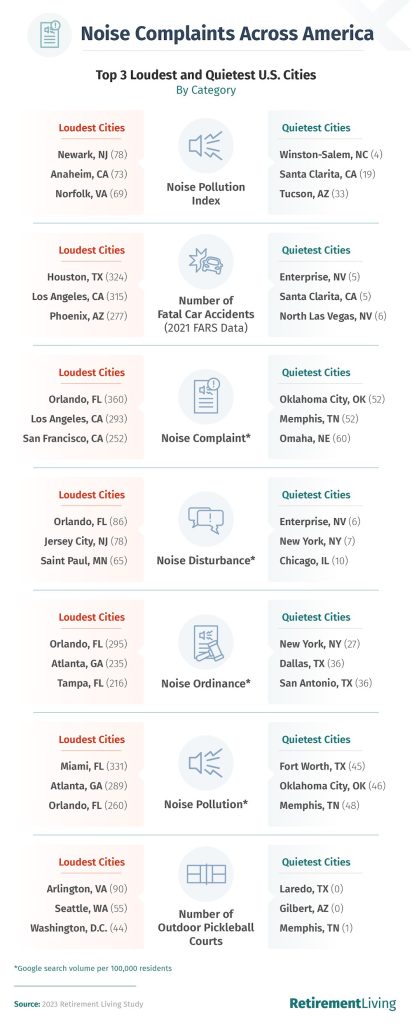
Ranked No. 6 overall, Newark, NJ, had the highest noise pollution index at 78. Newark has been working hard to decrease noise pollution with various ordinances against loud cars and entertainment venues, but its struggles with noise pollution persist. Conversely, proving their quietness yet again, Winston-Salem and Santa Clarita had the lowest noise pollution index numbers at 4 and 19, respectively.
One contributing factor to noise pollution is traffic congestion. High traffic levels come with honking horns, loud mufflers, and big trucks. Train and airplane traffic can also add to the transportation tumult. Houston residents suffered from the most traffic noise, followed by Los Angeles. Meanwhile, streets in Enterprise, NV, and Santa Clarita were far quieter.
Despite all the noise, some city residents seem to withstand the commotion more than others. Residents of Orlando, FL, had the highest search volume for “noise complaint,” “noise disturbance,” and “noise ordinance.” They also ranked third for searches regarding “noise pollution.” Perhaps the presence of some of the planet’s most popular vacation destinations is to blame, as Orlando is home to the multiple Disney and Universal theme parks.
Surprisingly, New York City had some of the lowest search volume for “noise disturbance” and “noise ordinance,” suggesting that New Yorkers have either accepted their lot in The City That Never Sleeps or invested in exceptionally effective soundproofing.
Along with traffic and theme parks, there are some more innocent-seeming contributors to noise pollution. The surge in pickleball popularity has led to the installation of hundreds of outdoor courts, but the persistent paddle pops have some city residents complaining about pickleball noise levels. While it may seem silly to complain about, some residents have to endure the sounds of multiple pickleball courts (90 in Arlington, VA) being played on consistently throughout the day and night.
Living With Noise Pollution
While we can close our eyes against light pollution, we can’t shut off our ears against noise pollution. We asked 1,005 U.S. city residents about the impact of noise pollution on their daily lives and what they’re doing to fight against it.
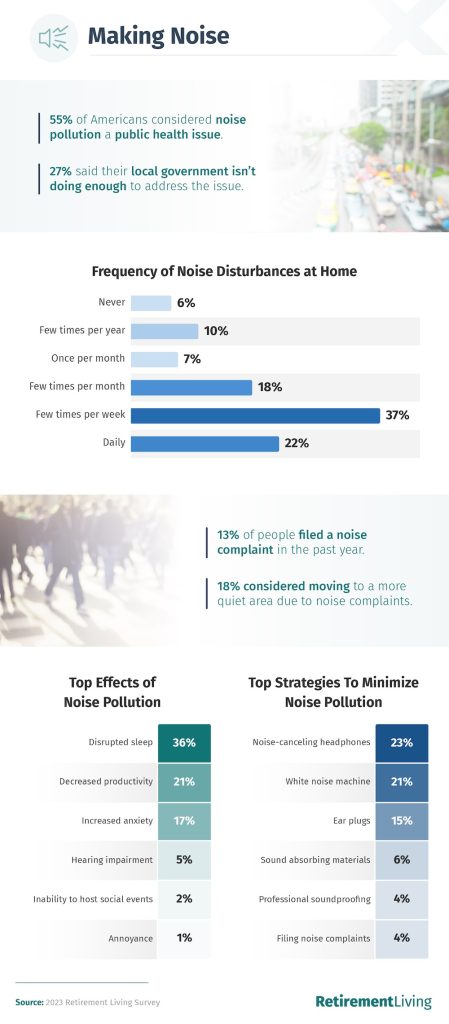
Noise pollution is a major problem in the U.S., as 77% of respondents were disturbed at home by noise pollution at least a few times per month. Almost one-quarter experienced disturbances daily. With the frequency of noise pollution problems, 55% of people considered noise pollution a public health hazard.
Over one-quarter of respondents said the government isn’t doing enough to reduce noise pollution, but it’s not for lack of awareness: 1 in 8 respondents filed a noise complaint in the past year. The most common complaints were loud neighbors, barking dogs, and car alarms.
As a result of excessive noise pollution, 36% reported disrupted sleep, 21% experienced decreased productivity, and 17% felt increased anxiety. To reduce noise at home, respondents used noise-canceling headphones (23%) and white noise machines (21%), and 4% even had their homes professionally soundproofed.
Taking Action Against Noise Pollution
From traffic sounds and car alarms to barking dogs and pickleball games, city residents have to deal with noise pollution every day. Those who prefer softer surroundings may choose to install soundproofing measures in their home or even relocate to one of the quieter cities on our list. On a larger scale, it’s up to local governments to create and enforce city ordinances to decrease noise pollution and reduce its health effects. Only then will we enjoy a quieter, healthier future.
Methodology
We created a unique meta-ranking for the 99 most populous U.S. cities using the following variables:
- Noise pollution index – weight = 50
- For variables with N/A, the averages of the column were used as their value, as data was not available
- FARS 2021 accidents – weight = 25
- Search volume – weight = 15
- 3.75 x 4 search volume queries
- Number of outdoor pickleball courts – weight = 10
We used Google search volume data from the past two years for the search terms “noise complaint,” “noise disturbance,” “noise ordinances,” and “noise pollution” to indicate resident dissatisfaction with high levels of noise pollution. We also surveyed 1,005 respondents to see how noise pollution impacts their lives.
About Retirement Living
Retirement Living is dedicated to providing resources, information, and products to help those in retirement enjoy a healthy, active, and secure lifestyle. Our mission is to empower retirees with knowledge, resources, and a deeper understanding of their options so they can make informed decisions about retirement living.
Fair Use Statement
Looking for a quieter place to settle down? Feel free to share this article with anyone you’d like for noncommercial purposes only; you must provide a link back to this page so readers can access our full findings and methodology.
Medicare Advantage Satisfaction Index
Medicare Advantage Satisfaction Index

Despite Some Challenges, Medicare Advantage Beneficiaries Report High Satisfaction Rates
Key Takeaways
- 71% of beneficiaries are satisfied with their Medicare Advantage plan.
- Affordable costs and out-of-pocket expenses are the top reasons people enroll in Medicare Advantage.
- Over the past year, 1 in 10 beneficiaries believes they were overbilled for their Medicare Advantage plan.
- Almost 20% of Medicare Advantage beneficiaries had challenges receiving care due to delays caused by the prior authorization process.
Understanding Medicare Advantage Satisfaction
Healthcare is one of the biggest expenses for seniors; as such, enrollees need to get significant benefits from their chosen plan. One major plan available to seniors in the U.S. is Medicare Advantage, which offers additional benefits not included in traditional Medicare plans.
To better understand seniors’ experiences with Medicare Advantage, we surveyed 351 beneficiaries about their plans, including premiums, customer service, and provider networks. We also gathered satisfaction rates for various plan aspects and explored potential disadvantages. In the following guide, we’ll present our findings to help you decide if Medicare Advantage offers the right coverage for you.
Factors That Matter
There are many factors to consider when choosing a health care plan. Let’s look at some reasons individuals enrolled in Medicare Advantage, then compare those to current member satisfaction.
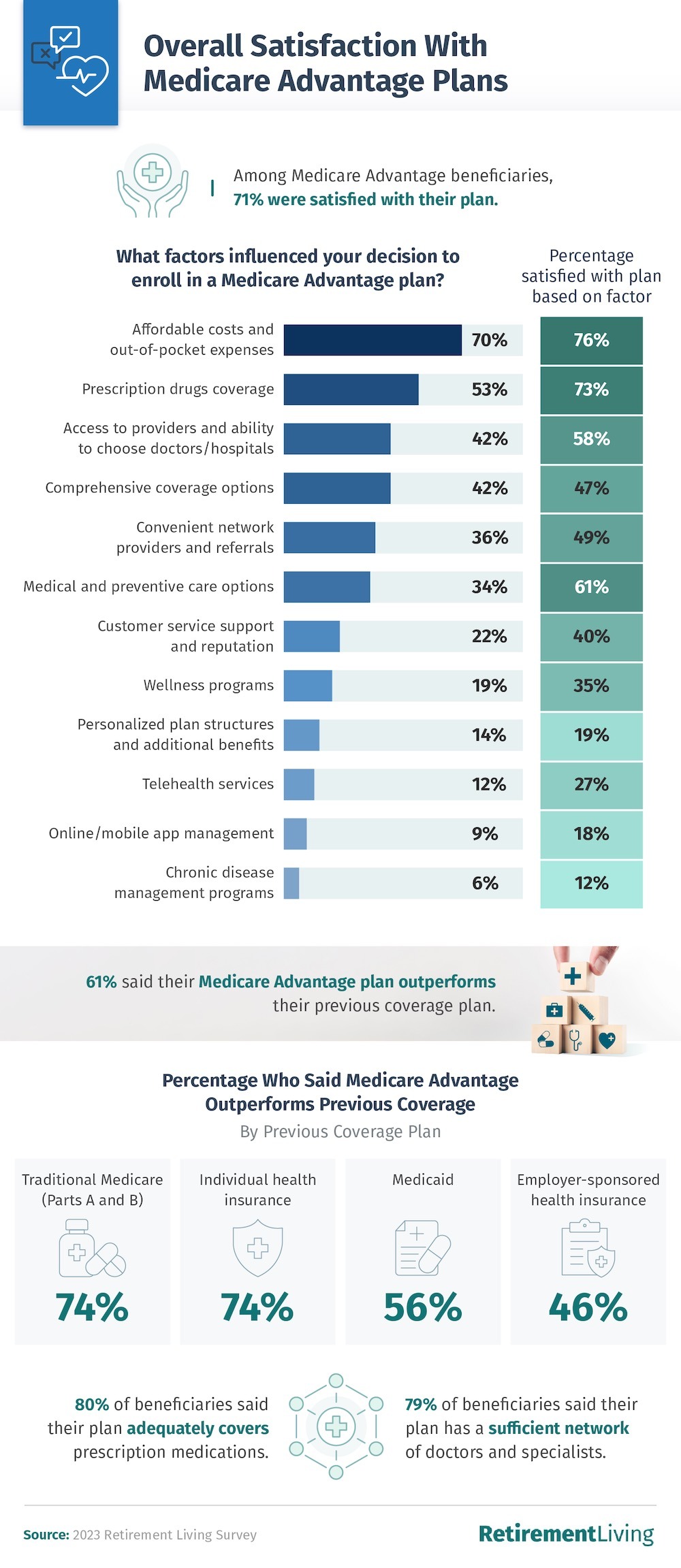
According to our survey results, most people enrolled in a Medicare Advantage did so in an attempt to save money and increase coverage. Of respondents, 70% enrolled for more affordable costs and out-of-pocket expenses, and 76% expressed satisfaction with those costs. Another 53% enrolled for prescription drug coverage, and 73% were satisfied with their prescription benefits.
Overall, 71% of beneficiaries were satisfied with their Medicare Advantage plan. Furthermore, 61% felt their current coverage outperformed their previous plan, including traditional Medicare Parts A and B, individual insurance plans, and Medicaid.
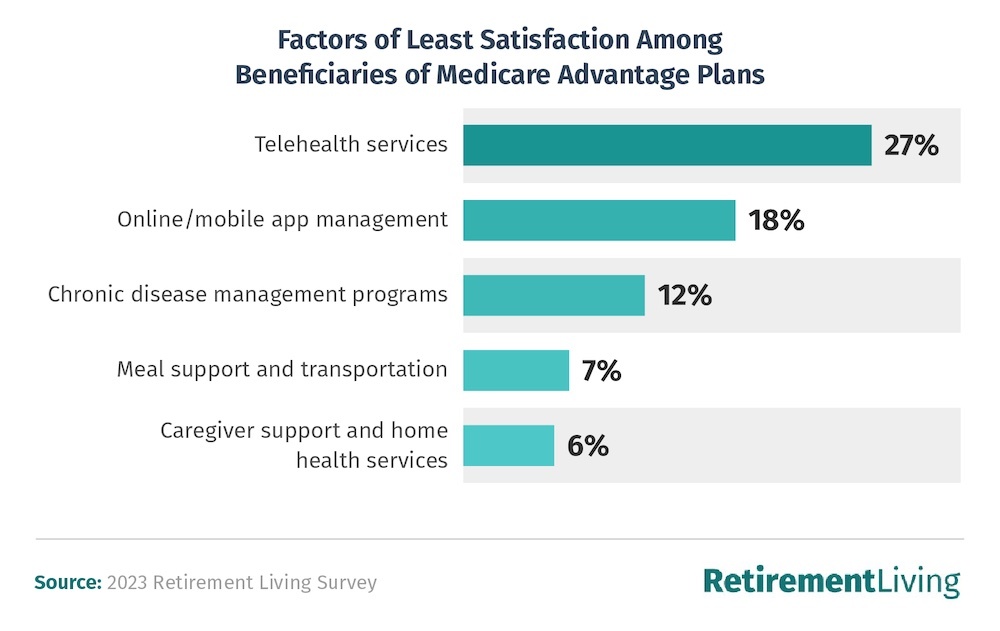
Despite the generally positive reviews, the program still lacks in a few key areas. Medicare Advantage members were less satisfied with their plan’s telehealth services (27%) and online and mobile access (18%). Medicare Advantage will want to improve these offerings to keep up with technological advancements in health care. As for medical concerns, only 12% were satisfied with their plan’s chronic disease management program, 7% with meal support and transportation, and 6% with caregiver support and home health services.
Addressing the Knowledge Gap for Beneficiaries
Navigating insurance coverage can be incredibly difficult, and some beneficiaries feel like they don’t know everything their plan has to offer. We asked Medicare Advantage members about their understanding of coverage and benefits to ascertain how easy the plans are to navigate.
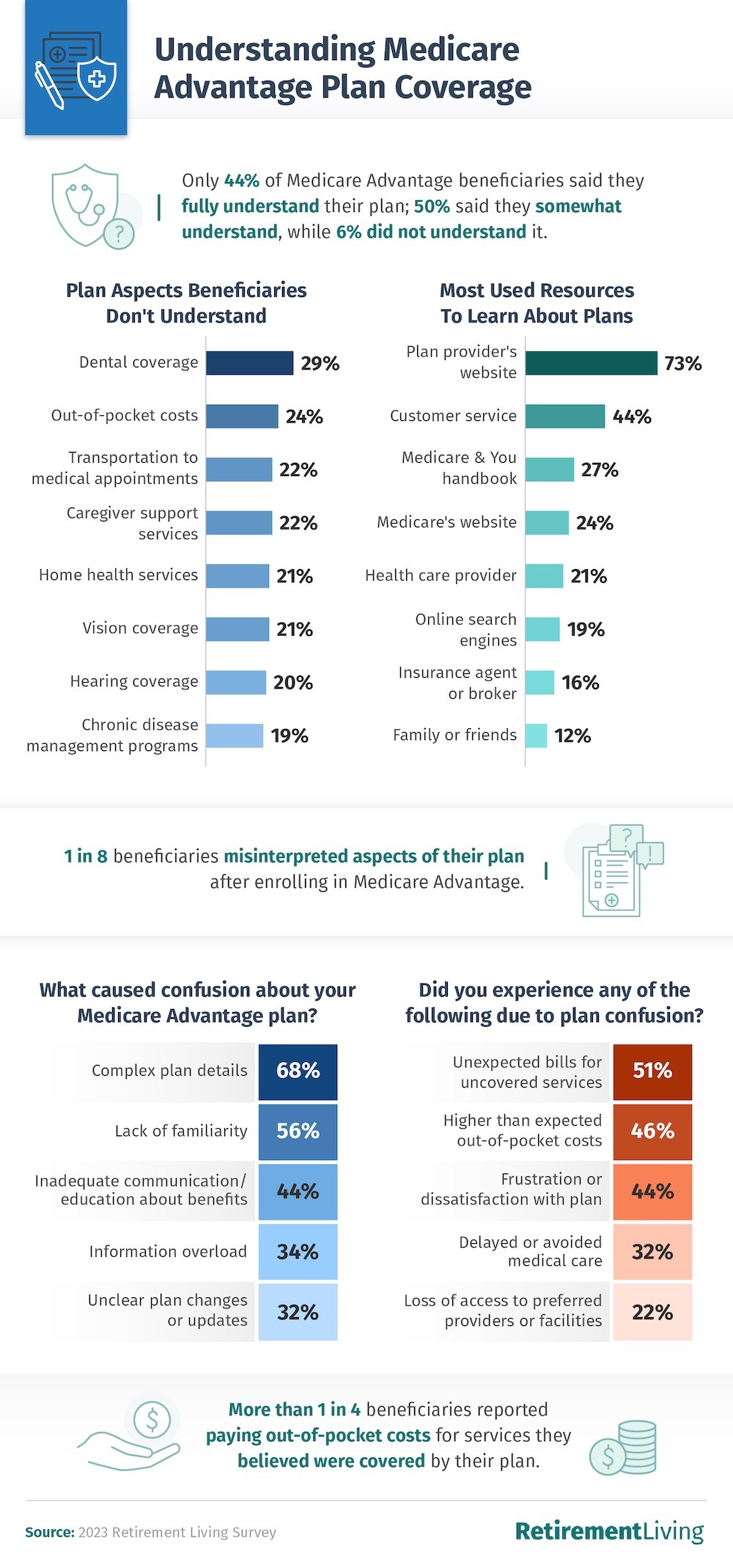
Medicare Advantage plans did a pretty good job laying things out for beneficiaries to understand, as 94% of plan members felt they fully understood or somewhat understood their plans. Plan members were most likely to seek clarification about their dental coverage (29%) and out-of-pocket costs (24%). When coverage questions like these arose, 73% consulted their plan’s website, and 44% contacted the customer service department.
That said, feedback suggests there is still work to be done to make it easier for people to effectively leverage their benefits; over 25% of beneficiaries reported paying out-of-pocket expenses for services they believed were covered. To avoid these challenges and unexpected expenses, thoroughly study Medicare Advantage plans in detail before signing up. You can also rely on additional Medicare resources to fully understand coverage options.
Navigating Potential Disadvantages
While Medicare Advantage offers additional benefits, there are some drawbacks to consider. We spoke with beneficiaries to gather some of the most noteworthy disadvantages of Medicare Advantage plans.
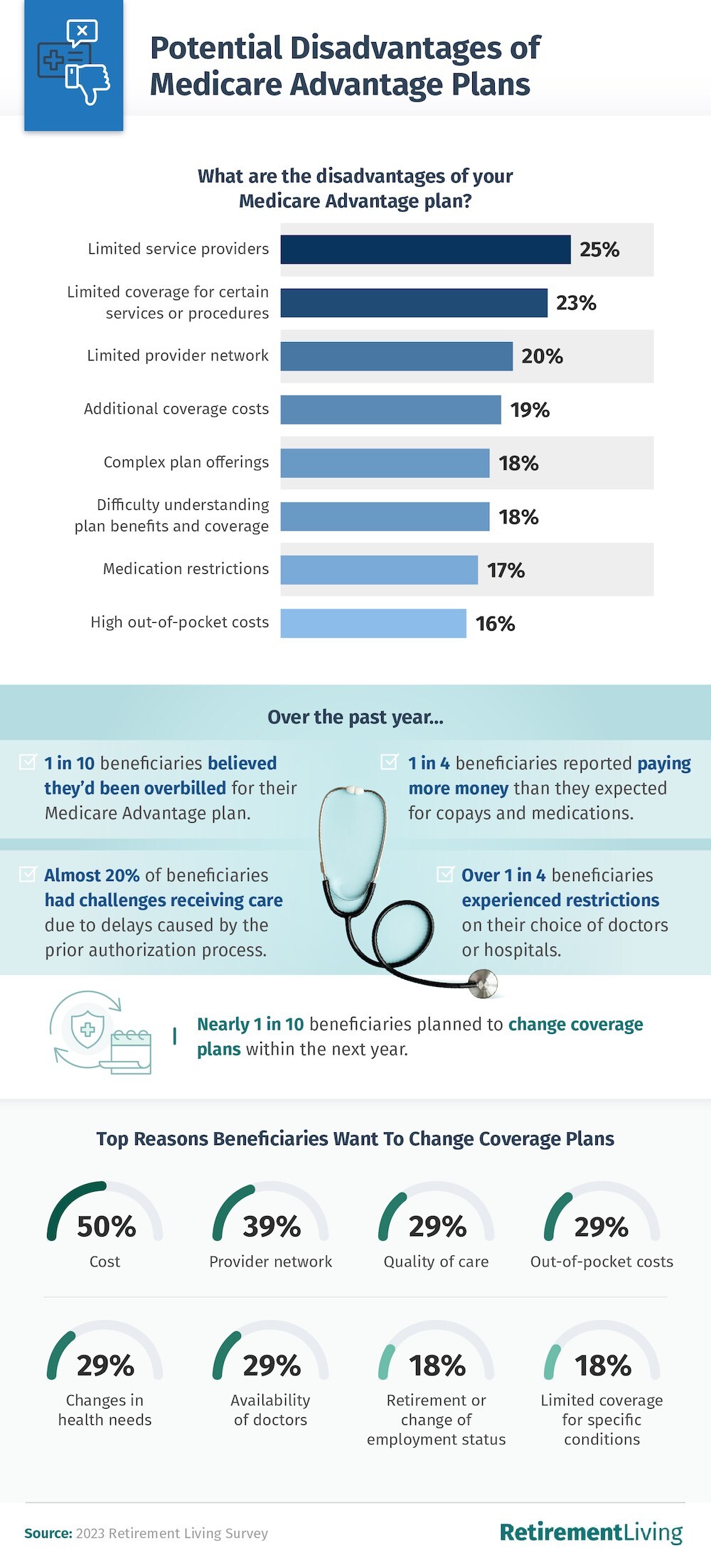
While most respondents were satisfied with their Medicare Advantage plans, around one-quarter of members were discouraged by limited service providers or coverage for certain procedures. A few members believed they were overbilled for their plan (just 10%), and 20% had challenges receiving care due to prior authorization process delays.
Despite some minor setbacks, only about 10% of current Medicare Advantage plan members expect to change health insurance plans within the next year. Among those beneficiaries, 50% wanted to switch because of cost and 39% because of a change to their provider network.
Some drawbacks of Medicare Advantage may be avoided by researching in-network doctors, provider networks, and hospitals before enrollment.
Medicare Advantage Challenges and Opportunities
While some Medicare Advantage plan members felt frustrated with their coverage, most enrollees expressed satisfaction with their benefits. Many even said Medicare Advantage outperforms their previous coverage. In most cases, enrollees could resolve their greatest sources of frustration with a better understanding of the plan’s offerings and details. Those interested in enrolling in Medicare Advantage should consult the plan provider’s website or contact customer service to learn more about coverage, benefits, and responsibilities.
Methodology
For this campaign, we surveyed 351 Americans enrolled in a Medicare Advantage plan. Among them, 57% were women, and 43% were men. The median age of respondents was 69 years old.
About Retirement Living
Retirement Living provides resources to help seniors make the best retirement decisions, such as senior living guides and retirement planning tools to help manage finances.
Fair Use Statement
Want to share something insightful or interesting in this article for non-commercial purposes? Feel free to do so, but please include a link back to this page so readers can access our full data findings and methodology.
