


Open Access
A 2025 global review found that 27.6% of older adults experience abuse, most often emotional abuse or neglect. In the U.S., about 1 in 10 older Americans face abuse each year, with higher rates in nursing homes. Abuse often leads to mental harm, with studies showing that up to 60% of victims of elder abuse have symptoms of PTSD. In 2024, Missouri, Washington, Maine, and Texas reported the highest rates of elder abuse.
Key Insights
More than one in four older adults worldwide experience abuse.
↓ Jump to insight
Washington reported about 11,818 financial exploitation cases per year, while Texas reported roughly 73,139 self-neglect cases annually, the highest among states.
↓ Jump to insight
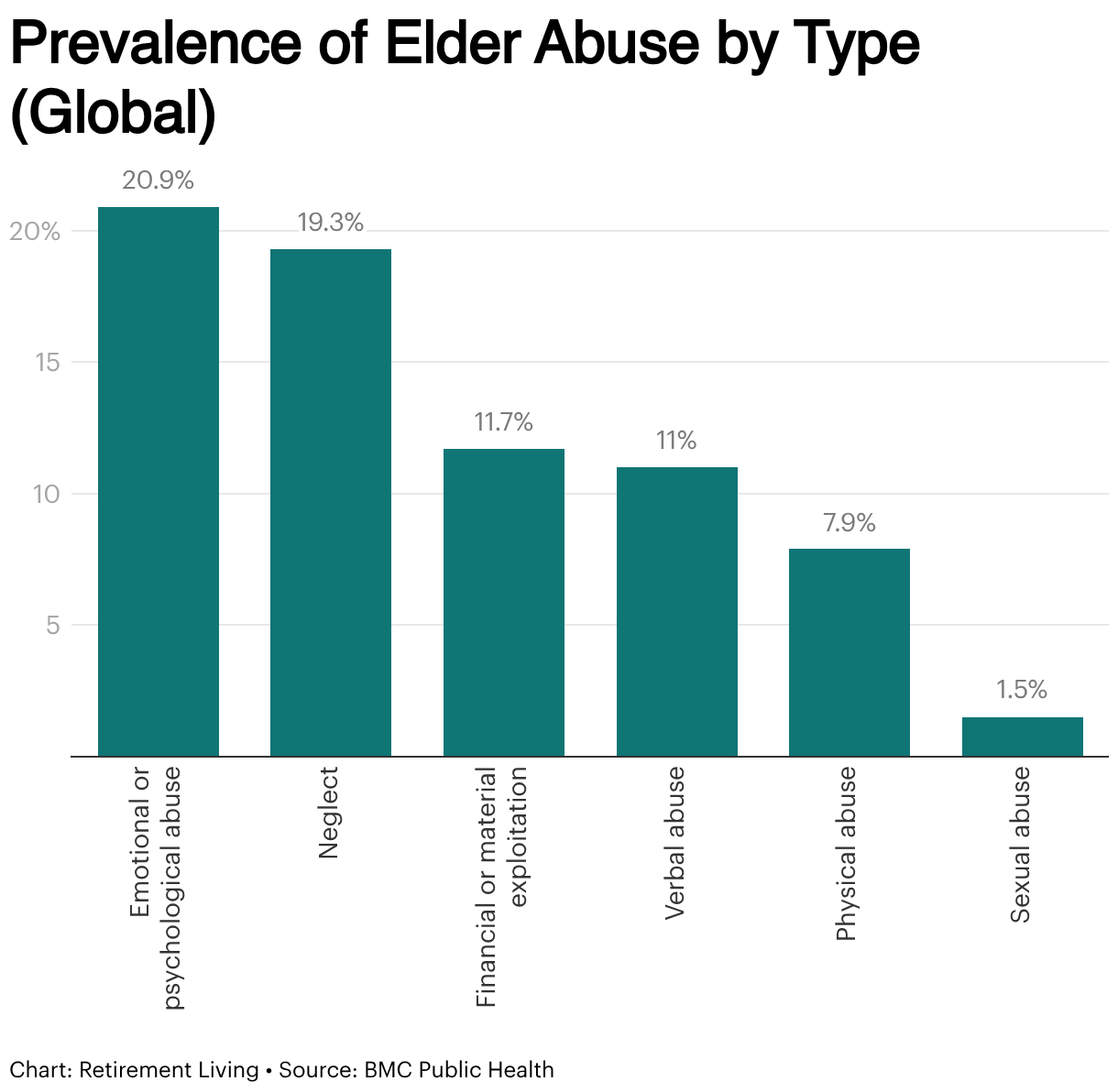
Global data shows emotional abuse at 20.9% and neglect at 19.3%, making them the most common forms of elder abuse.
↓ Jump to insight
A large meta-analysis found that 42.6% of older adults with dementia experience abuse, with 19.8% experiencing neglect specifically.
↓ Jump to insight
Physical abuse is reported more often by women, with 16.7% of older women reporting physical abuse compared with 10% of older men.
↓ Jump to insight
What Is the Prevalence of Elder Abuse in the U.S.?
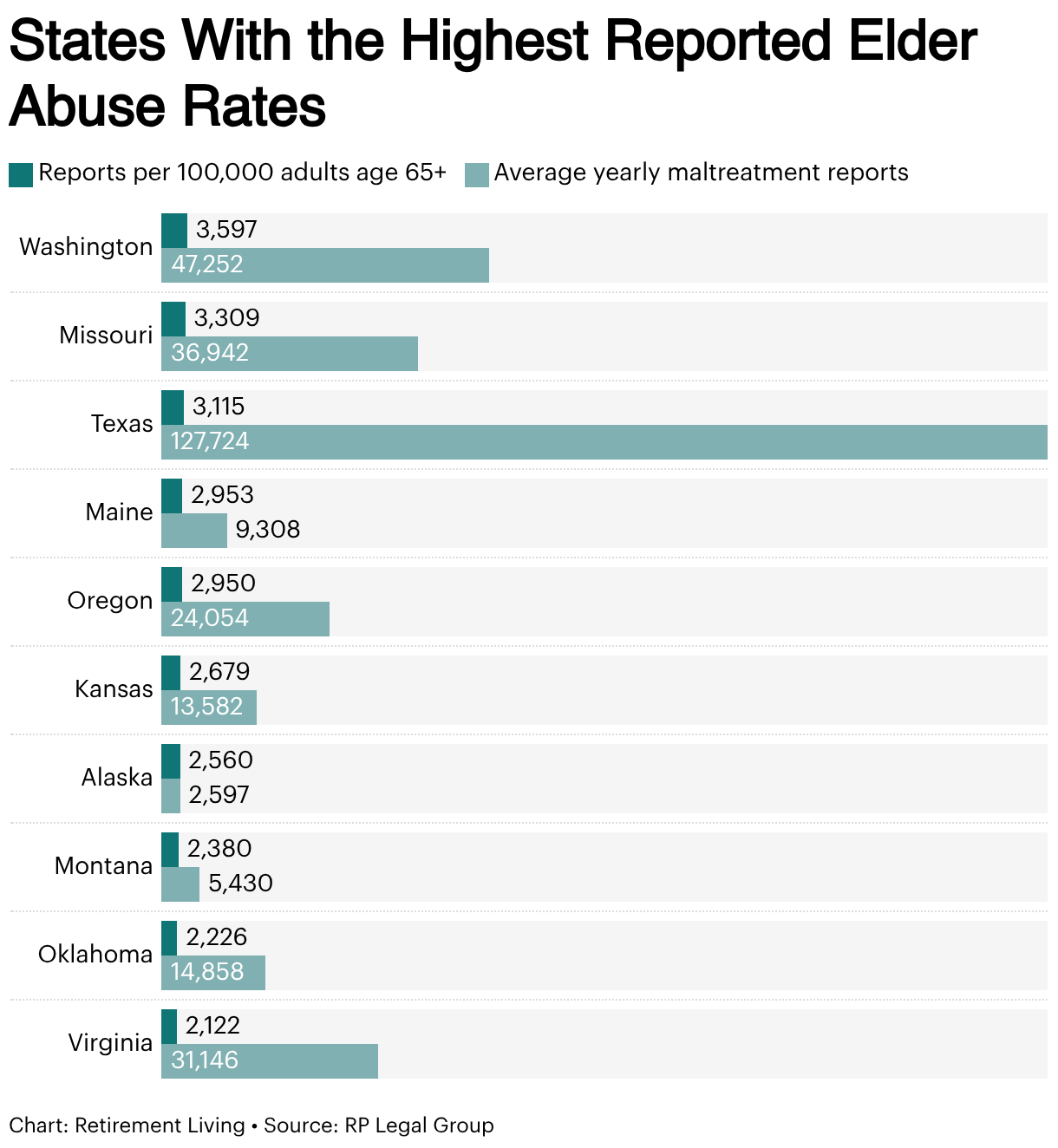
Elder abuse affects older adults across every state. Here are the worst states with the highest reported rates of elder mistreatment and the types of abuse most often reported:
- Washington reports financial exploitation as the most common form of elder abuse, with about 11,818 cases each year involving misuse of money, property, or assets.
- Missouri most often reports self-neglect, with an average of 13,129 cases per year, followed by financial exploitation at about 6,808 cases annually.
- Texas shows very high levels of self-neglect, averaging about 73,139 cases per year, followed by neglect with around 15,559 reports annually.
- Maine reports a large share of uncategorized maltreatment, averaging about 2,056 cases per year, closely followed by self-neglect at 2,043 cases annually.
- Oregon most commonly reports neglect, with about 9,989 cases per year, followed by financial exploitation at roughly 5,647 cases annually.
- Kansas reports elder abuse mainly through self-neglect, pointing to unmet daily care and support needs.
- Alaska most often reports self-neglect, frequently linked to isolation and limited access to services.
- Montana reports self-neglect more often than other forms of abuse, with fewer cases involving direct physical harm.
- Oklahoma reports elder abuse largely through self-neglect rather than physical or sexual abuse.
Types of Elder Abuse and How Common Each Is
Elder abuse includes several forms. Emotional abuse and neglect are reported most often, followed by financial exploitation. Physical and sexual abuse are reported less often but are widely underreported, especially among health care providers.
Emotional or Psychological Abuse
Psychological or emotional abuse is one of the most common forms of elder abuse. It happens when someone causes emotional harm through words or actions rather than physical force. This can include yelling, insults, threats, humiliation, intimidation, or isolation. Because this type of abuse does not leave visible injuries, it is often overlooked and underreported.
Neglect and Self-Neglect
Neglect happens when a caregiver fails to provide basic care an older adult needs, such as food, water, shelter, clean clothing, or medicine. Self-neglect happens when an older adult cannot meet these needs on their own because of physical or mental limits.
A large review found that 42.6% of older adults with dementia experience some form of abuse, and about 19.8% experience neglect specifically. Psychological abuse was even more common, showing that neglect often occurs alongside other forms of mistreatment.
Neglect is also widespread in rural areas. Studies show that 33% of older adults in rural settings experience abuse or neglect, with neglect affecting about 26% of older adults in these areas. Because neglect can appear as illness, disability, or normal aging, it is often missed or reported late, increasing the likelihood of emergency care or hospitalization.
Financial Abuse and Financial Exploitation
Financial abuse happens when someone improperly uses an older adult’s money, property, or assets. This can include stealing cash, misusing benefits, pressuring an older person to sign documents, or taking control of bank accounts without permission.
Scams and fraud are also common forms of financial exploitation, especially when older adults are isolated or have limited financial or digital knowledge.
Physical Abuse
Physical abuse happens when someone causes bodily harm to an older adult. This includes hitting, pushing, kicking, or using force. It can also involve improper care, such as using restraints, force-feeding, or giving too much or too little medication.
Research shows that physical abuse is reported more often among older women than older men. About 16.7% of older women reported physical abuse, compared with 10% of older men.
Rates are slightly higher among adults aged 68 and younger at 13.9% compared with 11.5% among those over 68. Physical abuse is also more common among older adults with no formal education, with 18.8% reporting abuse.
Sexual Abuse
Sexual abuse includes any sexual contact without consent or with an older adult who cannot give consent. It is the least reported form of elder abuse.
In a recent study, 15.4% of older adults reported experiencing unwanted sexual contact. Among those survivors, only 43.8% formally reported the abuse. Most incidents went unreported due to embarrassment, fear of consequences, minimization of the abuse, or not being believed. In many cases, the abuse was committed by someone the older adult knew, such as a family member, coworker, or another trusted person.
Who Is Most at Risk for Elder Abuse?
Elder abuse does not affect all older adults equally. Here are certain factors that increase risk of elder abuse for adults and for the people who care for them.
Victim Risk Factors
Older adults are at higher risk of abuse when they need help with daily activities or depend on others for care while aging in place.
Studies show higher risk among older adults who have:
- Dementia or cognitive impairment, which increases risk of neglect and financial abuse
- Social isolation, which reduces the chance that abuse is noticed or reported
- Poor physical health or chronic illness, which increases dependence on caregivers
- Mental health conditions, which are linked to higher risk of neglect and emotional harm
- Limited social support, which is associated with loneliness and declining well-being
Perpetrator Risk Factors
The risk of elder abuse increases when caregivers or others face personal, financial, or caregiving strain.
Studies link higher risk to the following factors:
- High stress or caregiver burnout, especially when support is limited
- Substance abuse, including alcohol or drug misuse
- Untreated mental illness, which can impair judgment and behavior
- Lack of caregiving training, especially for complex medical or daily care needs
- Financial dependence on the older adult, which raises risk of exploitation
- Family conflict or poor relationships, which increase tension and harm
- Past exposure to domestic violence or abuse, which is linked to abusive behavior
- Understaffing and heavy workloads in care facilities, which increase burnout and neglect
Where Does Elder Abuse Most Often Occur?
Elder abuse can happen in both long-term care facilities and private homes. In one study of nursing home residents, 53 out of 78 residents showed signs of possible abuse. This means about 68% of residents were exposed to abuse by staff members, family visitors, or other residents.
Residents with dementia faced higher risk. As dementia became more severe, the likelihood of abuse increased. Older residents who showed agitation or had trouble communicating were also more likely to be abused. Marital status mattered as well. Widowed or divorced residents experienced abuse more often than those who were married or single.
How to Report Elder Abuse in the U.S.
To support elder justice and identify the signs of elder abuse, understand these 3 R’s of elder abuse:
- Recognize: Notice warning signs such as sudden behavior changes, unexplained injuries, missing money, poor hygiene, or fear around certain people.
- Respond: Take concerns seriously. Check on the older adult’s safety and document what you observe, including dates, descriptions, and any visible injuries or financial changes.
- Report: Share concerns with the appropriate authority, even if you are unsure. Reports can be made confidentially, and proof is not required.
Once you are ready to report elder abuse, here are the main options recommended by the National Center on Elder Abuse (NCEA):
- Adult Protective Services (APS) investigates abuse, neglect, and elder financial exploitation involving older adults living at home or in the community. Reports can usually be made by phone or online through state agencies.
- The Long-Term Care Ombudsman program handles complaints involving nursing homes, assisted living facilities, and other long-term care settings. Ombudsmen advocate for residents and can help resolve issues without retaliation.
- Law Enforcement should be contacted when the older adult is in immediate danger, has serious injuries requiring emergency department care, or if a crime such as assault, theft, or sexual abuse has occurred.
When making a report, you may be asked to share the following information:
- The older adult’s name, age, and location
- A description of what you observed or suspect
- Names of involved caregivers or facilities, if known
- Any immediate safety concerns
You do not need proof to file a report. Concern alone is enough.
Bottom Line
Cases of elder abuse is a widespread and growing issue in the U.S. About 10% of older adults in the U.S. experience abuse or neglect, and the risk is growing as the population ages.
The number of Americans aged 65 and older is rising quickly, from 39.6 million in 2009 to 54.1 million in 2019, and it is expected to reach 94.7 million by 2060. As these numbers increase, so does the urgency to identify abuse early, support caregivers, and strengthen reporting systems.
Fair Use Statement
If you have feedback related to aging in place or elder care resources, we’d love to hear from you. Share your experience at [email protected]. Your personal details will stay completely confidential.
Sources
- ScienceDirect. PTSD in Elder Abuse Survivors: Trauma Symptom Presentation and Treatment Outcomes With the PROTECT Intervention. Evaluated January 24, 2026.
Link Here - RP Legal Group. New Study Reveals Elderly Mistreatment Is at an All-Time High in These Ten States. Evaluated January 24, 2026.
Link Here - PubMed. Elder Abuse Without Borders: A Systematic Review and Meta-Analysis. National Library of Medicine. Evaluated January 24, 2026.
Link Here - University of Minnesota Rural Health Research Center. Triad Program Perspectives on Preventing and Addressing Elder Abuse in Rural Communities. University of Minnesota. Evaluated January 24, 2026.
Link Here - BMC Public Health. Elder Abuse Without Borders: A Systematic Review and Meta-Analysis. BMC Public Health. Evaluated January 24, 2026.
Link Here - Frontiers in Public Health. Elder Psychological Abuse: Narrative Review of Evidence and Gaps in Research. Frontiers in Public Health. Evaluated January 24, 2026.
Link Here - Journal of Adult Protection. Elder Financial Abuse and Exploitation: A Systematic Review of Vulnerabilities and Protective Factors. Journal of Adult Protection. Evaluated January 24, 2026.
Link Here - PubMed Central. Sexual Violence Among People Aged 50 Years and Older: Recommendations for Prevention Provided by Direct Survivors. National Library of Medicine. Evaluated January 24, 2026.
Link Here - Gerontology. Prevalence of Elder Abuse and Neglect of Persons With Dementia in Community Settings: A Systematic Review and Meta-Analysis. Gerontology. Evaluated January 24, 2026.
Link Here - PubMed. The Prevalence of Elder Abuse and Neglect in Rural Areas: A Systematic Review and Meta-Analysis. National Library of Medicine. Evaluated January 24, 2026.
Link Here - Centers for Disease Control and Prevention (CDC). Abuse of Older Persons. CDC. Evaluated January 24, 2026.
Link Here - Aging & Mental Health. The Impact of Neglect, Physical, and Financial Abuse on Mental Health Among Older Adults: A Systematic Review. Aging & Mental Health. Evaluated January 24, 2026.
Link Here - Ageing International. Elder Abuse and Associated Factors Among Nursing Home Residents With Dementia. Ageing International. Evaluated January 24, 2026.
Link Here - Michigan State University, Department of Sociology. Map Shows States With the Highest Levels of Elder Abuse. Michigan State University. Evaluated January 24, 2026.
Link Here