
Retirement Living takes an unbiased approach to our reviews. We may earn money when you click a partner link. Learn More
Best Home Elevators of 2026
We selected home elevators designed for safety, comfort, and independence.


Updated:
|
Expert Reviewed
We reviewed pricing, customer support, expert ratings, and customer reviews. Our top picks include Stannah, Lifeway Mobility, Arrow Lift, Bruno, Mobility123, and the companies listed below. Learn about the different types of home lifts and how to choose the best one for your home.

ACME, a division of Stannah, offers custom elevators for your home. Stannah Elevators come in two varieties: pitless or shaftless. Stannah Elevators are perfect for those who find stairs challenging. This includes people dealing with aging, pain, limited mobility, or disabilities.
- Great Configuration Options
- Custom Designed
- Professional Installation

Lifeway Mobility offers a range of options, from traditional styles to through-the-floor elevators. They help you choose the best for your needs, with elevators that blend seamlessly into your home. Lifeway installs home elevators from top manufacturers, offering robust warranties. They also offer service and maintenance plans for your peace of mind.
- Multiple elevator types & design options
- Professional installation and service after install
- Test ride elevators in a local Lifeway showroom
Arrow Lift has showrooms in the Midwest and California. You can visit one to shop for stair lifts, luxury home elevators, and custom wheelchair lifts. Arrow Lift also offers comprehensive service and maintenance plans on all products. You can also explore their extended warranty options.
- Knowledgeable technicians and representatives
- Test-drive lifts in showrooms
- Professional installation included

Bruno Home Elevators provides reliable and stylish home elevator solutions. Bruno elevators are available in multiple models, including residential and small commercial lifts. They are ideal for individuals who need assistance navigating stairs due to aging, injury, or limited mobility.
- Customizable designs
- Versatile models
- Professional installation

4.3
- Wide range of accessibility products
- Trusted brands like Bruno, Savaria, and Stiltz
- Local, reliable service and maintenance

Harmar’s platform lifts offer safe, compact access for wheelchairs and scooters. They offer durable designs, safety features, and options for indoors and outdoors. They’re a reliable choice instead of ramps.
- Vertical travel up to 14 feet
- Compact design fits spaces as small as 36” x 48”
- Compatible with mobility devices for indoor and outdoor use

Residential Elevators is a family-owned business that provides factory-direct home elevator sales and installations. The company manufactures and sells both traction and hydraulic elevators for use in the home. Residential Elevators offers eight cab models and several options to fit with any decor, and consumers can design a custom elevator.
- Great Custom Options
- Custom-designed elevators
- Factory-direct installation
Inclinator
4.5
Inclinator is the first company to bring customizable elevators into the home. Their Elevette elevator is a cable drum drive system and comes in five cab styles.
- Most Customizable
- Made one-at-a-time for easy customization
- Cable drum drive system

Pneumatic Vacuum Elevators LLC
4.5
Pneumatic makes three models of air-driven home elevators. The cylindrical shape of the cabs takes up less room. Usually, they are 30 to 52 inches in diameter, depending on the model. The vacuum elevators use air pressure to raise and lower the cab. They use no electricity during the descent and about 4.7 kilowatts during the ascent. This makes them an energy-efficient option for you to use in your own home.
- Most Eco-friendly
- Air-driven, low-energy cost elevators
- Low-maintenance. Service calls every five years
Home Elevator Reviews
Choosing the right home elevator can transform daily living. Not only do they improve safety, but they also enhance comfort and independence.
We compared 14 popular home elevator companies to help you find the best one for your needs. We analyzed trusted government data, consumer feedback, and industry research. This led us to the best home elevator providers in 2025.
Key factors we evaluated include:
- Price and overall value
- Elevator types and configurations
- Certified safety features
- Accessibility and sizing options
- Customization
- Warranty protection
- Nationwide availability
Whether you plan to age in place, help a loved one, or make your home more convenient, our expert reviews can guide you. Below, you’ll find an affordable home elevator you can trust.
Stannah Home Elevators Review
Great Configuration Options
|
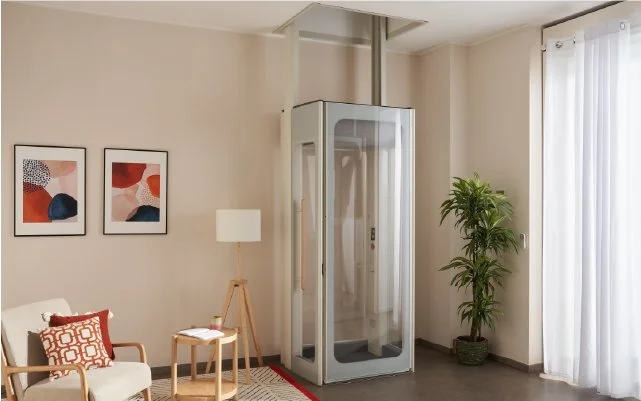
Stannah offers two home elevators under the “Uplifts” brand. Both are designed for maximum comfort, safety, and elegance. They have easy-to-use controls. These include remote controls and buttons inside. Stannah offers two Uplift models: S2 and S3.
The S2 is available in a standard and compact version. It has enough room for two standing individuals and takes only a few hours to install. The S3 allows for three standing persons or one person in a wheelchair. Both models offer an elegant design and low energy consumption. They are a great addition to any two-story home.
- Maximum weight capacity: 551 pounds
- Types of elevators available: Uplifts S2 and S3
- Max Distance: Up to 2 levels
- Price range: Not listed; Must contact for a custom quote
To learn more, read our comprehensive Stannah review.
Lifeway Mobility Home Elevators Review
Multiple elevator types & design options
|
Lifeway Mobility is a leader in home accessibility solutions. It sells home elevators from top manufacturers. These include Bruno, Savaria, Stiltz, Inclinator, and Wessex. Elevators are available in a wide range of styles, woods, and finish options.
Lifeway can add elevators to many existing home plans. Based on our findings, residential elevators are available in select states.
- Maximum weight capacity: 500 – 1,000 pounds
- Types of elevators available: Traction, hydraulic, pneumatic
- Max Distance: 5 levels or 50 feet
- Price range: $35,000 – $100,000+; contact directly for free quote
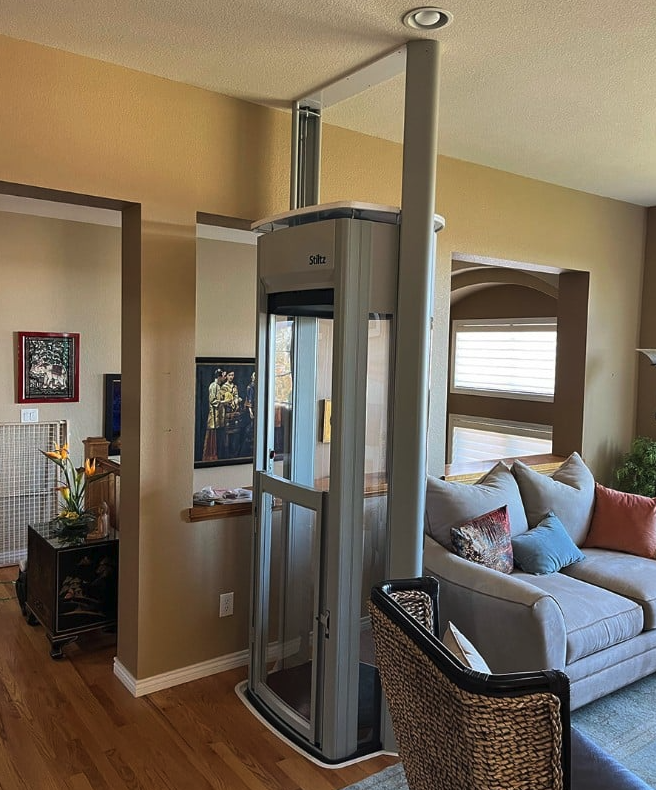
To learn more, read our comprehensive Lifeway Mobility review.
Arrow Lift Home Elevators Review
Knowledgeable technicians and representatives
|
Arrow Lift is a family-owned accessibility lift company. It has been in business since 1985. Its stylish, luxury home elevators are safe and aesthetically pleasing. They are a great alternative to wheelchair lifts or stair lifts.
You can visit Arrow Lift showrooms in the Midwest and California. While there, you can test products in person. Professional technicians and representatives will guide you through the selection and installation process.
- Maximum weight capacity: 350 – 1,400 pounds
- Types of elevators available: Traction, pitless, hydraulic, pneumatic
- Max Distance: Up to 5 levels
- Price range: $30,000 – $100,000+; Must contact for a custom quote
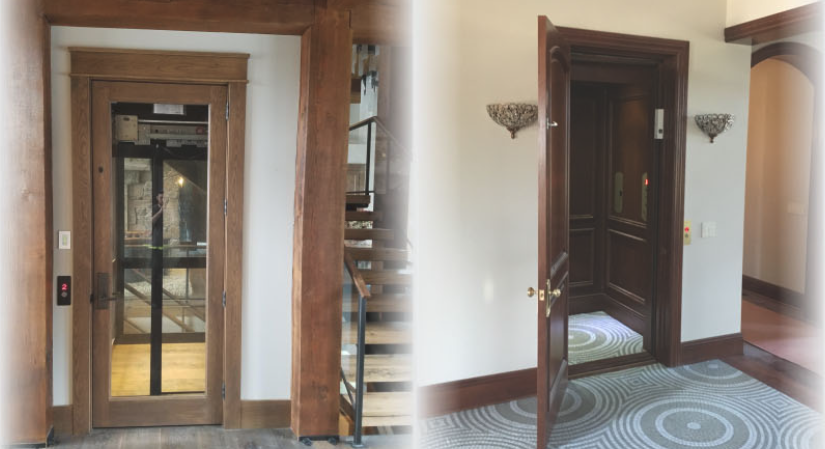
To learn more, read our comprehensive Arrow Lift review.
Bruno Home Elevator Review
Customizable designs
|
Bruno Home Elevators specializes in residential lifts that combine safety, style, and reliability. Their elevators are ideal for homeowners dealing with mobility challenges, offering smooth, quiet operation and customizable finishes to fit any home decor.
Professional technicians assist with installation and guide you through the selection process to ensure a perfect fit for your space.
- Maximum weight capacity: 400 – 750 pounds
- Types of elevators available: Residential, small commercial, custom models
- Max Distance: Up to 3 floors
- Price range: $15,000 – $60,000+; contact Bruno for a custom quote
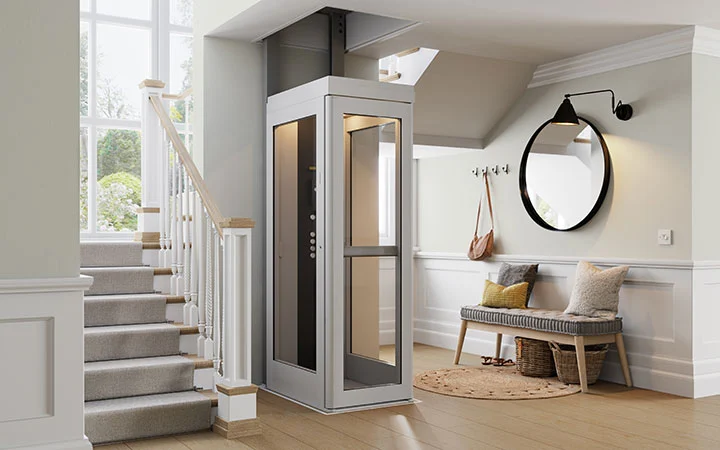
Read our comprehensive Bruno review.
Mobility123 Review
Wide range of accessibility products
|
Mobility123 installs and services a wide range of residential elevators. They sell elevators from trusted brands like Savaria and Stiltz. They help you choose the right option for your needs and match your style. Consider traditional hydraulic systems, compact shaftless designs, or custom glass cabs.
Mobility123 assists with selection, permitting, and installation. Their team is factory-trained, meaning they handle the full process in-house.
- Maximum weight capacity: 500 – 1,400 pounds (varies by model)
- Types of elevators available: Hydraulic, traction, shaftless, pneumatic
- Max distance: Up to 60 feet (depending on brand and model)
- Price range: Custom quotes only; typically $25,000 – $50,000+ installed
Mobility123 offers popular models, including the Savaria Eclipse, Vuelift, and Telecab. They also offer Stiltz’s DuoAlta and TrioAlta. These elevators can carry two to five passengers and fit a home with as few as two stops or as many as six. They have customizable features, which you can choose depending on your needs.
Homeowners consistently highlight Mobility123’s professional installation and responsive service. The company offers custom designs and ongoing maintenance plans. They are a great choice for homeowners who want style and reliability in a home elevator.
Read our comprehensive Mobility123 review.
Harmar Home Elevators Review
Vertical travel up to 14 feet
|
Harmar provides reliable and space-saving options for accessibility. They offer everything from compact porch lifts to full-featured vertical platform systems.
Harmar lifts are professionally installed by a network of authorized dealers. Harmar’s Highlander II and VPL400-X platform lifts are durable. They come with many safety features. This ensures peace of mind in both residential and commercial settings.
Harmar platform lifts provide a seamless and dependable alternative to traditional ramps. They also come with weather protection options, battery backups, and multiple platform sizes.
- Maximum weight capacity: 500 pounds
- Types of elevators available: Roped Drive, SM, MD, LG sizes
- Max Distance: “standard” 13’ 9 3/8” (4.2m), optional “extension” 15’ 9” (4.8m)
- Price range: MSRP $31,000 (SM) to $36,000 (LG)
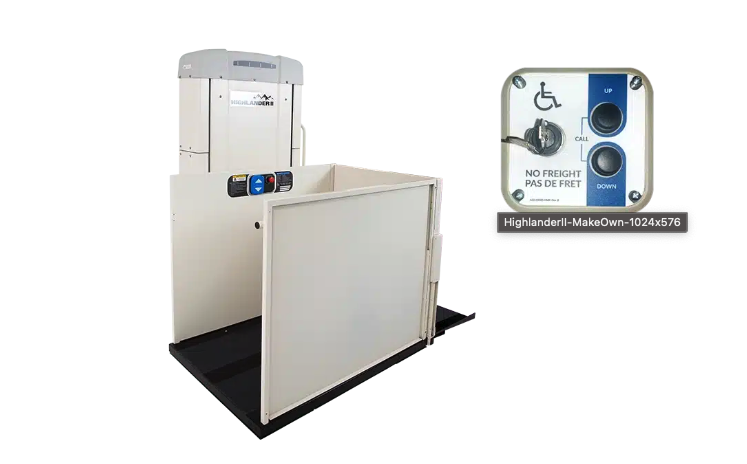
To learn more, read our comprehensive Harmar review.
Residential Elevators Review
Great Custom Options
|
Residential Elevators is a family-owned business. It provides factory-direct home elevator sales and installations. The company manufactures and sells traction, pitless, and hydraulic elevators for home use.
Residential Elevators offers eight cab choices. Each comes with design features that can accommodate any aesthetic. You can also design a custom elevator.
- Maximum weight capacity: 950 pounds
- Types of elevators available: Traction, pitless, hydraulic
- Max Distance: 50 feet
- Price range: Not listed; Must contact for a custom quote
To learn more, read our comprehensive Residential Elevators review.
Inclinator Review
Most Customizable
|
In 1923, C.C. Crispen, a self-taught mechanical engineer, invented the Inclinator. This was a patented folding wooden chair. It ran on electricity and had a footrest. It could move on rollers up and down a steel rail fastened to stairs. Today, the family-owned Inclinator Company of America has evolved its design. It now includes accessible home elevators that are also beautifully designed.
- Maximum weight capacity: 950 pounds
- Types of elevators available: Traction, cable, hydraulic
- Max Distance: 50 feet
- Price range: Not listed; Must contact for a custom quote
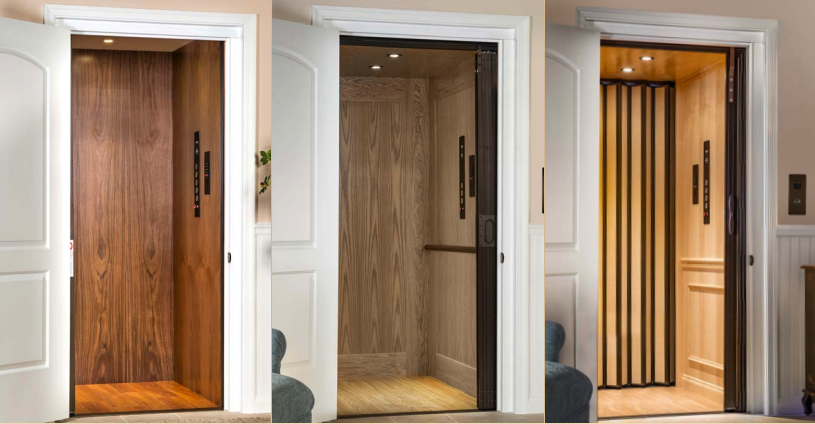
One feature we love is that you can design your home elevator on the website. You can choose from 18 different cabin configurations. Plus, you can choose from a variety of finishes and materials.
Pneumatic Vacuum Elevators LLC Review
Most Eco-friendly
|
Pneumatic Vacuum Elevators LLC, a Florida-based company, designs and manufactures vacuum elevators. It has been bringing eco-friendly elevators to homes on five continents since 2002.
- Maximum weight capacity: 1,000 pounds
- Types of elevators available: Pneumatic
- Max Distance: 50 feet
- Price range: Not listed; Must contact for a custom quote
Pneumatic Vacuum Elevators offers three home elevator models for wheelchairs and small spaces. They use air pressure to move the cabin, so the elevator itself uses a minimal amount of electricity.
With no chains or cables, there is no need for lubrication. Since air is the power source, there is no hydraulic fluid. As a result, regular maintenance is less frequent. The company recommends foregoing yearly service calls. Instead, contact them every four to five years (or after 15,000 rides) for a replacement seal.
Another thing we love about these elevators is that they aren’t built into the framework of your home. Meaning you can take your elevator with you if you move. You can also move the self-contained unit to a different spot in your home if you remodel or renovate.
Additional Companies Considered
Stiltz Homelifts has different residential elevator models. You can choose from Duo and Trio lifts, each with many customization options. To learn more, read our full Stiltz Homelifts review.
Savaria Home Elevators offers several residential elevator models with customizable designs. To learn more, read our full Savaria Home Elevators review.
What Home Elevator Customers Say About Their Experience
We wanted to gauge how satisfied customers are with their experiences with the providers on our list. We analyzed 199 reviews on Retirement Living from the past three years. We then considered factors such as installation process, customer service, and maintenance. Customers who have worked with the home elevator companies on our list have left an average rating of 4.3 out of 5 stars.
Here are some of our findings:
- 81% of reviewers rated their experience 4 or 5 stars.
- Of customers who discussed customer service, 80.6% positive experience.
- 56.8% of reviewers mentioned installation, leaving an average rating of 4.6.
- Only 23% of users reported needing repairs and maintenance on their unit, and 43% of them left an average rating of 4.8 stars.
Adding an elevator to your home is a major decision. The companies on our list have an overall positive reputation. Some users mentioned difficulty getting in touch with companies, but those were the exception to the norm.
If you bought a home elevator from one of the companies on our list, please tell us about your experience. This helps us give reliable information and accurate insights.
Best Home Elevators Buying Guide
The best home elevator depends on your needs and budget. Below, we review home elevator features and benefits. We also offer tips for choosing the best home elevator for your mobility needs based on our research. We also answer frequently asked questions about home elevators.
Who Are Residential Elevators Best For?
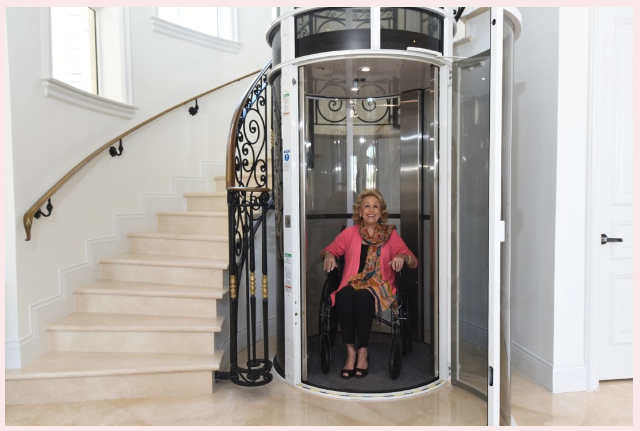
Home elevators are best for people living in multi-level homes who need help moving between floors. Residential elevators are large enough to accommodate a person in a wheelchair and are great for anyone with mobility issues. Home elevators are different from wheelchair lifts, which act as platform lifts. They also differ from stair lifts, which move a person up and down stairs in their home using a smaller seat.
Home elevators are the most expensive residential lift systems. This is due to their size, installation needs, and components.
| Home Elevator | Stair Lift | Platform Lift | |
|---|---|---|---|
| Price Range | $30,000 – $100,000 | $2,900 – $14,000 | $5,000 – $25,000 |
| Space Requirement | 25 square feet of floor space | Minimum width of 30-32″ inches | 54″ by 54″ (for a 36″ X 48″ platform) |
| Best For | Seniors and people with mobility issues | Those with mobility, balance, or endurance issues | Users of mobility devices |
How Much Room Do You Need to Fit an Elevator Into Your Home?
When installing an elevator, you’ll generally need a five-by-five-foot space (25 square feet).
Residential elevators come in different sizes. Usually, the cab is 36 to 60 inches deep, 48 to 60 inches wide, and at least 80 inches tall.
Standard Elevator Size
To comply with the Americans with Disabilities Act of 1990 (ADA), a home elevator cab must meet the following requirements:
- Depth of at least 51 inches
- Width of at least 68 inches if it uses side doors (at least 80 inches if it uses centered doors)
- Door width of at least 36 inches
For Arrow Lift elevators, the standard home elevator interior cab is 15 square feet. But we found other companies with smaller cabs measuring 12 square feet. Think about the cab size when comparing home elevators. This is important if you use wheelchairs or want to carry several people at once.
We found it’s key to check your floor plan. An elevator may fit on the first floor but not align on the second. A design consultant, accessibility consultant, or contractor can check if your home can fit an elevator.
Home Elevator Installation Step-by-Step: Planning and Consultations
Installing a home elevator takes careful planning and expert consultations. You must consult with a professional, assess your home’s layout, inspect the installation site, choose the right elevator type, select any necessary customizations, get permits, and prepare the location.
It’s vital to get professional guidance when installing a home elevator. Not only can a professional identify the best type of elevator for your needs, but they can also ensure the elevator is installed in the optimal location while meeting your budget requirements.
Step One: Research Providers and Determine a Budget
Once you’ve decided you’d like to install a home elevator, your first step should be to research available home elevator manufacturers and merchants. When researching, you will gain a better understanding of what options are available and which ones might suit your needs best. Look for reputable providers with a significant online presence and positive customer reviews.
After getting an idea of what products and features are available, create a rough budget. This will help you narrow down the list of providers. Once you’ve selected a provider, contact their sales team to schedule a consultation.
Step Two: Consultation and Layout Assessment
After scheduling a consultation, a professional will come to your home to discuss your mobility needs, goals, and potential solutions. Be prepared to answer questions about your current and future accessibility needs, what features are most important to you, and who will be using the elevator regularly.
The consultant will then measure the space, assess the existing architecture, and determine the best location for installation. They will also consider factors such as structural modifications, local building codes, and elevator models. After, you will be provided with a quote.
Step Three: Permits and Site Preparation
The provider or contractor will secure the necessary permits for home elevator installation from local and state authorities, and then they will prepare the site. This typically involves framing the hoistway (if needed) and making structural adjustments. During the preparation phase, mechanics usually install rough electrical systems, such as power and communication lines.
Step 4: Manufacturing and Installation
Once all the blueprints are finalized, the elevator components will be created and sent to the installation team. On a scheduled day, the team will come to your home to install the home elevator, a process that can take anywhere from a few days to several weeks, depending on the complexity of the job.
After installation, the team will test the product to ensure that it functions properly and that all the safety features are functioning. A technician will then walk you through how to operate it, explain maintenance requirements, and answer any questions.
Smart Technology and Advanced Elevator Controls
Smart technology has become increasingly common in household products, and home elevators are no exception. This technology enhances both the functionality and convenience of home elevators, improving energy efficiency, safety, and user experience.
- Remote Monitoring—Many home elevators are equipped with remote monitoring systems, which collect data and monitor usage and various features. Remote monitoring provides real-time alerts and performance analysis, so you know what needs to be fixed before it breaks.
- App-Based Control—App-based controls allow you to call and operate your home elevator from your smartphone. Common features include calling the elevator from a distance, selecting a floor, setting up routines, and receiving maintenance alerts.
- Voice Activation—More advanced home elevators can be equipped with voice-activation commands, allowing you to simply tell your elevator where to go, eliminating the need for physical controls, which is beneficial for those with limited dexterity and mobility.
- Automation Compatibility—Many smart home elevators can automate various systems, such as maintenance alerts, safety features, and routines, ensuring your elevator is at a specific level at a specific time.
When choosing a home elevator, consider whether you would like these smart features incorporated into the design, and ask your representative which features, if any, are included. The more advanced a feature is, the more it will likely cost, so prioritize safety features and your budget above luxury.
Features to Consider When Comparing the Best Home Elevators
When looking at the best home elevators for seniors, consider the manufacturer’s reputation. Compare features such as the drive system and electrical components. Look at safety features and dimensions. Check weight limits for each elevator model. A reputable residential elevator company will guide you through all your options.
Safety Features
The current national safety code for elevators is detailed in ASME ANSI A17.1/CSA B44-2016, section 5.3. This requires safety features such as:
- Automatic gate or door closing
- Battery backup in case of a power outage
- Door interlocks that cannot be released while the cab is moving
- Emergency brakes
- Alarms and intercoms
- Lighting and lit control panels
- Handrails
Home Elevator Dimensions
Some brands tout smaller, more compact cab sizes. This is great for smaller homes and tight spaces, but this isn’t always the best. Consider who (and what) will be riding between floors before making a purchase. Those with wheelchairs, mobility aids, or even portable oxygen tanks will require more cab space and a higher weight capacity. A single adult who can stand upright on their own, however, may be fine with a smaller elevator.
Elevator Weight Limits
Maximum weight ratings vary from 350 pounds to 1,400 pounds. While the latter might seem excessive, equipment and riders quickly add up. For example, an electric wheelchair can weigh up to 250 pounds, and multiple adults can weigh close to 1,000 pounds. Models with higher weight limits often have larger cab sizes.
Home Elevator Costs
Our research indicates that the cost of home elevators typically ranges from $30,000 to $100,000. Costs depend on your home’s setup, the type of elevator you pick, and installation fees.
- Arrow Lift home elevators: $30,000 – $100,000+
- Stannah home elevators: Starting at $20,000
- Residential Elevators home elevators: $15,000 – $40,000+
Installing a Home Elevator
When budgeting your residential elevator costs, don’t forget to account for installation. It can take professionals between one and two weeks to install a new elevator in your home. However, it’s important to remember that builders need to do some prep work before installing the elevator. They must plan where to build the pit, elevator shaft, and locate the mechanical components. If additional structural work is needed to reinforce the lift, it will need to be factored into the installation costs.
We recommend talking with a licensed contractor before purchasing a lift. You will help you know what size requirements, features, and budget to consider. Coordinate with both the installer and the home elevator company as soon as possible. This will ensure your home elevator installation goes smoothly.
Many states have specific requirements for residential elevators. We recommend having a local or state inspector examine the elevator before using it. Commercial elevators, on the other hand, typically cost $50,000 to $100,000 per landing and have their own installation requirements.
Are Home Elevators Covered by Insurance?
No, home elevators are not usually covered by insurance—whether it’s homeowners or health insurance. Standard homeowner’s insurance policies don’t directly cover the cost of, or injuries related to, home elevators.
However, it may be possible to extend homeowner’s insurance to include home elevators by adding a rider or endorsement. These optional add-ons can provide targeted coverage for the unique risks of owning and using a home elevator.
Contact your insurance provider to determine what your policy already covers. Explore any available add-ons that may be suitable for you.
Health insurance, like Medicare and Medicaid, usually doesn’t cover home elevators. If you have a flexible spending account (FSA) or health savings account (HSA), you might qualify for reimbursement. A health reimbursement arrangement (HRA) account may also help you qualify. But you will need to provide a Letter of Medical Necessity (LMN) to prove that it is medically necessary.
Medicare typically doesn’t cover home elevators. They are seen as upgrades or home modifications, not Durable Medical Equipment (DME). Medicaid might cover some services. This depends on your state and specific programs, like the Home and Community-Based Services (HCBS) Waivers.
Types of Home Elevators
There are many in-home elevator models to choose from. There are small ones for tight spaces and larger models that are wheelchair accessible. Each option fits different budgets and design needs.
The most common types of home elevators we’ve seen include:
Hydraulic Elevators
Hydraulic home elevators are powered by a piston that travels inside a cylinder, and residential models have a weight capacity of 750 to 1,500 lbs. The cab takes up less space than other elevators, and its machinery can often be placed at the bottom of the hoistway, saving space. These elevators use hydraulic fluid to move a piston. This creates a quieter, smoother ride, especially compared to traction elevators.
Hydraulic home elevators typically cost from $25,000 to $ 70,000 or more and require annual maintenance. The hydraulic fluid must be checked regularly to prevent leaks, odor, or decreased performance.
Traction and Chain-Driven Systems
Traction, or machine room-less (MRL) elevators, function by sliding up and down a track with a counterweight. While they don’t require a machine room, they do need a “pit” at the bottom of the lift. These elevators have a higher average cost, ranging from $26,500 to over $85,000.
Traction elevators utilize an electric motor and pulley system. The system consists of steel ropes (also known as sheaves) to lift the elevator cab. A balanced counterweight connects to these ropes. It reduces the energy needed to move the cab in the elevator shaft (hoistway).
Most home elevators need overhead space to store the motor and drive systems. The typical space needed is 8 to 10 feet above the top floor, depending on the type of elevator.
Additionally, here are two main types of drive systems:
- Cable-driven elevator systems, or winding drum elevators, use two cables to move the cab up and down between floors. Its control system is often located in a separate machine room, so installing this type of elevator in your home will require some room.
- Chain-driven home elevators use a chain wound around a drum to raise and lower the cabin. Chains are more durable than cables and don’t need to be replaced as often. Chain-driven units also do not require a separate machine room, but they do need overhead space. Depending on your roof line, these may not be an option in your home.
Cable-driven elevator systems can last between 20 and 25 years. However, their lifespan depends on proper and regular maintenance. It’s a good idea to replace key components, like the cables, every 10 to 15 years.
Chain-driven elevator systems, however, generally last much longer with proper maintenance. These elevators have a typical lifespan of 20 to 35 years, and parts can last between 20 and 30 years, assuming they have been properly cared for.
Pneumatic Vacuum Elevators
Pneumatic elevators utilize a vacuum system within a tube to power their movement. No pit or machine room is needed, so these are great options for retrofitting into existing homes. However, they usually do not accommodate larger mechanical wheelchairs.
These elevators are an eco-friendly option due to their significantly lower energy consumption. They take up less space than traditional elevators, typically around 3 to 5 feet in diameter, making them easy to retrofit into your home.
However, due to their size, vacuum elevators have a smaller weight capacity, ranging from 350 to 530 lbs. This limit may prevent some wheelchair users from using a pneumatic elevator. If you use a wheelchair, consider a wheelchair-accessible vacuum elevator. These offer more space and a higher weight limit, but may be more expensive.
Glass Elevators
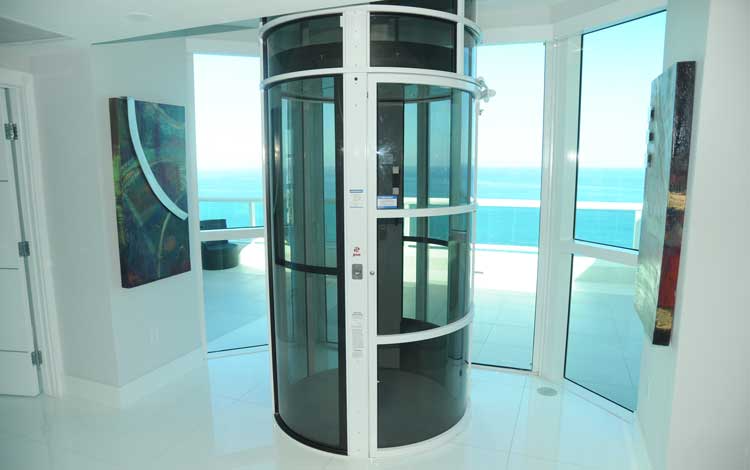
Glass home elevators are a premium option that combine accessibility with modern design. Unlike standard elevators with solid walls, glass models use clear panels that create a panoramic, open feel. They can work with vacuum, shaftless, or traditional hydraulic and traction drive systems. This gives homeowners flexibility in both style and function.
Glass elevators usually cost between $30,000 and $75,000. The price depends on factors like the drive system, customization, glass quality, and whether it’s new or a retrofit.
These elevators require careful planning for space and potential structural changes. Vacuum and shaftless models often take up less room and can be easier to install. Traditional glass elevators may involve more construction.
Glass elevators do more than just provide safe floor-to-floor travel. They also boost property value and serve as a sleek, modern focal point. They’re especially appealing to homeowners who want accessibility without sacrificing design.
Shaftless Elevators: A Compact Alternative
Shaftless elevators, also known as “through-the-floor elevators”, do not require an elevator shaft. They are installed by cutting a part of your floor. They take up little space, with the cab typically being 3′ x 3′.
Shaftless home elevators are a favorite for homeowners. They install easily and blend in well. Additionally, some models may use a push-and-hold operation. This means the user must continuously hold the control button. If the button is released, the cab stops. This is a safety feature required by law for certain types of residential lifts.
How Shaftless Elevators Work
Shaftless elevators are powered by a standard electrical connection. As such, they don’t need any special wiring or construction for the main power supply. They use either a hydraulic, pneumatic, or winding drum drive system to move a self-contained cab. This eliminates the need for a traditional hoistway.
Key features include:
- Constant pressure controls
- Magnetic and safety sensors
- Battery backups
- Automatic door lock
Shaftless elevators require less construction than traditional elevators. To install, a technician will cut a small hole in the floor and reinforce joists. Joists are horizontal structural elements that support floors or ceilings. The elevator itself is installed in modular sections, usually starting with the main rail or lift tower.
Through-the-floor elevators have a compact design. This lets them fit into existing home layouts and small spaces.
When to Choose a Shaftless Model
When deciding which elevator type is best for your home, consider space limitations, budget, and weight needs.
Shaftless elevators are easier to install, reducing labor costs, and are best for retrofit situations. Residential shaftless elevators are also cheaper. They typically cost between $15,000 and $30,000.
However, through-the-floor home elevators do have a limited travel distance. Most shaftless models are designed for two-story homes. So if you have more levels, a shaftless elevator may not work for you. Additionally, you should consider weight limits. Shaftless home elevators can typically lift 400 to 770 pounds, which varies by manufacturer and model.
Homeowners looking for a highly flexible, compact elevator should consider a shaftless elevator. They are a cost-effective solution that requires minimal construction.
Diverse Accessibility Features
Home elevators are a great solution for those planning to age in place as they enhance convenience, safety, and home accessibility. However, home elevators are also great for those with mobility disabilities.
Features like wide lower controls, large interiors, and wide entries make them highly suitable for individuals with wheelchairs. Other features, such as voice control and braille buttons, are great for those who are visually impaired.
Low-Positioned Controls
Low-positioned controls are highly important for wheelchair users and those of shorter stature. The right height will allow you to safely and easily operate the elevator as well as prevent complications like needing assistance. When discussing design aspects of your home elevator with your provider, be sure to specify control height needs.
Large Cab Interiors
Having a larger interior is highly recommended for individuals who use mobility aids such as wheelchairs and scooters. Larger cabs not only provide enough room for your mobility device to fit comfortably, but also typically have space for additional passengers. This is important for those who need assistance, as the caregiver can ride with them.
Wide Entry Doors and Ramped Access
Another important feature for those who use mobility devices is wide entry doors. A wide entry ensures safe, comfortable boarding while also protecting you and your mobility device from damage. Another feature wheelchair users should consider is ramped access. If the space between your floor and the elevator cab is uneven or difficult to roll over, a small ramp is a great solution.
Voice Prompts
Voice prompts are becoming more common in elevators integrated with smart home technology. They allow the user to operate the elevator simply by speaking (similar to Alexa and Google Home). Individuals with limited dexterity or visual impairments can greatly benefit from having voice controls added to their home elevators, as it enables them to efficiently and easily operate the elevator.
Tactile and Braille Buttons
Adding tactile and braille buttons is another great way to enhance the accessibility of a home elevator for those who are visually impaired. While smart features like voice control are innovative, they are prone to errors and often depend on an internet connection. Braille and tactile controls are a simple, cost-effective way to enhance accessibility with few drawbacks, making them great for those who are uncomfortable with or don’t want smart technology integrations.
Frequently Asked Questions about Home Elevators
To find a reputable local home elevator installer, research companies online, check professional certifications, their experience, read customer reviews, and ask for references. You can also look for companies that are members of professional organizations and ask for consultations.
No, Medicare sees elevators as convenience items, not medical necessities. This applies even to those with disabilities who can’t climb stairs. So, there’s no coverage for home elevators. If you’re a veteran, the Home Improvements and Structural Alterations (HISA) Program can help pay for the installation of an elevator in the home.
Yes, home elevators follow strict safety standards. These are set in place by the American Society of Mechanical Engineers (ASME). Home elevators must also meet state and local code requirements and pass inspections.
Most residential elevators have a weight limit of 500 to 1,400 pounds. The maximum weight capacities of home elevators vary from product to product.
In general, plan to use a space between 15 and 25 square feet to accommodate a residential elevator. Some shaftless elevators may fit in smaller spaces, while other types of elevators will require a larger space.
The average speed for a home elevator is 30 to 40 feet per minute.
Your decision to install a home elevator versus a stair lift depends on your home’s layout and your mobility needs. Home elevators can be installed in several locations throughout the home. Customization options are greater than those of a stair lift. On the other hand, stair lifts are more affordable and can be removed if you no longer need the lift.
Home elevators are safe for kids and pets if you follow safety rules and keep the equipment well-maintained. However, there are some potential risks to be aware of.
⚠️ Gaps—Children or pets can get stuck in the gaps between the exterior hoistway door and the elevator car door. Make sure children and pets are monitored when near the elevator.
⚠️ Loud noises—Pets, especially cats and dogs, can startle at sudden, unfamiliar noises. Be aware of your pet’s temperament when using the elevator to prevent potential risks.
⚠️ Getting trapped—Curious kids and pets may wander into an elevator and get stuck behind the doors if you’re not careful.
Ensure your children and pets are supervised and don’t wander off, and your home elevator will be safe for your little ones and pets.
You can expect your elevator to stop or slowly lower you to the lowest level during a power outage.
Traditional elevators will stop immediately to prevent a free fall. Or, they will engage an emergency battery-lowering system. The emergency system will slowly lower you to the bottom floor to let you out. Vacuum elevators use air pressure to lift and lower the car, which is controlled by a pump. During an outage, air pressure slowly releases, gently lowering the passenger.
When researching home elevators, ask providers how their elevators handle a power outage.
When buying a home elevator, check for these key safety features:
✅ Emergency stop
✅ Battery backup
✅ Handrail
✅ Emergency alarms and communication systems
✅ Door interlocks
Concluding Thoughts on Home Elevators
Bottom Line: Get multiple quotes and ensure factory-trained technicians perform the installation.
If mobility is an issue for you or a loved one and stairs at home are becoming a safety hazard, a home elevator is a viable option. Today, there are more choices in styles, types, and financing than ever before, making it easier to find a home elevator that meets your needs.