
Retirement Living takes an unbiased approach to our reviews. We may earn money when you click a partner link. Learn More
Types of Home Elevators
The right type of home elevators makes moving between floors effortless and safe, maintaining independence as you age.
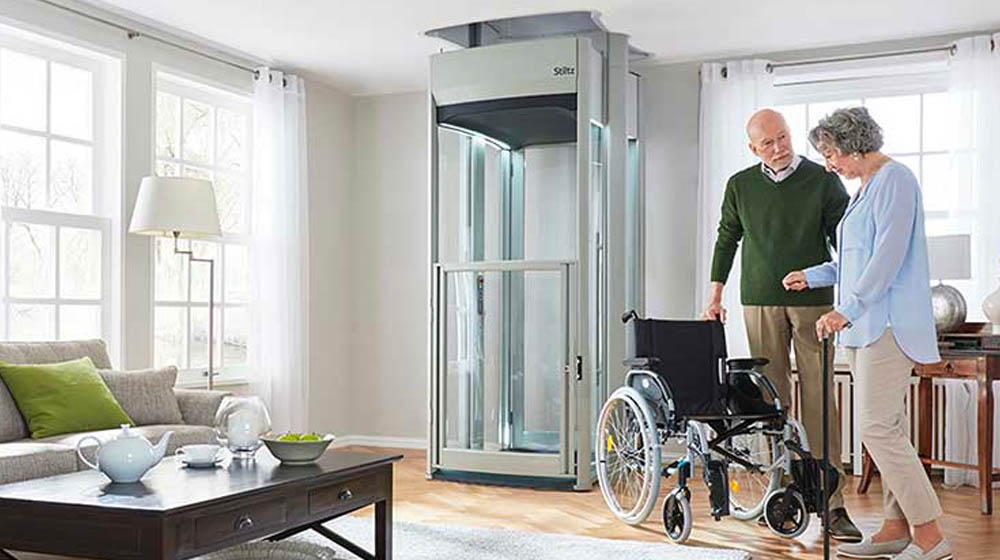


Updated:
At a glance:
- Traditional elevators have a cable-driven or hydraulic system and have a higher average weight capacity of 500 to 1,000 pounds.
- Some elevators require full hoistways, pits, or machine rooms, while shaftless or vacuum elevators can be installed with minimal construction.
- Homeowners should prioritize safety features like emergency brakes, door sensors, overload sensors, battery backups, and more when choosing a home elevator.
To help you find the best home elevator for you and your loved ones, we explore the most common types of home elevators, including how they work and what makes them stand out from the others. If you’re planning on aging in place and are exploring mobility solutions to add to an existing home, you’ll find home elevators a great solution.
Home elevators can usually be separated into two main categories: traditional and specialty elevators.
Types of Traditional Home Elevators
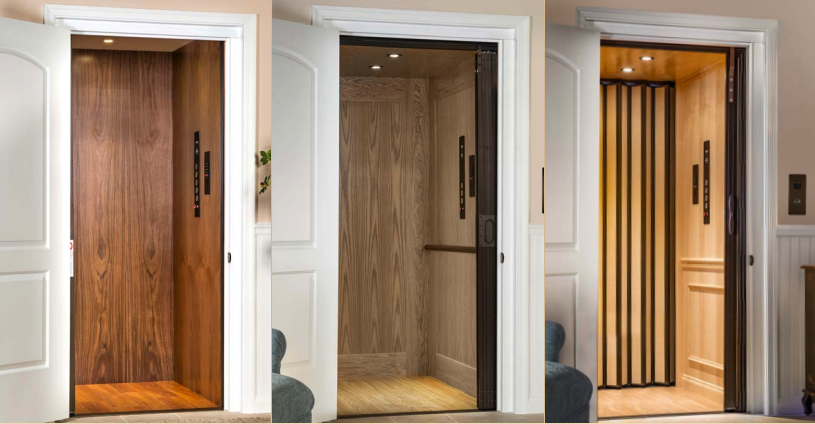
Typically, traditional elevators have a cable-driven or hydraulic system. These systems are similar to what you would see in a commercial elevator. As a result, most traditional elevators have high weight capacities (typically 500 to 1,000 pounds). Traditional elevators also need machine rooms, pits, and full hoistways; though, there are some exceptions.
A hydraulic drive system is often considered the safest system and is known for a smooth, quiet ride. While both hydraulic and traction elevators can be used in residential and commercial buildings, they have some significant differences.
Hydraulic Elevators
Hydraulic elevators use pressurized hydraulic fluid (usually oil) to operate. They are powered by hydraulic jacks, which are fluid-driven pistons that travel inside a cylinder, meaning they don’t use overhead hoisting machinery.
Rather, a hydraulic elevator uses the compression and decompression of fluids to lift and lower the cab. Electrical valves control the release of fluid, ensuring the ride up and down is safe and smooth.
Hydraulic elevators have a higher energy consumption and travel at slower speeds (about 150 feet per minute). They are best suited for shorter buildings, having a height range of about 60 feet. Despite this, hydraulic elevators are usually more affordable than other traditional elevators and can handle heavy loads.
Traction Elevators
Traction elevators use a system of steel ropes, grooved pulleys (aka sheaves), and an electric motor to lift the elevator car up and down. Additionally, it relies on friction to move. A counterweight is connected to these ropes and reduces the amount of energy needed to move the cab through the elevator shaft.
Traction elevators are great for both low and high-rise buildings, and they typically travel about 500 feet per minute, making them much faster than hydraulic elevators.
Winding Drum Elevators
A winding drum elevator is similar to a traction elevator in that they both use electric motors and steel cables. However, how those cables move the cab is where the difference starts.
While traction elevators rely on the friction between the hoist ropes and the pulley, a winding drum elevator directly winds the cables onto a drum to raise and lower the car. Using an electric motor, the steel cables are wound into a large drum, thereby lifting the elevator car. Interestingly, a winding drum may or may not use counterweights.
Residential winding drum elevators normally have a travel speed of 40 to 50 feet per minute, making them slower than other traditional elevators.
Machine Room-Less (MRL) Elevators
Many elevators have a separate machine room to manage the elevator’s parts; however, machine room-less elevators avoid this by having a small machine right above the elevator car, which can be accessed through a door on top of the elevator.
This makes MRL elevators compact, which is helpful in residential locations. They have a typical travel speed of up to 500 feet per minute.
Types of Specialty Home Elevators
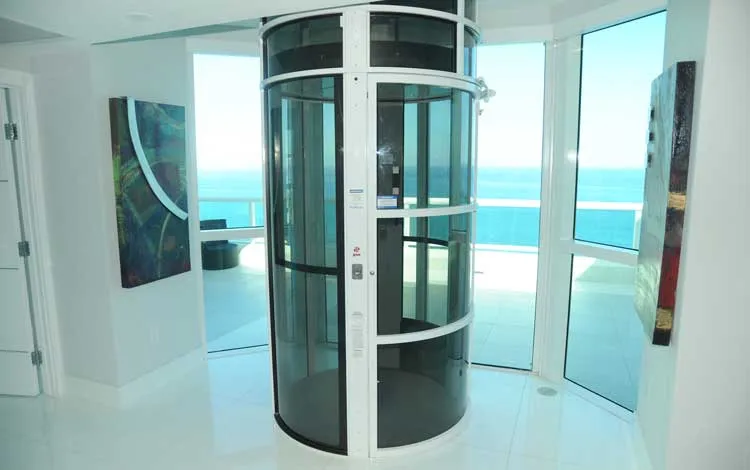
Specialty elevators do not use cables or hydraulic power to operate, but rather use pneumatic (air pressure) or other unique drive systems. They traditionally have a more streamlined design, making them excellent for homes with limited space.
Specialty elevators generally have a lower weight capacity than traditional elevators, at about 350 to 750 pounds; however, some heavy-duty models can handle up to over 1,000 pounds.
Shaftless (Through-the-Floor) Elevators
Shaftless elevators, also known as through-the-floor elevators, do not require an elevator shaft. They are installed by cutting a part of your floor and retrofitting the mechanism. They take up little space and are typically more affordable. Plus, with their unobtrusive installation process, shaftless elevators are a popular choice for homeowners.
Usually, shaftless elevators are powered by a standard electrical connection and need no special wiring or construction for the main power supply. They can have either a hydraulic or winding drum drive system. Shaftless elevators are normally used only in the home, and typically have a speed of 20 feet per minute.
Pneumatic Vacuum Elevators
Pneumatic, also known as vacuum, elevators operate by using suction devices, rather than ropes, pulleys, and gears. These devices manipulate air pressure either above or below the elevator car to move up and down.
They are similar to shaftless elevators and can have an elegant design while being energy efficient and space-saving. They have a normal travel speed of about 20 to 80 feet per minute. However, vacuum elevators typically have a small load capacity, averaging 350 to 500 pounds.
Glass Elevators
Glass home elevators are a premium option that combine accessibility with modern design. Unlike traditional elevators with solid walls, glass models use clear panels to create a panoramic, open feel. They typically cost $30,000 to $75,000, depending on the system, size, and customization, and may require more construction during installation.
Beyond providing safe and convenient floor-to-floor travel, glass elevators also add long-term value to your home, serving as a striking design feature.
What to Consider When Choosing the Right Type of Elevator for Your Home
When choosing an elevator for your home, consider both your specific needs and the reputation of the elevator companies. Not every home lift is wheelchair accessible, so if you or your loved one uses a mobility aid, keep that in mind.
Additionally, some elevator models may come with unique safety features, style options, or weight capacities. Consulting with professionals, like the manufacturer or an aging-in-place specialist, about your specific needs will help you make an informed decision about which home elevator is best for you.
Installation and Maintenance Factors to Consider
Installing a home elevator can take professionals between one and two weeks to complete. If the elevator is being installed in your current place, rather than a new home, installation will be a bit more complicated. Accounting for the time technicians will need to spend in your home is another aspect you will need to consider.
Costs of labor and maintenance are other factors to consider before purchasing a home elevator. Labor is usually included in the overall home elevator cost, but it’s wise to discuss this with your provider to avoid any surprise expenses.
Maintenance costs are ongoing. Experts recommend getting annual maintenance to ensure the elevator continues to operate properly and safely. When planning your budget, keep these expenses in mind.
Elevator Safety Features to Consider
Good safety features to prioritize when choosing an elevator include things like emergency brakes, door sensors, overload sensors, and fire safety integration. Other safety features include:
- Automatic gate or door closing
- Battery backups
- Door interlocks that can’t be released while the cab is moving
- Alarms and intercoms
- Lighting and lit control panels
- Handrails
- Automatic rescue device (ARD)
- Communication systems
Having these features ensures that passengers remain safe during use, avoid accidents, and can respond quickly in the case of emergencies.
The Bottom Line
Choosing the right type of home elevator is about safety, independence, and improving the quality of life for everyone in your household. Whether you prioritize high weight capacity, space-saving design, or specialized features like pneumatic, shaftless, or shafted systems, understanding the differences between elevator types ensures you can make informed decisions.
Before choosing which home elevator types are best for you, consider your space, mobility needs, and the features that matter most. Taking the time now to choose the right system ensures a safer, more accessible, and more comfortable home for years to come.
Frequently Asked Questions (FAQs)
Home elevators cost between $30,000 to over $100,000, on average. Homeowners pay around $65,000 on average for a home elevator. The overall price will depend on the type of elevator, model, and age. Whether you’re installing the unit in a new or existing home will also impact the price.
Home elevators should be serviced regularly, usually annually. This allows you to address repairs early, keeping your home elevator running safely and smoothly. You can talk with your provider to determine a regular maintenance schedule.
Home elevators are best for individuals with mobility issues, those who use a wheelchair or scooter, or those needing to regularly transport heavy items between floors. People looking to age in place will find home elevators a convenient way to make their home comfortable and easy to navigate, as well. Adding a home elevator increases accessibility, convenience, and home value.
Whether you buy stairlifts or a home elevator greatly depends on your unique needs and available space. With stairlifts, the rider sits in a chair that is attached to a rail system that follows the path of the staircase. These lifts are great for individuals who struggle to safely climb stairs. A home elevator, however, is installed in an empty space of a home and can typically carry more than one person between floors, and can be wheelchair accessible. Consider your needs and wants to determine which mobility solution is best for you.
While home elevators offer many benefits and make moving between floors convenient, they have some disadvantages. Elevators are usually quite expensive and require ongoing maintenance. They take up more space than other types of home lifts, and can have a high energy consumption. Additionally, if an elevator is damaged, repairs can be costly and time-consuming.
Help us improve our data! Email your latest home elevator quote to [email protected] or submit a review about your experience. Your personal details will remain completely confidential.