
Retirement Living takes an unbiased approach to our reviews. We may earn money when you click a partner link. Learn More
How to Buy Gold
Learn how to buy gold safely, compare different options, and understand what factors affect the price before you invest.


Updated:
At a glance:
- Gold can be purchased in different forms, including physical coins and bars, retirement accounts like Gold IRAs, and financial products such as ETFs and mutual funds.
- The price of gold changes daily, influenced by supply from mining, demand from buyers and central banks, and broader market fluctuations.
- Safe purchasing requires working with reputable dealers, checking purity and legal tender status, and choosing secure storage options.
Gold is one of the most common ways to preserve wealth and reduce risk during periods of market volatility. It can be purchased as physical coins and bars or through financial products like exchange-traded funds and futures.
In this guide, we’ll explain the main ways to buy gold, what affects its price, and how to decide which type of gold investment fits your financial goals.
Why People Buy Gold
Gold is often seen as a safe-haven asset because its value tends to hold steady during inflation and periods of market volatility. You may choose to invest in gold to reduce risk and protect savings because it provides:
- Protection Against Inflation and Market Volatility: When the cost of living rises or the stock market falls, the price of gold often moves differently. Holding gold can help balance losses in other asset classes and provide diversification.
- Long-Term Stability: Central banks around the world hold large amounts of gold because it maintains value over time. For individuals, it serves the same purpose by helping preserve wealth across generations.
- Liquidity and Global Demand: Gold is recognized and traded worldwide. Coins, bars, and bullion can usually be sold quickly through reputable dealers, which makes it easier to convert into cash when needed.
- Role in Personal Finance: For retirees, gold can fit into an investment strategy focused on stability rather than rapid growth. It spreads risk and provides reassurance during periods of market uncertainty.
What Affects the Price of Gold?
The price of gold changes every day based on global supply and demand. Here’s what you need to know about the factors that influence it.
Spot Price and Futures Price
The spot price of gold is the current market price for immediate delivery. This is the number you often see quoted per ounce (oz gold).
In contrast, futures prices are contracts that set the price of gold for delivery at a future date. Futures can signal where traders think the value of gold is headed, but they are more complex and carry higher risk.
Supply from Gold Mining and Refining
Gold supply comes mainly from mining companies and refiners. Large institutions such as the Royal Mint, Perth Mint, and other refiners produce bullion bars and coins that are traded worldwide. When mining output slows or costs rise, the overall supply can tighten and raise the price of gold.
Demand from Different Buyers
Gold demand comes from several sources, such as:
- Jewelry: Jewelry makes up a large share of global gold use, especially in countries where gold is tied to cultural traditions.
- Central banks: Many central banks hold gold as a reserve asset to protect their national currencies.
- Individual buyers: People buy gold coins, bars, and bullion as part of their savings or retirement strategy.
- Exchange-traded funds (ETFs): These funds allow people to purchase shares backed by physical gold, adding more demand to the market.
When demand rises from any of these groups, the price of gold can increase. For example, in mid-2025 gold traded above $3,350 per ounce. One key driver was central banks, which purchased 244 tonnes in the first quarter and 166 tonnes in the second.
Market Fluctuations
The value of gold also moves with broader market conditions. When stock markets are volatile or currencies weaken, people often turn to gold for stability. These shifts in demand create short-term price fluctuations that you may notice day to day.
Ways to Buy Gold
You can buy gold in several forms, each with its own costs, risks, and level of convenience. Here are some ways to buy gold:
Physical Gold: Bullion, Coins, and Bars
Physical gold is the most traditional way to own the metal. It comes in three main forms:
- Gold bullion: Gold that is at least 99.5% pure, shaped into bars or coins. Its value comes from weight and purity rather than collectible features.
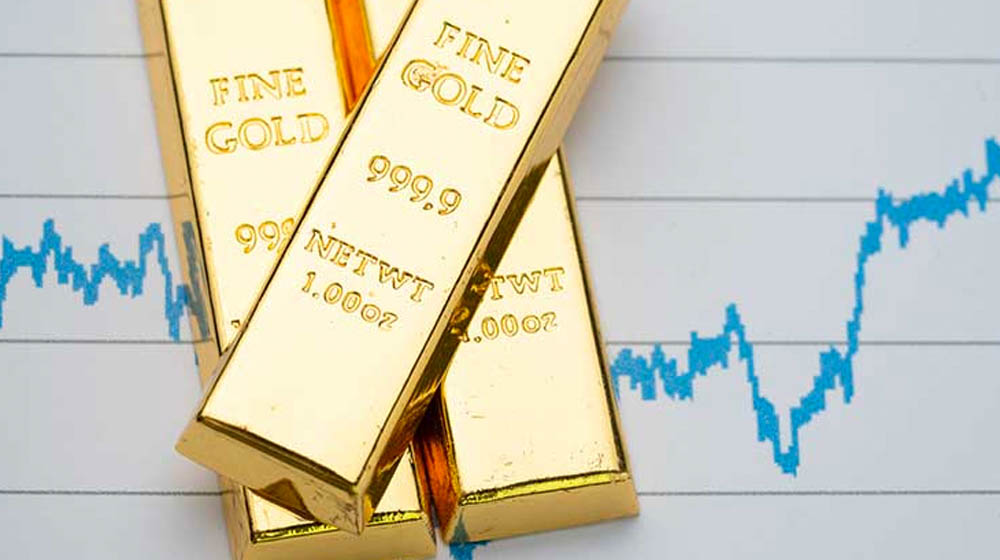
- Gold bars: Rectangular pieces of nearly pure gold, usually 99.9% (24-karat). They range from 1 gram to 400 ounces, with smaller bars easier for individuals to trade.
- Bullion coins: Government-issued coins with guaranteed weight and purity, such as the American Eagle, Canadian Maple Leaf, South African Krugerrand, British Britannia, and Australian Kangaroo. Purity levels range from about 91.67% to 99.99%. These coins are widely recognized and easier to sell than most bars.
When buying physical gold, check its purity. Pure gold is 24-karat, or 99.9%, while lower karats contain other metals. An assay certificate verifies the weight and purity, giving you proof of authenticity and helping with resale.
Gold Jewelry
Gold jewelry can be both decorative and a store of value. Unlike bullion or coins, it often includes added costs for design and craftsmanship, which makes resale more difficult.
Because of these markups, jewelry usually carries lower liquidity and may not return its full value when sold. It can still serve as a portable form of wealth, but it is less practical as a long-term investment compared with other types of gold.
Gold-Backed Paper Investments
Not all gold investments involve holding physical coins or bars. You can also buy gold through financial products that are backed by physical gold. The most common are exchange-traded funds (ETFs) and mutual funds.
An ETF is a type of investment you can buy through a regular brokerage account, just like a stock. When you purchase shares of a gold ETF, you are buying part of a fund that holds physical gold on your behalf. Mutual funds can work in a similar way, pooling money from many investors to buy gold-related assets.
These options make gold easier to buy and sell because you do not need to handle storage or security yourself. They are considered more liquid than physical gold, since you can trade shares directly through the stock market.
Gold IRAs
An individual retirement account (IRA) is a type of self-directed retirement account that lets you hold physical gold instead of only stocks or mutual funds. A gold IRA allows you to buy approved coins and bullion, such as American Eagle or Canadian Maple Leaf coins, and certain gold bars that meet IRS standards. For most bars, the required purity is 99.5%, although the IRS makes exceptions for some coins.
Because IRS rules do not allow you to store Gold IRA assets at home, choosing an IRA custodian is required to set up the account and arrange secure storage with an approved depository. The custodian also handles paperwork, reporting, and compliance. These accounts often include fees for setup, storage, and annual administration, so it is important to compare providers carefully.
A trusted Gold IRA company helps simplify the process by working with reputable dealers and refiners. This makes sure the coins or bars in your account meet IRS standards for legal tender bullion and are stored securely in an approved facility.
Here’s a list of some of the best Gold IRA companies to consider:
| Company | Key Features | Minimum IRA Size | Fees & Storage |
|---|---|---|---|
| American Hartford Gold | Same-day IRA setup, no buyback fees, up to $15,000 in free silver, physical delivery or IRA | Not disclosed | Storage $100–$150/year; multiple IRS-approved vaults |
| Patriot Gold Group | No-fee-for-life IRA (with $100k+ balance), 24-hour account setup, direct dealer pricing | $50,000 | No management fees; storage at Texas Precious Metals Depository |
| Goldco | Helps roll over 401(k), IRA, and pension funds; up to 10% silver bonus; strong educational resources | Not specified | Custodian and storage fees from partners; IRS-approved depositories |
Gold Futures and Mining Stocks
Gold futures are contracts to buy or sell gold at a set price on a future date. They are used to speculate on short-term price changes and carry higher risk, making them less suitable for retirees.
Gold mining stocks offer indirect exposure since their value often moves with the price of gold. However, company performance and operating costs can make them unpredictable compared with physical gold or gold-backed funds.
For most retirement portfolios, both futures and mining stocks are riskier asset classes and should be approached with caution.
How to Safely Purchase Gold
When you purchase gold, keep these points in mind to protect your savings:
- Choose reputable dealers: Work with established companies, official mints, or trusted refiners to avoid scams.
- Check for legal tender status: Coins issued by governments (such as American Eagle or Maple Leaf) are legal tender and easier to verify than collectibles.
- Understand storage options: Decide whether to keep gold at home, in a bank safe deposit box, or through a secure depository.
- Request documentation: Ask for receipts and certificates that confirm the weight and purity of your physical precious metals.
- Compare pricing: Look at the current spot price and make sure the premium charged by the dealer is reasonable.
Help us improve our gold investment resources! If you’ve recently purchased gold or received a quote from a dealer, email us at [email protected]. Your personal details will remain completely confidential.