
How Much Do Financial Advisors Make Per Client?


Updated:
Open Access
Financial advisors earn an average of $5,000 per client annually, based on a typical 1% fee on $500,000 in assets under management (AUM). However, income varies depending on the pricing model, experience, and location. This guide breaks down how much financial advisors make per client, including fee structures, salaries, and top-paying states.

Key Insights
Financial advisors typically earn $5,000 per client annually based on a 1% AUM fee on a $500,000 portfolio.
↓ Jump to insight
Entry-level financial advisors earn between $50,000 and $60,000 per year, while senior advisors can make up to $150,000.
↓ Jump to insight
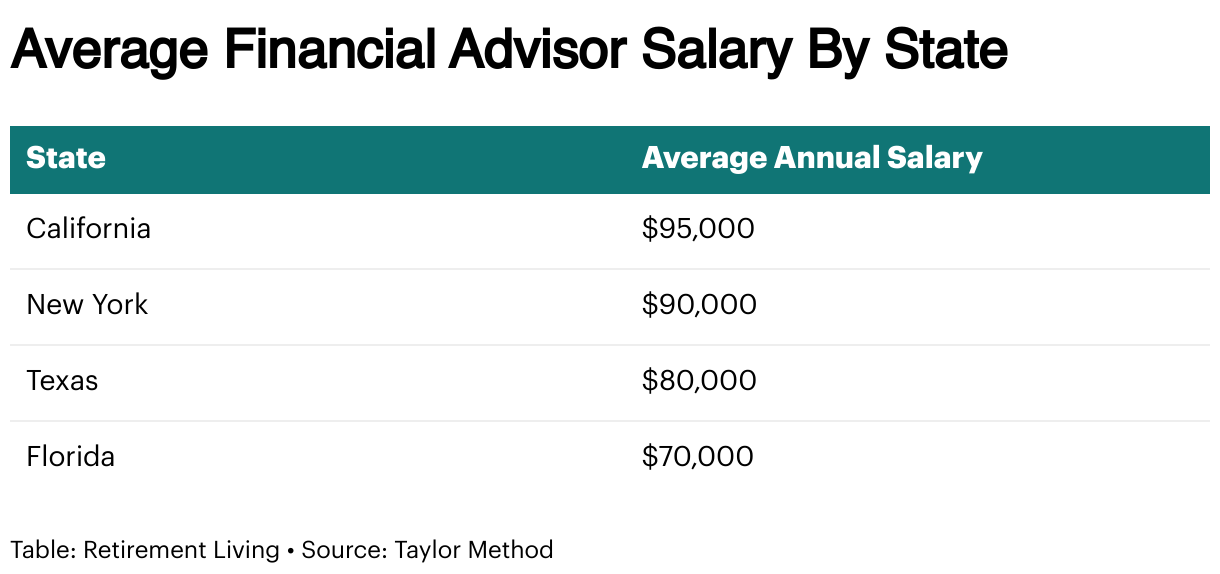
Financial advisors in California earn an average of $95,000 per year
↓ Jump to insight
New York is the highest-paying state for personal financial advisors, with an annual mean wage of $158,040.
↓ Jump to insight
Senior-level financial advisors earn between $100,000 and $150,000 annually.
↓ Jump to insight
How Much Do Financial Advisors Earn?
Financial advisors don’t earn a fixed amount per client. Their income depends on factors like experience level, location, and how they charge, whether through a flat fee, an hourly rate, or a percentage of assets under management (AUM).
Some advisors also earn commissions by selling financial products, especially in brokerage or commission-based models. Others, like fee-only advisors, charge transparent fees for financial planning services without sales incentives.
Salary by Experience Level
Entry-Level: $50,000 – $60,000
Most entry-level financial planners work at banks or advisory firms. They support senior advisors, gain certifications like CFP, and begin building a client base.
Mid-Level: $70,000 – $90,000
Mid-level financial advisors often manage their clients and may follow a fee-based model. Many also start offering specialized financial services like retirement or investment management.
Senior-Level: $100,000 – $150,000
Senior advisors typically manage high-net-worth clients, have substantial AUM, and may run their own RIA or firm. Income often includes a combination of flat fees, AUM fees, and equity earnings.
Salary by Geographic Location
Location can also affect earning potential. Currently, the average income of financial advisors in California is $95,000 per year.
Additional Income Sources
But many financial advisors don’t just rely on salary. A large part of their income can come from:
- Bonuses: Based on hitting performance goals or client satisfaction.
- Commissions: If they sell financial products like mutual funds, annuities, or insurance policies.
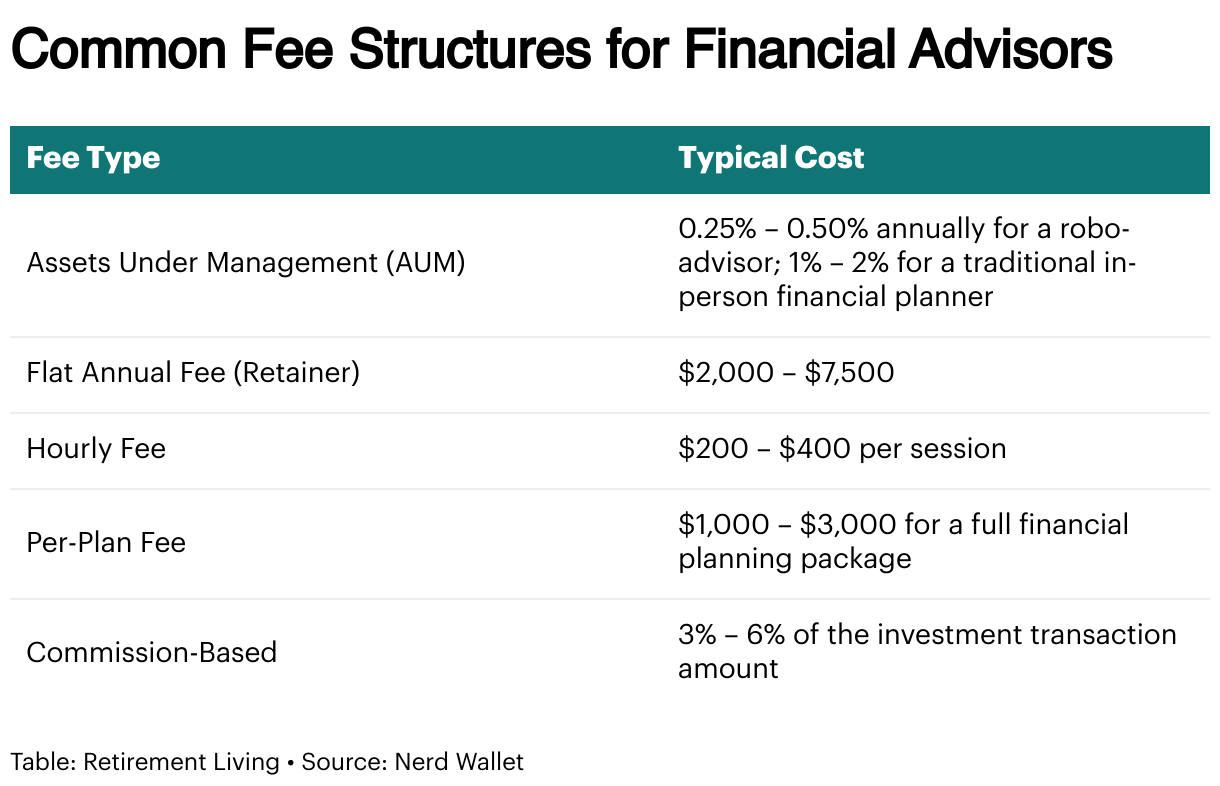
- Fees per client: Some advisors charge flat fees or a percentage of assets under management (AUM). For example, 1% of a $500,000 portfolio = $5,000 annually from one client.
Fee Structures for Financial Advisors
Fee-based financial advisors often use a mix of these pricing models. For example, a fee-based CFP might charge a flat fee for a plan and also earn commissions from recommending mutual funds or insurance products, which can sometimes lead to conflicts of interest if not clearly disclosed.
The Best-Paying States for Financial Advisors in the U.S.
You might assume that the best-paying states for financial advisors are the ones with palm trees and sunshine. But when it comes to earnings, the numbers point to a different story, one tied more to economic hubs than the weather.
According to the U.S. Bureau of Labor Statistics, here are the top five highest-paying states based on the annual mean wage for personal financial advisors, with New York ranking #1 on the list.
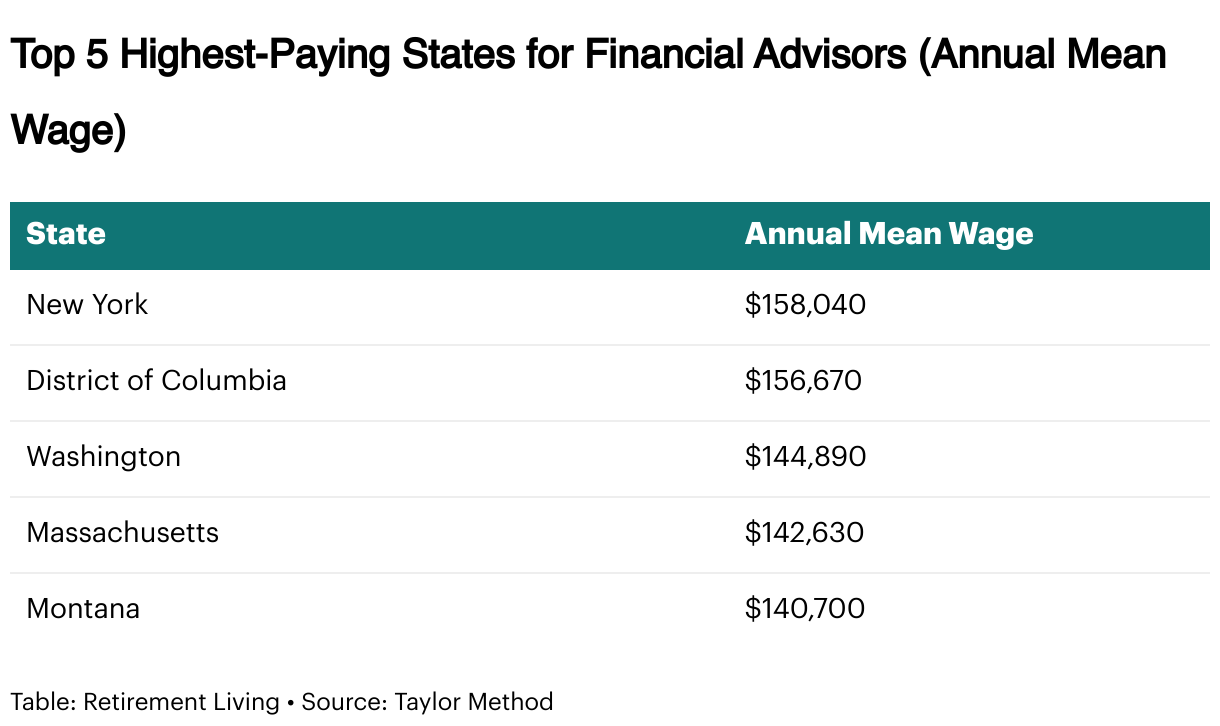
It’s no surprise that these states, especially New York, top the list. They’re home to some of the largest financial services firms, prestigious brokerage houses, and high-net-worth clients who demand expert financial planning and investment management.
Top-Paying Metro Areas for Financial Advisors
If you’re a financial planner or fiduciary advisor working in these metro areas, you’re likely earning above the national average:
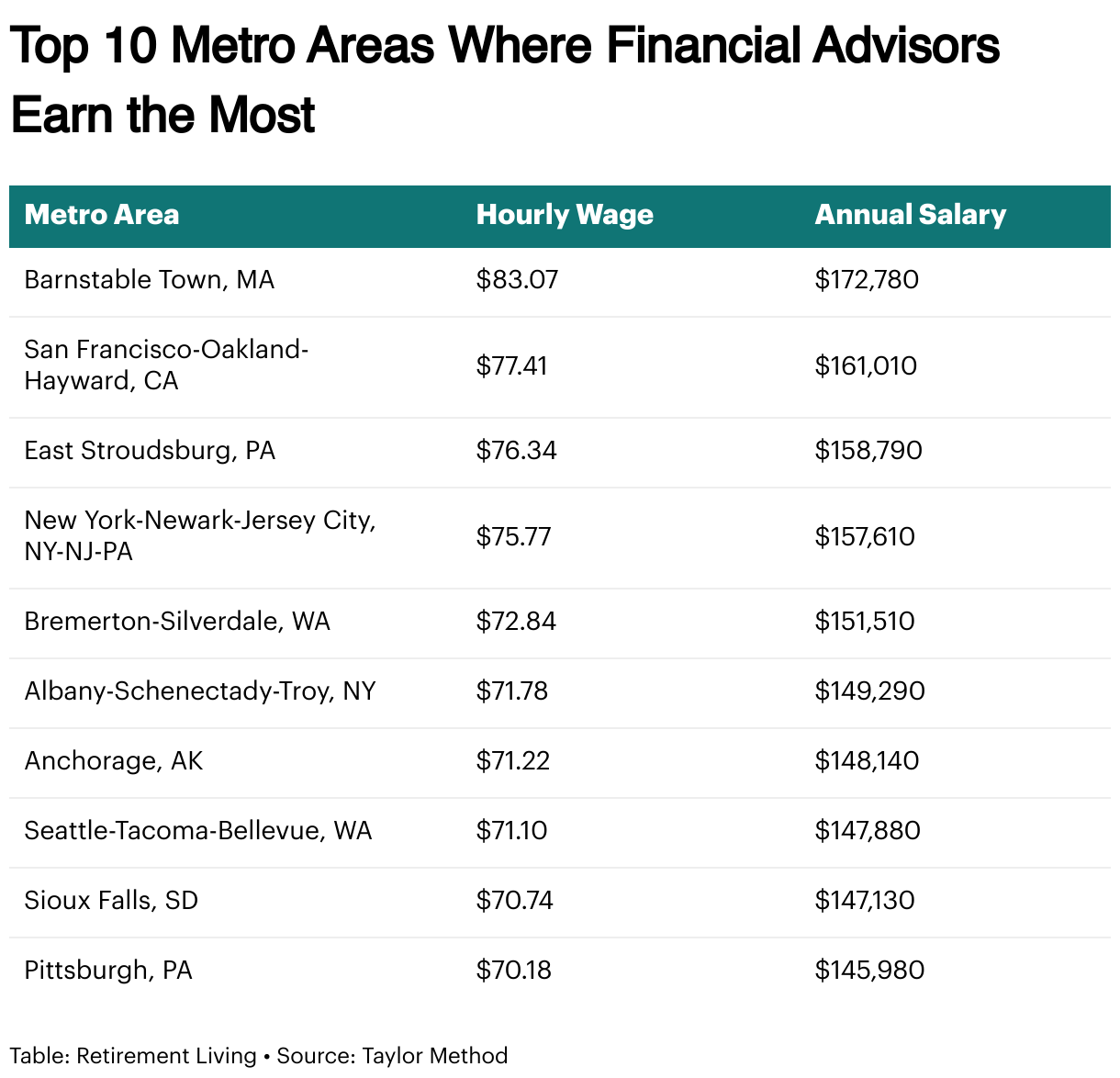
Places like New York City, home to Wall Street, attract top-tier financial talent and offer access to major clients with millions in assets under management (AUM). Advisors in these regions often work with clients on complex financial goals, combining fee-based services with high-value portfolio oversight.
That’s also why CFP® professionals, fee-only advisors, and hybrid fee-based advisors tend to see higher compensation in these areas and offer advanced financial planning services tailored to a wealthier clientele.
Bottom Line
Financial advisor fees vary widely based on the advisor’s fee structure, experience, and location. On average, advisors earn $5,000 per client annually through AUM-based models, though many also use flat fees, hourly billing, or an annual retainer.
Entry-level financial advisors earn around $50,000–$60,000 per year, while senior advisors with large books of business and advanced credentials like Certified Financial Planner (CFP®) certifications can bring in $100,000–$150,000 or more.
Geography also plays a major role. States like New York and metro areas like San Francisco report the highest earnings, with average salaries above $150,000 annually.
Additional income can come from commissions on annuities, mutual funds, or other financial products, especially for advisors affiliated with broker-dealers. Those specializing in wealth management, estate planning, or high-net-worth clients often charge higher fees in exchange for more comprehensive services.
Fair Use Statement
You’re welcome to share this insightful article for noncommercial purposes, but please link back to this page.
Sources
- Taylor Method. How Much Do Financial Advisors Make? Taylor Method. Published 2024. Evaluated April 14, 2025.
Link Here - Wealthramp. How Does My Financial Advisor Make Money? Wealthramp. Published 2024. Evaluated April 14, 2025.
Link Here - NerdWallet. How Much Does a Financial Advisor Cost? NerdWallet. Published 2024. Evaluated April 14, 2025.
Link Here - Ramsey Solutions. Should You Pay an Advisor for Investing Advice? Ramsey Solutions. Published 2024. Evaluated April 14, 2025.
Link Here