
Average Age to Make a Will: Key Stats


Updated:
Open Access
Most Americans say estate planning should start between the ages of 30 and 39. In reality, the average age to make a will is 42.
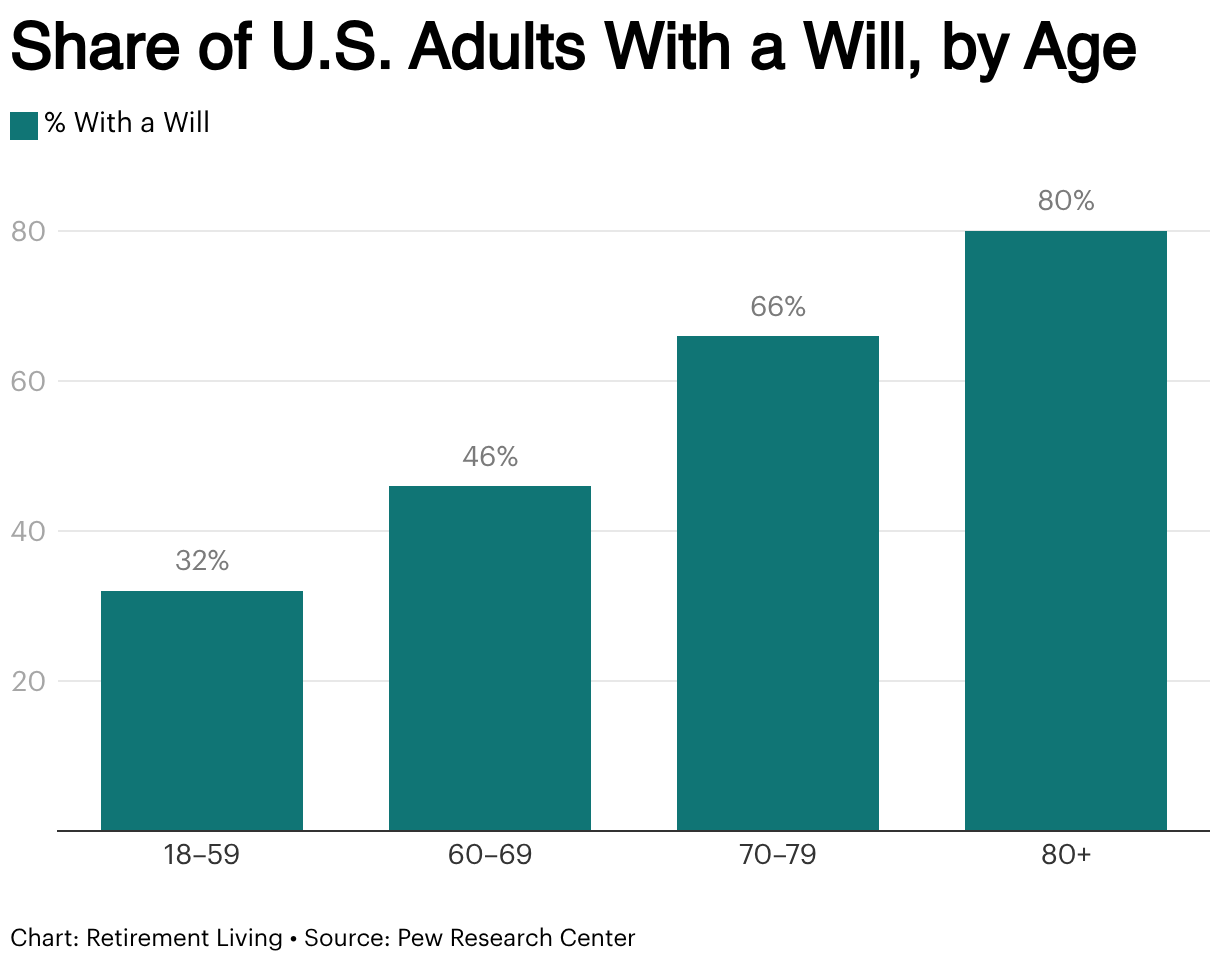
Only 24% of U.S. adults have a will, and 55% have no estate planning documents at all. Will ownership rises with age, reaching 46% in the 60s and 66% in the 70s.

Key Insights
Will ownership climbs from 32% or less among legal adults 18-59 to about 80% among those 80 and older.
↓ Jump to insight
Only 15% of Gen Z report having a will, compared to 66% of the Silent Generation.
↓ Jump to insight
31% of adults without a will believe estate planning is not necessary, while 30% cite procrastination as the main reason.
↓ Jump to insight
17% draft a will after the birth of their first child, while 16% act after marriage or as they near retirement.
↓ Jump to insight
66% of households earning over $1 million have a will, compared to 33% of households earning under $25,000.
↓ Jump to insight
What Age Do Most Americans Make a Will?
In 2025, 24% of U.S. adults reported having a will, down from 33% in 2022. Other national surveys place the figure slightly higher, at about 31% to 32%, depending on whether trusts are included.
Will ownership remains below one-third for adults under 60 years old. Rates increase sharply during retirement planning in the 50s and beyond, with the sharpest jump occurring in the 60s and 70s.
Will Ownership Trends by Generation
The Silent Generation has the highest will ownership rate, followed by Baby Boomers. Gen X ranks next, then Millennials, with Gen Z reporting the lowest ownership.
More than half of Gen Z and Millennials, especially young people just entering adulthood, report having no estate planning documents at all.

Why Americans Wait Until Their 40s and 50s
Procrastination is the most common reason Americans delay estate planning, even though online wills and trusts services have made the process more accessible. In 2025, 43% of adults without a will said they “haven’t gotten around to it.” Others cite concerns about the cost of making a will or say estate planning feels low on their priority list.

The Confidence vs. Action Gap
Almost 83% of Americans say estate planning is important. Only 22% say they understand it very well. Most people say it matters, but few feel confident handling the legal documentation. That lack of understanding often leads to delay.
What Triggers Americans to Finally Create a Will?
About 26% of Americans create an estate plan after the death of a family member, while 21% act following a health scare or medical diagnosis. Inheritance or another financial event, such as purchasing real estate, prompted 11% to draft a will for the first time.

Why Americans Create an Estate Plan
Americans create estate plans to reduce risk and protect family outcomes. Nearly 50% cite peace of mind for unexpected events. Another 49.6% focus on protecting loved ones.
Around 34% prioritize financial security for beneficiaries, while 29% want to avoid probate and court involvement. Smaller shares point to tax planning at 13.6% or legal advice from a financial advisor at 9%. These reasons show that people act to control outcomes and limit disruption for their families.
Estate Planning Gaps by Income and Demographics
Among households earning over $1 million, 66% have a will, compared to 33% of those earning under $25,000. Higher earners are also more likely to say estate planning should start earlier in life.
Racial gaps persist as well. About 64% of Black respondents report having no estate planning documents, and many cite limited access to legal services as a barrier.

What Happens If You Die Without a Will?
If you die without a valid will or power of attorney, state law controls how your assets are distributed and who makes decisions on your behalf.
Dying Intestate
About 55% of Americans have no estate planning documents or other important documents in place. If you die without a will, state intestacy laws control how assets pass to heirs.
The law sets a fixed order of distribution. Spouses and children receive priority, while unmarried partners and other dependents may receive nothing. The state can also appoint guardians for minor children.
The Probate Process
Without a will, your estate enters probate. The court oversees debt payments and asset transfers under state law. Probate increases time, costs, and public disclosure.
Around 46% of Americans rank probate avoidance as their top estate planning priority. Awareness varies by age group. Only 1% of the Silent Generation say they do not know what probate is. In contrast, 14% of Gen Z and other members of the younger generation report no understanding of probate.
Lower-income adults are also about twice as likely as higher-income adults to say they are unfamiliar with the process.
Bottom Line
Around 31% of U.S. adults have a living will or advance directive, and 64% of adults in their 70s report having one. Only 11% of Americans have a living trust, and 41% say they do not understand trusts well.
Trust in AI-driven estate planning is also divided. 20% say they would trust AI-generated advice more than a human attorney, while 46% say they would trust it less. 34% say they would trust both the same. The top concerns include loss of control, privacy risks, and emotional impact.
Generational differences drive this divide. 34% of Gen Z say they trust AI more than an estate planning attorney, compared to 5% of the Silent Generation. Will and document adoption increase with age, while trust in AI decreases.
Fair Use Statement
Help us improve our guides! If you’ve recently created a will or set up an online trust, we’d love to hear about your experience. Share your insights with us at [email protected]. Your personal details will stay completely confidential.
Sources
- Caring – 2025 Wills and Estate Planning Study (Evaluated 26 February 2026)
Link Here - Pew Research Center – Experiences with Estate Planning and Discussing End-of-Life Preferences (Evaluated 26 February 2026)
Link Here - Trust & Will – 2025 Estate Planning Report (Evaluated 26 February 2026)
Link Here - Vanilla – State of Estate Planning Report (Evaluated 26 February 2026)
Link Here