
Cohousing: A new approach to retirement living
Seniors are finding connection, community, and independence
Updated:

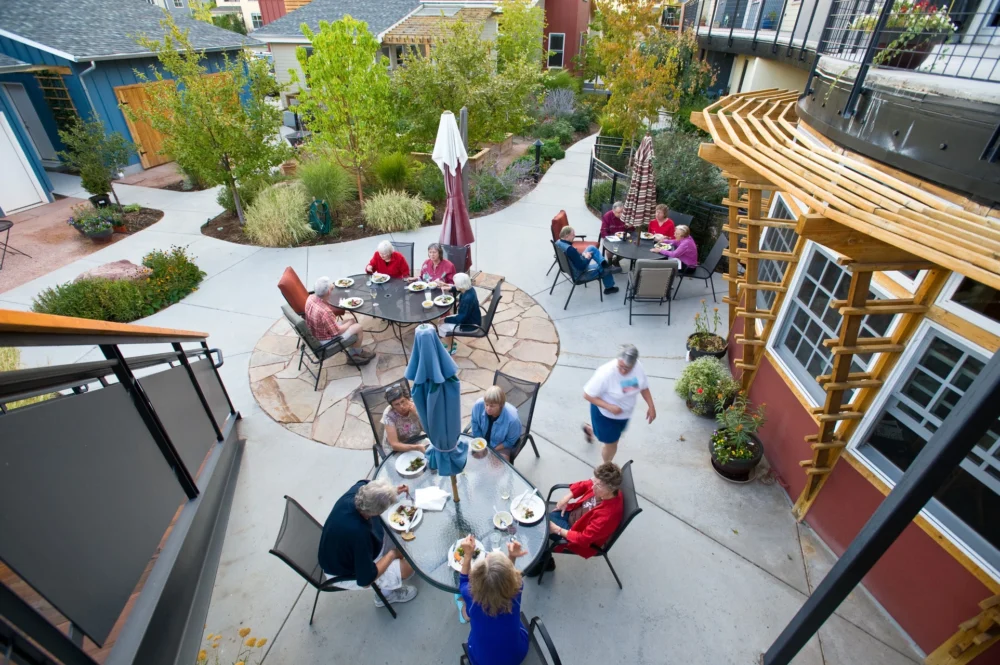
Photo by Cohousing Association
Key Insights
- Cohousing communities offer seniors a supportive, socially engaged alternative to traditional retirement living
- Older adults are increasingly drawn to interdependent living that preserves autonomy and fosters connectionInitiative aims to test flexible, community-tailored approaches under ACL Innovation Lab
- Shared housing models help combat loneliness, reduce costs, and create aging-in-place solutions
As America’s population ages and the cost of eldercare skyrockets, an increasing number of older adults are opting for a fresh alternative to traditional retirement homes: cohousing.
Rooted in mutual support, shared spaces, and community values, the cohousing movement is gaining momentum among seniors who want to age in place while staying socially connected.
Across the U.S., these intentional communities are reshaping what it means to grow older in the 21st century.
Cohousing is a form of collaborative living where residents typically have private homes but share common spaces such as kitchens, gardens, or workshops. Decisions are made collectively, and the community actively supports each other’s well-being, something especially attractive to aging adults seeking to maintain autonomy without isolation.
While cohousing originated in Denmark in the 1960s, the model took root in the U.S. in the 1980s. Today, more than 200 cohousing communities exist across the country, and many more are in development—particularly those designed specifically for older adults.
Communities such as Harbourside Cohousing in British Columbia and ElderSpirit in Virginia have become blueprints for aging-friendly cohousing. These communities attract older adults who are active, civically engaged, and eager to shape their environment in ways that traditional senior living often cannot offer.
How it works
Key features typically include:
- Barrier-free homes designed for aging in place
- Shared meals and events that encourage interaction
- Democratic decision-making and a shared sense of ownership
- Collective caregiving in informal ways, such as offering rides to doctor’s appointments or delivering meals during illness
Addressing loneliness and cost
A 2023 study by AARP found that 35% of seniors experience regular feelings of loneliness, a known risk factor for dementia and poor health. Cohousing directly addresses this challenge by promoting daily social interaction. Residents often describe their lives as “richer,” not just in relationships but also in purpose and meaning.
Financially, cohousing also appeals to retirees facing high housing and care costs. By sharing expenses such as utilities, landscaping, or maintenance, residents enjoy a lower cost of living without sacrificing comfort or independence.
Despite its benefits, senior cohousing is not without hurdles. Financing can be complex, zoning laws aren’t always friendly to cooperative housing, and the process of forming a community, from visioning to construction, can take years. Still, advocates believe the trend is just getting started.