
Stem cell therapy may improve age-related vision loss
The therapy could lead to new regenerative treatments
Updated:

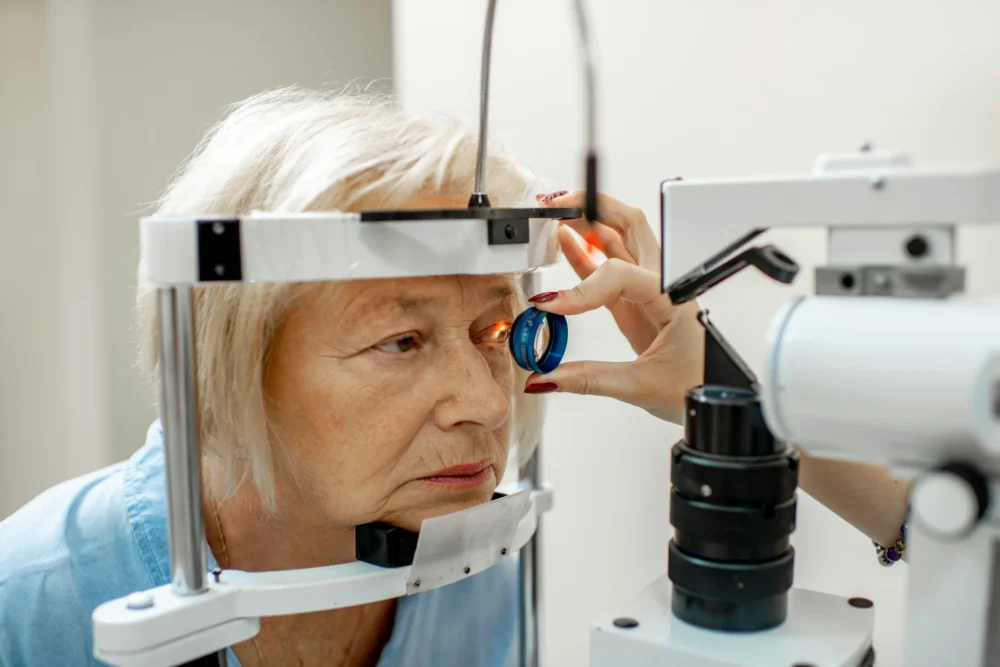
Photo by Getty Images on Unsplash
Key Insights
- Stem cell transplants show promise in restoring vision for patients with advanced dry age-related macular degeneration (AMD).
- Patients in an early clinical trial regained the ability to see up to 21 additional letters on an eye chart.
- The therapy, developed at the University of Michigan, could pave the way for new regenerative treatments.
Age-related macular degeneration (AMD) is the leading cause of irreversible vision loss in Americans over 60, affecting around 20 million people. The disease damages the macula – the central part of the retina that enables sharp, detailed, color vision – leaving patients unable to clearly see what is directly in front of them while preserving peripheral sight. Current treatments can slow progression but cannot restore lost vision.
But a recent clinical trial suggests that stem cell therapy may provide a path forward. Researchers at the University of Michigan, in a study published in Cell Stem Cell, successfully transplanted retinal pigment epithelial (RPE) stem cells into the eyes of patients with advanced dry AMD.
More than 90% of AMD patients have this dry form, which occurs when RPE cells gradually stop working and die off, leaving patches of vision loss.
A first-of-its-kind trial
The phase 1/2a study used RPE stem cells derived from postmortem adult eye tissue. Six patients received a low dose of 50,000 cells delivered through a surgical procedure.
The trial’s primary goal was to confirm safety, and the treatment passed this test. None of the participants experienced serious inflammation, tumor growth, or other complications.
But researchers were surprised to see something more: vision gains. In the transplanted eyes, patients regained significant sight, while their untreated eyes showed no improvement. On average, participants could read 21 more letters on an eye chart after a year.
“We were surprised by the magnitude of vision gain in the most severely affected patients who received the adult stem cell-derived RPE transplants,” said Dr. Rajesh Rao, professor of ophthalmology and visual sciences. “This level of vision gain has not been seen in this group of patients with advanced dry AMD.”
Next steps
The trial is continuing with 12 more patients receiving medium and high doses of 150,000 and 250,000 cells. If safety continues to hold, the team plans to advance to later-stage trials to further test efficacy.
“We are grateful to all our participants who are allowing us to better understand whether this intervention is safe enough to be a future therapy,” Rao said. “These kinds of NIH-funded studies can help us offer advanced treatments in the field of regenerative medicine, and we are happy we can offer this first-in-human, cutting-edge clinical trial at the University of Michigan.”
If successful, the therapy could become the first treatment capable of restoring sight for patients with dry AMD—a condition that until now has had no restorative options.