
Scientists find a clue that predicts ALS in patients
Early ALS detection could change the future of diagnosis
Updated:

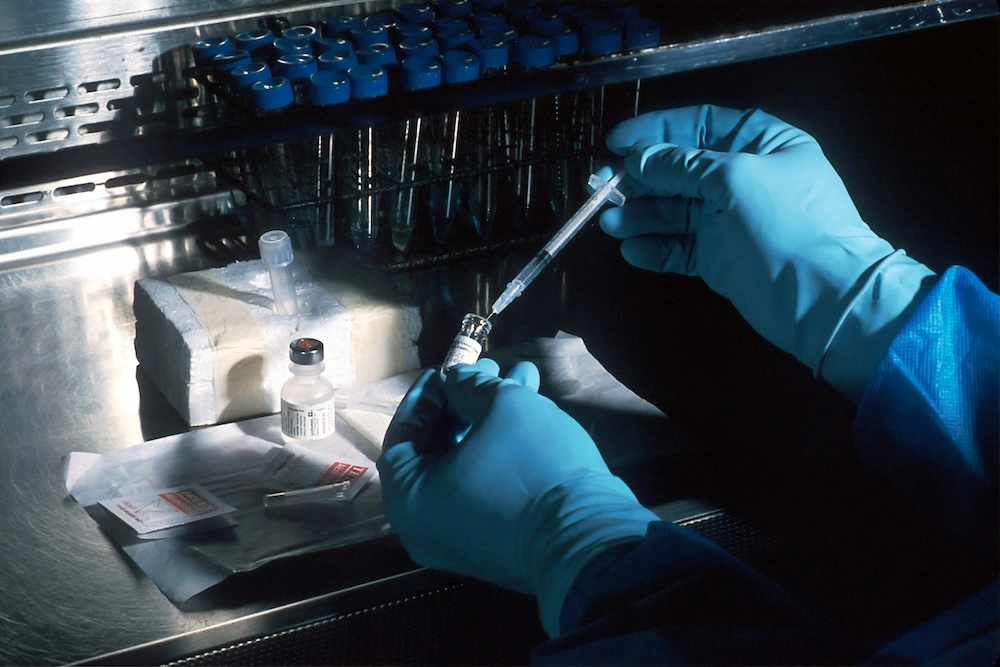
Photo by National Cancer Institute on Unsplash
Key Insights
- New blood test may detect ALS up to 10 years before symptoms appear.
- Johns Hopkins and NIH researchers identify unique protein patterns linked to ALS.
- Findings pave the way for earlier treatment, clinical trials, and better patient outcomes.
A new international study offers fresh hope in the fight against amyotrophic lateral sclerosis (ALS) — the devastating neurological disease better known as Lou Gehrig’s disease. Scientists have identified a set of blood proteins that can detect ALS with remarkable accuracy, even a decade before symptoms begin, marking a major leap toward earlier diagnosis and intervention.
The research, led by the Johns Hopkins University School of Medicine and the National Institutes of Health (NIH), in collaboration with the University of Turin and the UK Biobank, was published in a recent issue of Nature Medicine.
Doctors say this discovery could eventually lead to a simple blood test to identify ALS long before muscle weakness or breathing problems appear — a breakthrough that could transform how the disease is studied and treated.
ALS is a progressive disorder that attacks nerve cells controlling voluntary muscle movement. Over time, it causes muscle weakness, loss of mobility, and respiratory failure. There is currently no definitive diagnostic test; physicians rely on neurological exams and symptoms, often after the disease is well underway.
By 2040, nearly 400,000 people worldwide are expected to be living with ALS. Early detection, researchers say, could help patients access treatments and clinical trials before the disease causes irreversible damage.
Blood proteins provide the earliest clues
Using a powerful laboratory platform, scientists measured nearly 3,000 proteins related to brain and muscle function in blood samples from over 600 participants. They then used machine learning to identify a specific pattern — a protein “signature” — that predicted ALS with 98% accuracy.
What makes this discovery especially striking is that the same protein changes appeared years before symptoms in people who later developed ALS.
“We see the light at the end of the tunnel here,” said Dr. Alexander Pantelyat, associate professor of neurology at Johns Hopkins and a co-investigator on the study. “With a test that allows for earlier detection, we can enroll people in studies and, hopefully, deliver treatments that stop ALS before it becomes debilitating.”
In one large dataset from the UK Biobank, blood samples from 110 people who later developed ALS already showed these protein changes 10 to 15 years before diagnosis. This challenges the long-held belief that ALS begins only a year or two before symptoms appear.
“These findings tell us ALS has a much longer ‘silent phase’ than we realized,” Pantelyat said. “It’s a process that starts a decade earlier, quietly reshaping the body before patients notice anything is wrong.”
Confirmed across populations
The new diagnostic model was tested across multiple groups and consistently distinguished ALS from other neurological diseases like Parkinson’s or neuropathy. Importantly, the researchers found that the protein signature wasn’t linked to genetic mutations, meaning the test could apply to both inherited and non-inherited forms of the disease.
“It’s crucial for patients and families to know what they’re facing,” Pantelyat said. “A reliable blood test can provide clarity, guide care, and help identify who can benefit from new therapies.”
The project represents more than 15 years of global collaboration, supported by the NIH, Centers for Disease Control and Prevention, the Muscular Dystrophy Association, the ALS Association, and partners in Italy and the European Union.
The study team has made their data publicly available, inviting other scientists to build on their findings and accelerate development of an FDA-approved diagnostic test.