
Retirement Living takes an unbiased approach to our reviews. We may earn money when you click a partner link. Learn More
What Is a Silver IRA?
Learn how a silver IRA works, the types available, and the IRS rules that apply to holding physical silver in retirement.


Updated:
At a glance:
- A silver IRA is a self-directed retirement account that allows physical silver to be held inside an IRA under specific IRS rules and approved and secure storage requirements.
- You can open a silver IRA as a traditional, Roth, or SEP IRA, with differences based on how contributions and withdrawals are taxed.
- While a silver IRA can add physical silver to a retirement portfolio, it also comes with costs, IRS restrictions, and price risk that should be considered carefully.
A silver IRA is a self-directed IRA that allows you to hold physical silver, a tangible asset, as part of your retirement savings. The account is managed by an IRA custodian and requires approved storage for the silver.
This guide explains what a silver IRA is, how a silver IRA works, the types available, and the IRS requirements to consider.
What Is a Silver IRA?
A silver IRA is an individual retirement account that allows physical silver to be held inside a tax-advantaged retirement account. The account is governed by IRS rules that permit certain types of silver to be owned within an IRA rather than held personally.
This type of account is set up as a self-directed IRA. The structure allows silver to be included in the account, while an IRA custodian manages administration and ensures IRS rules are followed. The silver must meet IRS requirements and is stored in an approved depository for security and recordkeeping.
Unlike retirement accounts that hold only stocks, bonds, or mutual funds, a silver IRA holds physical precious metals that are owned by the IRA, not the account holder directly. This same ownership and storage structure also applies to a gold IRA. Both accounts follow the same IRS rules and self-directed IRA framework, with the only difference being the metal held in the account.
If you want to compare how gold IRAs work and how providers structure these accounts, see our guide to the best gold IRA companies for a breakdown of options.
Types of Silver IRAs
You can open a silver IRA account under three main IRA types, with the difference based on how contributions and withdrawals are taxed.
Traditional Silver IRA
A traditional silver IRA lets you contribute pre-tax money to your retirement account and defer taxes while the silver stays inside the IRA. If you qualify, you may deduct your contributions on your tax return, which can lower your taxable income in the year you contribute.
You pay taxes when you take withdrawals in retirement, not while the account grows. Once you reach the IRS-required age, you must begin taking required minimum distributions. You can also use a traditional silver IRA to roll over funds from an existing traditional IRA or an employer-sponsored retirement plan such as a 401(k).
Roth Silver IRA
A Roth silver IRA uses after-tax money for contributions, which means you pay taxes before the funds go into the account. You cannot deduct contributions on your tax return. If you follow IRS rules, you can take qualified withdrawals in retirement without paying taxes on the silver or any growth in the account.
You do not need to take required minimum distributions during your lifetime. This allows the account to remain intact for as long as you choose. A Roth silver IRA works best when you want predictable, tax-free access to retirement funds later and do not want required withdrawals to affect your planning.
SEP Silver IRA
A SEP silver IRA allows you to hold physical silver inside a retirement account if you are self-employed or operate a small business. You control the account, while the IRS sets the contribution and tax rules.
This type of IRA works differently from traditional and Roth accounts because contributions come from the business rather than personal income.
Key features of a SEP silver IRA include:
- You make contributions as an employer, not as an individual
- Contribution limits are higher than those for traditional or Roth IRAs
- Contributions are tax-deductible for the business
- Withdrawals are taxed as income during retirement.
What Types of Silver Are Eligible for an IRA?
The IRS limits what silver you can place in a silver IRA. To qualify, the silver must meet specific purity and classification rules. If the silver does not meet these rules, you cannot hold it in an IRA.
The IRS requires silver to have a minimum purity of 99.9%. When silver meets this standard, the IRS considers it IRA-approved silver. Silver classified as a collectible does not qualify, even if it meets purity standards, because the IRS does not allow collectibles in retirement accounts.
The same distinction applies in gold IRA vs physical gold rules, where metals held in an IRA must meet IRS standards and approved storage requirements.
You can hold the following types of silver in a silver IRA:
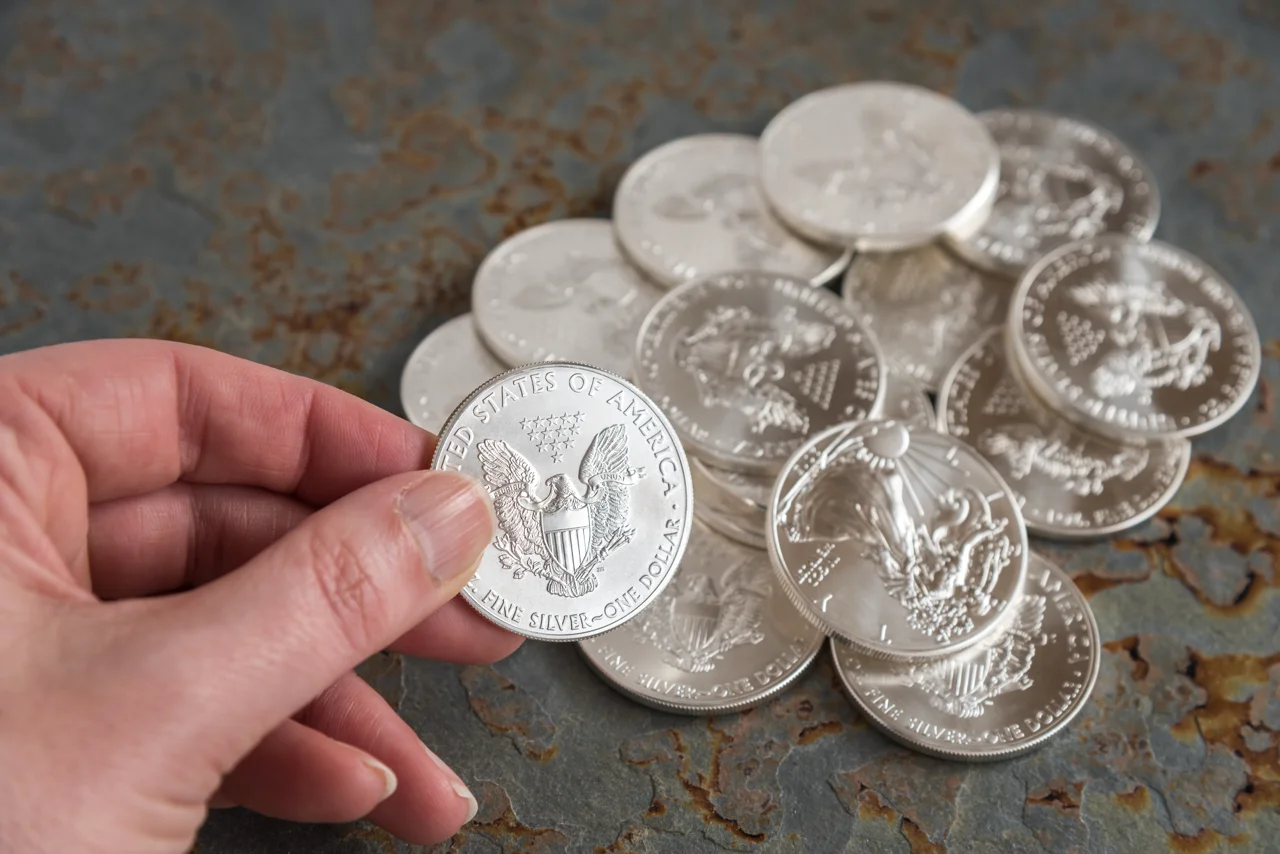
- Silver coins, including the American Silver Eagle and the Canadian Maple Leaf
- Silver bars and silver bullion produced by IRS-approved refiners
Before silver is added to your IRA, it must qualify as IRA-eligible silver and be stored in an IRS-approved depository. The IRS requires approved storage so the silver remains properly recorded and compliant with retirement account rules.
How Does a Silver IRA Work?
A silver IRA allows you to hold physical silver inside a self-directed retirement account that follows IRS rules and requires approved storage.
The process generally follows these steps:
- Open a self-directed IRA. You open the account through an IRA custodian. The custodian manages administration, reporting, and IRS compliance but does not sell silver.
- Fund the account. You add money to the silver IRA by completing a precious metal IRA rollover from an existing IRA, 401(k), or SEP plan, or by making annual contributions within IRS limits.
- Select IRA-eligible silver. You work with a precious metals dealer to choose silver that meets IRS purity and eligibility requirements.
- Store the silver in an approved depository. The silver is sent to an IRS-approved depository for storage. The IRS does not allow home storage or personal possession of silver held in an IRA.
Once completed, the silver remains part of your IRA account and follows the same withdrawal rules and tax treatment that apply to other IRA investments.
Benefits of Investing in a Silver IRA
Here are the potential benefits of holding silver in a retirement account:
- Gives part of your retirement savings exposure to a physical asset, which can support diversification
- Reduces reliance on paper assets tied directly to the stock market
- Keeps silver inside a regulated retirement account rather than outside it
- May help preserve purchasing power during periods of inflation
- Uses familiar IRA tax rules and tax benefits, depending on the type of account
Potential Drawbacks and Costs to Consider
A silver IRA also comes with costs and limitations to consider, much like the pros and cons of a gold IRA.
- Requires storage fees for IRS-approved depositories
- Includes IRA custodian fees in addition to storage costs
- Does not generate income such as dividends or interest
- Depends on the price of silver, which can rise or fall
- Can take longer to liquidate than stocks or mutual funds
- Counts toward required minimum distributions when withdrawals apply
- Must follow strict IRS storage and handling rules
- Holding too much silver can limit flexibility in a retirement portfolio
Help us improve our guides! If you’ve recently opened a gold or silver IRA, we’d love to hear from you. Share your experience with us at [email protected]. Your personal details will stay completely confidential.