
Retirement Living takes an unbiased approach to our reviews. We may earn money when you click a partner link. Learn More
Do Residential Elevators Need to Be Inspected?
Most home elevators must be inspected by the state or a third party once, following installation, to ensure safe operation, while some states require ongoing annual or periodic inspections.


Updated:
At a glance:
- The American Society of Mechanical Engineers (ASME) sets safety codes (ASME A17.1) for the home elevator industry, but code requirements are ultimately set and managed at the state and local levels.
- While the federal government does not mandate elevator inspections, almost all states have elevator safety codes that require either state-managed or third-party inspection following the initial installation.
- Most states require inspections following new elevator installation, with some also mandating annual, biennial, or five-year inspections to ensure safety and functionality.
Who Sets Residential Elevator Safety Standards?
While the federal government sets elevator maintenance regulations through OSHA and the ADA, there are no definitive inspection requirements. Instead, the American Society of Mechanical Engineers (ASME) is generally the most respected authority on the matter. Their safety codes, including ASME A17.1, outline requirements for the design, installation, and inspection of private residence elevators.
Ultimately, while ASME serves as a guidepost, mandated inspections for home elevators are enforced at the state or local level. Many jurisdictions require inspections during installation and occasionally thereafter, such as annually or every five years.
Home Elevator Inspection Laws Vary By State and Local Region
With no federal mandate governing residential elevator inspections, seniors should be mindful of their state and local laws. Most states have elevator safety programs based on ASME standards, but enforcement and inspection vary widely for private residences.
For instance, states like Delaware and Kansas rely heavily on local oversight rather than a statewide inspection program. Certain states, like California and Florida, often allow exemptions or reduced inspection requirements for private home elevators. Even in states with statewide mandates, local regulations remain common and vary by region.
Overall, the most common baseline is an acceptance inspection, in which a mandatory review is conducted after installation and before the elevator is used. Some areas also mandate annual or periodic inspections; others require inspections only upon a change of ownership, a major alteration, or at the homeowner’s request.
Given the significant variability across regions and types of elevators, we always recommend contacting your state’s department of labor, building department, or equivalent elevator safety authority before you invest.
Annual, Biennial, and 5-year Inspection Requirements
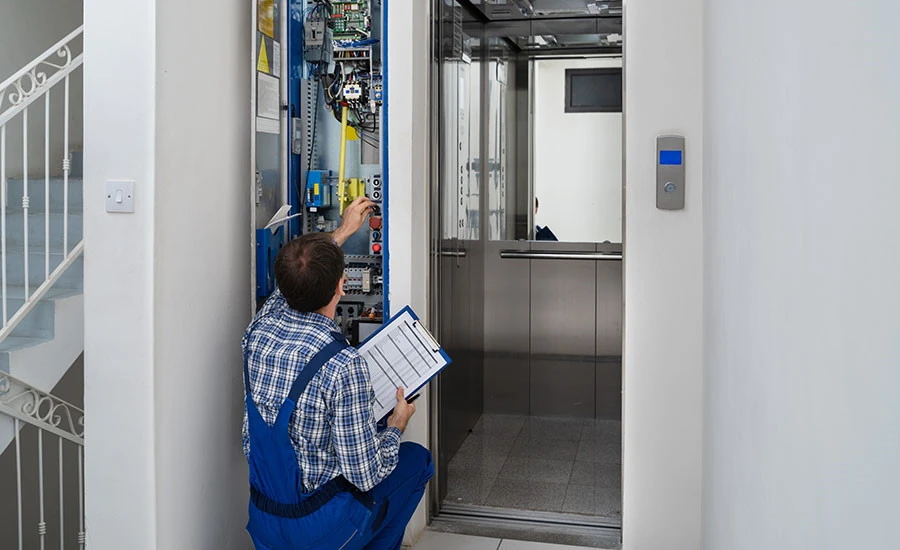
While acceptance inspections are almost always universal, some states and municipalities also require periodic or annual inspections. Annual inspections are the most common, mandated by states like New York, Wisconsin, Washington, and more, and require a licensed inspector to:
- Verify that the elevator meets local safety codes and regulations.
- Inspect mechanical components for wear or malfunctions.
- Test emergency safety features (alarms, backup battery, etc.)
- Review maintenance records to confirm proper upkeep.
- Document findings so homeowners can address identified issues promptly.
Five-year inspections (like Category 5 or CAT5 tests) are sometimes mandated in lieu of annual inspections; other times, they are used in tandem as an additional requirement. In addition to other tests, they involve placing weights in the elevator to confirm safe operation under the maximum weight limit. Maryland, Texas, Kansas, Massachusetts, and other states all incorporate five-year testing requirements to some extent.
Biennial (18-month) inspections are less common. Connecticut is one of the only states that requires them, though some private residences need only be inspected upon the owner’s request.
Understanding State-Managed vs. Third-Party Inspections
Whether an annual or five-year inspection cycle is required, the inspection will be conducted by either a state government inspector or a certified third-party inspector hired by the homeowner. The distinction matters for both convenience and cost.
- State-managed inspections are done by employees of your local state agency, such as the Department of Labor or a dedicated elevator safety division. Due to modern policies and limited inspector capacity, you’ll still need to pay market costs for state-sponsored inspections.
- Third-party inspections are performed by private inspection firms or state-certified licensed contractors. After the inspection is complete, it must be displayed within the elevator and filed with the building’s maintenance records. You’ll need to pay out-of-pocket for these inspections.
Overall, homeowners should check local laws to confirm which type of inspection is required and which inspectors are approved to perform it in their area.
The Cost of Mandatory Home Elevator Inspections
Combined with routine maintenance costs, homeowners can expect to pay a median of $300 for mandatory elevator inspections. Per visit, the cost is generally between $75 and $1,500, depending on the elevator type, permits, and other factors. As of 2026, no state helps you cover this cost. Whether private or public, you’ll need to pay for your inspection out-of-pocket.
Why Are Regular Inspections Important For Home Elevators?
Even in states where ongoing inspections aren’t legally required, scheduling regular checkups not only boosts safety but also prevents minor issues from becoming costly repairs. For instance, annual inspections can:
- Prevent malfunctions and breakdowns that will cost more in the long run and shorten your elevator’s lifespan. Inspectors can identify worn components, misalignments, or failing safety features before they cause costly, dangerous incidents.
- Test safety features, like emergency brakes, door sensors, alarm bells, and emergency phones, to ensure they’re all operational.
- Maintain compliance with local codes to prevent fines, permit lapses, or being required to take the elevator out of service until it passes reinspection.
- Protect home resale value, as in many states, elevators must be inspected before a home title can be transferred to a new owner. Having a documented inspection and maintenance history on hand simplifies and streamlines the sale process.
Our Takeaway: Know Your Local Elevator Inspection Requirements
Most states mandate acceptance inspections upon completion of home elevator installations, with some also requiring annual, biennial, or five-year inspections. Ultimately, the exact inspections you’ll need depend on your state and local municipality, so it’s important to research local laws before you invest.
Frequently Asked Questions (FAQs) About Residential Elevator Inspections
While there’s no nationwide, definitive post-installation elevator inspection frequency, many states and municipalities require them to be inspected annually or periodically. For instance, New York and Georgia mandate annual inspections, while Massachusetts and Maryland require inspections every five years.
Yes, regardless of local regulations, we still recommend annual inspections of the elevator car, control panel, and drive system to ensure the proper functioning of the lift and its safety features.
Yes. Even with routine maintenance and upkeep, an elevator inspector acts as a third party that can confirm the safety and functionality of your elevator. Regular inspections can also help you avoid legal issues with your state or local region.
Whether your inspection is handled by an Authority Having Jurisdiction (AHJ) or a private entity depends on the local jurisdiction. For example, inspections in North Carolina are handled by the NC Dept. of Labor, while inspections in Oklahoma are regulated by a private third party known as the OK Elevator Escalator Program.
Yes. Residential and commercial elevators generally have different inspection requirements. California and Florida are examples of states that highly regulate commercial elevators while providing many inspection exemptions for residential installations.
The best way to look up local building codes and inspection laws is to visit your state’s municipal building department, city hall, or Office of Public Safety and Inspections (OPSI).
Of course. Different drive systems, from hydraulic to mechanical, have different safety concerns. Additionally, some systems require a hoistway, while others don’t, which can also impact inspection requirements. Find your specific type of elevator when reviewing local building codes.
Usually, yes. Specific costs vary by location and contractor, but typically range between $75 and $1,500. More realistically, though, homeowners can expect to pay around $300 annually for routine inspections.
For wheelchair users or seniors with significant health concerns, home elevators can be worth it. However, you should always weigh all your options before investing, including more affordable, temporary stair lift installations.
Help us improve our data! Email your latest home elevator quote to [email protected] or submit a review about your experience. Your personal details will remain completely confidential.