
Retirement Living takes an unbiased approach to our reviews. We may earn money when you click a partner link. Learn More
Best Gold ETFs of 2026
We reviewed gold ETFs that provide access to gold, manageable costs, simple structure, and suitability for long-term holding.



Updated:
Our top picks for the best gold ETFs of 2026 include funds from State Street Global Advisors, BlackRock, and VanEck, along with other well-known providers listed below. We compared factors like expense ratios, liquidity, assets under management, and how closely each fund tracks gold prices to help investors choose with confidence.
Gold ETFs are exchange-traded funds that track the price of gold and trade on major U.S. stock exchanges. They offer a simple way to invest in gold without buying or storing physical gold. Gold ETFs can help you diversify your portfolio, add a potential safe-haven asset, and gain exposure to precious metals without added storage costs.
This guide compares the best gold ETFs and explains how they work and compare to other gold investments. To learn how we selected our top picks, see our methodology below.
If you’re interested in owning physical gold, silver, or a precious metals IRA, you can also read our best gold dealers guide.

State Street Global Advisors
4.8
State Street Global Advisors sponsors SPDR Gold Shares (GLD), one of the most widely traded gold ETFs on the stock market. Its high trading volume generally makes it easier to buy or sell shares during market hours.
- Great for high liquidity and active trading
- Offers both a standard (GLD) and lower-cost (GLDM) gold ETF
- One of the largest and most established gold ETFs available

BlackRock
4.8
BlackRock offers gold ETFs through its iShares brand for investors focused on keeping long-term costs low. iShares Gold Trust (IAU) and iShares Gold Trust Micro (IAUM) are commonly used by investors who plan to hold gold as part of a long-term allocation.
- Great for lower expense ratios among gold ETFs
- Designed for buy-and-hold gold exposure
- Popular choice for cost-conscious long-term investors

VanEck
4.6
VanEck offers gold ETFs that provide exposure to both physical gold and gold mining companies. VanEck Merk Gold ETF (SGOL) tracks gold prices, while VanEck Gold Miners ETF (GDX) focuses on gold mining stocks, which tend to be more volatile than physical gold.
- Great for gold mining stock exposure
- Offers both physical gold and gold miner ETFs
- Higher volatility compared to gold-backed ETFs

Goldman Sachs
4.8
Goldman Sachs offers a straightforward physical gold ETF through its Goldman Sachs Physical Gold ETF (AAAU). The fund is often chosen by investors who want simple gold exposure with relatively low ongoing costs.
- Great for simple, low-cost gold exposure
- Competitive expense ratio for a physical gold ETF
- Tracks gold prices without added strategies or leverage
Gold and other precious metals are an investment and carry risk. Consumers should be alert to claims about high returns or low risk with precious metals or other assets. As with any investment, you can lose money, and past performance is not a guarantee of future results. Consumers should also obtain a clear understanding of the fees associated with any investment before agreeing to buy.
Best Gold ETFs: Comparison Table
| Provider | ETF Ticker | Type of Gold Exposure | Expense Ratio | Assets Under Management | Best For |
|---|---|---|---|---|---|
| State Street Global Advisors | GLD | Physical gold bullion | 0.40% | $150B+ | High liquidity and frequent trading |
| GLDM | Physical gold bullion | 0.10% | $25B+ | Lower-cost long-term holding | |
| BlackRock (iShares) | IAU | Physical gold bullion | 0.25% | $69B+ | Long-term gold exposure with moderate fees |
| IAUM | Physical gold bullion | 0.09% | $6B+ | Lowest-cost physical gold ETF | |
| VanEck | OUNZ | Physical gold bullion | 0.25% | $2.4B+ | Physical gold redemption option |
| GDX | Gold mining stocks | 0.51% | $470B+ | Gold mining stock exposure | |
| Goldman Sachs | AAAU | Physical gold bullion | 0.18% | $2B+ | Simple, low-cost gold exposure |
How We Chose the Best Gold ETFs
To select the best gold exchange traded funds, we compared 14 widely available gold ETFs that provide direct exposure to gold and are easy to understand. We focused on funds that appear consistently in major rankings and are accessible to U.S. investors.
We evaluated each gold ETF using the same criteria, focusing on what matters most when investing in gold:
- The type of gold exposure, such as physical gold ETFs or gold mining ETFs
- How closely the ETF follows the price of gold
- Expense ratios and how fees affect long-term returns
- Liquidity and how easily you can buy or sell shares
- Whether the ETF structure is simple or complex
We also reviewed how gold ETFs perform during market changes, such as rising gold prices or stock market declines. ETFs that use leverage, derivatives, or complex strategies were not prioritized.
Best Gold ETFs
State Street Global Advisors Review
Great for high liquidity and active trading
|
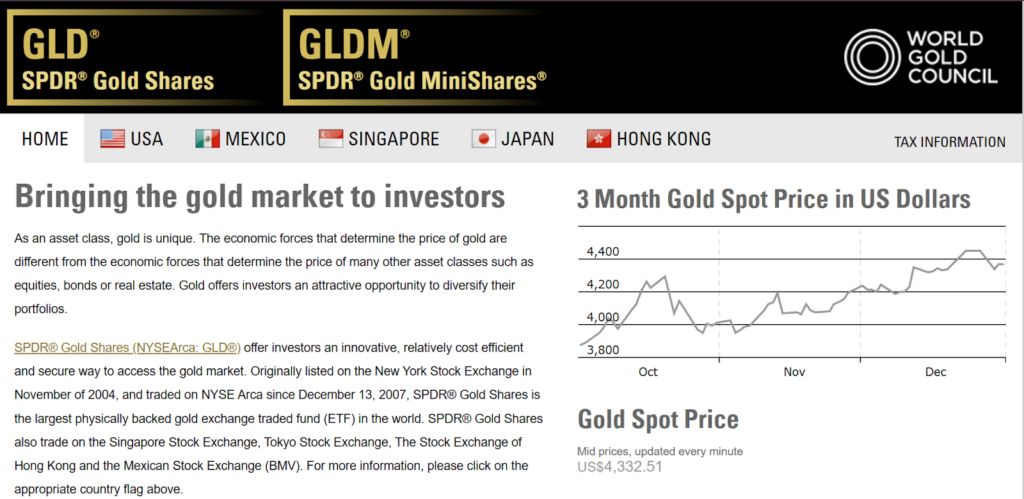
State Street Global Advisors offers SPDR Gold Shares (GLD) and SPDR Gold MiniShares Trust (GLDM), two physical gold ETFs traded on U.S. stock exchanges. GLD was first launched in 2004 as the first U.S.-listed gold ETF, while GLDM was introduced later at a lower cost.
Gold ETFs
- SPDR Gold Shares (GLD): GLD tracks the price of physical gold bullion and holds more than $150 billion in assets under management, which supports high trading volume. The fund has an expense ratio of 0.40%, equal to $40 per year for every $10,000 invested.
- SPDR Gold MiniShares Trust (GLDM): GLDM provides the same physical gold exposure as GLD but holds less gold per share. It has an expense ratio of 0.10%, or $10 per year for every $10,000 invested, which lowers annual holding costs.
Limitations
GLD has a higher expense ratio, which increases holding costs over time. GLDM trades at lower volume than GLD, which reduces flexibility for frequent transactions.
BlackRock Review
Great for lower expense ratios among gold ETFs
|
BlackRock offers gold ETFs through its iShares brand, including iShares Gold Trust (IAU) and iShares Gold Trust Micro (IAUM). Both ETFs provide physical gold exposure and trade on U.S. stock exchanges.
Gold ETFs Offered
- iShares Gold Trust (IAU): IAU tracks the price of physical gold bullion and holds more than $69 billion in assets under management. The fund has an expense ratio of 0.25%, equal to $25 per year for every $10,000 invested.
- iShares Gold Trust Micro (IAUM): IAUM provides the same physical gold exposure as IAU but holds less gold per share. It has an expense ratio of 0.09%, or about $9 per year for every $10,000 invested, which lowers annual holding costs.
Limitations
IAU has higher annual fees than micro-share gold ETFs, which increases long-term holding costs. IAUM holds less gold per share, so investing larger amounts requires buying more shares.
VanEck Review
Great for gold mining stock exposure
|
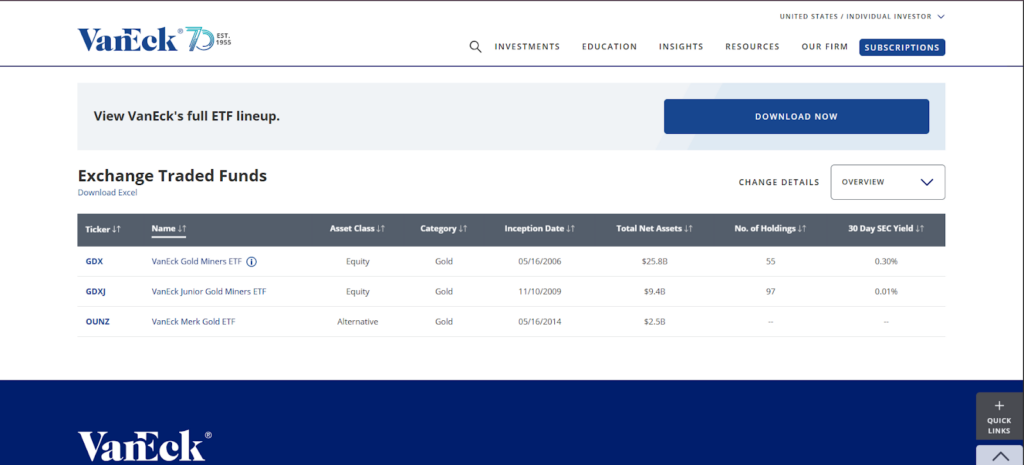
VanEck offers gold ETFs that provide two types of exposure. One tracks physical gold, and the other tracks companies involved in gold mining. This makes VanEck different from providers that only offer gold-backed ETFs.
Gold ETFs Offered
- VanEck Merk Gold Trust (OUNZ): OUNZ tracks the price of physical gold bullion held by a custodian. The fund allows shares to be redeemed for physical gold, which is uncommon among gold ETFs. OUNZ has an expense ratio of 0.25%.
- VanEck Gold Miners ETF (GDX): GDX tracks the MarketVector Global Gold Miners Index, which includes large gold mining companies. The fund holds mining stocks rather than physical gold and has an expense ratio of 0.51%. GDX manages more than $470 billion in assets.
Limitations
OUNZ trades at lower volume than larger gold ETFs, and redeeming shares for physical gold involves added fees and processing steps. GDX holds mining stocks instead of physical gold, so its performance can differ from gold prices and reflect company and stock market risks.
Goldman Sachs Review
Great for simple, low-cost gold exposure
|
Goldman Sachs offers a single gold ETF, the Goldman Sachs Physical Gold ETF (AAAU). The fund provides direct exposure to physical gold and trades on U.S. stock exchanges.
Gold ETFs Offered
- Goldman Sachs Physical Gold ETF (AAAU): AAAU tracks the price of physical gold bullion. Each share represents 1/100th of an ounce of gold, which allows smaller investment amounts. The fund holds 100% physical gold bars and has an expense ratio of 0.18%, equal to $18 per year for every $10,000 invested.
Limitations
AAAU does not allow retail investors to redeem shares for physical gold, which limits access to direct ownership. The IRS taxes long-term gains at the collectibles tax rate, increasing after-tax costs. AAAU also does not generate income, so returns depend only on changes in gold prices.
How Do Gold ETFs Work?
Gold ETFs let you invest in gold through a standard brokerage account, similar to buying a stock. When you buy shares of a gold ETF, you are buying exposure to gold prices rather than owning gold directly. You can buy or sell shares during normal market hours, and prices change throughout the trading day.
Most gold ETFs hold physical gold bullion in secure vaults. The fund owns and stores the gold on your behalf. The share price moves up or down based on changes in gold prices measured in the U.S. dollar, minus a small annual fee. This fee covers costs such as storage, insurance, and fund management. You do not need to handle or safeguard the gold yourself.
Some gold ETFs track physical gold only. Others invest in gold mining companies instead of gold bullion. Mining ETFs can move differently than gold prices because they depend on company operations and stock market conditions.
Gold ETFs do not pay interest or dividends. Any gain comes from changes in the price of gold or related assets. You can hold gold ETFs in regular investment accounts and, in many cases, in retirement accounts such as IRAs.
Physical Gold ETFs vs. Gold Mining ETFs
Gold ETFs fall into two main types.
Physical gold ETFs hold gold bullion in secured vaults. The fund tracks gold prices directly. When gold prices rise or fall, the value of the ETF usually moves in the same direction. Physical gold ETFs do not depend on company performance. They offer a direct way to follow gold prices without buying or storing gold yourself.
Gold mining ETFs invest in companies that mine and produce gold. These ETFs hold stocks, not gold. Their prices depend on both gold prices and company factors such as production costs, management decisions, and overall stock market conditions. Mining ETFs can rise faster than gold when conditions are favorable, but they can also fall more sharply.
Physical gold ETFs tend to move in line with gold prices. Gold mining ETFs often show larger price swings. Physical gold ETFs focus on price tracking. Gold mining ETFs introduce business and market risk.
If you want direct exposure to gold prices, physical gold ETFs offer a simpler structure. If you are comfortable with stock market risk and want broader exposure to the gold industry, gold mining ETFs provide a different approach.
How to Choose the Best Gold ETFs
Choosing a gold ETF starts with understanding the role gold should play in your investments. You may want gold to help balance stock market risk or to gain exposure to gold prices without owning physical gold.
When buying gold ETFs, focus on these factors that directly affect cost, risk, and usability:
- Type of exposure: Decide whether you want a physical gold ETF or a gold mining ETF. Physical gold ETFs track gold prices more closely. Mining ETFs behave like stocks and can move differently.
- Expense ratio: Check the annual fee. Higher fees reduce returns over time, especially if you plan to hold the ETF for many years.
- Liquidity: Look at how easily the ETF trades. Higher trading volume makes buying and selling simpler during market hours.
- Fund structure: Confirm whether the ETF holds physical gold or stocks. Some funds also offer features like physical redemption.
- Account compatibility: Make sure the ETF can be held in your investment account or IRAs.
Tax Considerations for Gold ETFs
Taxes play an important role when you invest in gold ETFs, especially if you plan to hold them for several years. How a gold ETF is structured affects how gains are taxed.
Most physical gold ETFs are treated as collectibles for tax purposes. If you sell shares after holding them for more than one year, the IRS taxes gains at the collectibles tax rate, which is higher than the standard long-term capital gains rate. Short-term gains follow ordinary income tax rules. This tax treatment applies even though you do not own physical gold directly.
Gold mining ETFs are taxed differently. These ETFs hold stocks, not gold. Gains are usually taxed like other stock investments. Long-term gains follow standard capital gains rates, and short-term gains follow ordinary income rules.
Holding gold ETFs in a retirement account can change how taxes apply. When gold ETFs are held in a traditional IRA, taxes are deferred until withdrawals begin. In a Roth IRA, qualified withdrawals may be tax free. Not all brokers allow gold ETFs in every retirement account, so account rules matter.
Frequently Asked Questions about Gold ETFs
Gold ETFs offer easier buying, selling, and storage through a brokerage account. Physical gold provides direct ownership but involves storage, insurance, and higher transaction costs. Gold ETFs work better for convenience and flexibility, while physical gold suits those who want personal possession.
Gold ETFs can help protect purchasing power during inflation by tracking gold prices. Results vary over time, and gold prices can fluctuate. Gold ETFs often work best as part of a diversified portfolio rather than a single solution.
Gold ETFs with lower expense ratios include SPDR Gold MiniShares Trust (GLDM) and iShares Gold Trust Micro (IAUM). Lower fees reduce annual costs and can improve long-term results, especially when holding gold ETFs for several years.
Concluding Thoughts on Best Gold ETFs
Gold ETFs provide a simple way to gain exposure to gold without buying, storing, or insuring physical gold. They allow you to track gold prices through a brokerage account and can help add diversification to your investments. Gold ETFs do not generate income, but they can play a role in balancing risk during periods of market uncertainty.
When choosing a gold ETF, consider how long you plan to hold it, how much you want to pay in annual fees, and whether you prefer physical gold exposure or gold mining stocks. Some ETFs focus on low costs, while others offer higher liquidity or different types of gold exposure. Matching these features to your goals helps narrow your options.
No matter which option you choose, gold ETFs offer a flexible way to access the gold market. When used thoughtfully, they can support a balanced investment approach alongside other asset classes.