
How Many People Are Affected By Identity Theft?


Updated:
Open Access
In 2025, about 1.15 million people reported identity theft in the U.S., within nearly 6.5 million total fraud reports. Surveys show the real number of victims is much higher, with tens of millions of U.S. adults affected.
At the same time, fraud losses have passed $12.5 billion in one year, showing how widespread identity crime has become.

Key Insights
Identity theft, a major form of cybercrime, accounts for about 17% of all consumer complaints, with more than 1.1 million cases reported annually.
↓ Jump to insight
Younger adults face a higher financial impact, with up to 25% of Millennials losing $5,000 or more in scams.
↓ Jump to insight
Credit card fraud grew 54% year over year in 2025, making it the fastest-growing and most common type of identity theft.
↓ Jump to insight
More than 20% of victims lost over $100,000, and over 10% lost at least $1 million in identity theft cases.
↓ Jump to insight
More than 80% of victims report anxiety, and over 65% experience sleep problems after identity theft.
↓ Jump to insight
How Common Is Identity Theft in the U.S.?
Identity theft accounts for about 17% of all consumer reports filed each year, increasing demand for identity theft protection. Consumers submitted nearly 6.5 million total reports across fraud, identity theft, and other scams last year.
Of these, about 1.1 million were reports of identity theft, while 2.6 million involved fraud and 2.8 million fell into other scam categories, according to the Federal Trade Commission (FTC).
Identity Theft Statistics by Age Group
Identity theft affects all age groups, but patterns differ by age. About 75% of American adults under 65 report past incidents, compared to 66% of those 65 and older.
Younger adults report more frequent incidents and higher total losses. Among scam victims, 23% of Gen Z and Millennials lose $5,000 or more. Millennials show the highest share, with 25% reporting losses at this level. Gen Z reports the highest rate of extreme losses, with 5% experiencing losses exceeding $50,000.

Most Common Forms of Identity Theft
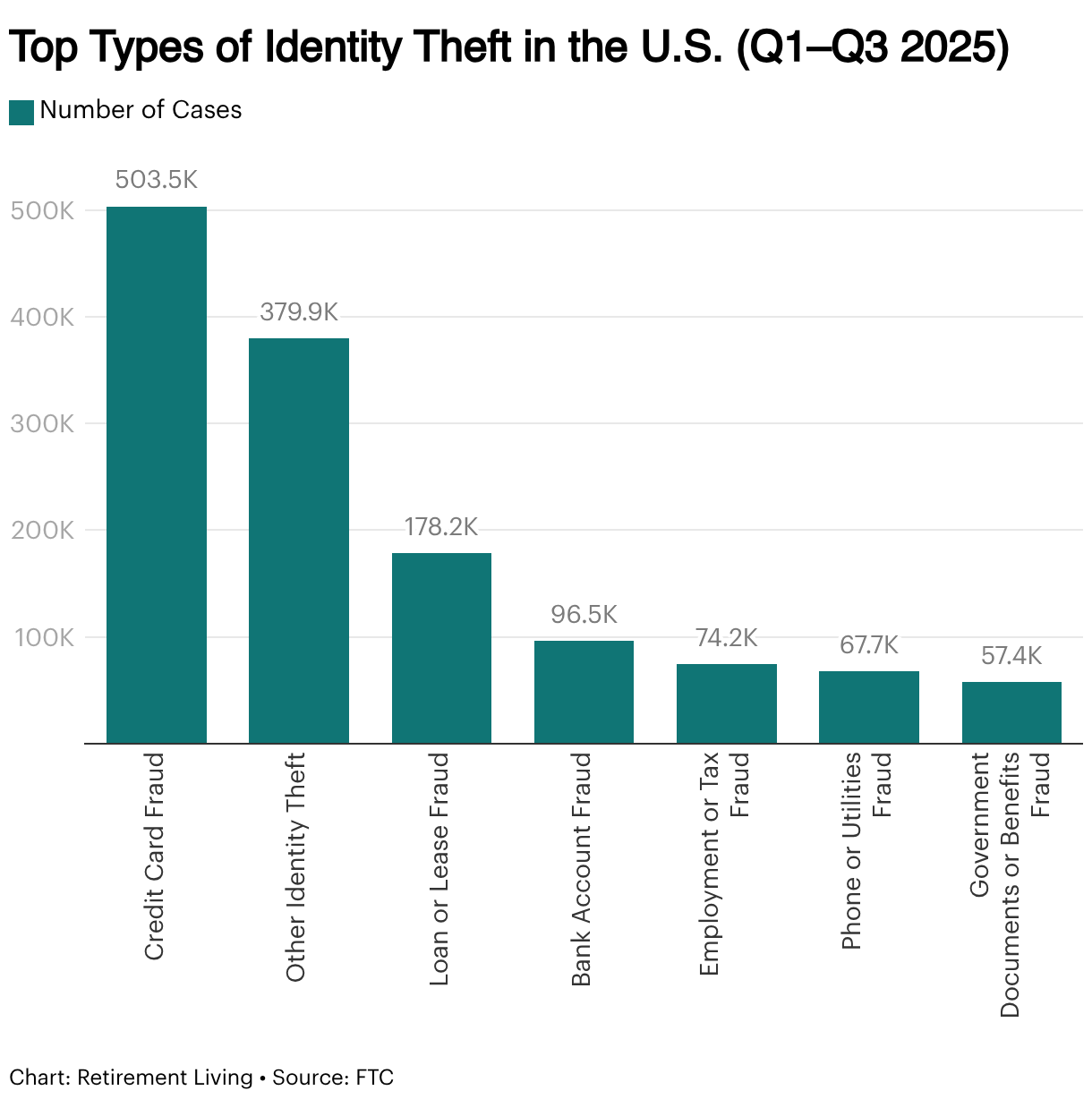
Credit card fraud leads to identity theft in the U.S., with a 54% year-over-year increase in the first three quarters of 2025. This type includes misuse of both new and existing credit card accounts, which accounts for most identity theft cases.
Other types of fraud linked to identity theft increased 47% year over year. This category includes social media account misuse, email compromise, and online shopping fraud. It reflects a shift beyond credit and debit card and bank account fraud.
Loan and lease fraud increased 37%, while bank account fraud rose 12% over the same period. Employment- and tax-related fraud grew only 1%, while government documents or benefits fraud increased by 5%.
All major categories show growth, indicating a broad expansion of identity theft activity. Student loan fraud reflects this trend, with federal cases increasing 195% and non-federal cases increasing 74% year over year.
Financial Losses From Identity Theft and Fraud
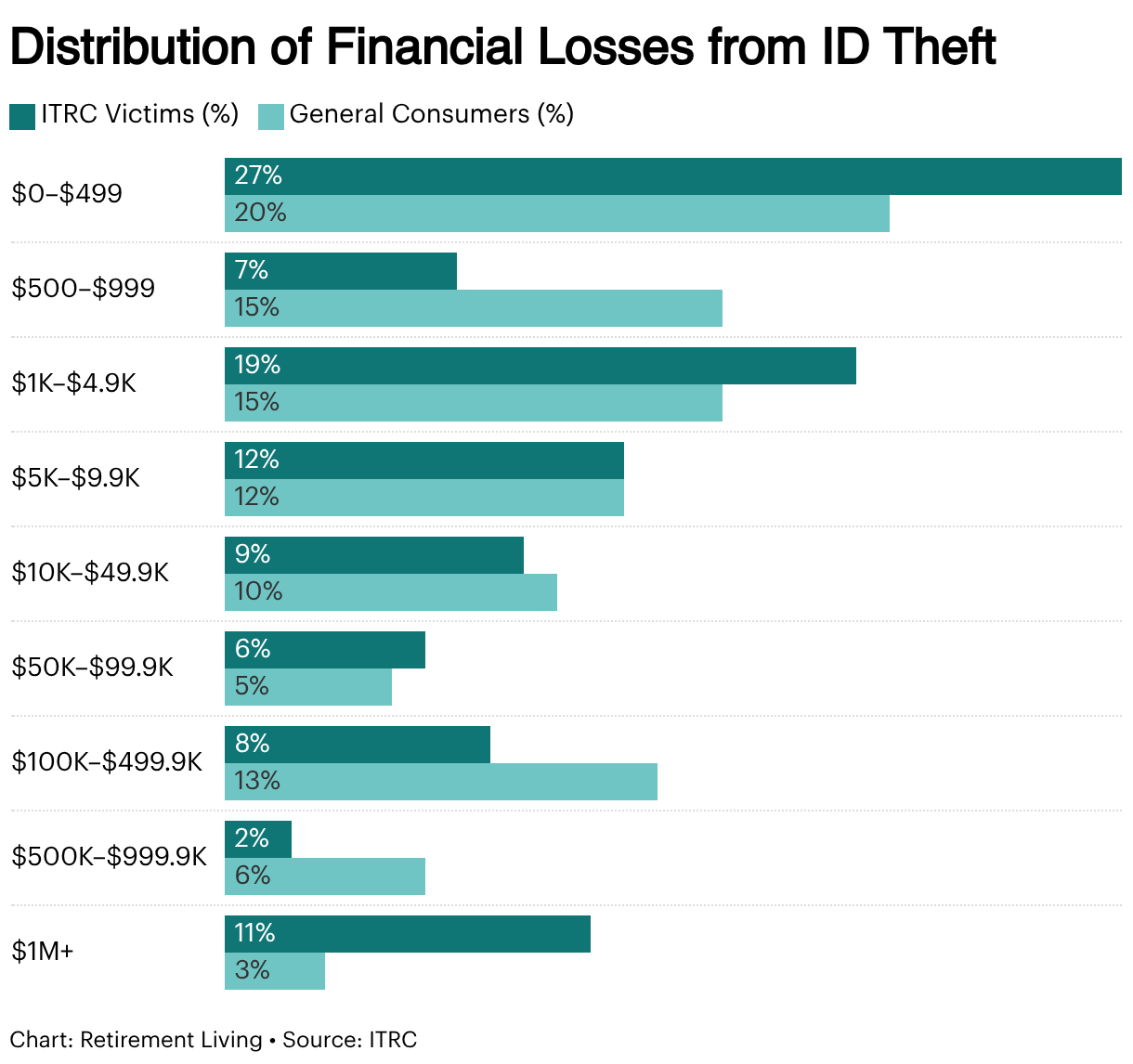
In 2025, 27% of identity theft victims lost less than $500, while 19% lost between $1,000 and $4,999. At the higher end, more than 20% lost over $100,000, and over 10% lost at least $1 million.
Where Identity Theft Happens Most
ID theft cases reported to law enforcement vary by state based on how identity thieves use stolen data:
- California leads all states with 74 reported identity theft victims, followed by Texas with 41 and Florida with 31.
- New York reports 27 victims, while Massachusetts and North Carolina each report 15.
- At the lower end, Vermont reports 1 victim, Rhode Island reports 3, and Alaska and Hawaii each report 4.

Identity Concerns and Ongoing Risks After Theft
In 2025, 52% of individuals contacting the Identity Theft Resource Center reported confirmed identity misuse, while 35% reported identity compromise without misuse. Another 3% reported attempted misuse, where attackers tried but failed to access accounts.
Attackers often retry access after initial exposure. About 69% of attempts targeted new accounts, while 31% targeted existing accounts. Most attempts focused on financial systems, with 85% involving financial accounts. Credit card accounts made up 56% of these cases, followed by checking accounts at 14%.
Scams often act as the entry point for these attacks. Around 43% of compromise cases involved personal information shared during a scam. Attackers then use this data to access accounts or create new ones.
After exposure, identity compromise expands across channels. Reports of unauthorized access to devices increased 104% year over year, while data breach-related compromise increased 235%. Physical theft of documents also rose 71%, including driver’s licenses, credit card numbers, and Social Security cards.
Identity concerns persist even without confirmed fraud. Among individuals who had not experienced misuse, 29% reported contact from scammers, and another 29% were unsure if their identity had already been used.

Impact of Identity Theft on Victims
Identity theft creates both emotional and physical harm, not just financial loss. In 2025, 83.3% of victims reported feeling worried or anxious, while 78.6% felt violated and 75.4% felt vulnerable.
Severe psychological distress is also widespread among victims of identity theft, especially when identity theft signs go unnoticed early. About 25% of all respondents reported considering self-harm, while 67.8% of confirmed victims reported the same.
Around 73.6% also reported ongoing stress, 65.6% experienced sleep problems, and 39.2% reported panic or anxiety attacks.
These effects are increasing over time, reinforcing the importance of identity theft protection. Among general consumers, sleep problems rose to 50.4%, while reports of pain and headaches reached 48.8%.

Bottom Line
Identity theft now starts with exposed data. Breaches, scams, and stolen documents give attackers access to core identity data. This includes Social Security numbers, driver’s license details, and login credentials.
Attackers now use AI to scale identity fraud. They generate phishing messages, fake sites, and impersonation scams in minutes.
AI now drives large-scale identity fraud. Deepfake attacks occur every five minutes, showing constant activity. At the same time, digital document fraud increased 244% year over year. Deepfakes also account for 40% of biometric fraud, indicating that attackers now rely on AI-based methods.
These attacks move through digital channels. Email, social media, and online platforms now drive most identity theft activity. Over 50% of cases involve account takeover, while 36% involve new account creation.
Identity theft now operates as a system. AI tools, digital channels, and stolen data work together to drive attacks at scale.
Fair Use Statement
If you have practical insight or experience related to identity theft or fraud, you may share it with us at [email protected]. Any personal information shared will remain confidential.
Sources
- Entrust – 2025 Identity Fraud Report (Evaluated 25 March 2026)
Link Here - Identity Theft Resource Center (ITRC) – 2025 Trends in Identity Report (Evaluated 25 March 2026)
Link Here - Identity Theft Resource Center (ITRC) – 2025 Consumer Impact Report (Evaluated 25 March 2026)
Link Here - Identity Theft Resource Center (ITRC) – 2025 Data Breach Report (Evaluated 25 March 2026)
Link Here - Pew Research Center – Online Scams and Attacks in America Today (Evaluated 25 March 2026)
Link Here - KPMG – Regulatory Insights: Fraud, Identity Theft, and Other Scams (Evaluated 25 March 2026)
Link Here