
Retirement Living takes an unbiased approach to our reviews. We may earn money when you click a partner link. Learn More
How Does Medical Alert Fall Detection Work?
Learn how fall detection works, what triggers alerts, and how medical alert systems respond during an emergency.


Updated:
At a glance:
- Medical alert fall detection uses wearable sensors and pattern recognition to identify falls automatically and send alerts to a monitoring center.
- Fall detection improves safety but does not replace a manual help button, since false alarms and missed falls can still occur.
- Accuracy varies, so emergency response depends on sensor data, user movement, and whether the device is worn at the time of the fall.
Medical alert fall detection works by using sensors inside a wearable device to detect sudden movement and position changes that signal a fall. If a fall is detected, the system sends a fall alert to a monitoring center for emergency help.
This article explains how medical alert fall detection works, what triggers alerts, and what happens during a medical emergency.
How Does Medical Alert Fall Detection Work?
Older adults living alone face higher risk because falls are a leading cause of injury among older adults, and delays in response can worsen outcomes.
Standard medical alert systems require the wearer to press a help button during an emergency. The button connects them to a monitoring center that can send help if needed.
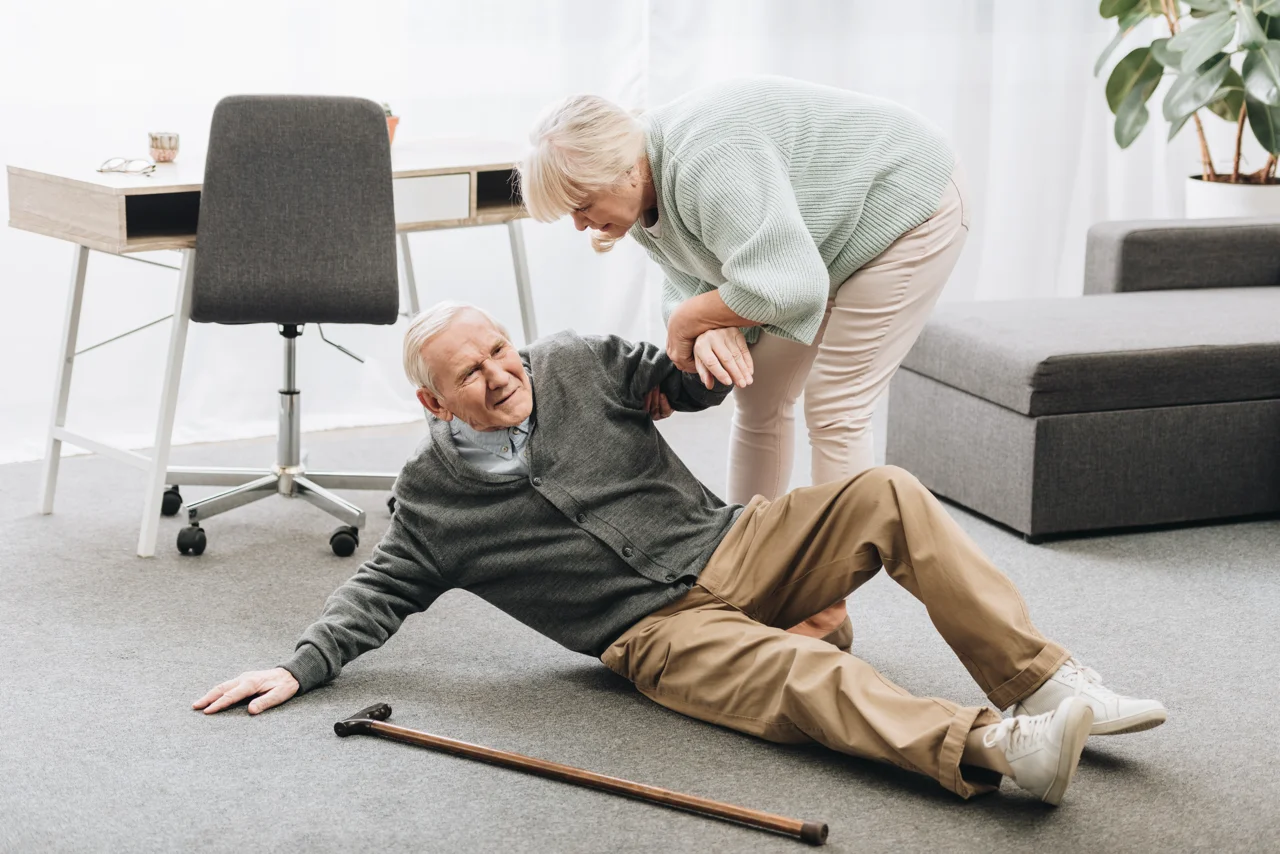
Fall detection is an optional feature in medical alert systems. It automatically detects a possible fall without requiring the wearer to press a help button.
Here is how medical alert fall detection works:
Fall Detection Sensors Inside the Device
Fall detection technology relies on sensors built into wearable medical alert devices that stay in constant contact with the body. The most important sensor is an accelerometer, which measures changes in speed and direction during movement.
The system monitors motion patterns to identify sudden shifts that may indicate a fall. These shifts often involve rapid movement followed by impact or a quick change in body position. Because the device is worn on the body, it can track real movement more accurately than a fixed home system.
How Algorithms Decide a Fall Happened
Automatic fall detection systems use algorithms to interpret data collected by sensors in the device. The system looks for specific motion patterns linked to real falls. These patterns often include rapid movement, impact, and a sudden change in body position.
Not every movement matches a fall pattern. Daily actions like sitting quickly or bending down follow different motion sequences, so the system does not trigger a fall alert.
What Happens After a Fall Is Detected
When a medical alert system detects a fall, it sends a fall alert to the monitoring center linked to the device. The device then activates its two-way speaker, allowing the call center to check on the wearer immediately.
A trained agent asks the wearer if help is needed and waits for a response. If the wearer answers, the agent determines whether emergency help, a family member, or no action is required. If the wearer does not respond, the system treats the alert as a possible medical emergency.
The call center then follows its response process, which may include notifying emergency contacts or dispatching emergency services.
Do Fall Detection Alert Systems Detect Falls Automatically?
Fall detection alert systems can detect some falls automatically, but the response is not automatic in every case. The system first sends the alert to a monitoring center instead of calling 911 directly.
This step helps prevent unnecessary emergency dispatches caused by false alarms or normal daily movement. It also allows the wearer to confirm whether help is needed.
The wearer’s response determines what happens next. If the wearer confirms an emergency, the call center contacts emergency services. If the wearer indicates no help is needed, the alert is canceled. When the wearer does not respond, the system treats the situation as a potential emergency and escalates the response.
How Accurate Is Fall Detection in Medical Alert Systems?
Fall detection systems are accurate for many real falls, but no system detects every fall correctly. Accuracy depends on how closely a movement matches a fall pattern.
False alarms occur when normal movements resemble a fall. Sudden sitting can create rapid motion and impact similar to a real fall. Dropping the device can trigger an alert because the sensors detect speed and impact without body context.
Fast or abrupt movements can also cause false alarms. These movements may briefly match fall patterns before the system can distinguish normal activity.
Because of these limits, fall detection works best as a backup to the help button. Using both options together reduces risk and improves response reliability.
Why Some Falls Are Missed
Fall detection systems identify falls based on movement patterns. Some real falls do not match those patterns closely enough.
Common reasons a fall may be missed include:
- Slow slides, such as slipping gradually from a bed or chair
- Controlled descents, where the person lowers themselves to the floor
- Device not worn, which prevents the system from monitoring movement
These limits do not reduce the value of fall detection devices. The technology remains life-saving in many emergencies and works best alongside a manual help button.
Common Features That Support Fall Detection
Fall detection works best when paired with supporting features that improve response and reliability. These fall detection features help fill gaps when automatic detection alone is not enough.
Key features of medical alert system that support fall detection include:
- Help button and alert button backup, which allow the wearer to request help if detection does not trigger
- Water-resistant design, which allows use in the shower where falls often occur
- Battery life management, since a drained device cannot send alerts
- GPS tracking, which shares location during emergencies outside the home
- Notifications to caregivers or family members, which extend awareness beyond the monitoring center
Who Should Use Fall Detection Devices?
Fall detection devices are designed for people who may not be able to call for help after a fall. Older adults living alone face higher risk because delays in response can lead to serious health complications.
People with balance issues, chronic conditions, or a history of falls also benefit from automatic detection. These factors increase the likelihood of sudden falls where manual alerts may not be possible.
Fall detection also supports caregivers and family members, especially when health care is managed from a distance. Alerts and notifications provide timely awareness when direct supervision is not possible.
Top Medical Alert Systems With Fall Detection
Choosing the right medical alert system can improve safety and response during a medical emergency. Many systems now include fall detection, two-way communication, and caregiver notification features.
Here are a few medical alert systems that offer fall detection and related safety features:
- Medical Guardian offers both in-home and mobile systems. Fall detection is available as an add-on. Mobile devices include GPS tracking. The system supports caregiver alerts through Care Circle notifications.
- Personal Living Alert focuses on in-home safety. The base unit covers up to 2,000 square feet and offers optional fall detection features. Fall detection is optional. Battery backup supports use during power outages. Smartwatch options are also available.
- LifeStation provides in-home and mobile systems with fall detection. Mobile devices include GPS tracking. A caregiver app allows family members to receive location updates and emergency notifications.
To compare features, pricing, and coverage, visit our best medical alert systems guide breaking down the top options.
Help us improve our guides! If you’ve recently used a medical alert system with fall detection, we’d love to hear from you. Share your experience with us at [email protected]. Your personal details will stay completely confidential.