
Elderly Loneliness Statistics (2026): Rates, Risks, & Trends


Updated:
Open Access
According to a study, more than one-third of adults ages 50 to 80 report feeling lonely, and nearly the same proportion experience social isolation. Separate research shows that about four in ten U.S. adults now experience loneliness.
Elderly loneliness is often driven by social isolation and can seriously affect both mental and physical health. While loneliness has declined since the pandemic, it is still common among older adults.
Key Insights
More than one-third of adults ages 50 to 80 report feeling lonely, showing that elderly loneliness remains widespread in the U.S.
↓ Jump to insight
Nearly three in ten older adults experience social isolation, meaning they feel cut off from others at least some of the time.
↓ Jump to insight
Adults ages 50 to 64 report higher loneliness than those ages 65 to 80, showing loneliness does not steadily increase with age.
↓ Jump to insight
Poor mental health is the strongest predictor of elderly loneliness, with about three-quarters of affected older adults reporting loneliness or isolation.
↓ Jump to insight
Loneliness increases mortality risk by 26%, while social isolation raises it by 29%, placing loneliness among major public health threats.
↓ Jump to insight
How Common Is Social Isolation Among Older Adults?
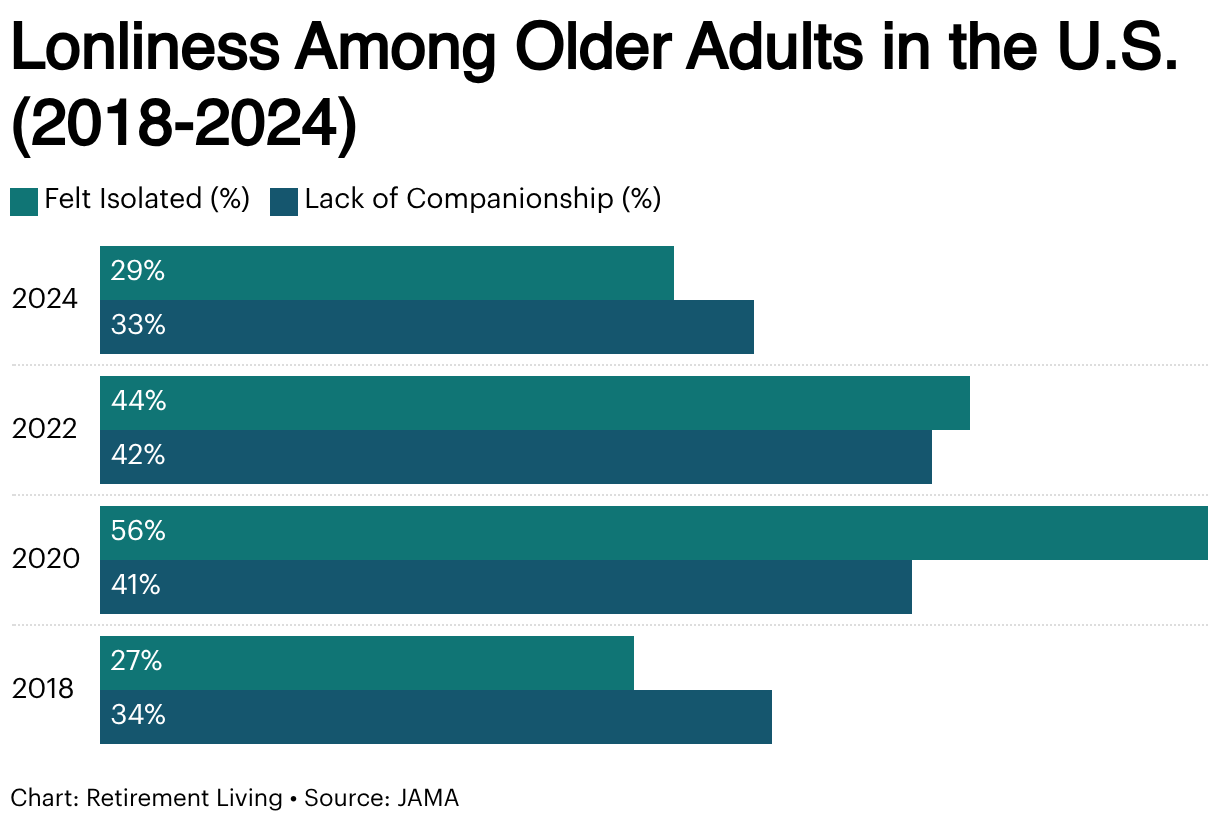
According to a recent study, 29.2% of older people ages 50 to 80 said they felt socially isolated in 2024. This means nearly three in ten older adults felt cut off from others at least some of the time.
Isolation was much higher during the early months of the pandemic. In 2020, about 55.7% of adults ages 50 to 80 reported feeling socially isolated, as lockdowns and public health rules limited in-person contact. Social activity has increased since then, but 29.2% still felt socially isolated in 2024, compared with 27% before the pandemic in 2018.
Loneliness rates differ by gender. About 31% of older women report loneliness, compared with 24% of older men. This is partly because women are more likely to outlive a spouse. In contrast, studies of U.S. adults ages 45 and older show higher loneliness among men, suggesting these patterns change earlier in life.
Which Older Adults Are Most at Risk of Loneliness?
Loneliness does not affect all older adults equally, and age alone does not explain who is most at risk. In 2024, adults ages 50 to 64 reported higher levels of loneliness and social isolation than those ages 65 to 80. This shows that loneliness does not steadily increase with age.
The increased risk is seen among adults who are not working or receive disability benefits, especially those with poor mental or physical health. In 2024, more than half of adults in these groups reported feeling lonely or socially isolated.
What Are the Main Causes of Elderly Loneliness?
The following factors help explain why older adults who live alone are more likely to experience loneliness and social isolation, based on recent studies and research.
Poor Mental Health
Mental health is one of the strongest predictors of loneliness. In 2024, about three-quarters of older adults reporting poor mental health also reported loneliness or social isolation.
Lower Income and Fewer Resources
Lower household income increases loneliness by limiting access to transportation, social relationships, and activities. About 38.1% of older adults earning under $60,000 reported loneliness, compared with 28.9% of higher-income adults.
Employment status also matters. 51.9% of adults ages 50 to 80 who were not working or receiving disability benefits reported loneliness, and 50.1% reported social isolation.
Declining Physical Health, Disability, and Mobility Limits
Chronic diseases and physical limitations increase loneliness by restricting mobility and independence. About 52.9% of older adults with fair or poor physical health reported loneliness, and 52.0% reported social isolation.
Health problems limit mobility and social participation. Reduced ability to leave home can shrink social networks and limit involvement in daily activities over time.
Shrinking Social Networks
Smaller social circles strongly increase the risk of loneliness. Nearly half of lonely adults report having limited social resources.
Lonely adults spend 7.3 hours alone each day, compared with 5.6 hours among adults ages 45 and older overall. Reduced community involvement further limits regular social interaction and worsens isolation over time.
How Does Elderly Loneliness Vary by State?
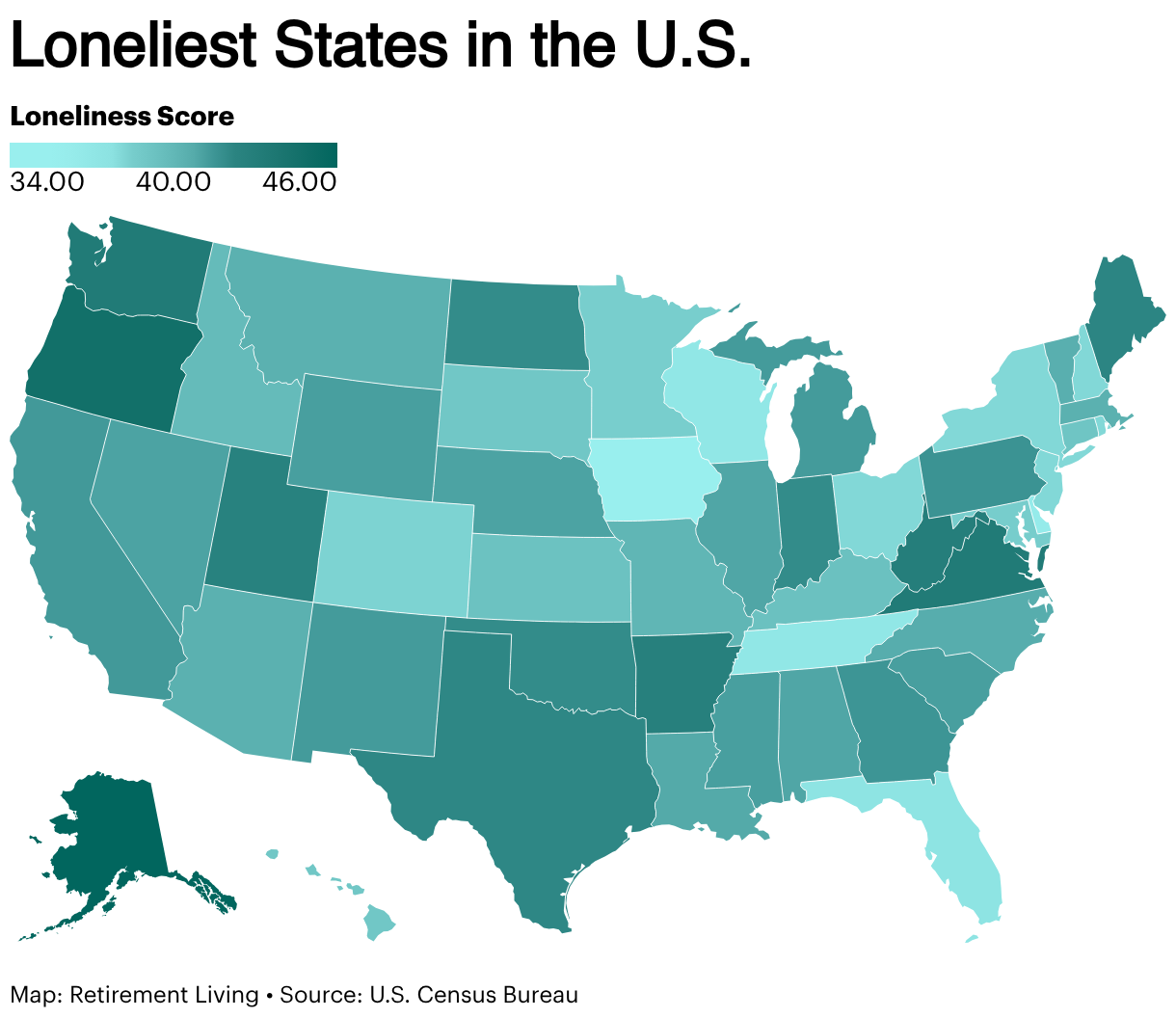
In a recent U.S. Census Bureau Household Pulse Survey, some states reported higher loneliness rates than others. These patterns often overlap with discussions about the best and worst states to retire, especially when social connection and community support are considered.
Alaska (45.9%), Oregon (44.7%), and Virginia (43.3%) ranked among the highest, while Iowa (35.9%), Delaware (36.5%), and Wisconsin (37.0%) reported lower levels.
What Health Risks Are Linked to Elderly Loneliness?
Research shows that loneliness and social isolation are linked to serious health conditions in lonely older adults. The impact of loneliness include:
- Heart disease
- Stroke
- Dementia
- Depression
- Diabetes
- Premature death
The same synthesis reported that loneliness increases the risk of premature death by about 26%, while social isolation increases mortality risk by about 29%.
What Is the Healthcare and Economic Impact of Elderly Loneliness?
Loneliness and social isolation increase healthcare utilization among older adults. Studies show that socially isolated seniors have poorer health outcomes that leads to more doctor visits, more emergency room visits, and higher hospitalization rates.
Loneliness is also a risk factor for long-term care admission, further increasing health services needs. Together, loneliness and social isolation among older adults account for an estimated $6.7 billion in excess Medicare spending each year.
What Are Evidence-Based Ways to Reduce Elderly Loneliness?
Elderly loneliness is not a permanent problem and can be addressed through various interventions. Here are some ways to prevent loneliness among older adults.
Regular Social Contact Through Community Programs
Group-based activities are among the most effective interventions. Studies show that ongoing social participation, such as senior care centers, group classes, or volunteering, reduces loneliness more than informal or occasional contact.
The U.S. has over 11,000 senior centers, serving roughly one million older adults daily, offering structured opportunities for repeated social interaction.
Healthcare Screening and Referrals
Public health experts increasingly recommend screening for loneliness during routine healthcare visits. Identifying loneliness early allows clinicians to connect older adults with social services, community programs, or support resources.
The U.S. Surgeon General has emphasized loneliness as a public health concern that should be addressed within the healthcare system.
Support From Caregivers and Family Members
Regular interaction with caregivers, family members, and loved ones plays a key role in reducing loneliness, especially for older adults with health or mobility limits. Caregivers often provide both practical assistance and emotional support.
Group-Based Support and Peer Programs
Research shows that group-based interventions and senior dating sites are effective. Support groups, peer programs, and shared-interest groups help older adults build social networks and reduce isolation.
These programs also improve emotional well-being and perceived social support.
Bottom Line
Loneliness among older adults is increasingly viewed as an epidemic of loneliness, with serious consequences for both health and quality of life. Large reviews of international studies show that loneliness is linked to a 29% higher risk of heart disease and a 32% higher risk of stroke, while socially isolated older adults face a much higher risk of cognitive decline and dementia.
Because loneliness and poor health often reinforce each other, early action matters. Community programs, caregiver support, and routine screening in healthcare settings can help older adults stay connected, protect long-term health, and support healthier aging.
Fair Use Statement
If you have practical insight related to senior dating, you may share it with us at [email protected]. Any personal information shared will remain confidential.
Sources
- JAMA. Loneliness and Social Isolation Among U.S. Older Adults. Evaluated 20 January 2026.
Link Here - AARP. Disconnected: The Escalating Challenge of Loneliness Among Adults 45-Plus. Evaluated 20 January 2026.
Link Here - Nature. The Global Prevalence and Associated Factors of Loneliness in Older Adults: A Systematic Review and Meta-Analysis. Evaluated 20 January 2026.
Link Here - Medical Journal of Australia. The Loneliness Epidemic: A Holistic View of Its Health and Economic Implications in Older Age. Evaluated 20 January 2026.
Link Here - U.S. Census Bureau (Household Pulse Survey). Loneliness Among U.S. Adults. Evaluated 20 January 2026.
Link Here - National Poll on Healthy Aging. Trends in Loneliness Among Older Adults, 2018–2023. Evaluated 20 January 2026.
Link Here - Psychological Science. Do We Become More Lonely With Age? Evaluated 20 January 2026.
Link Here - NCOA Adviser. Get the Facts on Senior Centers and How They Serve Older Adults. Evaluated 20 January 2026.
Link Here