
Does the ‘One Big Beautiful Bill’ repeal Social Security taxes or doesn’t it?
It does and it doesn’t: It’s complicated
Updated:

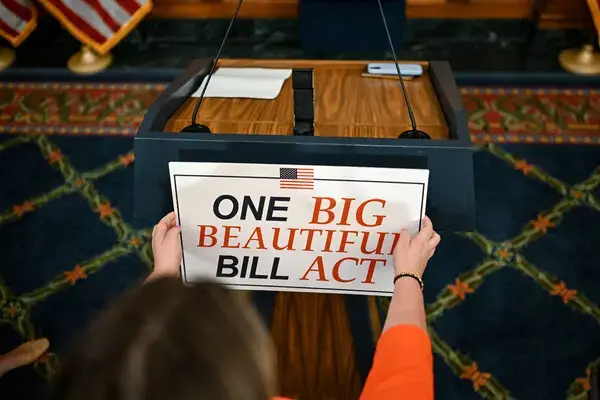
Photo by The New York Times
Key Insights
- Although President Trump claimed the “One Big Beautiful Bill” eliminates taxes on Social Security, the legislation does not fully repeal them. Instead, it offers a significant temporary tax deduction for many seniors.
- Beginning in the 2026 tax year, individuals aged 65+ can claim a $6,000 “bonus” deduction ($12,000 for couples), on top of existing standard deductions.
- The White House estimates 88% of Social Security recipients will owe no federal tax on their benefits under this bill.
After he signed the “One Big Beautiful Bill,” President Trump cataloged its provisions, saying that, among other things, it “eliminates taxes on Social Security.” But early in Congressional deliberations, that sweeping proposed tax cut was discarded.
So why did the president say that the bill eliminated the tax on benefits? Because the bill will result in many Social Security recipients not paying taxes on their benefits.
While the measure does not entirely eliminate federal income taxes on Social Security benefits, it introduces a substantial, though temporary, tax deduction aimed at reducing the tax burden for many seniors.
Starting in the 2026 tax year, people aged 65 and older can claim a $6,000 “bonus” deduction, while married couples filing jointly can claim $12,000. That’s in addition to the current $15,000 – $30,000 for a married couple – standard deduction taxpayers can claim in 2025.
The full deduction applies to individuals with incomes up to $75,000 and couples up to $150,000. The deduction phases out for individuals earning over $175,000 and couples over $250,000. These deductions are set to expire after the 2028 tax year.
The anticipated result
According to the White House, approximately 88% of Social Security recipients will owe no federal income tax on their benefits under this legislation.
Many low-income seniors already do not pay taxes on their Social Security benefits; thus, this bill offers them a limited additional benefit.
Those with incomes above the specified thresholds will see reduced or no benefit from the new deductions.
The bill’s approach stems from Senate budget reconciliation rules, specifically the Byrd Rule, which restricts the inclusion of provisions that do not directly affect the federal budget. Since Social Security is considered off-budget, a full repeal of taxes on its benefits could not be included in this legislation.
So, while the “One Big Beautiful Bill” does not completely eliminate taxes on Social Security benefits, the White House says it provides significant tax relief for a majority of seniors through targeted deductions.