
Heat-based treatment offers hope for millions with vision loss
It could be the first effective treatment for dry AMD
Updated:

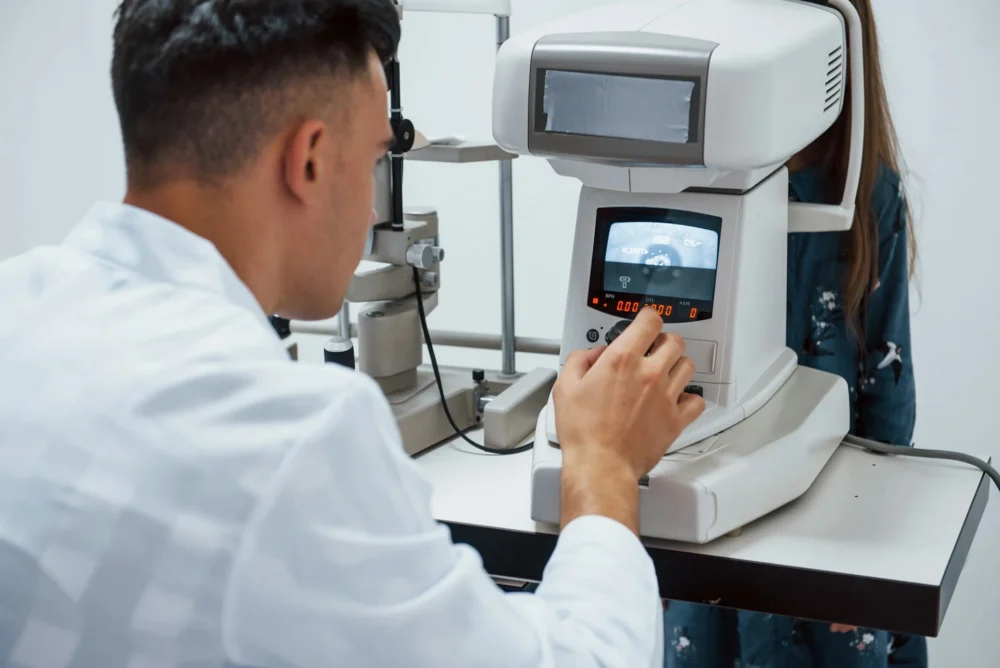
Photo by Getty Images on Unsplash
Key Insights
- Nearly one-third of people over 80 suffer from age-related macular degeneration (AMD)
- Finnish researchers have developed a heat-based treatment that may halt the progression of the dry form of AMD
- Human trials are set to begin in 2026, raising hopes for a long-awaited therapy
For millions of older Americans, gradual vision loss from age-related macular degeneration (AMD) can mean losing the ability to read, drive, or recognize loved ones.
While treatments exist for the “wet” form of AMD, the more common “dry” form — which progresses slowly but relentlessly — has had no effective therapy. Now, a team of researchers at Finland’s Aalto University has unveiled a potential breakthrough: using heat to activate the eye’s natural repair mechanisms before vision is lost.
The innovative approach, developed under the direction of Professor Ari Koskelainen, focuses on strengthening the eye’s cellular defenses through controlled heating. As people age, the protective systems in retinal cells weaken, allowing oxidative stress to damage proteins. These damaged proteins clump together, forming fatty deposits known as drusen — the key diagnostic sign of dry AMD.
Bringing the heat
By gently warming tissue at the back of the eye with near-infrared light, the treatment stimulates a biological “cleanup” process.
“We were able to show that we can activate not only the production of heat shock proteins, but also autophagy using the heat shocks,” Koskelainen said. “This process is like waste disposal.”
These heat shock proteins help repair or recycle damaged proteins. If the damage is too great, another process called autophagy — a cellular self-cleaning mechanism recognized by the 2016 Nobel Prize in Medicine — steps in to remove harmful accumulations.
Applying heat to delicate eye tissue is tricky; temperatures above 113°F can cause damage. The Aalto University team’s breakthrough was creating a system that can monitor temperature in real time as the tissue is warmed, allowing safe, precise stimulation.
In animal studies involving mice and pigs, the method successfully triggered the intended cellular responses without harming tissue. Researchers believe that repeated, carefully timed treatments could prevent AMD from advancing — effectively halting a disease long considered untreatable.
Human trials begin in 2026
The research, recently published in Nature Communications, is now moving toward human trials in Finland, set to begin in spring 2026. The first phase will test safety before assessing how frequently the treatment needs to be repeated to maintain its effects.
“The treatment needs to be repetitive, since the response can already begin to decline some days after the treatment,” Koskelainen said.
The Aalto team has formed a research-to-business start-up called Maculaser to commercialize the technology. If all goes well, Koskelainen says the method could be available in hospital eye clinics within three years, and eventually through local ophthalmologists.
For the roughly 20 million Americans already living with AMD, the discovery could mark the first real hope of stopping the disease before it steals their sight.