
Is it too risky for retirees to buy gold at record highs?
It may be without careful research and expert advice
Updated:

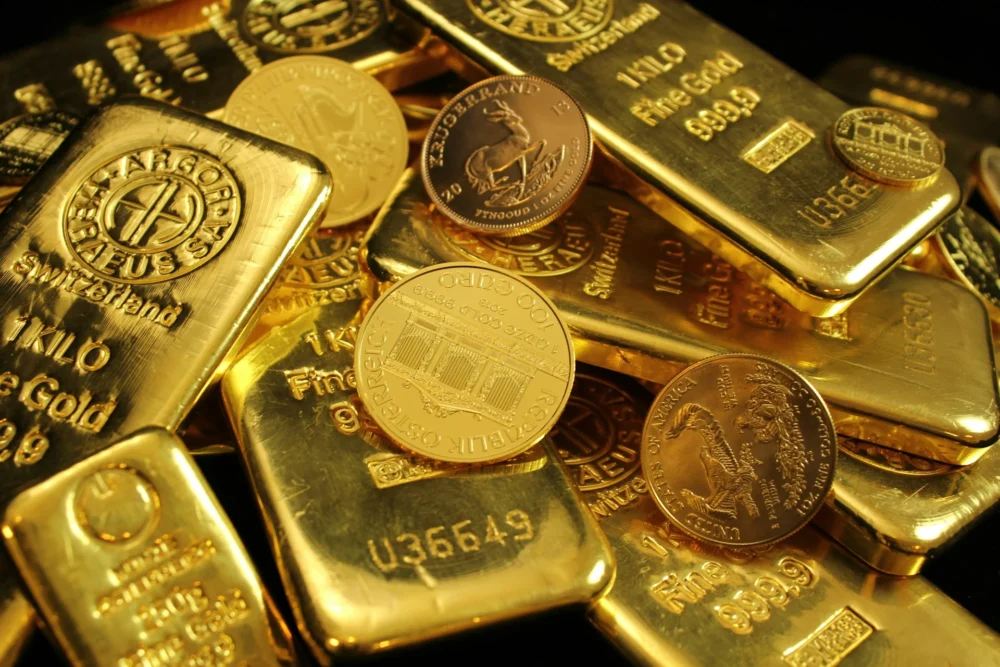
Photo by Zlaťáky.cz on Unsplash
Key Insights
- Gold prices are at record highs — now above $4,200 an ounce — driven by demand for safety, central bank buying, and expectations of easier monetary policy.
- Experts are divided: while some see room for further gains, others warn that gold and silver may be overextended and due for a correction.
- Caution and balance are key — retirees should research carefully and consider professional advice before investing at these levels.
Caution is a watchword for retired investors, but gold has been on a remarkable run, recently closing above $4,200 an ounce, while silver has surged as well. Many investors have turned to precious metals as a haven against inflation, debt concerns, and global tensions. But with prices this high, retirees are asking: Is it too late to buy in?
Retired investors have a much shorter investment timeline than their younger counterparts and less time to make up for dramatic losses. Before making a move, it’s important to look at what is driving precious metal prices to record highs.
Why gold is rising
- Safety in uncertain times
Inflation, government debt, and geopolitical tensions have made investors nervous. In this environment, gold is viewed as a “store of value.” Financial institutions like HSBC and Goldman Sachs note that recent demand reflects genuine safety-seeking behavior — not just speculation. - Central bank and institutional buying
Central banks around the world are accumulating gold, regardless of short-term price moves. This steady demand adds long-term support to the market. Institutional investors are also adding to the momentum through gold-backed ETFs. - Interest rates and policy shifts
Gold becomes more appealing when real interest rates fall. If central banks begin cutting rates, as some expect, the “opportunity cost” of holding gold (which pays no interest) declines — a dynamic that can further lift prices. - Silver’s dual role
Silver’s strength is tied to both its role as a precious metal and its industrial uses, such as in solar panels and electronics. Tight supplies can make silver even more volatile than gold.
Where the risks lie
- Overvaluation and pullbacks
After such a strong climb, gold may simply be too expensive in the short term. If inflation eases or global tensions subside, a pullback or period of consolidation could follow. - Changing central bank policies
If the U.S. Federal Reserve or other central banks take a more hawkish tone — raising rates or tightening policy — non-yielding assets like gold could lose appeal. - Speculative froth
Some analysts worry that momentum investors have piled in, pushing prices beyond what fundamentals justify. If sentiment turns, corrections can be sharp. - Competition from Other Assets
When stocks or bonds start offering better returns, investors often move out of gold. For retirees, diversification remains essential — not over-concentration in any one asset. - Silver’s extra risk
Silver’s smaller, more volatile market makes it prone to larger swings. It also lacks the central bank demand that underpins gold.
Expert outlook
Market forecasts are scrambling to keep up. JPMorgan, for example, predicted gold would reach $3,675 by late 2025 — a target already surpassed. Some forecasters see more upside, while others caution that the rally could be overdone.
YouTube and social media channels are full of bullish predictions, but as history shows, markets rarely move in a straight line.
If you’re thinking about adding gold or silver to your retirement portfolio:
- Avoid chasing headlines or hype.
- Use precious metals as a hedge, not a bet.
- Consult a trusted financial advisor to determine whether now is the right time and how much exposure makes sense for your situation.
A little gold can add stability — but at today’s record levels, patience and prudence may be worth their weight in the same metal.