
Ken Burns will bring the American Revolution to PBS in November
The 12-hour series is timed to the run-up to the country’s 250th anniversary
Updated:

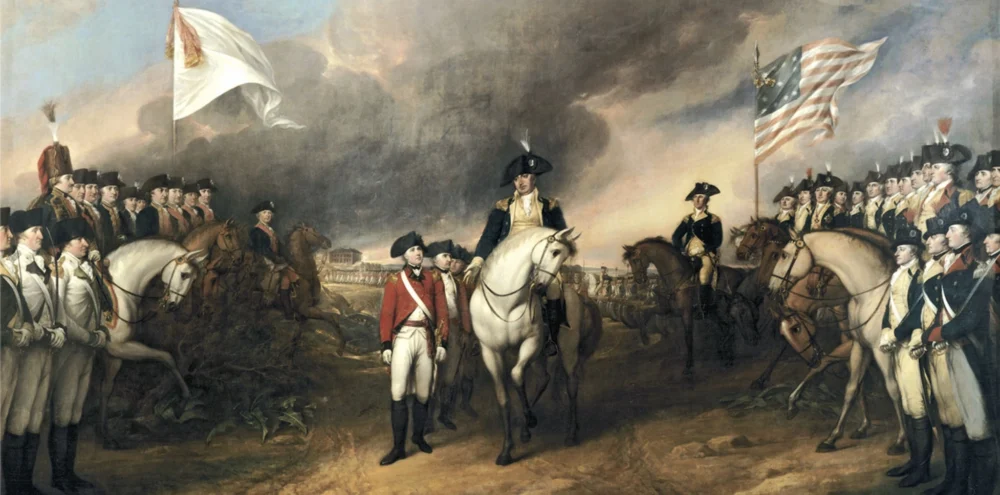
Photo by KenBurns.com
Key Insights
- It is a sweeping, six-part, twelve-hour documentary by Ken Burns (with co-directors Sarah Botstein and David Schmidt) that aims to revisit the story of the American Revolution with both breadth and nuance.
- The series is explicitly intended to move beyond the standard “founding‐fathers in powdered wigs” narrative by including broader perspectives — Indigenous nations, women, enslaved people, Caribbean connections — and to treat the Revolution as both heroic and deeply conflicted.
- Visually and sonically ambitious: Burns uses reenactments, archival records, painting and image sequences, and historic music to help render what he describes as “a symphony” of ideas, battles, personal stories and national identity.
Ken Burns is synonymous with historical documentaries, having produced them for his entire adult life. His first documentary, “The Brooklyn Bridge,” aired on PBS in 1981 and was followed by more than a dozen major works, including “The Civil War,” “Baseball,” and “Jazz.”
In the 1980s, long before there was video software that could do it, Burns brought historical photos and paintings to life by having the camera zoom in on the image, a technique that is often called “the Ken Burns effect.”
His latest documentary series, “The American Revolution,” is a fitting example of Burns’ signature style, rich in visual storytelling, layered with historical scholarship, and ambitious in scope. For viewers who love history, it offers a compelling re-examination of one of America’s foundational events, and for general audiences, it is both accessible and intellectually stimulating.
What it does well
One of the series’ greatest strengths is its willingness to complicate the story of the Revolution rather than simply celebrate it. As Burns explains, this isn’t just a “story for Americans,” but “for everybody who ever agreed to be an American, or thinks they are an American.”
By beginning with the influence of the Haudenosaunee (Iroquois) Confederacy, for instance, and placing Benjamin Franklin and Philadelphia at a central role, the series signals that it wants to dig deeper than standard textbook narratives.
Also, the production value is high: the use of paintings, reenactments, voices of actors reading contemporary documents, and carefully selected historic music combine to create a immersive experience.
A 12-hour series
A twelve-hour series necessarily cannot delve into every nuance of every figure or facet of the period, and viewers looking for deeply analytical or academic treatment of economic drivers of the Revolution or microscopic military tactics may want supplemental reading.
At the same time, Burns’ storytelling approach often privileges narrative flow, dramatic tension and accessible language, which means some historians may feel that certain contested interpretations or minor players receive less time than they deserve.
Given its timing – premiering in November 2025, in the run-up to America’s 250th anniversary of the Revolution – the series carries extra weight: it invites reflection not only on the 18th-century struggle but on the living legacy of those ideals and the contradictions those ideals entailed.
In that regard, The American Revolution does more than recount a familiar story, it asks what that story means today, and how we might understand freedom, citizenship and national identity in light of both triumph and cost.
For anyone interested in U.S. history, documentary storytelling, or the origins of the American republic, this is an essential viewing. It marries scholarship with cinematic craft, and invites viewers to see the Revolution not as a static heroic moment, but as a swirling, contested journey with consequences still unfolding.