
More older adults and retirees are going back to school
Community colleges report growing interest in health care support roles
Updated:

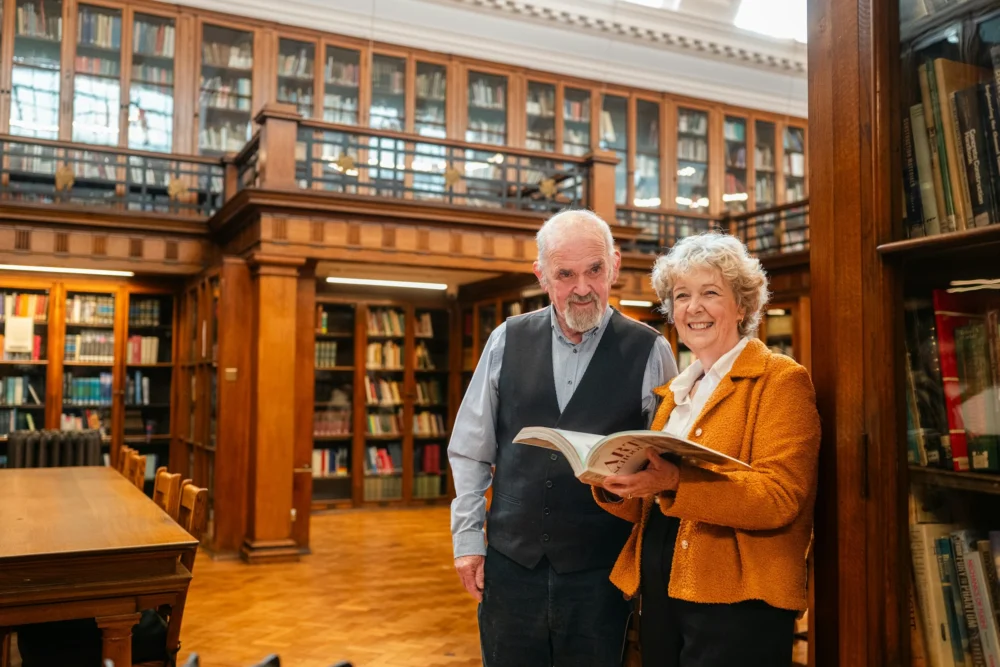
Photo by Centre for Ageing Better on Unsplash
Key Insights
- Colleges and universities report rising enrollment among adults 55 and older, including retirees seeking new skills and second careers.
- Financial pressures, longer life expectancy, and the desire for social connection are driving many older adults back into classrooms.
- Schools are responding with flexible programs, tuition discounts, and certificates tailored to encore careers and lifelong learning.
As retirement stretches across decades rather than years, a growing number of older Americans are trading in golf clubs and travel itineraries for textbooks and student IDs.
From community colleges to flagship state universities, administrators say enrollment among adults 55 and older has steadily increased over the past several years. Some are pursuing degrees they postponed decades ago. Others are training for entirely new careers. Still others simply want to learn for learning’s sake.
Rethinking retirement
Several forces are fueling the trend. Americans are living longer and staying healthier, often expecting to spend 20 to 30 years in retirement. For many, that’s too long to remain idle.
At the same time, rising costs for housing, health care, and everyday expenses have pushed some retirees to seek part-time work or second careers to supplement fixed incomes.
Community colleges report growing interest in health care support roles, bookkeeping, information technology, and skilled trades — fields that offer relatively quick certification pathways. Four-year institutions, meanwhile, are seeing retirees enroll in undergraduate and graduate programs in fields ranging from psychology to environmental studies.
For some, it’s about unfinished business.
“I always wanted to finish my degree,” said a 67-year-old student who recently enrolled in a bachelor’s program after retiring from a logistics job. “I finally have the time — and the motivation.”
Encore careers and new skills
The concept of the “encore career” — a second act focused on purpose-driven or flexible work — has gained traction. Older students are training to become nonprofit managers, substitute teachers, small-business owners, and consultants.
Technology is also playing a role. As more aspects of daily life move online, some retirees return to school to build digital literacy skills, from basic computer proficiency to coding and data analytics.
Online and hybrid programs have lowered logistical barriers. Older students who may not want to commute daily can attend lectures remotely, participate in virtual discussions, and complete coursework on flexible schedules.
Social connection and cognitive benefits
Beyond finances and career prospects, many retirees cite social engagement as a key motivator.
Classrooms provide built-in community — something that can be harder to maintain after leaving the workforce. Interacting with younger classmates can also be energizing, students say.
Research has long suggested that continued learning may help maintain cognitive function and emotional well-being. While education is not a guaranteed shield against age-related decline, experts say intellectual stimulation, social interaction, and a sense of purpose can all contribute to healthier aging.
Colleges are adjusting to meet the demand. Some institutions offer reduced or waived tuition for residents over a certain age. Others allow seniors to audit classes at a low cost.
Certificate programs designed for quick workforce reentry are often marketed specifically to older adults.
Advising services are also evolving. Older students may have different concerns than traditional undergraduates, including balancing coursework with caregiving responsibilities or navigating financial aid options after retirement.
A lifelong shift
As demographic shifts reshape the U.S. population, educators expect the trend to continue. By the end of this decade, older adults are projected to make up a larger share of the population than ever before.
For many retirees, the return to school reflects a broader redefinition of aging — one that emphasizes growth rather than withdrawal.
In classrooms across the country, a new generation of students is proving that retirement may be less about slowing down — and more about starting over.