
Older adults are more likely to share political misinformation
It’s not because they can’t tell what’s true, study finds
Updated:

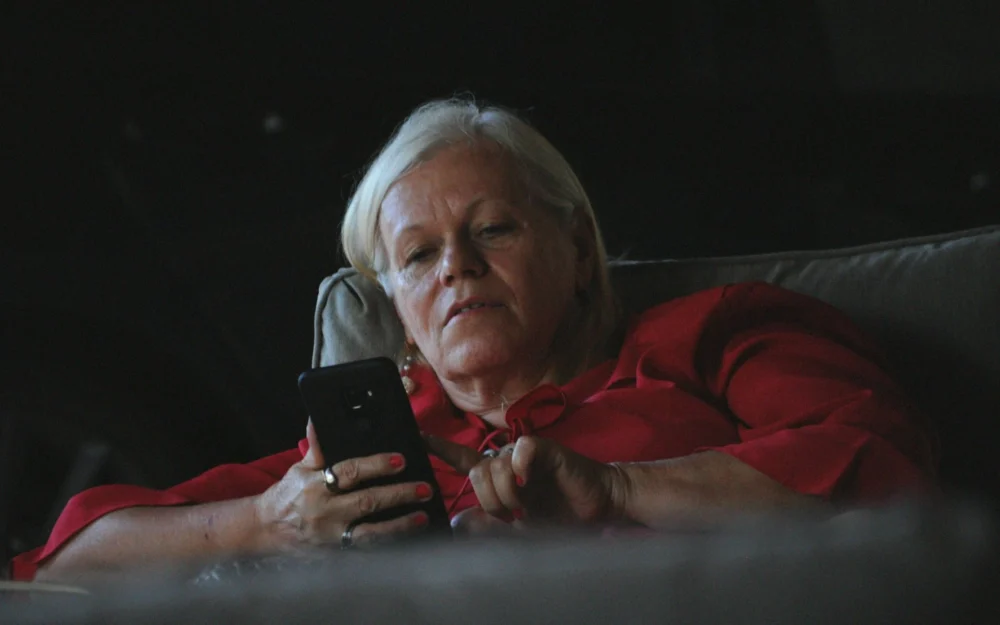
Photo by Linoleum Creative Collective on Unsplash
Key Insights
- Older adults are more likely than younger people to share political misinformation online
- It’s not due to gullibility or cognitive decline, but to stronger partisanship
- Study finds that partisanship, not age, drives people to share false information that favors their side
Baby boomers may recall the Simon & Garfunkel song, “The Boxer,” that contains this lyric: “Still, a man hears what he wants to hear and disregards the rest.”
A new study from the University of Colorado Boulder reinforces that observation, finding that people over 55 are more likely to share political misinformation online. The researchers challenge the stereotype that older adults are more gullible when it comes to fake news. Instead, researchers say it’s partisanship, not cognitive decline, that causes them to believe what they want to believe.
The research, published in the Journal of Experimental Psychology: General, found that as people age, they tend to become more politically partisan on both ends of the spectrum, and that bias clouds their judgment of what’s real and what’s not.
“We found that older people are more likely to believe as true and to share information that aligns with their party, whether that information is true or not,” said Leaf Van Boven, a psychology and neuroscience professor at CU Boulder and senior author of the study.
The research was conducted in collaboration with Guilherme Ramos, assistant professor of marketing at the Rochester Institute of Technology.
Politics over proof
The study surveyed nearly 2,500 adults in the United States and Brazil, aged 18 to 80. Participants were shown political headlines – some true, some false – designed to appeal to different ideological leanings.
For example, one fake U.S. headline read, “Pope Francis shocks world and endorses Donald Trump for President.” In Brazil, a false left-leaning headline claimed, “Bolsonaro wants to cut 25% of civil servants’ salaries.”
Participants rated how likely they would be to share each headline on social media and, in a follow-up experiment, whether they believed the story was true.
The results were clear: older adults weren’t worse at recognizing fake news, but they were more likely to share stories that supported their political side.
“They had different standards of evaluating evidence depending on whether it reflected well on their side or not,” said Van Boven.
Age doesn’t equal gullibility
Past studies have painted older adults as more vulnerable to misinformation, suggesting they’re less analytical or more easily confused by ads and false content. However, this study found no evidence that older adults have weaker critical-thinking skills.
Instead, researchers say the problem is emotional and ideological, not cognitive. As people grow older, they often identify more strongly with a political group, and that identity can drive what they choose to believe and share.
“Older adults are not necessarily less discerning,” Van Boven explained. “They’re just more partisan.”
A global pattern
The study also found that this trend isn’t unique to the U.S. Despite Brazil’s multiparty system, the same pattern held true: the more partisan people were, the more likely they were to share politically aligned misinformation.
“This suggests that the two-party system is not necessarily the issue here,” said Ramos. “People in Brazil behave in the same partisan way.”
Efforts to combat misinformation have long focused on teaching people how to fact-check or spot fake news. But Van Boven and Ramos say that’s only part of the solution.
“Our study suggests it is equally important to encourage people to behave in a less politically partisan way when they are communicating on their social networks,” said Van Boven.
That means pausing before hitting “share,” considering whether a story is being judged fairly, and even staying connected with people who think differently.
“As someone who studies political polarization, I am very much in favor of inter-group contact,” Ramos said. “It’s critical for a healthy democracy that we can talk to and have friends who think differently.”