
Researchers say they reversed brain damage from Alzheimer’s in mice
Restoring a key energy molecule in the brain achieved results
Updated:

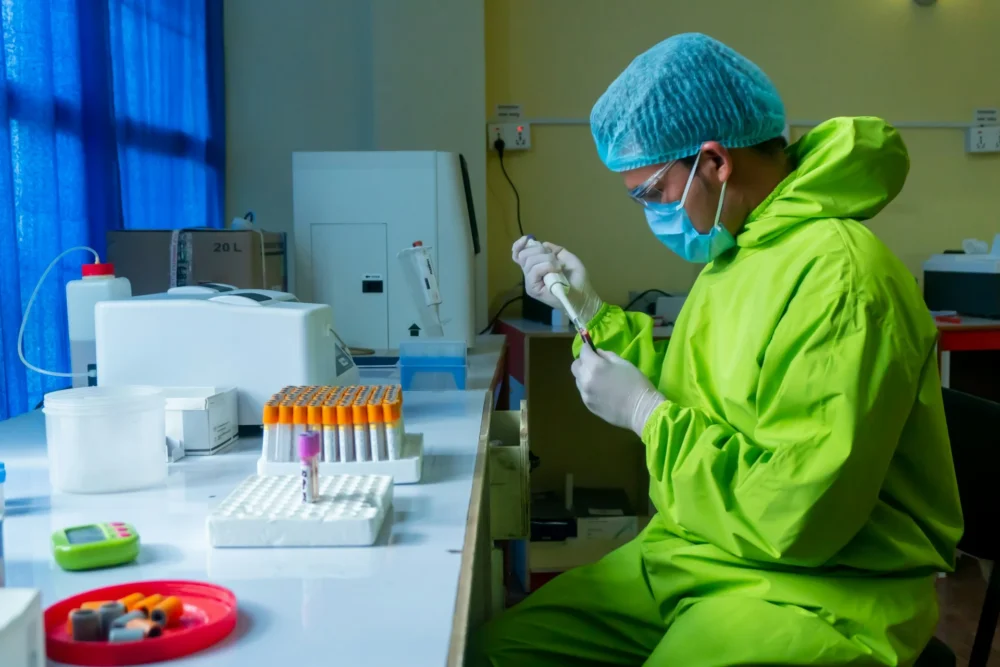
Photo by Prasesh Shiwakoti Lomash on Unsplash
Key Insights
- Scientists report evidence that Alzheimer’s damage may be reversible—at least in laboratory models.
- Restoring the brain’s energy balance helped mice with advanced Alzheimer’s regain memory and brain function.
- The findings raise new hope but are not yet ready for patient use.
For more than 100 years, Alzheimer’s disease has been viewed as a one-way process: once brain damage begins, it can’t be undone.
Treatments have focused on slowing decline or preventing the disease altogether—not reversing it. Despite billions of dollars in research, no Alzheimer’s drug has ever been tested with the goal of restoring lost brain function.
However, a new study published in Cell Reports Medicine challenges that assumption and suggests a radically different future for Alzheimer’s treatment.
Researchers from University Hospitals, Case Western Reserve University, and the Louis Stokes Cleveland VA Medical Center found that restoring a key energy molecule in the brain allowed mice with advanced Alzheimer’s disease to recover both brain health and memory. The work was led by Kalyani Chaubey, PhD, in the Pieper Laboratory, with senior author Andrew A. Pieper, MD, PhD.
The brain’s energy problem
At the center of the discovery is a molecule called NAD+ (nicotinamide adenine dinucleotide), which plays a critical role in cellular energy and repair. NAD+ levels naturally decline as people age, but the researchers found that the drop is far more severe in the brains of people with Alzheimer’s disease.
“When NAD+ levels fall too low, brain cells lose the ability to carry out essential functions and eventually die,” the researchers reported.
By examining human Alzheimer’s brain tissue and multiple mouse models of the disease, the team showed that disrupted NAD+ balance is a major driver of Alzheimer’s-related brain damage.
Testing reversal—not just prevention
To test whether restoring NAD+ could do more than just slow disease, the researchers used genetically engineered mice that develop Alzheimer’s-like changes seen in humans, including amyloid plaques, tau pathology, inflammation, nerve damage, and severe memory loss.
The mice were treated with a drug called P7C3-A20, developed in the Pieper lab, which helps cells maintain healthy NAD+ levels under stress. Importantly, the treatment was given after the disease was already advanced in some animals.
The results were surprising:
- Brain damage related to Alzheimer’s pathology was repaired
- Inflammation and nerve degeneration improved
- Cognitive performance returned to normal
- A key blood biomarker of Alzheimer’s (phosphorylated tau 217) normalized
Both prevention and reversal were seen across two very different Alzheimer’s models, strengthening confidence that the findings aren’t limited to one narrow cause of the disease.
“We were very excited and encouraged by our results,” said Pieper. “Seeing full cognitive recovery in animals with advanced Alzheimer’s suggests the brain may have more capacity to heal than we once believed.”
A note of caution for consumers
The researchers stress that this does not mean people should start taking over-the-counter NAD+ supplements. In fact, Pieper warned that common NAD+ precursors sold as supplements can raise NAD+ to unsafe levels and have been linked in animal studies to increased cancer risk.
The drug used in the study works differently—it helps cells maintain normal NAD+ balance rather than pushing levels too high.
“This distinction is critical for patient safety,” Pieper said.
However, the findings may represent a potential paradigm shift in how Alzheimer’s disease is viewed: not necessarily as irreversible damage, but possibly as a condition the brain can recover from under the right circumstances.