
Retirement Living takes an unbiased approach to our reviews. We may earn money when you click a partner link. Learn More

Lifeline Review

4.4 Overall Rating
Bottom Line
Lifeline, formerly Philips Lifeline, offers On the Go and HomeSafe medical alert systems. The HomeSafe works with a landline or cell signal. Both systems include access to the My Lifeline mobile app, which allows you to contact support, test your system, and update your contact list.


Updated:
About Philips Lifeline
Philips was the first company to introduce a medical alert system in North America, serving hospitals and healthcare facilities beginning in 1974. Today, Philips Lifeline helps seniors live independently and safely, both at home and on the go, with medical alert systems that provide one-touch communication with trained representatives. With six mobile communication technologies, Philips Lifeline has the largest subscriber base of any medical alert company, serving more than 7 million people.
Originally known as Lifeline Systems, Inc., Philips Lifeline was founded by a gerontologist who developed the first call buttons and systems for hospitals and healthcare centers. In the early 1980s, the company began selling to the public with an advanced water-resistant fall detection pendant designed for use in the most common fall location: the shower.
In 2006, Philips Lifeline became part of the global healthcare company, Royal Philips Electronics, and the brand was renamed Philips Lifeline. Today, Philips Lifeline offers home-based medical alert systems through its HomeSafe line and mobile systems through its GoSafe line.
Pros
- Philips is one of the most recognized companies in the world
- Offers waterproof wearable help buttons
- Provides both landline- and cellular-based systems
- Utilizes multiple location technologies
Cons
- Limited to a single cellular carrier (AT&T)
Philips Lifeline HomeSafe Medical Alert Systems
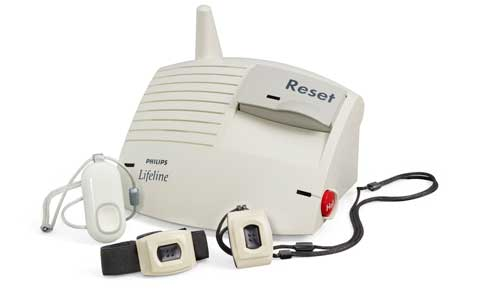
Philips Lifeline HomeSafe is a traditional home-based medical alert system that includes a speaker/receiver base and a wearable pendant or wristband used as a panic button. The HomeSafe system is available in both landline and cellular versions. The base unit, known as the Communicator, operates on the AT&T cellular network. The AT&T Network provides excellent coverage across most of the U.S., with the exception of Alaska and some areas in western states.
The HomeSafe base functions like a speakerphone, with volume designed to be heard throughout the home, and a microphone sensitive enough to detect voice commands from most rooms. Wearable alert buttons are available as pendants or smartwatches, and they are water-resistant, allowing them to be worn almost anywhere for added security. The optional HomeSafe AutoAlert pendant add-on can detect falls and automatically send a notification to the response center without requiring the wearer to push a button.
The HomeSafe base and wearable devices are self-monitoring and will automatically notify Philips Lifeline if maintenance or battery replacement is required. When a battery is running low, the system automatically notifies Philips Lifeline, which then ships a replacement battery to the customer.
| Product | Monthly Fee | Activation Fee |
|---|---|---|
| HomeSafe Landline | $29.95 | $50.00 |
| HomeSafe Cellular | $39.95 | $50.00 |
| HomeSafe Landline With AutoAlert | $44.95 | $50.00 |
| HomeSafe Cellular With AutoAlert | $58.95 | $50.00 |
| On the Go Standard | $44.95 | $99.95 |
| On the Go Mini | $$49.95 | $99.95 |
| Smartwatch | $39.95 | $159 (one-time device fee) |
Philips Lifeline Medical Alert System Costs
The GoSafe systems from Philips Lifeline are designed for individuals who frequently leave home and want to take the protection of their medical alert system with them. Philips Lifeline often provides special promotions for new customers, making it easier to get started with a GoSafe system.
The GoSafe systems use GPS along with several other technologies to locate the user who wears a pendant. Philips Lifeline GoSafe systems include up to six location technologies:
- A-GPS: Allows GPS receivers to receive information from both cellular networks and satellites, enabling faster and more accurate location tracking.
- Wi-Fi: Uses nearby Wi-Fi access points to help locate users indoors or in areas with weak GPS signals.
- Location breadcrumbs: GoSafe medical alert devices regularly record the wearer’s location and store the data. These breadcrumbs can be used to track the user’s recent movements.
- Two-way communication: Allows the user to speak directly with a trained representative to explain the type of help needed and their location.
- Audio beacon: Philips can remotely activate a loud sound on the pendant to help first responders locate the user.
- In-home system communication: When the user is at home, the pendant connects to the Communicator base, which is linked to the user’s address. Help will be dispatched to the home if needed. Only the original GoSafe system includes this sixth technology; GoSafe 2 does not.
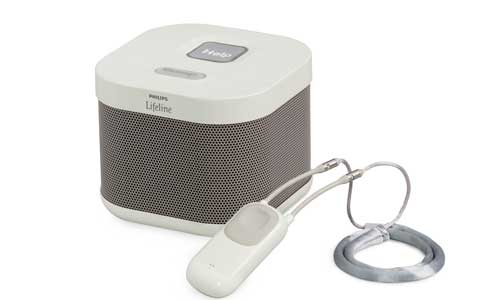
The original GoSafe medical alert service includes a base Communicator unit that works with either a landline or cellular service, along with a waterproof pendant featuring an emergency call button. The functionality of the pendant includes two-way communication that works outside the Communicator range, allowing the user to contact the Philips LifeLine Response Center and request the type of help needed. The pendant is rechargeable, and a single charge can last up to seven days. The GoSafe pendant includes fall detection.
The GoSafe 2 system features a waterproof pendant with built-in two-way communication and fall detection. This rechargeable medical alert system does not require a base unit, resulting in lower equipment and monthly service fees. The company also has a straightforward cancellation policy that allows customers to end service at any time without long-term contracts.
| Product | Monthly | Equipment |
|---|---|---|
| GoSafe Landline | $54.95 | $149 |
| GoSafe Cellular | $69.95 | $149 |
| GoSafe2 | $49.95 | $99.95 |
Philips Lifeline Response Centers and Dispatch
Philips Lifeline operates response centers in the U.S. and Canada staffed with multilingual operators to ensure effective communication with customers. The monitoring centers operate 24/7, 365 days a year, with an average response time of just 12 seconds. When the emergency button is pressed or fall detection is activated, the response center is alerted, and a representative attempts to contact the user. If contact is established, the trained representative will follow the user’s instructions to contact friends, family, caregivers, or emergency services. If contact cannot be established, the staff will immediately contact emergency services. Family and friends’ phone numbers are stored in the customer’s electronic records, which agents can access during emergencies.
Philips Lifeline Complaints
Philips Lifeline holds an A+ rating from the Better Business Bureau (BBB) with 105 complaints in the last three years—most of which involve billing disputes. Based on over 5,000 reviews on ConsumerAffairs, Philips Lifeline has a 2.7 out of 5-star rating, with most customers praising the response center’s communication with their emergency contacts and the overall ease of use.
Philips Lifeline FAQs
All Philips Lifeline call centers are equipped with backup systems to handle power outages and other emergencies. If a response center becomes inoperable, calls are automatically rerouted to other locations, ensuring nationwide coverage is never disrupted.
Automatic fall detection is designed to contact the Philips Lifeline Response Center without requiring the user to press the button. However, fall detection may not detect every fall, so customers are advised to press the emergency button whenever possible after a fall.
With skilled operators on call around the clock to respond to alerts promptly and expertly, Lifeline’s emergency response services are incredibly dependable. The system is backed by redundant call centers to ensure uninterrupted coverage, even during power outages or technical issues. Numerous clients attest to prompt response times and regular communication, which reassures users and their families that assistance is always available when needed.
Medicare does not cover medical alert systems. However, some Medicare Advantage plans may include coverage, so check with your insurance provider for details.
In many cases, the Philips Lifeline service line will contact a friend or family member of your choice. Philips Lifeline recommends designating someone who lives within 10 minutes of your home, has a house key (or access to a lockbox), and is available to help at any time.
No, the Philips Lifeline monthly setup fee already includes cellular service for your system.
Lifeline provides a number of advantages, such as quick access to nearby emergency services when necessary, dependable emergency communication via a help button or automated fall detection, and round-the-clock access to a trained response center. With features like caregiver alerts and lockboxes to improve security, it also gives users and their families peace of mind. These features ensure that assistance is always accessible while assisting seniors in maintaining their independence.
Reviews of Lifeline are generally positive and emphasize the system’s dependability, usability, and excellent customer service. Because of its established industry reputation and range of device options, including in-home and on-the-go systems, Lifeline stands out when compared to other medical alert services. Many clients appreciate Lifeline’s established track record and reliable response times, even though some rivals might provide more contemporary features or cheaper costs.
Choosing between Lifeline and Life Alert depends on what you value most. Lifeline is often preferred for its flexible plans, fall detection options, and no long-term contracts, while Life Alert is recognized for its strong brand reputation and 24/7 monitoring, but comes with higher costs and longer commitments.
Conclusion
As we age, our bodies cannot handle blunt force as effectively as they once did. Reduced bone strength, lower fat reserves to cushion bones and organs, and decreased dexterity leading to more awkward falls all contribute to the increased severity of injuries. In the U.S., an older adult dies from a fall every 19 minutes, and one is treated for a fall-related injury every 11 seconds. Since one out of every five falls results in a serious injury, medical alert systems like Philips Lifeline can help seniors maintain independence longer, particularly when aging in place.
For comparisons with other medical alert systems, read: