
Retirement Living takes an unbiased approach to our reviews. We may earn money when you click a partner link. Learn More

LifeFone Review

4.4 Overall Rating
Bottom Line
LifeFone has been providing medical alert systems to consumers since 1976 with a call center based in New York and two other backup call centers in the United States. LifeFone offers some great perks with their medical alerts systems like adding a spouse or significant other to your plan for free (there’s a charge for their wearable device) and no price changes as long as you are a customer.


Updated:
About LifeFone
LifeFone has offered medical alert systems since 1976, with a call center in New York and U.S.-based backup monitoring centers. Perks include free spouse coverage (device fee applies) and a price guarantee that locks in your rate for as long as you remain a LifeFone customer.
LifeFone serves medical alert systems to customers at risk of falls, stroke, or those living alone. They offer fast emergency access to health care to ensure peace of mind. Systems are available for both home and mobile use, with optional fall detection for an additional monthly fee. LifeFone also offers a lock box option so emergency responders can access your home quickly without causing damage.
Pros
- Price stays the same for the life of your subscription
- All call centers, including backup, are U.S.-based
- Free spouse coverage (device fee applies)
- Caregiver app
Cons
- At-Home Cellular System is only available on Verizon and AT&T networks
LifeFone Products
LifeFone At-Home Landline and Cellular
The LifeFone At-Home systems include a base unit with your choice of a waterproof wristband or necklace, both with emergency help buttons. Pressing the button connects you through a LifeFone operator through the base unit’s speaker. If the microphone cannot pick up your voice, operators will send emergency services immediately for a faster response time.
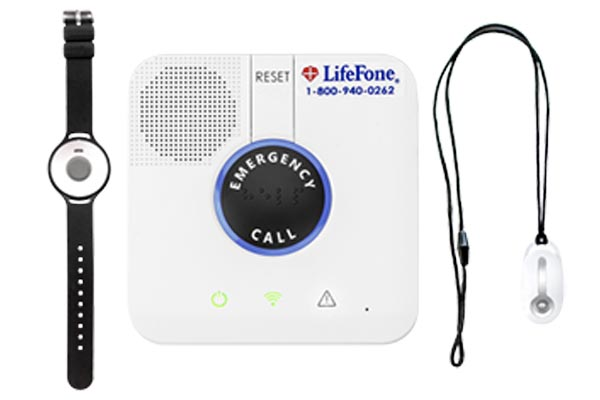
If you can communicate, the operator will assess your need and send help accordingly. The base also includes a temperature sensors that detect unsafe in-home conditions. Optional fall detection is available for an added monthly fee.
The At-Home Landline system uses your home’s landline for 24/7 emergency communication. The At-Home Cellular system runs on AT&T mobile service, with service included in your plan.
LifeFone At-Home and On-the-Go GPS
Both of LifeFone’s GPS-enabled systems use AT&T’s cellular network to monitor your safety at home or on the go. Cellular service is included in your LifeFone subscription.
The At-Home and On-the-Go VIP flex system includes a base unit and a pocket-sized mobile device. Both medical alert devices have emergency response buttons with two-way communication to LifeFone operators. GPS tracks your location within 1,400 feet of the base unit, while two-way communication works within 600 feet.
An optional waterproof necklace offers fall detection technology and an emergency button. The necklace can automatically detect falls and alert LifeFone, even if the button isn’t pressed.
At-Home and On-the-Go VIP Active
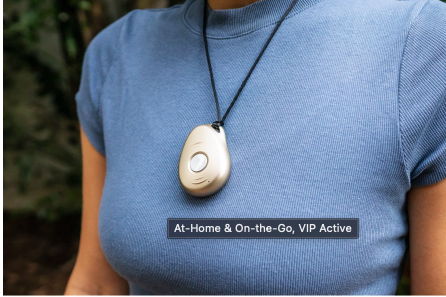
The VIP Active is a lightweight pendant with two-way communication and an emergency button. It features advanced location tracking and a battery life of up to five days. The VIP Active system uses AT&T’s cellular network. AT&T service is included in the subscription cost.
At-Home and On-the-Go, VIPx
The VIPx is LifeFone’s smallest and most advanced model. It is water-resistant with a battery life of up to 10 days. The VIPx works on either Verizon or AT&T’s 4G LTE networks and is compatible with the Caregiver mobile app ($8 per month).
At-Home & On-the-Go Safe Watch Active
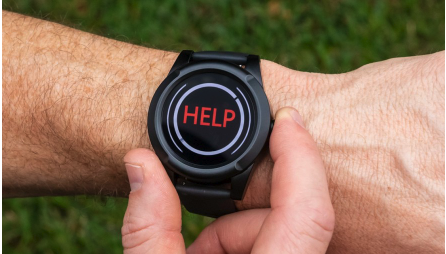
For those who prefer a watch, LifeFone’s smartwatch offers a GPS-based solution for active lifestyles. It tracks heart rate, steps, and weather, along with standard LifeFone medical alert features. The smartwatch runs on AT&T’s cellular network.
LifeFone Costs
LifeFone plans start at $25 per month (for annual billing), depending on the device. Discounts are available for quarterly billing, while monthly billing lets you try the system without a long-term commitment.
| Model | Billed Annually (per month) | Billed Quarterly (per month) | Billed Monthly (per month) |
|---|---|---|---|
| At-Home Landline | $24.95 | $27.95 | $29.95 |
| At-Home Cellular | $30.95 | $32.95 | $34.95 |
| At-Home & On-the-Go, VIP flex | $39.95 | $41.95 | $43.95 |
| At-Home & On-the-Go, VIP Active | $37.95 | $39.95 | $41.95 |
| At-Home & On-the-Go, VIPx | $39.95 | $41.95 | $43.95 |
| At-Home & On-the-Go Safe Watch Active | $43.95 | $45.95 | $47.95 |
Add-on options include:
- Fall detection: $5 per month
- Daily check-ins: $19 per month
- LifeFone Protection Plan: $5 per month
- Activity assurance: $6 per month
LifeFone Fees and Guarantees
LifeFone’s guarantees apply to all of their medical alert systems, regardless of model. There are no activation fees, equipment fees, or shipping fees.
- 30-day money-back guarantee for a risk-free trial
- Cancel anytime and pay only for service used; annual subscriptions require a contract, and no long-term commitment is required
- Price guarantee ensures your rate never changes while you’re subscribed
- Lifetime warranty covers all units, with free replacements if needed
- Optional LifeFone Protection Plan ($5 a month) covers damage, mishandling, loss, or theft for one base unit and two emergency button wearables per year
LifeFone Complaints
LifeFone holds an A+ rating with the Better Business Bureau (BBB), with just one complaint on record in the last three years. Reviews on Trustpilot and ConsumerAffairs are largely positive.
On Trustpilot, LifeFone averages 4.6 out of 5 stars, though some users note issues with fall detection. On ConsumerAffairs, LifeFone holds a 4.7 out of 5 rating from 730 reviews, with most complaints resolved satisfactorily.

LifeFone FAQs
When a user presses a button on their medical alert device, LifeFone connects them to a monitoring center that is open 24/7. Pressing the button instantly connects the user to a trained operator who can evaluate the situation, notify family members or caregivers, and call emergency services if necessary. Features like GPS tracking, two-way communication, and fall detection, depending on the device, offer extra security and assistance at home and while traveling.
Subscribers complete an emergency care profile with contact information for family members, friends, loved ones, or neighbors who can be reached if help is needed. For example, you can list a nearby neighbor to assist with non-medical issues at home. Medical details are also included in the profile, enabling operators to give the right level of assistance.
LifeFone works nearly everywhere in the U.S., though service may not be available in areas without cell towers. Before traveling, use AT&T’s coverage map to confirm cell coverage in your destination.
Not always. The At-Home system can travel with you, but you must notify LifeFone each time the base unit is moved. The On-the-Go systems use GPS, so you can travel freely without calling first.
Yes. All LifeFone pendants and wristbands are waterproof, except the Voice-in-Pendant, which is water-resistant. Wearables can safely be worn in the shower or bath.
No long-term contract is required. Service can be canceled at any time without penalty.
Conclusion
Since one out of five falls results in serious injury, medical alert systems provide both safety and greater independence. LifeFone earns high customer ratings among other medical alert providers and offers simple, affordable pricing. Today’s retirees are healthier, more active, and more likely to travel. LifeFone’s At-Home and On-the-Go systems offer flexibility for active lifestyles, while At-Home systems provide added security for aging in place.