
Retirement Living takes an unbiased approach to our reviews. We may earn money when you click a partner link. Learn More
Glass Elevators: Cost, Installation & Capabilities
Learn what glass elevators cost, how to install, and the benefits they offer.


Updated:
AT A GLANCE:
- The average starting cost of a home elevator is $30,000 for shaftless elevators but ranges over $100,000 for luxury-focused elevators. Homeowners pay around $65,000 on average for a home elevator.
- The average labor cost to install a home elevator ranges from $5,000 to $15,000, depending on the type of elevator and complexity of the project.
- Lifeway Mobility is one of the more expensive home elevator providers, with average costs ranging from $35,000 to over $100,000.
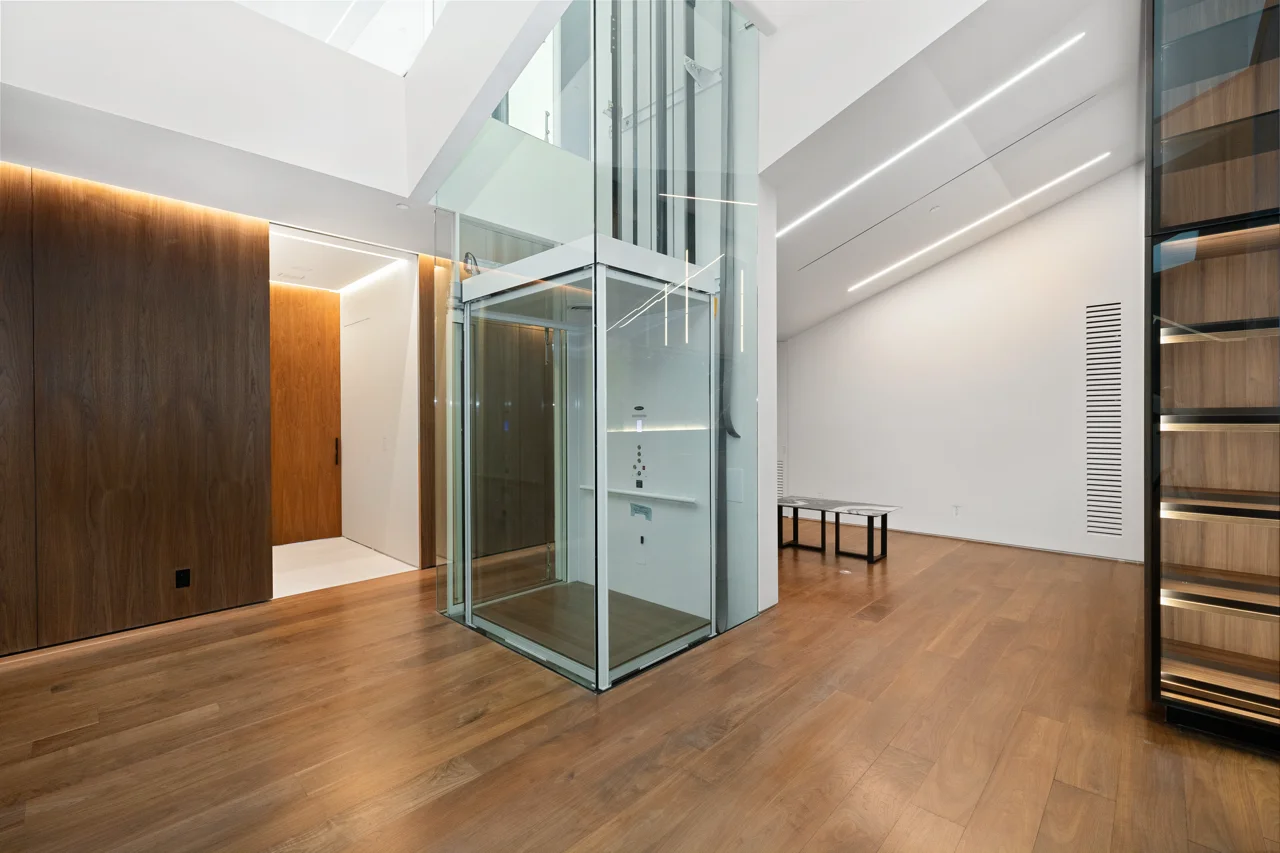
Glass home elevators let you move between floors safely while adding a modern look to your home. They are designed for residential use and rely on glass panels that create an open, panoramic feel.
In this guide, you’ll learn about the types of glass elevators available, what they cost, how installation works, and the benefits to consider before deciding if one is right for your home.
How Glass Elevators Differ from Standard Home Elevators
A standard home elevator is built with solid walls, a metal frame, and a closed cab. A glass elevator carries you between floors in the same way, but the ride feels different because of its design.
Clear glass panels replace solid walls, creating a panoramic view that feels open rather than enclosed. Beyond the ride itself, a residential glass elevator adds a modern design element that blends with the home instead of looking like an add-on.
The mechanical systems remain similar to other home elevators. Glass lifts can run on hydraulic, traction, or pneumatic vacuum drive systems. Most of the equipment stays hidden, so the design stands out more than the machinery.
Types of Glass Home Elevators
Glass home elevators can be built with different systems. The main types of home elevators are vacuum, shaftless, and traditional drive systems with glass panels.
Vacuum Elevators (Pneumatic)
Pneumatic vacuum elevators (PVE) use air pressure to move the cab up and down. They are built as clear cylinders with glass panels, which saves space and provides a wide view while riding. Installation is often simpler because no deep pit or machine room is needed.
Shaftless Glass Elevators
Shaftless models move along a track without a full hoistway. The smaller footprint makes them easier to add during a remodel or in tighter spaces. The elevator design is open and creates a modern look inside the home.
Traditional Drive Systems with Glass Panels
Hydraulic or traction systems can also be built with glass walls instead of solid ones. These models operate like standard home elevators but feature the open design of glass lifts. They usually require more construction but give you the same reliable function.
Cost of a Glass Elevator
A glass home elevator usually costs more than a standard model. Most installations fall between $30,000 and $75,000, although custom designs or larger builds can push the price higher.
Standard glass residential elevators often range from $20,000 to $40,000, so the added expense comes mainly from glass panels and the construction needed to support them.
The exact cost of home elevators depends on the following factors:
- Drive system: Hydraulic and traction elevators are reliable but require more construction and space, which increases installation costs. Pneumatic vacuum elevators use air pressure to move the cab and are often simpler to install, which may reduce labor costs.
- Customization: Expanding the cab to hold more than one person, adding extra stops for multiple floors, or choosing curved glass panels all increase the final price. These options are common in larger homes or when style is a priority.
- Glass quality: Standard tempered glass is the base option, but thicker or specialty glass adds to the price. Higher-grade materials improve durability and appearance but come at a premium.
- Installation work: Elevators added during new construction usually cost less to install. Retrofitting into an existing home often requires reinforcing floors or adding a shaft, which significantly increases labor and material costs.
When planning your budget, it helps to compare offers from trusted providers. Visit our Home Elevators Guide to see detailed reviews, pricing insights, and options for glass home elevators.
Installation Requirements for Glass Home Elevators
Installing a home elevator requires planning to make sure it fits safely and functions well in your home. The main points to review are space, structural changes, and the type of project.
The first step is checking how much room you have. Most elevators need about six to seven feet of clear height for each floor and a footprint that measures three to five feet wide. A smaller vacuum elevator may need less, while a larger custom cab will take more. Taking accurate measurements before you begin avoids costly changes later.
You should also be prepared for some structural work. In many homes, the project involves cutting through floors, reinforcing the frame, or building a shaft. The amount of work depends on your floor plan and the type of elevator you choose.
If you are building a new home, the process is easier because the space can be designed with the elevator in mind. Retrofitting an existing home takes more effort, but it is still possible with the right adjustments. Either way, the result can be a high-quality installation that combines safety with a modern look.
Another point to keep in mind is payment. Medicare and most insurance plans do not cover the cost of a residential elevator. In most cases, you will need to budget for both the equipment and the installation yourself.
Benefits of Glass Home Elevators
Adding a glass home elevator can support both daily living and the long-term value of your property. The main benefits include:
- Safe movement between floors: A glass elevator reduces the risks that come with stairs, especially if balance or mobility changes over time. You can move between floors without relying on others, which supports independence.
- Comfortable ride with an open feel: Clear panels create a panoramic elevator experience that feels less confined than a traditional cab. If you are sensitive to small, enclosed spaces, the open design makes each ride easier and more comfortable.
- Blends accessibility with design: A residential glass elevator provides function without looking industrial. The high-quality design and transparent walls allow the elevator to match the style of your home while serving a practical purpose.
- Adds long-term property value: Elevators are viewed as upgrades in many homes, and a glass lift can make the property more appealing to future buyers. Even if selling is not in your immediate plans, the investment supports your home’s value.
Finding the Right Glass Home Elevator Company
Once you understand the types, costs, and installation needs, the next step is choosing a provider. Visit our best home elevators guide to compare top companies and learn what to look for when selecting a high-quality glass home elevator.
Here are some of the leading providers we have reviewed:
| Company | Rating | Highlights |
| Lifeway Mobility | 4.6 | Multiple elevator types, design options, professional installation, strong warranty support |
| Arrow Lift | 4.4 | Wide range of home elevators, showroom test rides, maintenance and warranty plans |
| Stannah | 4.8 | Custom designs, compact shaftless options, intuitive controls for ease of use |
| Harmar | 4.8 | Compact platform lifts, indoor/outdoor options, safety features for mobility devices |
Many of these companies also offer wheelchair lifts. These can be a practical alternative if you need a smaller solution for accessibility but do not want a full residential elevator.
Help us keep our home elevator data accurate! If you’ve purchased or installed a glass home elevator recently, email us at [email protected] and share your experience. Your personal details will remain completely confidential.