
Retirement Living takes an unbiased approach to our reviews. We may earn money when you click a partner link. Learn More
Vertical Platform Lift: Cost, Pros & Cons
Discover how vertical platform lifts improve home accessibility, what they cost, and the pros and cons.


Updated:
AT A GLANCE:
- Vertical platform lifts provide safe access for wheelchairs, scooters, and power chairs in homes and public buildings.
- Costs range from $9,000 to $20,000, with price influenced by height, location, platform size, and added features.
- Vertical lifts offer independence and accessibility but require space, maintenance, and are limited compared to full residential elevators.
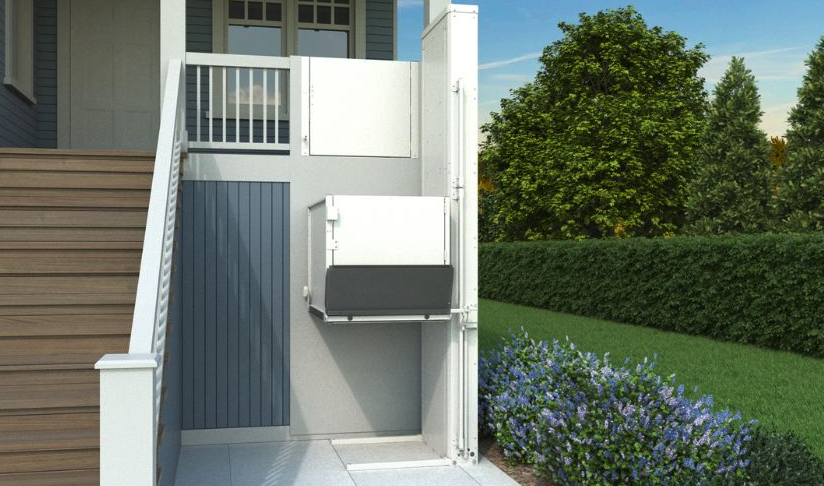
A vertical platform lift (VPL) is a mobility device that helps wheelchair users, scooters, and power chairs move safely between levels in a home or public building. These lifts are often used as an alternative to ramps, stair lifts, or full residential elevators.
In this article, we’ll explain what vertical platform lifts are, how they work, the types available, and what to expect in terms of cost, pros, and cons.
Understanding How Vertical Platform Lifts Work
A vertical platform lift moves a wheelchair, scooter, or power chair between levels by raising and lowering a platform. You roll onto the lift, close the gate, and press a control button until you reach the landing. The platform stops as soon as you release the button, which is an important safety feature.
Most vertical platform lifts use one of two drive systems. Each works differently but is built to provide steady, reliable travel:
- Screw drive (acme screw): A motor turns a long threaded rod, and the platform moves as the screw rotates. This design is simple and dependable, making it common in residential lifts.
- Hydraulic drive: Fluid pressure raises and lowers the platform through a piston system. This type often provides a smoother ride and is frequently used in larger or higher lifts.
Vertical platform lifts use constant pressure controls, so the platform only moves while the button is pressed. Emergency stop buttons allow the rider to halt the lift at once, and backup systems keep it usable during power outages.
These lifts also follow safety standards set by the Americans with Disabilities Act (ADA) and the American Society of Mechanical Engineers (ASME).
When you look at a lift, you will notice a few basic parts:
- Platform: The surface where your mobility device rests.
- Gates: A platform gate and a landing gate that secure you during use.
- Controls: Simple switches or buttons that allow you to operate the lift on your own.
Vertical platform lifts are common in both homes and public spaces. In residential settings, they are often installed at porches, raised entryways, or to connect interior levels. In schools, churches, and offices, they provide an accessibility solution where ramps or elevators are not practical.
Types of Vertical Platform Lifts
Vertical platform lifts are one of several types of wheelchair lifts available today. The right choice depends on where you plan to install it and how much protection from weather or building structures you need.
- Unenclosed lifts (porch lifts): These open designs are often placed outside a home to connect the ground with a porch or raised entryway. They are cost-effective for outdoor use and include gates for safety.
- Enclosed lifts: These come with walls, a platform gate, and a landing gate, creating a contained space for the rider. They offer extra security and protection, especially for indoor installations.
- Shaftway or hoistway lifts: These are installed inside a shaft built into the home or building, similar to a small elevator. They can blend more easily with the structure but require additional construction.
- Hybrid and commercial lifts: These models are designed for schools, churches, offices, and other public buildings. They provide durable performance, are ADA compliant, and accommodate higher lifting heights.
Leading brands such as Arrow Lift, Lifeway Mobility, Bruno, and Harmar offer models across these categories. Each brand provides different features and price points to match your specific needs.
Vertical Platform Lift Cost
A vertical platform lift for a home typically costs between $9,000 and $20,000, including equipment and installation. Outdoor porch lifts are usually at the lower end of the range, while enclosed or shaftway models with added features fall at the higher end.
Here are some factors that affect the final cost of wheelchair lifts:
- Lifts that travel higher or stop at more than one landing cost more because they need stronger towers and additional installation work.
- Outdoor models are more expensive than indoor lifts since they must be weather-resistant and built for year-round use.
- Platforms built with wider or higher lifting capacity cost more because they use extra steel and stronger drive systems.
- Features such as powered gates or automatic controls increase the price by adding electrical components and wiring.
- Heavy-duty models with longer warranties have higher upfront prices but reduce the chance of paying for repairs later.
The best way to understand actual pricing is to request a free quote based on your home layout and accessibility needs.
Pros of Vertical Platform Lifts
Here are some of the main benefits of vertical platform lifts:
- Lower overall cost than installing a residential elevator
- Works with wheelchairs, scooters, and power chairs without needing transfers
- Easier to install than an elevator, with less structural change to the home
- Suitable for both indoor and outdoor access, including porches and raised entryways
- Provides stable travel with steady speed and safety features like constant-pressure controls
- Designed to meet ADA and ASME standards for accessibility and safety
- Adds long-term value by making a home more accessible for aging in place
Cons of Vertical Platform Lifts
On the other hand, there are also some drawbacks to keep in mind:
- Requires enough space and sometimes structural changes during installation
- Can look more mechanical and less integrated than a residential elevator
- Needs regular checks and maintenance for the drive system and safety controls
- Limited to shorter lifting heights compared with full elevators
- Can be slower to operate than other accessibility options
Choosing the Right Lift Solution
Before buying a vertical platform lift, review these practical considerations:
- Match the lifting height to your home’s needs; taller lifts often require stronger equipment and higher costs.
- Check the weight capacity against the wheelchair, scooter, or power chair being used.
- Measure available space to confirm the platform size will fit without blocking doors or walkways.
- Decide if the lift will be installed indoors or outdoors, since outdoor models must be weather-resistant.
- Compare a VPL with other types of wheelchair lifts, such as stair lifts and inclined platform lifts, to see which option provides safer and easier access in your setting.
- Look for ADA- and ASME-compliant models to make sure the lift meets accessibility and safety standards.
- Review warranty terms and local service availability to avoid unexpected repair expenses later.
To compare pricing and features across leading brands, visit our guide on the best wheelchair lifts.
FAQs about Vertical Platform Lifts
Most unenclosed porch lifts can be installed in one day. Enclosed or shaftway models often require additional construction work, so the process can extend to several days or even weeks, depending on complexity.
A vertical platform lift usually needs a clear platform area of about 4×5 feet, plus extra room for gates, landings, and safe entry and exit. Outdoor models may also require a concrete base.
Unenclosed porch lifts can sometimes be disassembled and reinstalled at a new location. Enclosed and shaftway models are generally permanent installations and cannot be moved without significant reconstruction.
Screw drive lifts tend to produce more mechanical noise during operation. Hydraulic models are typically quieter and provide smoother travel, making them a preferred choice when noise is a concern indoors.
Help us improve our guides! If you’ve recently purchased a vertical platform lift or have insights on how yours works, we’d love to hear from you. Share your experience with us at [email protected]. Your personal details will stay completely confidential.