
Retirement Living takes an unbiased approach to our reviews. We may earn money when you click a partner link. Learn More
Types of Wheelchair Lifts for Homes
Whether you need a permanent installation or a portable solution, wheelchair lifts improve accessibility, safety, and independence.


Updated:
At a glance:
- From vertical and inclined platform lifts to portable and vehicle lifts, there’s a lift perfect for your home and mobility needs.
- Wheelchair lifts require less space than ramps and are more affordable than full residential elevators.
- Platform size, lift range, weight capacity, safety features, and installation needs all impact the right choice for your home.
Installing a wheelchair lift in your home is a great way to improve accessibility and increase independence for yourself or your loved ones. They allow people who use wheelchairs or other mobility devices, like scooters and power chairs, to easily navigate between different levels of their home.
Wheelchair lifts can be made for indoor or outdoor use, making both residential and commercial spaces more wheelchair accessible.
They are a practical solution for homes with multiple floors, high entryways, or steep steps. Additionally, wheelchair lifts typically take up less space than ramps, which require enough space for slope adjustments.
Below, we explore the main types of wheelchair lifts to help you discover which style is best suited for your needs.
Vertical Platform Lifts (VPL)
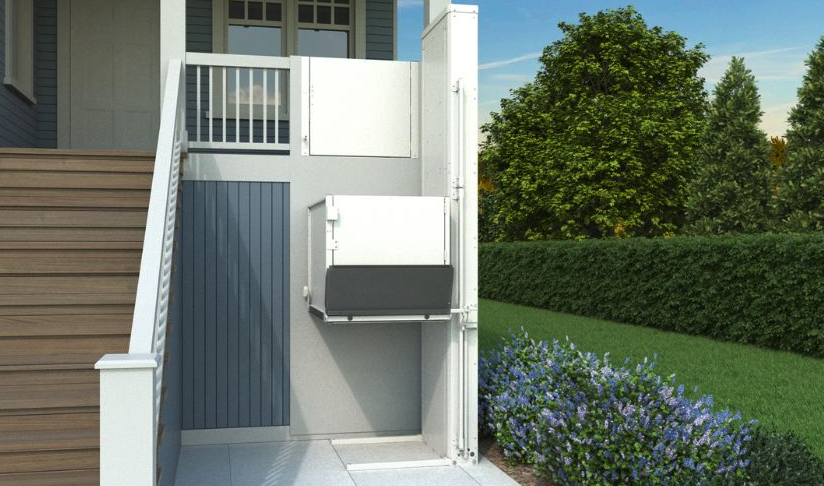
Vertical platform lifts (VPLs) are the most common type of wheelchair lift for residential homes. They are similar to small elevators, raising and lowering the wheelchair and user vertically between floors or levels. They can be installed both inside and outside, making them a versatile option for homes with porches and desks. They can be installed in existing or new homes and can accommodate different weight capacities.
Most vertical platform lifts have an open platform, allowing the wheelchair to easily roll onto the lift. However, some vertical lifts can be enclosed for added safety, especially outdoor wheelchair lifts that are exposed to all types of weather.
Vertical platform lifts are a cost-effective solution for individuals looking for a secure and space-saving accessibility option.
Inclined Platform Lifts
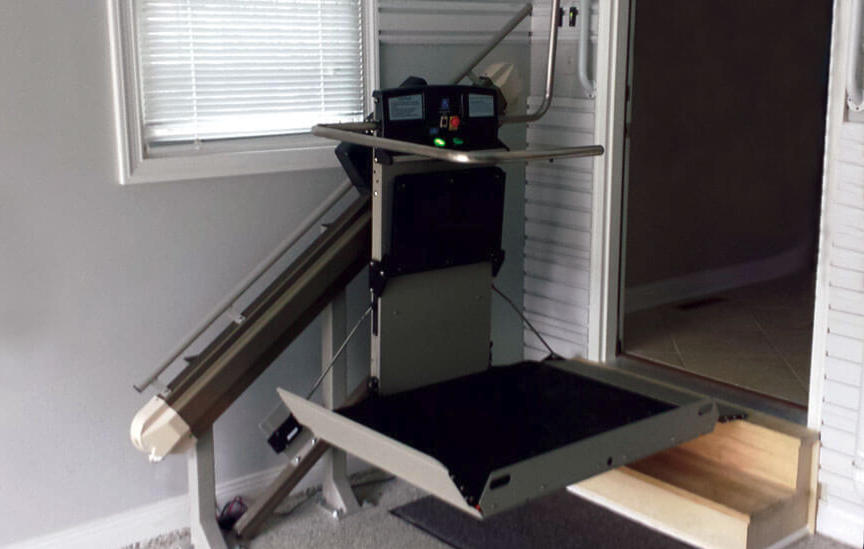
Inclined platform lifts (IPLs) are made to move wheelchairs and their users along a track, typically on a staircase. The platform travels along the incline of the stairs. They are similar to stair lifts; however, rather than only transporting a person, inclined platform lifts can carry the user and the wheelchair up a flight of stairs.
Typically, inclined platform lifts are installed in homes where the staircases have a strong structural integrity and are too steep for ramps. They can be created for both straight and curved staircases, and can be folded up when not in use, making them ideal for homes with limited space.
Like VPLs, inclined platform lifts can be installed indoors and outdoors. They are designed to navigate curves, landings, and other complex staircase designs, making them a great home accessibility solution for individuals with wheelchairs who need to move up and down stairs regularly.
Portable Wheelchair Lifts
Portable wheelchair lifts are commonly used for travel, events, or locations where installing a permanent wheelchair lift isn’t feasible. They are a great option for people who need a temporary solution or require mobility assistance across multiple locations.
Portable wheelchair lifts are freestanding units that are typically lightweight, easily moved, and don’t require permanent installation, making them highly flexible and convenient.
However, due to their portable nature, these lifts typically have a lower lift range and weight capacity. They are also less durable than permanent lifts, so keep that in mind if you’re considering purchasing or renting a portable wheelchair lift.
Vehicle Wheelchair Lift
In addition to building wheelchair lifts for the home, many manufacturers create lifts for vehicles. These can include under-mount lifts, hoist lifts, and vehicle lifts, which can be installed in a van. Vehicle wheelchair lifts make it easier to transition in and out of cars with your mobility device.
Benefits of Wheelchair Lifts in the Home
Having a wheelchair lift in your home offers plenty of benefits.
- Increased mobility and independence: Individuals who use wheelchairs often face barriers in their homes. A wheelchair lift provides convenient access to different levels, without the person having to leave their mobility device behind, increasing mobility and independence.
- Increased safety: Wheelchair lifts offer a safer alternative to ramps on staircases, especially when the stairs are steeply inclined and there is limited space in the home. Additionally, lifts are equipped with features like non-slip platforms, safety rails, and emergency stop buttons.
- Space-saving design: Wheelchair lifts generally have a smaller footprint than ramps and residential elevators, making them great for homes with limited space.
- Cost-effectiveness: Compared to traditional elevators, wheelchair lifts are a more affordable option, with costs ranging from $4,000 to $25,000, especially for existing homes that can’t fit a full elevator shaft.
- Customization options: Many modern wheelchair lift providers allow for a wide range of customization, giving homeowners a choice of designs, materials, and finishes.
Wheelchair lifts improve an individual’s quality of life by enhancing accessibility and safety, contributing to a more comfortable, independent, and enjoyable living experience.
What to Consider When Choosing the Right Type of Wheelchair Lift for Your Home
When looking for a wheelchair lift, you want to ensure it has all the necessary features to give you full home accessibility and independence while keeping you and your family members safe.
Consider these aspects when choosing a wheelchair lift:
- Platform size: Standard platform sizes are around 36″ x 48″ or 34″ x 54″. You’ll want to make sure the wheelchair lift has enough space for you and your mobility device. If your mobility device is larger than usual, ask the manufacturer about customizing the platform size.
- Lift height and range: The length of the wheelchair lift will depend on the type and model. Vertical platform lifts have a typical height of 53 inches to 171 inches. An inclined platform lift will typically be between 40 and 168 inches. Consider where you’ll be installing the lift and make sure the unit you’re looking at has an appropriate range.
- Weight capacity: The wheelchair lift needs to carry both you and your mobility device, so you need to know your combined weight. Most residential lifts have a weight capacity from 550 to 750 pounds.
- Battery backup: In the event of a power outage or the main battery failing, having a backup ensures you can travel safely. Speak with the lift provider to know what kind of battery backup system they offer.
- Lift installation time and cost: You should consult your provider about their installation process (whether they provide installation or if you have to go through a third party) and request a free quote for installation. This will allow you to properly plan and budget for your wheelchair lift.
- Maintenance warranty: Most manufacturers offer a limited warranty for maintenance and repairs. It’s important to fully understand what these warranties entail, so be sure to ask the provider for details.
- Additional safety features: Your safety is the most important factor when installing a wheelchair lift. Consider what safety precautions are most important to you and talk to your provider about finding a unit that meets all those requirements.
The Bottom Line
Having an accessible home is vital for those with mobility issues or those planning to age in place. For individuals using wheelchairs, residential wheelchair lifts, including inclined platform lifts and vertical platform lifts, provide a space-saving and cost-effective accessibility solution, as they occupy less space than ramps and are less expensive than home elevators.
Whether you need a permanent lift installed in your home or a portable lift for temporary or limited use, there are many types of wheelchair lifts that can make your home safer and more accessible.
Frequently Asked Questions (FAQs)
A wheelchair lift is a mechanical device made to carry individuals in wheelchairs between levels of a building. They have a powered platform, which the wheelchair sits on, that moves either vertically or along an inclined path. Wheelchair lifts are usually powered by a screw drive or a hydraulic drive system, which allows for smooth and safe transportation between floors. For a deeper look at the mechanics, check out our guide on how a wheelchair lift works.
No, Medicare does not pay for wheelchair lifts as they are generally considered home modifications rather than durable medical equipment.
When looking for a wheelchair lift for your home, consider what you require to have full home accessibility and independence. Consider safety features such as non-slip platforms, grab bars, railings, and emergency stop buttons. Consider features like battery backups, how the machine is operated, and whether the home lift is open or enclosed.
Vertical platform lifts are usually powered by either standard household current (AC) or battery power (DC). The AC option uses a standard electrical outlet, while the DC option utilizes batteries that are continuously charged. In the case of a power outage, battery-powered lifts are preferred.
The actual cost of installing a wheelchair lift varies depending on where it’s being installed, the type of lift, and the model. However, the price normally ranges from 15% to 25% of the total project cost.
Delivery of a wheelchair lift can take anywhere from a few days to several weeks. The time depends on the unit and the number of customizations it has. Standard in-stock lifts can be shipped within a few days, while custom or complex lifts could take 2 to 4 weeks.
Typically, you’ll need about 5′ x 5′ (60″ x 60″) for standard wheelchair platform lifts. However, depending on location, model, and customizations, a wheelchair platform lift can take up more or less space. It’s important to consider each model’s specifications before purchasing the lift.
Help us improve our data! Email your latest wheelchair lift quote to [email protected] or submit a review about your experience. Your personal details will remain completely confidential.