
Retirement Living takes an unbiased approach to our reviews. We may earn money when you click a partner link. Learn More
Portable Wheelchair Lift: Cost, Pros & Cons
Portable wheelchair lifts cost $6,950 on average, are highly flexible, cost-effective, and don’t require permanent installation.


Updated:
At a glance:
- Portable wheelchair lifts range from $900 to $13,000+ on average; however, depending on the model and features, some can be as low as $600 or as high as $20,000.
- Portable wheelchair lifts are highly flexible, cost-effective, require no permanent installation, and reduce caregiver strain.
- However, these wheelchair lifts tend to have lower weight capacities and travel height due to their portability.
Homeowners and businesses have plenty of options to consider when seeking the best wheelchair lift. Whether you’re hosting an event or traveling and need a temporary lifting solution for those with mobility devices, consider purchasing a portable wheelchair lift.
Of the types of wheelchair lifts, portable lifts are more flexible and convenient due to their lightweight design, allowing you to place them in the best location. Below, we provide an overview of what portable wheelchair lifts are, the average price range, and the pros and cons to help you make an informed decision about whether a portable wheelchair lift is right for you.
What is a Portable Wheelchair Lift?
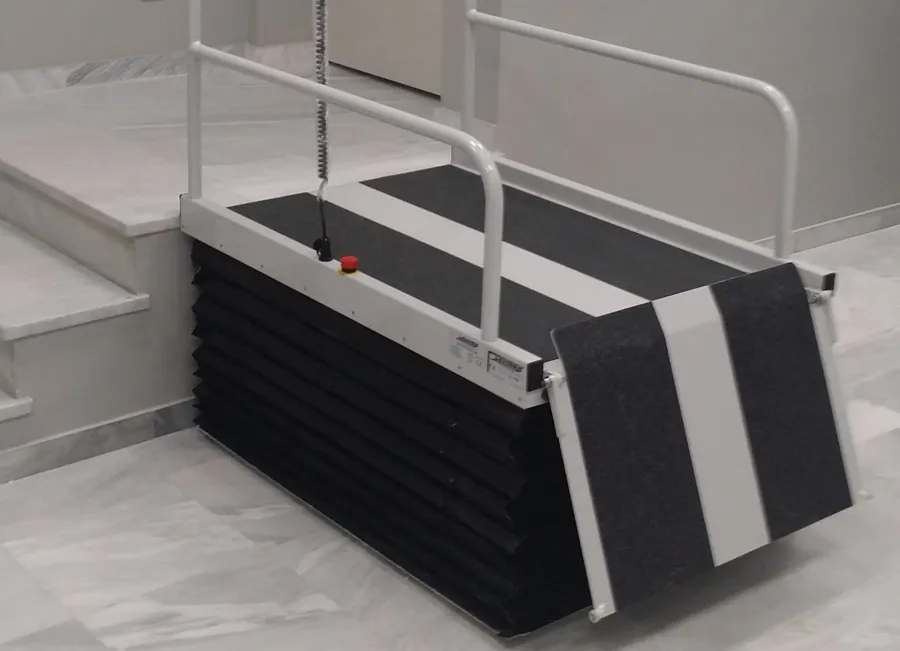
A portable wheelchair lift is a mobile, temporary, ADA-compliant lift that provides wheelchair users access to various locations, like stages, platforms, and sometimes vehicles. These freestanding units are commonly used for travel, events, or locations where permanent installation isn’t feasible.
They come in different sizes to suit your needs, allowing both individuals and venues to find a unit that works best for their situation.
Types of Portable Wheelchair Lifts
There are three main types of portable wheelchair lifts: vertical, inclined, and vehicle lifts.
Portable vertical platform lifts (VPLs) move up and down and operate like mini elevators. They are great for events that require temporary wheelchair access to an elevated platform like a stage, deck, or upper landing. Most vertical platform wheelchair lifts have an open platform, allowing the wheelchair to easily roll onto the lift.
Portable inclined platform lifts (IPLs) are wheelchair lifts that move along an incline, usually stairs. Due to their portable nature, many inclined wheelchair lifts are manually operated and require a caregiver to guide the wheelchair user down. However, powered lifts are available, meaning no exertion is required on the guide’s part.
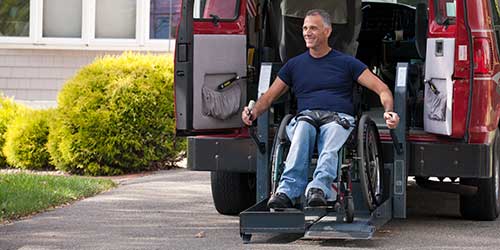
Another common type is the vehicle lift, sometimes called a power wheelchair lift. These units are often super lightweight and foldable, and they can be installed in or on a vehicle. They can lift the electric wheelchair or mobility scooter in and out of your vehicle, making transportation easier. However, these portable lifts usually have limited lifting capacity and can only carry the wheelchair without the user.
How Much Do Portable Wheelchair Lifts Cost?
Wheelchair lifts can range anywhere from $4,000 to $25,000, but when looking at portable wheelchair lifts, you can expect prices closer to $900 to $12,000 on average. However, some newer, more advanced models can reach up to $20,000. The price mainly depends on the type of lift, durability, lifting height, and features.
Portable wheelchair lifts for homes and vehicles tend to cost less than commercial wheelchair lifts, which are more heavy-duty and can make more frequent trips. Lifts with additional features (such as enclosure kits, enhanced controls, or extended warranties) can increase the total cost.
Vertical and inclined wheelchair lifts are typically on the higher end ($5,000 to $10,000 on average) because they are more complex and require more components that must be high-quality and ADA-compliant. They also have a higher weight capacity and lifting height.
Portable wheelchair lifts for vehicles, on the other hand, have an average price range of $1,500 to $4,000; however, some models can be as low as $600 or as high as $10,000, depending on their primary function and how advanced they are.
Portable Wheelchair Lift Pros
Portable wheelchair lifts are a wonderful option for those seeking reliable yet temporary accessibility solutions. Below are some of the main benefits you can expect from a portable lift.
Pros:
- Flexible use
- Space efficient
- No permanent installation
- Easy to store
- Quick setup
- Cost-effective
- Increased accessibility for loved ones
- Perfect for emergency situations
- Works indoors and outdoors
- Increased independence
- Reduced strain on caregivers
- Safety features (non-slip platforms, seatbelts, locking mechanisms, etc.)
- No remodeling required
- One solution for multiple areas
Portable Wheelchair Lift Cons
While portable wheelchair lifts offer plenty of benefits, there are a few drawbacks to keep in mind.
Cons:
- Limited lifting range
- Typically requires manual operation
- Lower weight capacity than permanent lifts
- Can be challenging to move
- Less durable than permanent lifts
- Slower speeds
- Often require a consistent power source
- May not be weather-resistant
Who are Portable Wheelchair Lifts Best For?
Portable wheelchair lifts are best for locations like convention centers, banquet halls, or community centers that need accessibility solutions for specific events, not year-round. They are also a great solution for historic preservation projects that require ADA-compliant access without altering the original structure of a historic site.
People who use manual wheelchairs or power chairs can greatly benefit from portable wheelchair lifts, as they provide easy access to areas without the commitment of a permanent installation. They are also a wonderful solution for individuals with temporary mobility challenges who need access to elevated areas while they recover.
Portable lifts can be moved between locations, providing a single solution across multiple locations and making them great for travel. Plus, they usually take up less space than wheelchair ramps, which is ideal for areas with limited space available that need to meet ADA standards.
Bottom Line: Portable Wheelchair Lifts are a Cost-Effective and Flexible Accessibility Solution
Whether you’re seeking a way to meet ADA standards without major remodeling or you need a temporary solution at home, portable wheelchair lifts are worth considering. Not only are they cost-effective, but their portability also makes them highly flexible, often providing a single solution for multiple locations.
Portable wheelchair lifts are a good alternative to chair lifts and ramps, since they are less intrusive. They offer those with mobility challenges easy access to previously difficult-to-reach areas, promoting independence.
Frequently Asked Questions (FAQs) About Portable Wheelchair Lifts
Yes, portable wheelchair lifts are safe to use outdoors. However, not every portable lift is designed for outdoor use, so be sure to confirm whether the lift is suitable for that when researching. Always be sure to discuss use cases with the provider during consultation.
The best wheelchair lift depends on your specific needs and budget. When looking for the best wheelchair lifts, consider whether you need a permanent solution, the installation location, what safety features are most important, the travel height, the required space, and whether any home modifications are required. Answering these questions will help you identify which wheelchair lift model and manufacturer is best for you.
No, Medicare won’t pay for a wheelchair lift. Wheelchair lifts are considered home modifications, not durable medical equipment (DME), so they are not covered under the basic Medicare plan. However, some Medicare Advantage plans may help cover the cost if certain conditions are met, so be sure to contact your insurance provider to see what options are available.
No, portable wheelchair lifts aren’t the same as traditional vehicle wheelchair lifts. Generally, a portable lift is a temporary solution used to load only the wheelchair in and out of a vehicle, while traditional vehicle lifts are permanently installed and can lift both the wheelchair and occupant directly into the vehicle.
Help us improve our data! Email your latest wheelchair lift quote to [email protected] or submit a review about your experience. Your personal details will remain completely confidential.