
Retirement Living takes an unbiased approach to our reviews. We may earn money when you click a partner link. Learn More
What is a Platform Lift?
Learn how platform lifts help you move safely between levels with your wheelchair or scooter, and what to know before choosing one.


Updated:
AT A GLANCE:
- Platform lifts move you and your wheelchair, power chair, or scooter between levels, offering a safe way to navigate stairs, porches, or raised entryways.
- They come in several types, including vertical platform lifts (VPLs), inclined platform lifts (IPLs), and porch lifts, each designed for different spaces and mobility needs.
- Platform lifts are smaller and more cost-effective than residential elevators, making them a practical option for homes and public buildings.
A platform lift is a powered mobility device that moves you and your wheelchair, power chair, or mobility scooter between floors, stair landings, or raised entryways. It provides a safe, convenient way to reach spaces that aren’t accessible by ramps or stairs.
This article explains how platform lifts work, the types available, their safety features and costs, and how they compare to stair lifts, passenger lifts, and residential elevators.
How a Platform Lift Works
A platform lift can move straight up and down in a vertical track or glide diagonally along an existing staircase. It allows you to travel between levels while staying in your wheelchair, power chair, or scooter.
The lift runs on an electric motor or screw-and-nut drive system that raises and lowers the platform. You operate it with simple controls. Most models include safety gates that stay closed while the lift is moving. They also have emergency stop buttons to halt the lift instantly and battery backups that keep it running during a power outage.
Platform lifts are smaller, slower, and less enclosed than passenger lifts or residential elevators. Their lower lifting heights and simpler designs make them a practical, cost-effective choice for homes or small spaces.
Types of Platform Lifts
Here are the main types of platform lifts:
Vertical Platform Lift (VPL)
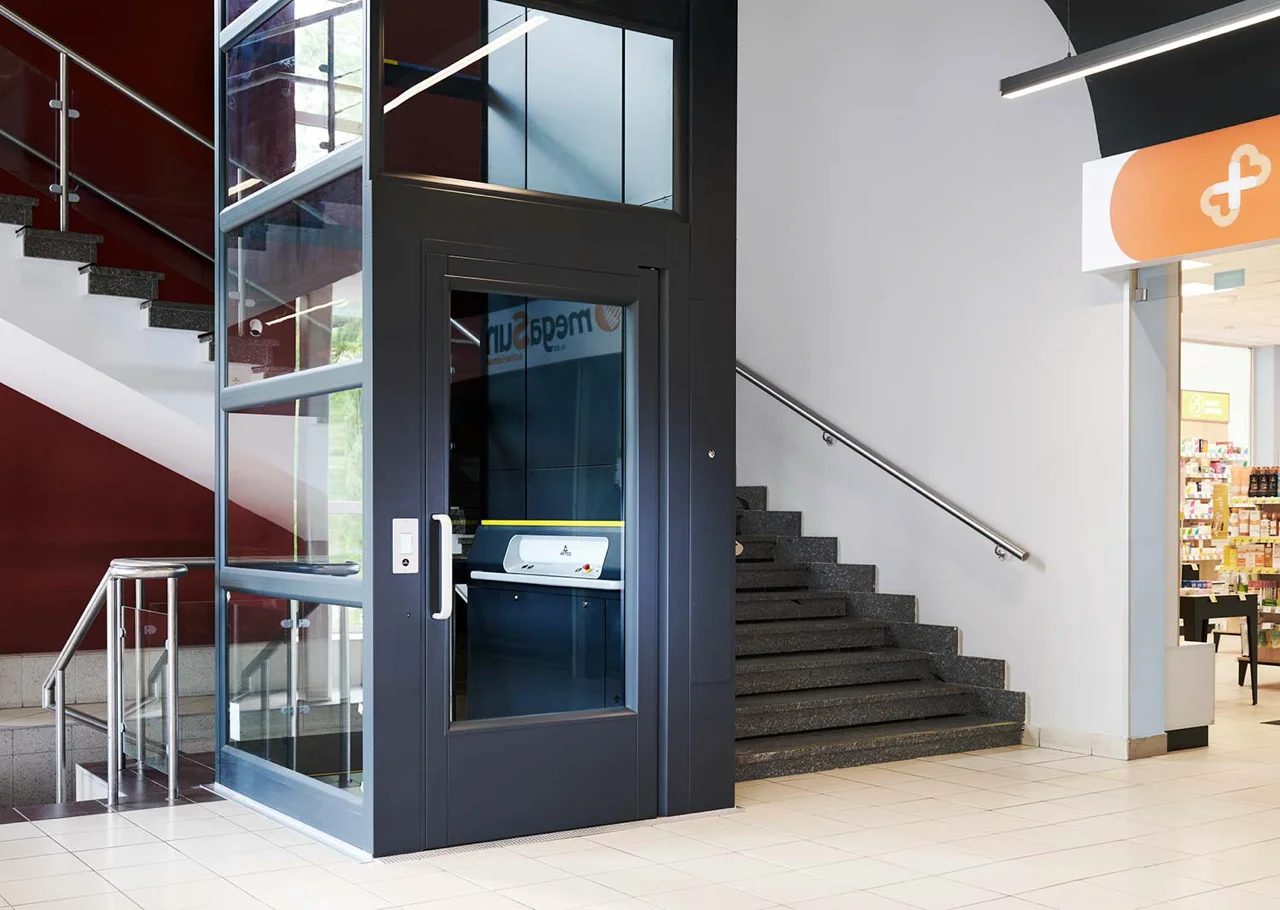
A vertical platform lift moves straight up and down between two levels, like a mini elevator. It is often used to get from the ground to a porch, deck, or raised entryway.
Some models are placed inside a shaftway (an enclosed wall structure built around the lift for extra protection), while others stay open on the sides. Vertical lifts are also common inside small commercial buildings where a full elevator will not fit.
Inclined Platform Lift (IPL)
An inclined platform lift moves along the path of existing stairways. It carries you and your mobility device over straight or curved staircases without needing extra space on the floor. The lift folds up flat against the wall when not in use, so others can still walk on the stairs.
Porch Lift
A porch lift is an outdoor version of a vertical platform lift. It helps you move from the ground up to a porch, deck, or raised entry landing. These lifts are built to handle rain, snow, and temperature changes so they can stay in place year-round.
Where Are Platform Lifts Used?
Platform lifts are used anywhere steps or raised areas make it hard to move between levels with a wheelchair, power chair, or scooter.
Here are the most common places you might see them:
Homes
A platform lift for home can help you reach parts of your house that have steps or level changes. You might place a lift at:
- The front or back entry, to get from the ground up to a porch or deck
- Inside the home, to connect a split-level floor or raised living room
- Between the garage floor and the main house level
A platform lift can be an easier option than building a long ramp or installing a full residential elevator. It gives you direct and easy access to these areas while staying in your wheelchair, power chair, or scooter.
Public and Commercial Buildings
Platform lifts are often installed in commercial settings like libraries, schools, small shops, offices, and community centers. These buildings sometimes have stairs at their entrances or between floors inside, which can block access for wheelchair users, power chairs, or scooters.
A lift provides a way to move between these levels safely when a wheelchair ramp will not fit or would be too steep.
Since these lifts are open to the public, they must meet ADA-compliant safety and design rules from the Access Board. These standards make the lift safe, reliable, and easy to use independently.
Platform Lifts vs Other Mobility Devices
If you are deciding how to move between levels safely, here are the main options to compare:
- Stair lifts move you while you sit on a chair that glides along a rail attached to the stairs. They can be useful if you are able to walk short distances and can transfer yourself from a wheelchair or scooter onto the seat. However, they do not carry mobility devices, so they are not suitable if you rely on a wheelchair, power chair, or scooter full-time.
- Residential elevators are fully enclosed lifts that move between floors inside a built-in shaft. They can carry both you and your mobility device, but they take up much more space than other options. Installing one usually requires major construction and much higher costs.
- Platform lifts carry you while you stay in your wheelchair, power chair, or scooter. They need less space than an elevator and usually cost less to install. Platform lifts are often the best choice if you use a mobility aid and want a simple way to move between levels without transferring out of your chair.
Safety Features to Look For in a Platform Lift
When choosing a platform lift, check that it includes these key safety features:
- Safety gates: Lock in place across the platform opening while the lift moves. This keeps your wheelchair, power chair, or scooter from rolling off.
- Guardrails or side panels: Line the sides of the platform to prevent wheels from slipping off, especially on open-style lifts.
- Non-slip platform surface: Textured flooring that prevents wheels from sliding if the platform gets wet.
- Emergency stop button: A large, easy-to-reach button that immediately stops the lift if something blocks the platform or if you feel unsafe.
- Battery backup: A built-in power source that lowers the platform to the ground during a power outage.
Platform lifts also need regular inspections and maintenance. A technician can check the drive system, controls, and safety parts to keep the lift working safely and reliably.
Costs and Buying Considerations of Platform Lift
Platform lift prices vary based on the type and the setup. VPLs often start at lower prices than IPLs because they are simpler to install. IPLs usually cost more because they must be custom-fitted to the shape of your stairs.
Both types are generally more cost-effective than installing a full residential elevator.
Here are some factors that affect the total cost of a platform lift:
- Lifting height: A short lift, such as from the ground to a porch, costs less because it needs fewer parts. A lift that goes between full floors needs taller rails, stronger framing, and more powerful motors, which raises the price.
- Platform size: The platform must fit your wheelchair, power chair, or scooter. Standard sizes work for most wheelchairs, but larger devices may need a wider or deeper platform. Bigger platforms use more materials and space, which increases both equipment and installation costs.
- Indoor or outdoor location: Outdoor lifts must handle rain, snow, and temperature changes. They use weather-resistant covers, sealed controls, and rust-proof materials. These features help them last longer but add to the upfront cost.
- New vs. used: New lifts include full warranties and up-to-date safety features. Used lifts cost less but may not last as long and could need more repairs. If buying used, check the age, service history, and whether parts are still available.
To understand which accessibility solution best suits your space and budget, compare the top platform lift brands by reviewing the best wheelchair lifts.
Help us improve our guides! If you’ve recently purchased or installed a platform lift or have insights on how yours works, we’d love to hear from you. Share your experience with us at [email protected]. Your personal details will stay completely confidential.