
Retirement Living takes an unbiased approach to our reviews. We may earn money when you click a partner link. Learn More
What Is The Minimum Width For A Stair Lift?
The minimum width for a stairlift is between 29 and 34 inches, depending on the type of lift.
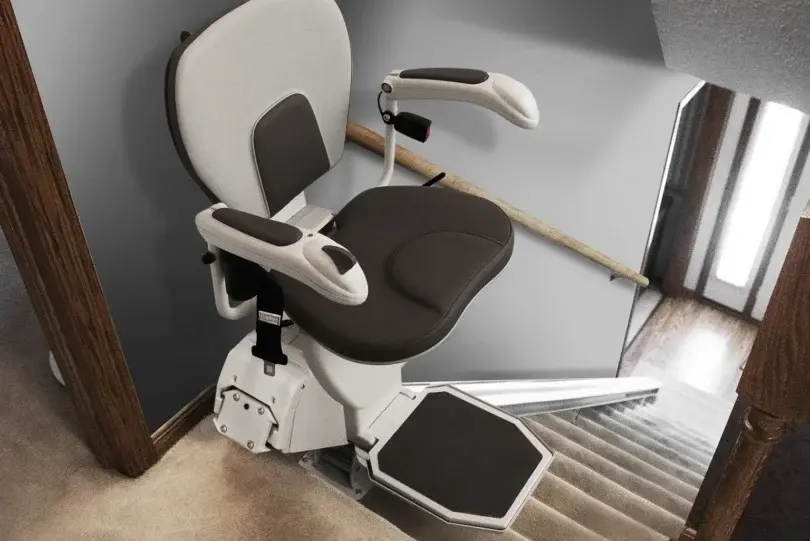


Updated:
At a glance:
- For a straight stairlift, the minimum staircase width needed is 29 to 30 inches. Curved stairlifts need around 30 to 34 inches. Some stairlift models can fit in spaces as narrow as 26 to 28 inches.
- Stairlift tracks extend out from the wall by about 6 to 9 inches, while the far edge of the footrest is usually about 22 to 27 inches from the wall.
- When folded, stair lift chairs take up about 12 to 18 inches, depending on the model.
If you or a loved one has limited mobility and is planning to age in place, then installing a stairlift is a cost-effective accessibility solution that increases independence and safety. However, to find the right stair lift for you, you will need to first consider the width of your staircase.
The minimum width needed for a stairlift varies, depending on the type of staircase. Typically, you’ll need between 29 and 34 inches (74–86 cm) to easily accommodate a stairlift; however, some units can fit in spaces as narrow as 26 to 28 inches (66–71 cm).
Most modern staircases in the United States are at least 36 inches (or 3 feet) wide, making it simple and fast to install a stairlift in your home. However, if your home is more than 50 years old, your staircase may be narrower, in which case you may need to consider specialized units.
Minimum Widths by Stairlift Type
The type of stairlift you need will affect the minimum width. Straight stair lifts require less space than curved stair lifts, whether you’re installing an indoor or outdoor stair lift. You will also need to consider obstructions, such as handrails and head clearance, when measuring the width of your staircase.
It’s also important to keep in mind that the chair will not sit flush against the wall. The stairlift track is mounted on the stair treads and extends out from the wall by about 6 to 9 inches, depending on the track and manufacturer. Additionally, the far edge of the footrest is usually about 22 to 27 inches from the wall, but this can typically be folded when not in use.
Minimum Width for Straight Stairlifts
When installing a stairlift on a straight staircase, you will need a minimum staircase width of 29 to 30 inches to fit standard models. This distance is more than enough to allow you to safely travel up the steps, as well as allow for others to easily use the stairs when the chair lift is folded up.
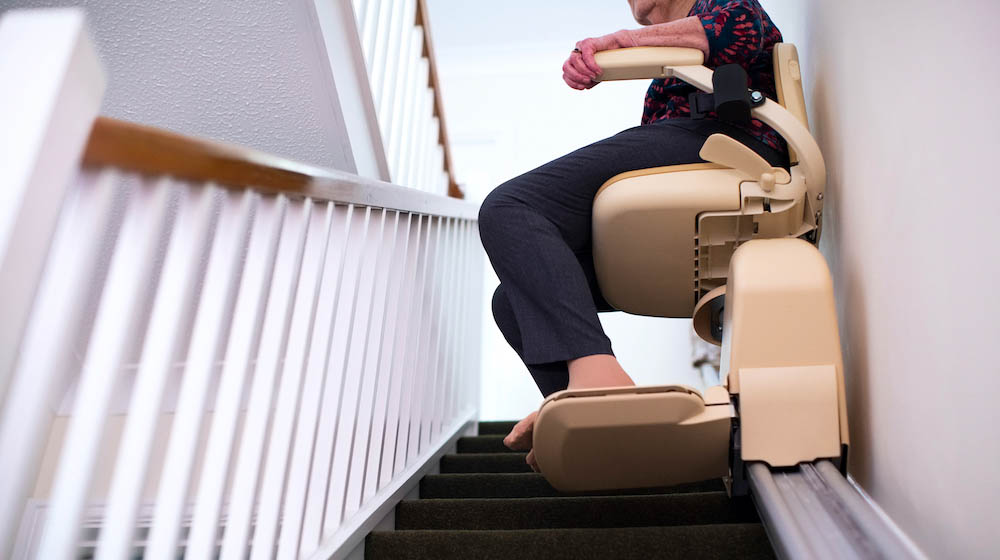
ONot sure how to measure for a stair lift? Don’t worry. Getting the measurements for your straight staircase is pretty straightforward. During your consultation, a representative will measure the distance from the wall on one side to the wall or railing on the other. Most modern staircases are wide enough for standard stairlift models, but in the case your staircase is narrower, the representative can discuss alternatives.
Minimum Width for Curved Stairlifts
Curved staircases typically require more space for a lift due to the stairlift rail’s curve and the chair’s rotation. The minimum width for a curved stairlift is 30 inches; however, some curved stairlift models require up to 34 inches.
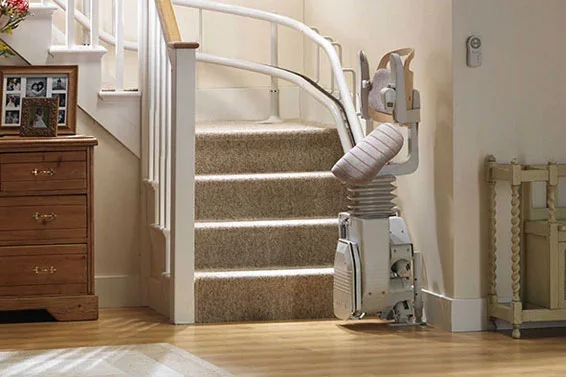
Fitting a curved stairlift is a bit more complicated than fitting a straight stairlift. Curves, turns, and intermediate landings on your staircase lead to tight corners that can be tricky to navigate. As such, a curved staircase requires advanced measurements and photo shoots to ensure the rail can be fabricated to fit your specific stairway.
Minimum Width for Specialized Stairlifts
If you have narrow staircases, you may not have enough space for a traditional stairlift. Luckily, some stairlift models are designed for narrow stairs, such as standing stairlifts. These models typically require a minimum stair width of 26 to 28 inches. During your home assessment, you can discuss what options will best meet your needs and whether any home modifications are necessary.
Stairlift Seat Measurements When Folded
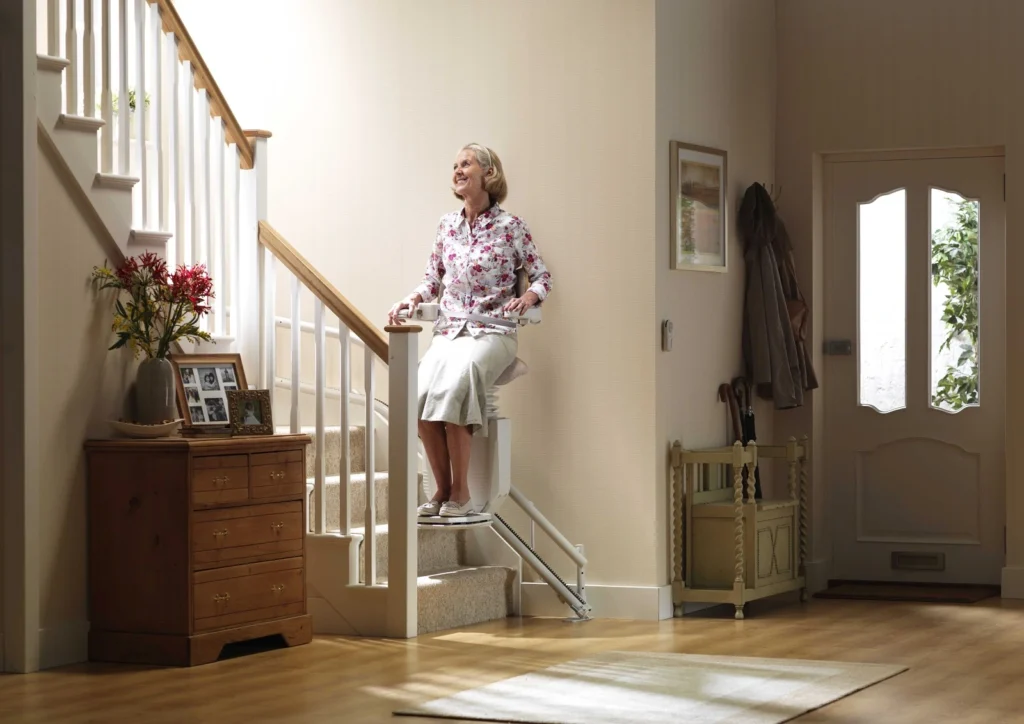
When not in use, modern stairlift chairs fold up to free up space. Usually, when folded, stair lift chairs take up about 12 to 18 inches, depending on the model. Some models also feature a folding rail at both the top and bottom of the stairs to reduce tripping hazards and save space. Other parts of the stairlift, such as footrests and armrests, can also be folded when not in use.
Different manufacturers have different chair widths when folded. The Harmar Pinnacle is one of the narrowest models, sitting 10.5 inches from the wall when folded. The Bruno Elan folds to 12.5 inches, and the Stannah 600 folds to 14.5 inches. Keep in mind that compact models tend to have a lower weight limit.
Typical stairlifts, such as the Bruno Elite, will have a folded width of 15 to 18.5 inches, depending on the features added. For curved rail stairlifts, typical folded chairs sit 16 inches from the wall; however, many curved stairlifts can be parked around the bottom corner or on a landing at the top of the stairs, placing the chair out of the way.
Key Considerations When Measuring Staircase Width
When examining your staircase to see if it is suitable for stairlift installation, consider the following factors:
- Stair width—Make sure your staircase is around 36 inches wide. If you have a narrow staircase, you will want to look into compact models.
- User size—Taller and larger riders may need more knee and elbow room, so consider who will be using the stairlift when choosing a stairlift company.
- Head clearance—Head clearance isn’t usually a concern for most staircases, but steps leading to the basement or those with overhead ceilings may need to be modified to provide enough space.
- Nearby power outlets—Many stairlifts need to plug into a power outlet, so check whether there is one within 10 feet of the top or bottom of the stairs. Luckily, most stairlifts also have a battery backup to keep the lift operating during a power outage.
- Doors & furniture—If there is a door at the top or bottom of the stairwell, the lift might act as an obstruction. However, optional retractable rails can lift up and out of the way when the chair is parked. If you have a door or furniture that can’t be moved near the lift, this may be a good feature to add.
- Handrails—If you have handrails that would be in the way of a stairlift, many installers will be able to remove them for you, but if you ever wish to reinstall the handrails after stairlift removal, you will need to hire a licensed contractor.
The Bottom Line: Most Staircases Are Wide Enough for a Stair Lift
No matter the size of your staircase, you can find a provider that meets your stair lift needs. Stairlifts typically only need 29 to 34 inches of space, while most modern American staircases are 36 inches wide.
When you’re researching stairlifts, keep in mind the size of your staircase, nearby obstructions, your specific mobility needs, your budget, and any additional features that may increase the width of your stairlift.
Frequently Asked Questions (FAQ) About Stair Lift Widths
The typical width needed to accommodate a traditional stairlift is at least 29 inches for a straight stairlift or 30 inches for a curved stairlift.
A staircase can be as narrow as 26 to 28 inches wide to safely accommodate a specialized stairlift, such as a standing or perch stairlift.
Some manufacturers design ultra-slim models designed for narrow stairs, such as the Sadler from Stannah or the Harmar Pinnacle, which folds to 10.5 inches wide. However, other stair lift companies may be able to accommodate narrow staircases, so be sure to discuss available options with your representative.
Yes, there are many alternatives to stairlifts, including home elevators and platform lifts—both of which are great for wheelchair users. However, these alternatives are generally more expensive than stairlifts, so consider your needs and budget before deciding which mobility solution is best for you.
The “Rule of 27” for stairs is a guideline for stair tread dimensions that creates a comfortable, safe walking rhythm. The rule states that the vertical height of the step plus the tread depth should equal 27 inches.
Yes, stairlifts can be fitted to almost any stair type, including straight, curved, spiral, and outdoor. Additionally, stairlifts can easily be installed on steps made of wood, concrete, tile, carpet, and more. If you’re uncertain whether your stairs can safely hold a stairlift, consult with a licensed professional.
Help us improve our cost data! Email your latest stair lift quote to [email protected]. Rest assured, your personal details will remain completely confidential.