
Retirement Living takes an unbiased approach to our reviews. We may earn money when you click a partner link. Learn More
Stair Lift Removal Guide
While removing a stair lift is a fairly straightforward process, it should be left to the professionals. Learn what to expect if you need to remove a stair lift from your home.


Updated:
At a glance:
- Removing a stairlift should always be done by a licensed professional to avoid damage and fees.
- The average cost to remove a stairlift is between $200 and $500.
- When a stairlift is removed, it’s either disposed of, recycled, or resold as a second-hand stairlift.
Whether you or your family member no longer needs the stair lift, you want to upgrade to a newer model, or you plan to transfer the lift to a new home, understanding the stair lift removal process is vital.
Removing a stairlift is a simple process that leaves behind minimal damage when done by a licensed technician. Homeowners have a few options for how to start the removal process and what to do with the unit once it’s removed. Below, we go in-depth into the stairlift removal process to help you know what to expect.
How To Remove A Stair Lift
Removing stairlifts should always be done by a professional and licensed technician, no matter the model, age, or type of unit. This is because stairlifts are rather complicated pieces of machinery, and they can weigh more than 200 pounds.
To prevent damage to yourself, the unit, and your home, the first step in removing your stair lift is to hire a professional.
Often, the company you purchased your stair lift from will offer removal services, either for a small removal fee or no cost. Some providers may even offer buyback programs; buyback pricing usually depends on the age, make, model, and condition of your stair lift. You can also reach out to charities like Handicare, which may be able to help you remove your stairlift at a reduced or zero cost.
Below, we’ve broken down the steps of the typical professional stairlift removal process.
1. Disconnecting Power
Technicians start by shutting off the power supply. This can include turning off the power switch on the armrest or carriage, removing a power key, or turning off the battery isolator. Any other power sources will be such off in order to safely disassemble the unit.
2. Removing Chair and Components
Normally, the chair is the first piece that is removed. This process, explained in more depth below, usually involves unscrewing the seat and releasing any locks. If you have any covers or added components, they may be removed as well.
3. Rail Dismantling
This is the complicated part. The stairlift rail is normally dismantled section by section. The technician will unbolt the rail from the stair treads in the correct order to prevent damage to the pieces or the staircase.
4. Final Inspection & Cleanup
Once the lift is removed, the technician might check for any minor damage. Usually, the only damage is the screw holes, and your technician may repair them for you, depending on the extent of the service. The worker will also ensure all tools and components are removed from your home.
How to Remove a Stair Lift Chair
It is possible to remove the stair lift chair by yourself. However, this shouldn’t be done regularly and without cause. If you are planning to remove the entire stair lift, it is best to allow the professionals to handle the chair as well.
Below is a step-by-step guide on how to remove the chair from your lift:
- Move the chair to the end of the track: You will need to power up the stair lift and move the chair to the end of the track at the bottom of the stairs if it’s not already there. Once the seat is all the way at the bottom, turn the power completely off.
- Remove the limiter: Most stairlifts have a limiter at the end of the track that can normally be removed without tools. Limiters can be located at both the top and bottom of the track. All you have to do is pull them off. (However, if it seems like removal will cause damage, stop your attempt and contact a professional.)
- Remove chair screws: Use a screwdriver to remove the screws on the outer panel of the stairlift chair. These are typically located where the mechanical arm meets the chair.
- Release the chair lock: Releasing the chair lock ensures easy and safe removal of the seat. You can usually find the lever under the chair and move it to the “unlocked” position.
- Remove the chair: Once steps 1-4 are completed, you should be able to easily pull the chair off the track. Keep in mind that the chair might be heavy. Be sure you have someone assist you to avoid any accidents.
Stair Repair After Removal
After the lift is removed, your steps will have approximately four screw holes. This is because stair lifts are installed by bolting the rail into the treads of your stairs, rather than being attached to the wall. Typically, a straight stairlift is attached to every 3 to 4 steps. However, due to its complexity, curved stairlifts are typically bolted to every other step to ensure safety.
Luckily, these holes are small and don’t affect the safety or integrity of your steps. Additionally, patching the holes is easy. It’s normally done by inserting wood filler or plugs that match the color of the wood. You can either hire a handyman or do it yourself, whichever you’re most comfortable with.
Is a Curved Stairlift More Difficult to Remove than a Straight Stairlift?
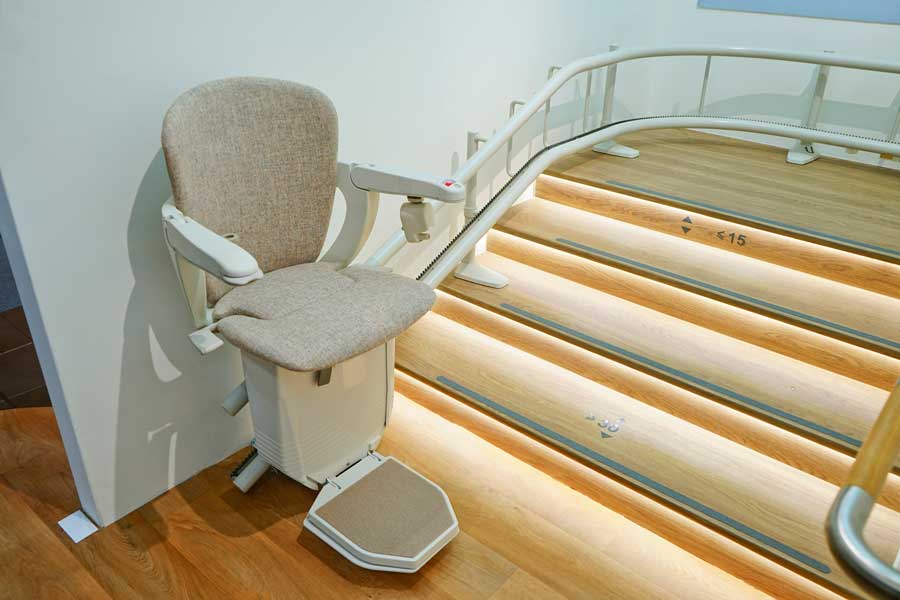
Curved stairlifts are generally more difficult to remove than straight models because they are custom-built to fit a curved staircase, whereas lifts built for straight stairs typically have a standardized design.
Here are the top reasons curved stairlifts are more challenging to remove:
- Custom-built rails: Because curved models are designed for your unique staircase (including bends and landings), it may take more effort to take apart the pieces correctly.
- Specialized tools: Due to the unique designs, technicians will likely need specialized tools to remove the old stairlift.
- Damage risks: Improper removal, no matter the type of stairlift, risks causing damage to the staircase, walls, or surrounding features. Because curved lifts are more complex, proper removal is trickier, and therefore, the risk for potentially causing damage is higher.
- Time and effort: Due to the more involved process and more complex design, curved stairlifts can take up to half a day to remove, while straight stairlifts can often be completed in a few hours.
If you have a curved lift, hiring a stairlift removal service is the best way to ensure the lift is removed properly while minimizing damage to your home.
Temporary Stairlift Removal
If you don’t want to get rid of your stairlift but need it temporarily removed or transferred, that is possible.
If you have carpeted steps and want to change the carpet, you can typically hire a stairlift removal company to temporarily remove the lift. Typically, the technicians will come before the carpet fitters are scheduled to come and remove the unit. Once the new carpet is added, the technicians will put the stairlift back and ensure everything is in working order.
Temporarily removing and reinstalling a stairlift will add an additional cost on top of the cost of the new carpet, so keep that in mind when planning your budget.
Another reason you may want to temporarily remove your lift is if you’re moving to a new home and want to transfer your unit. If this is the case, contact the company you purchased the lift from to see what your options are. It is possible to transfer a stairlift, but unless the stairs are exactly the same in the new place, the company may need to add parts or get a new rail entirely. This will especially be tricky if you have a curved lift.
Contact your stairlift provider to see if they can buy back the used stairlift and give you a discounted rate on a new one.
Stairlift Removal Cost
Stairlift removal costs vary depending on the type of stairlift, the condition, and the complexity of the process. Typically, the average cost to remove a stairlift is between $200 and $500. This includes the cost of labor, tools, and cleanup services.
In some cases, the manufacturer or supplier will remove the lift free of charge, especially if you’re upgrading to a new model. Other companies may offer reduced removal fees if the unit is in good condition and can be resold or recycled.
Keep in mind, if you want to dispose of your stair lift, there are certain procedures you must follow. If you’re disposing of the unit yourself, research and follow local regulations regarding electronic and mechanical waste to avoid illegal dumping, as this could result in hefty fines.
Normally, stairlift removal companies will save you the hassle and dispose of the unit for you. They will likely include any fees in the initial quote, but be sure to discuss this with them to ensure you have all the information.
What Happens to the Stairlift When It’s Removed?
When a stairlift is removed, it can either be properly disposed of, recycled, or resold as a second-hand stairlift.
Depending on the age, model, and condition of the lift, the manufacturer might buy it back and sell or rent the unit as a used stairlift. Although the buy-back price will be less than what you paid, it’s still worth contacting the manufacturer or supplier to explore your options. Even if they don’t buy the unit, they may be able to help you remove the unwanted stairlift for a decent price.
If you don’t sell the lift, the unit will likely be taken away for recycling or disposal. Many companies are able to reuse parts that still function well and properly dispose of the rest. If you hire a removal company other than the manufacturer or supplier, do research into their practices to ensure they legally and ethically dispose of the stairlift technology.
Frequently Asked Questions (FAQs)
Yes, stair lifts are removable. Because they are only bolted to the stair treads and not the wall, they are easy to take apart and remove from your staircase, leaving little damage behind.
While it is possible to remove a stairlift yourself, we highly recommend against the DIY approach. This is because stairlifts are complicated pieces of machinery, and improper removal could not only damage the unit but also your home. Additionally, if you remove the lift yourself, you will be responsible for the proper disposal, which can be complicated. Hiring a professional stairlift removal service ensures the job is done correctly and safely, and it saves you the hassle of finding proper disposal areas and possible fees.
The best place to start is contacting the original installer or manufacturer. These companies usually offer removal services or buy-back services. If they don’t, they may be able to direct you to a reputable removal service. If that doesn’t work, research local companies and read customer reviews to ensure they are a legitimate business.
Removing a stairlift is a relatively simple process, and it normally takes about one to two hours on average for a straight stairlift. Curved stairlifts will generally take a bit longer to disassemble due to their more complex structure.
The resale value of a used stairlift is generally much lower than the purchase price, usually only a few hundred dollars. However, the price will greatly depend on the age and condition, brand and model, and type of stairlift. Companies are more likely to buy back newer units in good condition since they can either re-use parts or sell the lift as a used model.
Help us improve our data! Email your latest stair lift quote to [email protected] or submit a review about your experience. Your personal details will remain completely confidential.