
Retirement Living takes an unbiased approach to our reviews. We may earn money when you click a partner link. Learn More
Types of Stairlifts
Whether straight, curved, or outdoor, any type of stair lift you choose can be customized to fit your staircase perfectly.


Updated:
At a glance:
- A straight stair lift is the simplest and most cost-effective type of stair lift and can be installed in as little as one day.
- Curved stairlifts can fit all types of staircases, even complex spiral staircases.
- Custom-built stair lifts can conform within millimeters of your staircase, ensuring a shorter and smoother ride.
- Home elevators and wheelchair lifts are two types of stairlift alternatives to consider, especially for individuals who use wheelchairs or other mobility aids.
For those with limited mobility, stair lifts are a great accessibility solution to add to your home. Installing a stair lift enables you to move around your multi-level home safely, increasing independence and peace of mind for you and your loved ones.
The benefits that stairlifts bring are often worth the initial cost for many homeowners. Below, we explain the different types of stairlifts available will help you choose the best stairlift to upgrade your home.
4 Main Types of Stairlifts
The main types of stair lifts are straight, curved, outdoor (either straight or curved), and standing (either straight or curved). Each type of stair lift is designed to fit a certain set of stairs and can be customized with all the features you need.
Whether you have a perfectly straight staircase or one with an intermediate landing, you can find the right stairlift model to suit your home.
Straight Stair Lifts
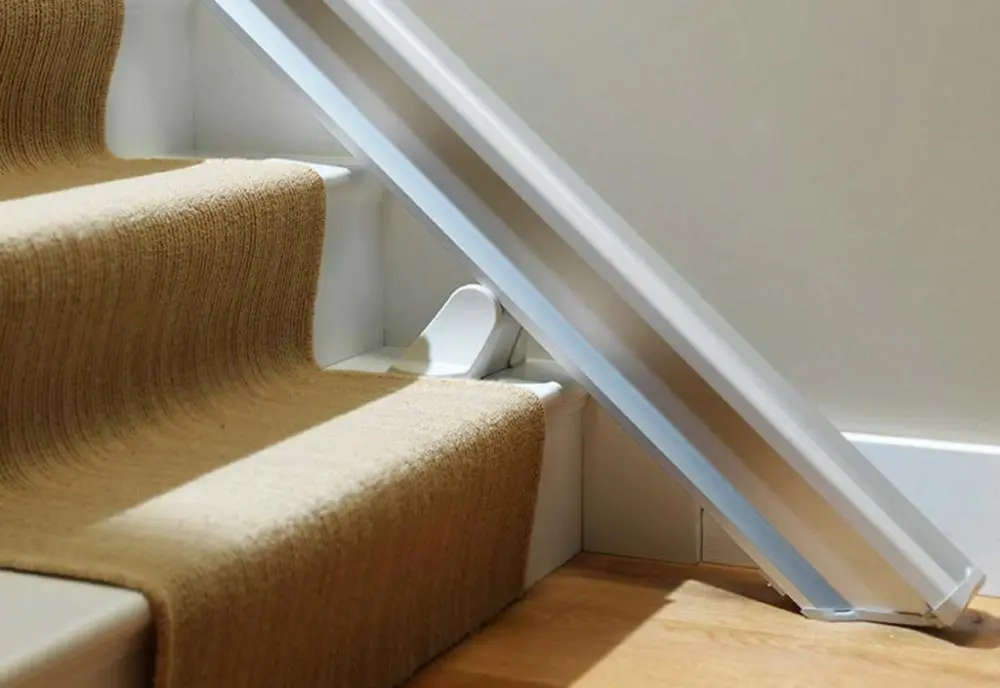
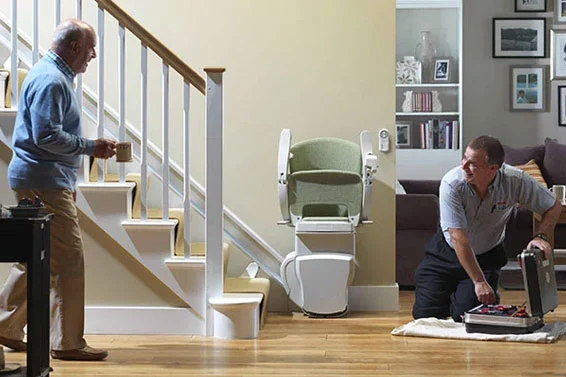
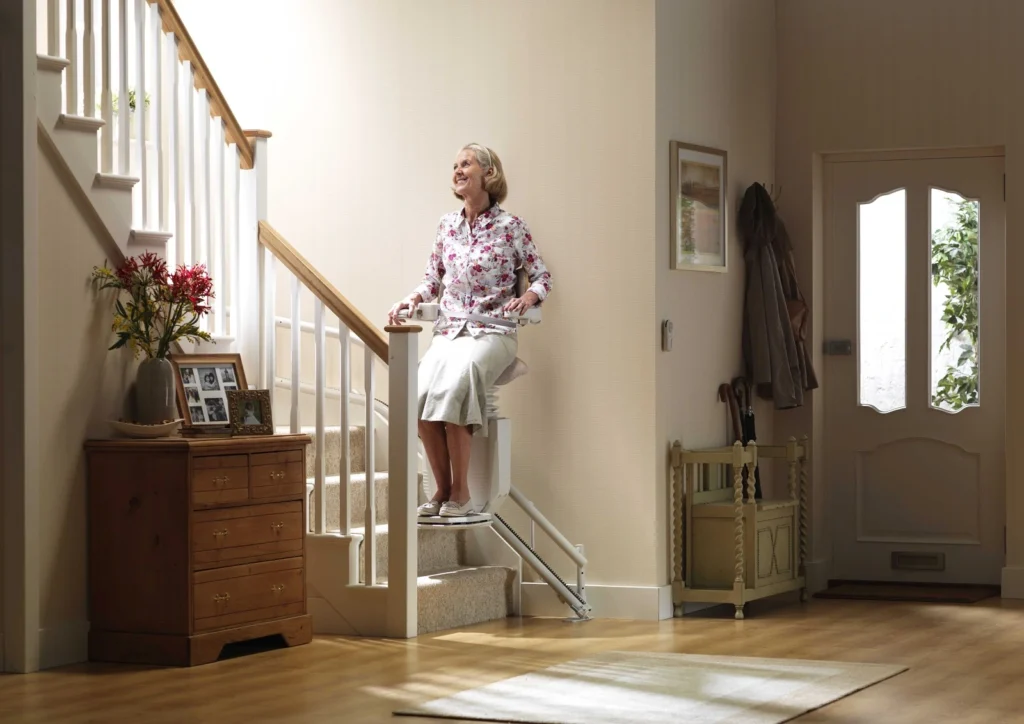
A straight stair lift is the simplest and most cost-effective type of stair lift. This stair lift follows a straight rail and can be installed on either side of your straight staircase. Many straight stairlifts come with power swivel seats, retractable rails, and foldable seats, footrests, and armrests.
Curved Stair Lifts
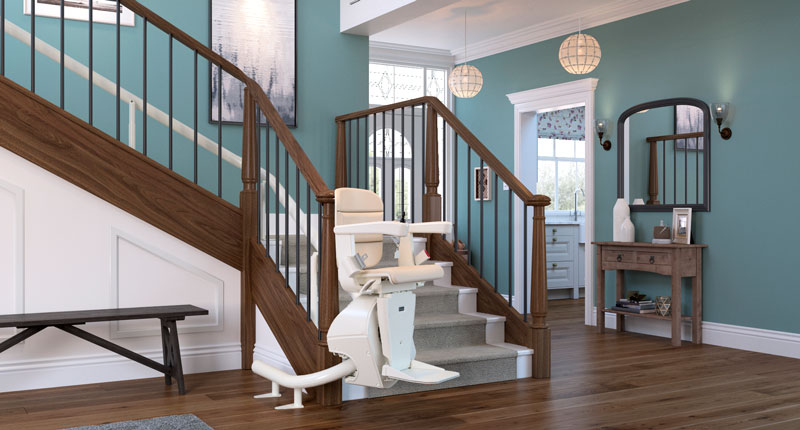
Curved stair lifts are customized to follow the unique curve of your staircase. As a result, this type of stair lift is considerably more costly. The curved rail can be configured to a myriad of specific requirements, such as staircases that reach multiple floors, staircases with landings, and even complex spiral staircases.
Like straight stair lifts, curved stair lifts are also typically equipped with a foldable seat, footrest, and armrests, and either a power swivel seat option or the ability to stop directly on a landing. Easy-to-use and intuitive controls are also standard.
Outdoor Stair Lifts
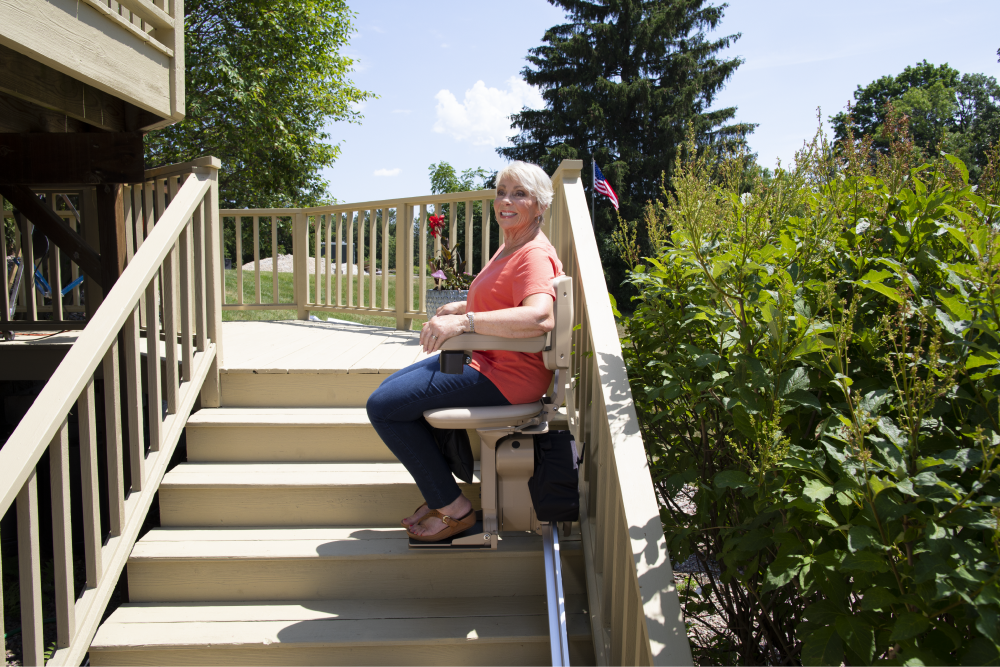
An outdoor stair lift can be either straight or curved, depending on the specifications of your outdoor staircase. This type of stair lift is designed to be heavy-duty, weather-resistant, and survive extreme temperatures. They are most commonly used to carry the stairlift user to and from a porch, deck, driveway, or detached garage or shed.
Outdoor stair lifts typically feature a foldable seat, a seatbelt, and a power swivel option, along with unique outdoor features such as a lock-and-key mechanism to keep them secure and a cover to keep them clean and protected from direct exposure to the elements.
Standing Stair Lifts
A standing stair lift is designed for people who have difficulty sitting and standing due to pain or inflexibility in their lower extremities, resulting from advanced age, illness, or disability. This type of stair lift may include an elevated seat, a tilted seat, or a “barstool” design that makes rising from a semi-seated position easier.
Some stair lifts may be designed to simply allow you to stand upright. A standing stair lift can be adapted for either a straight or curved staircase and is typically equipped with features such as a seatbelt, intuitive controls, and the ability to park on a top, middle, or bottom landing. Additionally, they typically cost between $2,000 and $15,000, on average.
Types of Stair Lift Configurations
Depending on the type of stair lift being installed, a variety of configurations are available to ensure the stair lift meets your mobility needs.
Since a straight stair lift can only be fitted to straight staircases, only one configuration option is possible. However, curved stair lifts have several configuration options available.
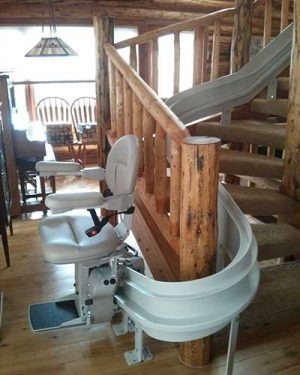
As mentioned above, a curved stair lift can accommodate multiple levels of stairs, staircases with landings between floors, and even intricate spiral staircases.
If your staircase has a single landing with a 90-degree turn, you may choose to install two straight stairlifts, rather than one continuous curved rail. However, if you or a loved one can’t transfer safely between chairs at the middle landing, a single curved lift will be best.
Curved stair lifts give you the option to choose between a custom-built stair lift and a pre-manufactured modular stair lift.
Custom-built stair lifts are designed to conform within millimeters of your individual staircase.
Modular stair lifts, sometimes referred to as “snap-rail” stair lifts, are a pre-assembled set of standardized components that can be combined on-site to match the staircase path as closely as possible. While modular stair lifts are less costly, custom-built stair lifts ensure a shorter and smoother ride for the user.
Common Types of Stairlift Features
Stairlifts are a great way to increase independence for those aging in place and those with mobility issues. Regardless of the type of lift you purchase, you can expect some common features to ensure proper function, safety, and aesthetics.
Safety Features
All stairlifts come with the following safety features to ensure a successful ride up and down stairs.
Seatbelts
Many stairlifts come with a seatbelt to ensure a secure ride while moving up and down the stairlift rail.
Obstruction Sensors
Most stairlifts are equipped with obstruction sensors that stop the lift or prevent it from starting if a potentially hazardous object is in the way.
Emergency stop buttons
These buttons allow the rider to stop the lift if there is an issue or obstruction that the sensors don’t notice.
Swivel Seat Lock
Swivel seats enable the rider to easily mount and dismount, and many stairlifts feature a lock to prevent the seat from moving while in motion.
Folding Rails
Folding rails, also called hinged or retractable rails, fold up to clear space at the bottom of the stairs, reducing trip hazards and removing obstructions from doorways.
Battery Backups
In the case of a power outage, stairlifts come with a battery backup, ensuring that the rider doesn’t get stuck on the lift and can continue to move freely around their home.
Stairlift Accessories
Many stairlift companies also offer a variety of accessories to ensure proper function. Some of these accessories are customizable, making the lift more aesthetically pleasing.
Remote Controls
Most stairlifts have remote controls that allow users to call the lift to either end of the staircase without being on it.
Adjustable Features
Some stairlifts have adjustable seat height, footrests, and armrests for greater user comfort.
Rail Overrun Park Positions
For curved stairlifts, this feature extends the rail away from the staircase. It can be configured as a 90-degree or 180-degree curve, wrapping around a bannister or wall.
Rail Color and Finish
Stairlift rails are usually available in white, black, or brown, but some have more custom options to blend with a home’s decor.
Chair and Armrest Style
You can sometimes choose different armrest widths, seatbelt types, and a variety of upholstery colors; however, these features may be an added cost.
Weight Capacity
The standard weight capacity for stairlifts is approximately 350 pounds. Some models can be customized for higher weight capacities if needed.
Stair Lift Alternatives
When researching residential lifts, keep in mind your needs both now and in the future. Stair lift prices range from $2,900 to $14,000, making them the most cost-effective solution. Stairlifts also have a less complicated installation process. However, they cannot accommodate wheelchair users.
If you or a loved one has mobility issues but you are unsure if a stairlift is right for you, consider the following alternatives.
Home Elevators
Home elevators are ideal for individuals living in multi-level homes who require assistance navigating between floors but prefer not to or are unable to use any of the stairlift options.
Residential elevators are great for wheelchair users or those who can’t transfer in and out of a chair lift. They are the most expensive option for home lifts. They require extensive home modifications, professional installation, and major components.
Wheelchair Lifts
The main types of wheelchair lifts for homes are vertical platform lifts (VPL) and inclined platform lifts. A vertical platform lift carries the user and their wheelchair or other mobility device between two levels. They are similar to an elevator, but they typically have an open cab and are more affordable.
Inclined platform lifts are similar to stairlifts in that they follow a rail (either straight or curved), but instead of a chair, they have a platform that accommodates a wheelchair user.
| Home Elevator | Stair Lift | Platform Lift | |
|---|---|---|---|
| Price Range | $30,000 – $100,000 | $2,900 – $14,000 | $5,000 – $25,000 |
| Average Weight Capacity | 750 – 1,500 pounds | 300 – 400 pounds | 550 – 750 pounds |
| Best For | Seniors and people with mobility issues | Those with mobility, balance, or endurance issues | Users of mobility devices |
Conclusion: Aging in Place Is Possible with Any Type of Stair Lift
If you’re planning to age in place, maintaining mobility and preventing falls becomes a priority. This concern is reinforced by real-world data, as the National Institute on Aging reports that six out of every ten falls occur in the home.
Choosing to install a stair lift with the latest technology in your home helps significantly alleviate that concern. With the numerous stair lift types and configurations available, finding one that suits your needs doesn’t have to be difficult.
Frequently Asked Questions
There are several ways to pay for a stairlift, including certain types of insurance, payment plans, government grants, and other state assistance programs. Consult your insurance provider to explore coverage options or research grant programs available in your state.
No, Medicare and most private health insurance plans do not cover the cost of new stair lifts, as they are not considered necessary durable medical equipment. However, some Medicare Advantage plans and other state-based insurance programs might help cover the cost of stairlifts.
The cost of a stairlift can range anywhere from $2,900 – $14,000, depending on the age, type, and model of the lift. Used stairlifts will generally cost less ($1,500 and $3,000 for straight models); however, used models may not always fit your staircase. It’s best to speak with a representative and get an in-home consultation to find the right stairlift for your home.
Yes, stairlifts can be installed on spiral staircases. Curved stairlifts are manufactured specifically for your staircase using specialized technology that gets exact measurements. No matter which twists and turns your staircase takes, a curved stairlift can be customized to fit perfectly.
Help us improve our cost data! Email your latest stair lift quote to [email protected]. Rest assured, your personal details will remain completely confidential.