
Retirement Living takes an unbiased approach to our reviews. We may earn money when you click a partner link. Learn More
How to Choose a Stair Lift
Know your staircase type, your personal needs, and your budget to choose the right stairlift for you.


Updated:
AT A GLANCE:
- The first step in choosing a stairlift is to determine the shape of your staircase, which influences whether you need a straight, curved, or standing lift.
- Identify your mobility needs and challenges, list required features, and create a budget to help you narrow down your search for a stairlift.
- Finally, test products in person when possible and use free in-home estimates to help you find a reputable provider.
A stairlift is a type of accessibility device that helps seniors aging in place and those with injuries or mobility issues safely travel up and down a flight of stairs. Sometimes called a chair lift, it consists of a motorized seat attached to a rail that follows the shape of your staircase.
With so many providers and options available, it can be difficult to find the right stairlift for you and your loved ones. Below, we go over the main steps to choosing a stairlift that fits your home, your mobility needs, and your budget.
5 Steps to Choosing a Stair Lift
Follow these five steps to choose the best stairlift for your home.
1. Consider Your Staircase Type
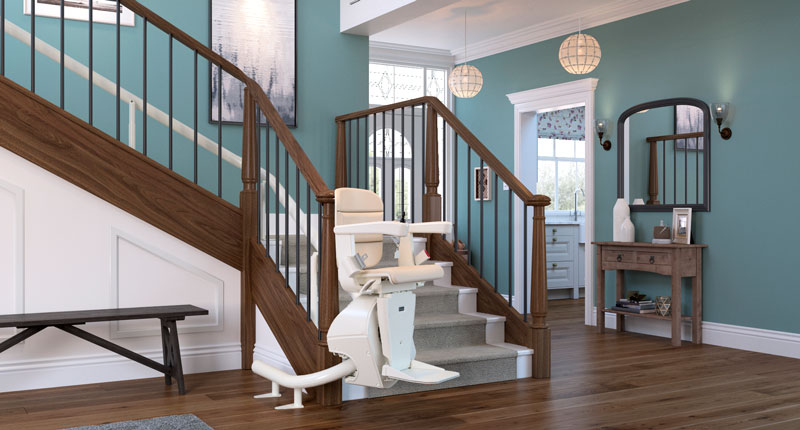
The type of staircase you have plays a major role in what type of stairlift you will need. If you have a straight staircase with no turns or mid-landings, a straight stairlift is the best option.
Straight stairlifts are more affordable because many of the components are standard and can be pre-made, allowing for quick, professional installation. The stairlift technicians will measure the length and width of your staircase to ensure a good fit.
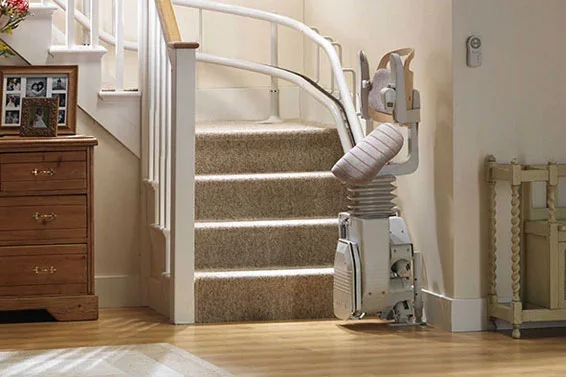
However, if your staircase has middle landings, curves, or spirals, then a curved stairlift is what you’ll need. The curved rail is custom-made to fit your staircase’s exact dimensions. Because of this, curved models tend to be more costly and can take a little longer to install.
If your staircase is narrower than most modern stairs, then you may consider a standing stairlift. This type of lift is designed specifically to fit narrow staircases, but they are also a great option for individuals with knee joint pain or those who struggle to safely get in and out of a chair.
Finally, consider the location of the staircase you want to add a lift to, whether it’s indoors or outdoors. Outdoor stair lifts are built with heavy-duty and weather-resistant materials to keep them functioning in mild to extreme conditions.
In summary, ask yourself:
- Is my staircase straight or curved?
- How narrow is my stairwell?
- Will I need an indoor or outdoor model?
2. Identify Mobility Needs
After identifying the type of stairlift you will need, you should identify your specific mobility needs and challenges. Knowing this information will help you while researching providers and will also be important for the technicians, so they can design a new stair lift that meets your needs and provides peace of mind.
Evaluate your physical capabilities, such as balance, strength, and the ability to safely enter and exit the lift at the top of the stairs. Depending on the user’s mobility needs, certain features, like swivel seats, may be more necessary than others. Also, consider whether you can safely and comfortably get in and out of the chair, or whether your joints struggle to bend.
You should also consider whether or not you will need to transfer to a wheelchair afterward. Also, identify the required weight capacity of the stair lift to safely transport the user up and down the stairs.
In summary, identify:
- Your physical capabilities, like balance and strength.
- Whether you will need to transfer to a mobility aid after.
- The required weight capacity.
3. Determine Necessary Features
The next step to finding the right stairlift for your home is determining which features are necessary, which would be nice to have, and which aren’t required. Features can include safety components, convenience pieces, and aesthetic details.
Common safety features:
- Seat belts
- Obstruction sensors
- Battery-power source backups for power outages
- Foldable seats & footrests
- Key locks (preventing unauthorized use)
Common convenience features:
- Power swivel seats
- Remote controls
- Folding rails for the bottom of the stairs
- Controls on armrests
- Adjustable seat and footrest heights
Common aesthetic features:
- Customizable upholstery
- Hidden gears for a clean look
- Different finishes for rails
- Compact designs
What features are included depends on the provider and stairlift model. When you identify the safety, convenience, and aesthetic features that are most important to you, you can begin researching available options. Keep in mind that the more features you add, the higher the final cost. You may have to adjust your list as you research, but don’t skip out on safety features.
In summary, determine:
- What features are absolutely necessary for your safety and ease of use.
- Whether aesthetic features to match your home’s decor are worth the additional costs.
4. Set a Budget
Throughout the process of identifying the type of stairlift you need, your mobility needs, and required features, you will likely get an understanding of the average stairlift cost.
The price range for stairlifts is between $2,900 and $14,000, depending on the type, model, provider, additional features, and whether it’s new or used. However, most homeowners pay around $6,000 to $8,500, which includes stairlift installation. When creating a budget, keep in mind that curved rails cost more than straight rails, and the more features and modifications required will increase overall costs.
In summary:
- Set a realistic budget based on your needs and preferences.
5. Find a Stairlift Provider
The last step in choosing a stairlift is finding a provider that offers a stairlift that fits your needs without going over budget.
The best way to find a provider is to start researching options online. Look for providers with a good reputation and internet presence. Look for reliable customer reviews to get a sense for the company’s integrity.
After, look for local dealers and showrooms to see if you can actually test the products in person. This is also a great time to ask any questions and raise any concerns you may have. Representatives will be able to explain the purchasing and installation process in detail to help you make informed decisions.
Take advantage of free in-home assessments. Providers will send licensed technicians to your home to discuss your needs, measure your staircase, and offer a quote for the total costs.
Once you have all the information and are ready to proceed with that provider, you can move on to the stairlift installation process.
In summary:
- Research reputable providers online.
- Look for local showrooms to test products, if possible.
- Get free quotes and ask questions before choosing a provider.
Other Factors to Consider When Choosing a Stairlift
In addition to the above steps, you may also want to consider a few other things when choosing a stairlift. Ask yourself these questions to aid your decision-making.
- Will the stairlift be temporary or permanent? If you only need a stairlift temporarily while you or a family member is recovering from an injury, renting is a more cost-effective solution than buying a new stairlift. Look into the options available to you.
- How much space is by both landings? Stairlifts take up space. If the areas around your landings are small or will become tight with the inclusion of a stairlift, be sure to clear all obstructions beforehand. Also, look for lifts with folding rails and compact seats to prevent hazards in high-traffic areas.
- How long is the warranty? Most providers offer a one to three-year warranty or a limited lifetime warranty. Be sure you know how long the warranty lasts and what it covers. Also, consider whether getting an extended warranty is worth it.
- Is buying a used stairliftfeasible? Some stairlift providers may sell used stairlifts at a lower price. If your staircase has a common layout and dimensions, you may consider getting a used stairlift. However, be sure the lift is the right size for stairs and is in good, reliable condition.
The Bottom Line: Choosing a Stair Lift
Choosing the right stairlift involves determining whether you’ll be modifying a straight or curved staircase, identifying your specific mobility needs, understanding the necessary features, setting a budget, and finding a reputable provider that can meet these requirements.
You should also consider factors like warranties, available space, and how long you’ll need the lift. Be sure to speak with the providers and get free cost estimates before making a final decision.
Frequently Asked Questions (FAQs): Choosing a Stair Lift
Original Medicare doesn’t cover stairlifts because they are considered home modifications rather than durable medical equipment. However, some Medicare Advantage plans may offer limited coverage; the amount is subject to your plan and eligibility.
Extra stairlift safety features are highly recommended. They often include obstruction sensors, seat belts, locking switches, power swivel seats, and other safety sensors that will stop the lift or keep it from moving if a problem is detected. Extra features enhance peace of mind and significantly reduce the risk of falls, protecting users from injury.
Yes, stairlifts typically come with manufacturer warranties that cover parts for a few years. Some manufacturers also offer lifetime coverage for critical components like the motor and gearbox. Providers will often have a 1-year labor warranty. Be sure to discuss warranty coverage with your provider.
A stair lift is a seated device that carries one person along a rail attached to the staircase. A wheelchair lift (also called a platform lift) is a larger unit that raises a person while they remain in their wheelchair, using a vertical platform lift instead of traveling up the stairs.
Help us improve our stair lift data! If you’ve recently purchased or received a stair lift quote, email us at [email protected]. Your personal details will remain completely confidential.