
Retirement Living takes an unbiased approach to our reviews. We may earn money when you click a partner link. Learn More
Can You Buy Hearing Aids Over the Counter?
Over-the-counter hearing aids are now available without a prescription. Learn who can use them, how they compare with prescription devices, and where to buy them.


Updated:
At a glance:
- Adults age 18 and older in the U.S. can buy OTC hearing aids without a prescription, but they are intended only for mild to moderate hearing loss.
- OTC hearing aids cost less and are easier to access than prescription devices, but they offer limited customization and support.
- Before buying, you should confirm your level of hearing loss and compare features, sound quality, and trial policies to find the right option.
Adults with mild to moderate hearing loss can purchase over-the-counter (OTC) hearing aids without a prescription or in-person hearing test under FDA rules. These hearing devices are available through online stores, pharmacies, and other retailers.
This guide explains what over-the-counter hearing aids are, who can use them, and how they compare with prescription hearing aids.
What Are Over-the-Counter (OTC) Hearing Aids?
Over-the-counter hearing aids are hearing devices designed for adults with mild to moderate hearing loss. These medical devices amplify sounds to improve speech clarity in daily environments.
OTC hearing aids use a self-fitting setup. You adjust amplification, volume control, and preset sound settings through a smartphone app.
Many models also include rechargeable batteries and Bluetooth connectivity. These features support phone calls and media streaming.
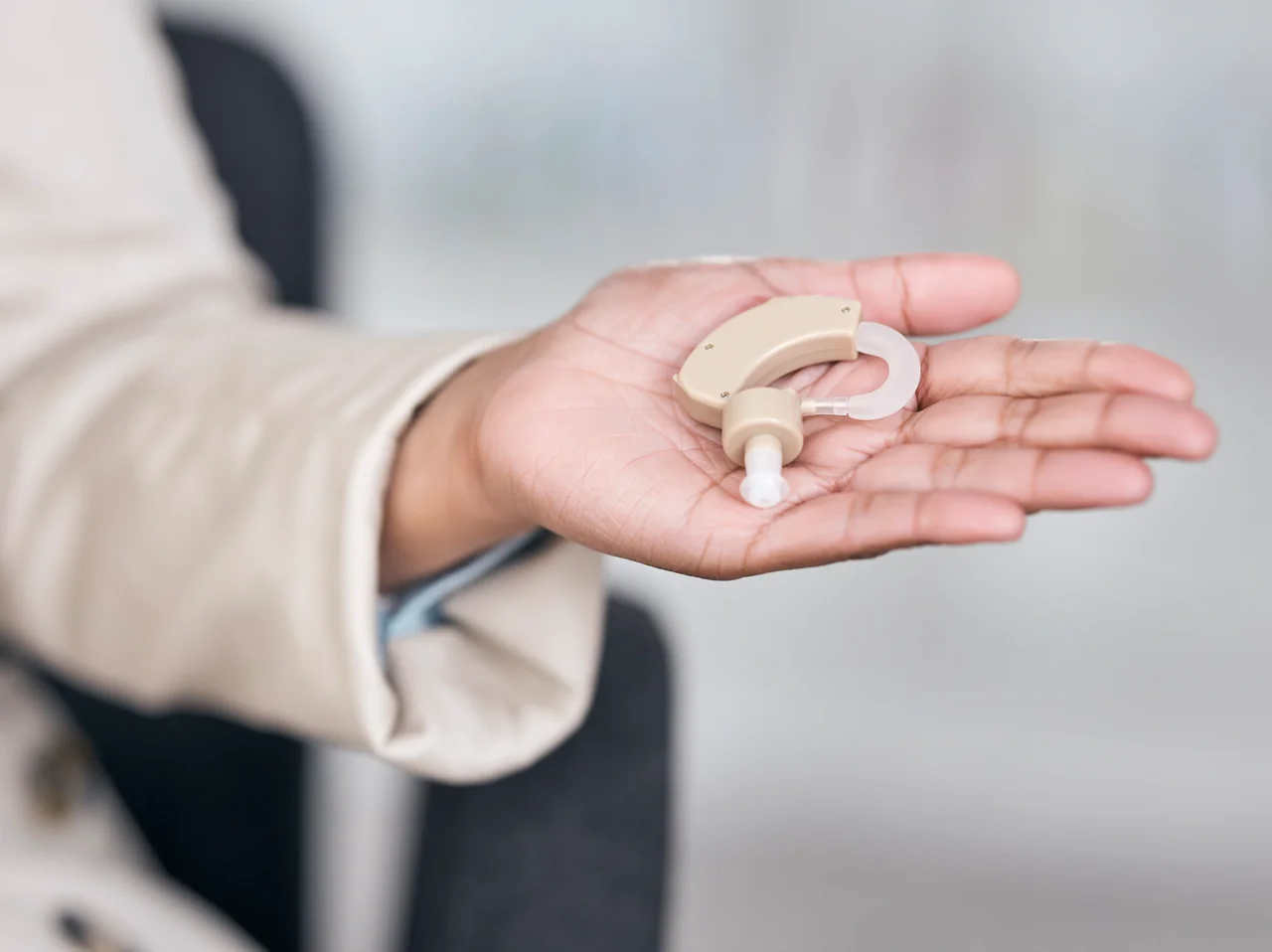
OTC hearing aids come in several designs. Behind-the-ear models rest behind the ear and send sound into the ear canal. Smaller devices fit directly inside the ear canal. Many devices also reduce background noise and improve sound quality in noisy places.
Who Can Buy OTC Hearing Aids?
You can buy over-the-counter hearing aids if you are 18 or older and have mild to moderate hearing loss. These devices help adults manage hearing needs without in-person hearing care.
Here’s how to determine whether OTC hearing aids match your hearing needs:
- Notice signs such as difficulty hearing conversations or speech in background noise.
- Pay attention to situations where hearing becomes difficult, such as group conversations or noisy places.
- Ask family members or coworkers if they notice frequent requests to repeat words.
- Take an online hearing test or consult an audiologist if you are unsure about your hearing needs.
OTC hearing aids may not work if you have severe hearing loss. You should also avoid OTC devices if you experience sudden hearing changes, ear pain, persistent tinnitus, or earwax buildup.
These symptoms may indicate medical conditions that affect hearing health. In these cases, consult a health care professional or audiologist for evaluation.
The National Institute on Deafness and Other Communication Disorders recommends seeing a specialist if hearing problems continue. An audiologist or otolaryngology provider can perform a hearing test and recommend appropriate hearing care.
OTC Hearing Aids vs. Prescription Hearing Aids
| Feature | OTC Hearing Aids | Prescription Hearing Aids |
|---|---|---|
| Hearing test required | No | Yes |
| Professional fitting | Self-fitting | Audiologist fitting |
| Best for | Mild to moderate hearing loss | Moderate to severe hearing loss |
| Custom tuning | App-based fine-tuning | Fully customized by an audiologist |
| Follow-up care | Limited or remote support | In-person hearing care and adjustments |
| Where you buy | Online retailers, pharmacies, electronics stores | Audiology clinics or hearing professionals |
| Cost (per pair)* | $200–$3,000 | $2,000–$7,000 |
*Costs vary widely by device type and support, and hearing aid cost with insurance depends on your plan and coverage.
Pros and Cons of Buying OTC Hearing Aids
Pros:
- You can start using hearing devices quickly without waiting for appointments or hearing care scheduling.
- Self-fitting controls let you adjust amplification based on your hearing needs in different environments.
- Smartphone apps allow quick changes when moving between quiet settings and noisy places.
- Many users find it easier to test different settings at home without repeated clinic visits.
- OTC devices can improve communication in early hearing loss, especially in one-on-one conversations.
Cons:
- It can be difficult to judge the correct level of hearing loss without a professional hearing test.
- Trial-and-error adjustments may lead to poor sound quality if settings are not optimized.
- Devices may struggle to separate speech from background noise in busy environments.
- Lack of in-person support can make troubleshooting of a hearing aid harder if the device does not perform as expected.
- Some users stop using devices due to discomfort or unclear improvement in hearing.
What to Consider Before Buying OTC Hearing Aids
Here are a few key factors to review before paying for hearing aids that match your needs.
Type of Hearing Aid
Start by choosing the right type of hearing aid based on your hearing needs, comfort, and level of hearing loss. Focus on how the device fits, how easy it is to handle, and how it performs in different environments.
OTC hearing aids are available in two common designs:
- Behind-the-ear devices sit behind the ear and direct sound into the ear canal. They are easier to handle, provide stronger amplification, and perform better in noisy places.
- Earbuds-style OTC devices sit inside the ear and resemble wireless earbuds. They offer a more discreet design, support Bluetooth streaming, and may vary in sound quality depending on fit.
Features and Sound Quality
Focus on features that affect how the device performs in daily use. Many OTC hearing aids use rechargeable batteries, which support full-day use without replacements. Bluetooth connectivity allows direct streaming from a smartphone for phone calls and media.
Next, look at control and adjustment. Smartphone apps let you manage volume, amplification, and preset sound settings. These controls help you adapt the device to different environments.
Sound quality depends on how well the device processes speech and reduces background noise. Lower-cost OTC hearing aids often provide basic amplification but limited noise filtering, which makes it harder to follow conversations in noisy places. Higher-end models use advanced processing to separate speech from surrounding sounds.
Check how each device performs in real situations, especially in group conversations or noisy environments.
Trial Period, Warranty, and Return Policy
Check the trial period before buying OTC hearing aids. Use this time to evaluate sound quality and comfort in daily situations. Test the device during conversations and in noisy places.
Review the return policy. Confirm how many days you have to return the device and whether fees apply. Return the device if it does not match your hearing needs.
Check the warranty for coverage and duration. Look for protection against defects or device failure after purchase.
Where Can You Buy OTC Hearing Aids?
You can buy OTC hearing aids through major retailers, pharmacies, electronics stores, and online marketplaces such as Amazon. Many manufacturers also sell hearing devices directly through their websites.
Several OTC brands offer different levels of sound quality, support, and trial periods. Use the comparison below to evaluate key differences before buying.
| Brand | Best For | Key Features | Trial Period | Support |
|---|---|---|---|---|
| Eargo | Discreet in-ear design | Rechargeable, in-canal fit, noise reduction, app control | 45 days | Lifetime remote support |
| ELEHEAR | Budget-friendly OTC devices | AI noise reduction, Bluetooth, app customization | 45 days | Remote support |
| Audicus | Lower-cost premium features | Online hearing test, rechargeable options, app control | 100 days | Audiologist support |
| Jabra Enhance | Strong remote care | Bluetooth streaming, rechargeable, and advanced sound processing | 100 days | Audiology team support |
To review the top OTC hearing aids with detailed comparisons of sound quality, features, and support, visit our best hearing aids guide.
Frequently Asked Questions (FAQs) About Buying Hearing Aids Over the Counter
Yes, adults can buy OTC hearing aids without seeing a doctor or audiologist. These devices are intended for mild to moderate hearing loss and do not require a prescription or hearing test. If you have unclear symptoms, consult a hearing professional before buying.
OTC hearing aids may reduce tinnitus by increasing external sound, which can make ringing less noticeable. However, they do not treat underlying causes. If tinnitus is persistent, worsening, or combined with other symptoms, seek evaluation from an audiologist or medical professional.
Original Medicare does not cover hearing aids or fittings, including OTC devices. Some Medicare Advantage plans may include limited hearing benefits. Medicaid coverage varies by state and may cover hearing aids in certain cases, but OTC devices are often not included.
Help us improve our guides! If you’ve recently purchased or used hearing aids, we’d love to hear about your experience. Share your insights with us at [email protected]. Your personal details will stay completely confidential.