
Retirement Living takes an unbiased approach to our reviews. We may earn money when you click a partner link. Learn More
Types of Hearing Aids and How to Choose the Right One
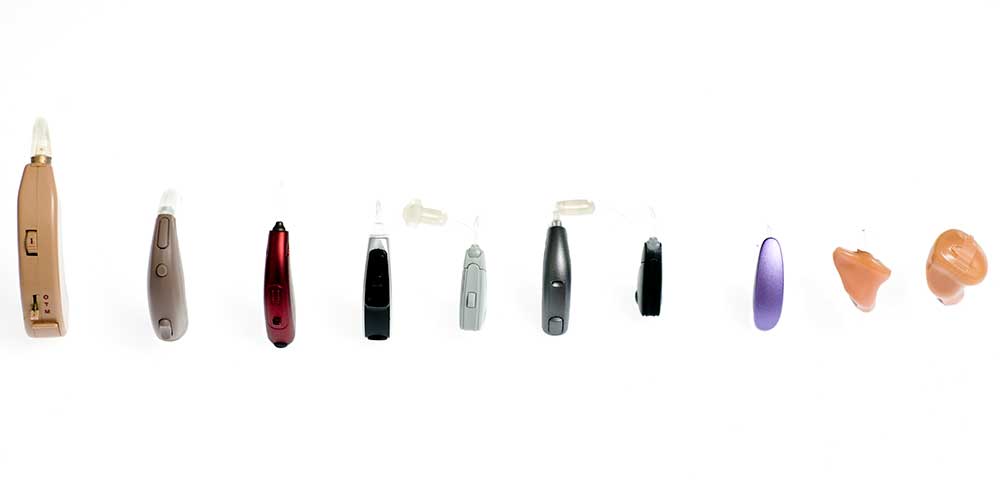
From discreet in-canal devices to powerful behind-the-ear models, hearing aids vary in size, features, and suitability depending on the degree of hearing loss and individual lifestyle needs.


Updated:
At a glance:
- Hearing aids are available in several styles, including behind-the-ear (BTE), receiver-in-canal (RIC), and in-the-ear (ITE), each designed for different levels of hearing loss and lifestyle needs.
- Smaller, more discreet models like completely-in-the-canal (CIC) and invisible-in-canal (IIC) offer a low-profile fit, while larger devices typically provide stronger amplification and more advanced features.
- The right hearing aid depends on your degree of hearing loss, daily activities, budget, and personal comfort preferences.
When shopping for hearing aids, the number of options can feel overwhelming. Devices vary widely in type, size, features, and price point.
So, how do you choose the right hearing aid? We recommend starting with a hearing test to determine your level of hearing loss. From there, you can explore both over-the-counter (OTC) hearing aids and prescription hearing aids from reputable providers.
Shopper’s tip: No hearing aid can fully restore natural hearing, and no device can eliminate all background noise. If a company makes these claims, consider another brand, read independent reviews, and consult a licensed audiologist.
Hearing Aid Types, Explained
In recent years, hearing aids have trended towards smaller, less visible designs. While these compact devices pack advanced technology into a small space, they can also reduce airflow in the ear canal and increase moisture buildup, which may raise the risk of irritation or ear infections. However, with proper cleaning and care, these risks are generally minimal.
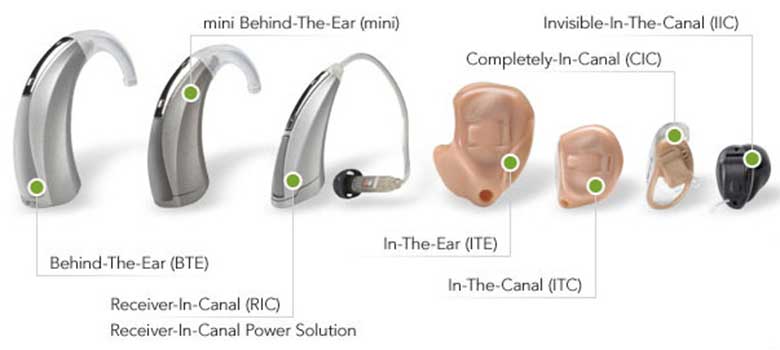
Choosing a hearing aid that fits your lifestyle is essential. Below is a breakdown of the most common hearing aid types and their key advantages.
| Hearing Aid Style | Fit and Use |
|---|---|
| Completely-in-the-Canal (CIC) | – Fits fully in the ear canal – Very discreet – Mild to moderate hearing loss |
| Invisible-in-Canal (IIC) | – Deep canal placement – Least visible – Mild to moderate hearing loss |
| In-the-Canal (ITC) | – Partially in the ear canal – Smaller custom fit – Mild to moderate hearing loss |
| In-the-Ear (ITE) | – Custom-molded shell in outer ear – Mild to severe hearing loss |
| Behind-the-Ear (BTE) | – Worn behind the ear – Sound delivered through tubing – Mild to severe hearing loss |
| Receiver-in-Canal (RIC) | – Speaker sits in the ear canal – Wire connects behind-the-ear component – Mild to severe hearing loss |
Completely-in-the-Canal (CIC) Hearing Aid
Best for mild to moderate hearing loss
A completely-in-the-canal (CIC) hearing aid is designed to sit entirely inside the ear canal. In most cases, it is a custom-made earmold that fits the wearer’s ear.
Pros
- CIC hearing aids are among the smallest and least visible devices available.
- Their simple design often makes them more affordable.
- Their placement in the ear canal can provide a more natural listening experience with reduced wind noise and sound distortion.
Cons
- Their small size requires tiny batteries, which typically have shorter lifespans and may be difficult to handle.
- They are more prone to earwax buildup, which can affect sound quality.
- Many CIC models offer limited manual controls, including little or no on-device volume adjustment.
Invisible-in-Canal (IIC) Hearing Aids
Best for mild to moderate hearing loss
Similar to a CIC model, an invisible-in-canal (IIC) hearing aid is a very small device that sits deep within the ear canal, beyond the second bend. It is slightly smaller and even less visible than most CIC models, and significantly smaller than BTE or RIC devices.
Pros
- The most discreet hearing aid style and is designed to be virtually invisible when worn.
- Because it fits deep in the ear canal, it is less likely to shift during physical activity, making it a strong option for active users.
Cons
- Due to their extremely small size, they can be difficult to insert and remove.
- Most models include a removal line, but handling it can still be challenging for users with limited hand dexterity.
In-the-Canal (ITC) Hearing Aids
Best for mild to moderate hearing loss
In-the-canal hearing aids, or ITC, are custom-molded devices similar to CIC models, but they sit partially in the ear canal rather than fully inside it.
Pros
- ITC devices are relatively small and discreet.
- Because they are slightly larger than CIC models, they can often support additional features such as Bluetooth connectivity and smartphone app control.
- They be more comfortable for users with smaller ear canals.
Cons
- Like CIC models, they can be prone to earwax buildup and may be more difficult to handle when changing batteries or making adjustments.
In-the-Ear (ITE) Hearing Aid
Best for mild to severe hearing loss
In-the-ear (ITE) hearing aids come in two main styles. One fills the outer bowl of the ear, while the other is a smaller, half-shell version. Performance is similar between the two, with differences mainly related to fit and comfort.
Pros
- Compared to in-canal models, ITE hearing aids typically offer more features, including manual volume control and stronger amplification for more severe hearing loss.
- Their larger size also makes them easier to handle and often allows for longer battery life.
Cons
- They are more visible than smaller styles and may pick up more wind noise.
Behind-the-Ear (BTE) Hearing Aid
Best for mild to profound hearing loss
Behind-the-ear (BTE) hearing aids are a traditional open-fit hearing aid style that has been used for many years. They consist of a main unit that sits behind the ear, connected by tubing to an earpiece that fits inside the ear canal.
Pros
- Its larger size allows for stronger amplification than most other models.
- It’s less likely to be misplaced and typically offers longer battery life.
Cons
- While new hearing aid models are more streamlined, this BTE hearing aid style is still generally the largest and most visible type.
Receiver-in-Canal (RIC) Hearing Aid
Best for mild to extreme hearing loss
Receiver-in-canal (RIC) hearing aids are similar to BTE models, but instead of a tube, they use a thin wire to connect the behind-the-ear component to the receiver in the ear canal.
Pros
- RIC hearing aids provide strong amplification.
- Good battery life, similar to BTE models, while offering a more discreet behind-the-ear profile.
Cons
- They are still somewhat visible and are often more expensive than BTE models.
Hearing Aids vs. Hearing Amplifiers
While hearing aids and hearing amplifiers serve some of the same needs, they are completely different types of hearing aids.
Hearing Aid
Hearing aids are designed to support a user’s specific hearing profile. They process sound waves selectively, amplifying a low-frequency sound where hearing loss is present. In many cases, they require a prescription from a hearing care professional or evaluation, although over-the-counter (OTC) hearing aids are now available for adults with mild to moderate hearing loss. Many modern hearing aids work with directional microphones that help focus on sounds coming from in front of the user while reducing background noise from other directions for better hearing and improving speech understanding.
Hearing Amplifier
A hearing amplifier, on the other hand, does not require a prescription and amplifies all incoming sounds equally. As a result, it does not distinguish between different speech and background noise and may also amplify loud environmental sounds. It can be useful for hearing distant sounds during outdoor activities like hunting and may help individuals with very mild hearing difficulties.
For those exploring more affordable or tech-based alternatives, you can also learn how to use earbuds as hearing aids to amplify sound and improve hearing in certain situations.
Disposable vs. Rechargeable Hearing Aids
Depending on the model, hearing aids are available with either disposable or rechargeable batteries.
Disposable
Disposable batteries are widely used and convenient, as users can keep spares on hand and replace them when needed. While most hearing aid styles still offer disposable battery options, rechargeable versions are now common in many BTE and RIC models. However, ultra-small CIC and IIC devices are still less likely to offer rechargeable options.
Rechargeable
Rechargeable batteries are convenient because they eliminate the need to handle and replace small disposable batteries. They are also more environmentally friendly, as they reduce the need for frequent battery replacements.
How to Choose the Right Type of Hearing Aid
Now that you understand the available types, how do you choose the right one? The process involves several important steps.
- Visit your doctor: To start, you should visit your doctor if you haven’t already. Hearing loss is occasionally caused by non-permanent factors such as earwax or other debris.
- Schedule a hearing test: Depending on your doctor’s findings, they will likely have you schedule a hearing test to check how much hearing loss you have and what specific types of sounds you may have problems hearing.
- Visit an audiologist: Once a doctor confirms your hearing loss, you should schedule a more in-depth hearing appointment with an audiologist. They will examine your ears to determine the severity of your hearing loss and the type of hearing aid you need.
- Understand your prescription: When choosing a hearing aid, consider the severity of your hearing loss. Those with more severe hearing loss may have fewer style options compared to those with mild or moderate hearing loss.
- Consider your lifestyle: Lifestyle is also an important factor. If you are active, you may need a more secure fit to prevent the device from shifting during movement. If you work in professional or public-facing settings, you may prefer a more discreet style. Most hearing aids include a trial period, allowing you to test comfort, sound quality, and usability before committing.
It is also important to understand how to operate and maintain your device for good hearing health. Many modern hearing aids use app-based controls or automatic adjustments, while others still include physical controls on the device itself. Some styles may be more susceptible to moisture or earwax buildup, so follow cleaning instructions carefully and consult your audiologist for troubleshooting tips.
The Bottom Line on Hearing Aid Types
Hearing aids can significantly improve hearing and speech clarity for many users. With ongoing advancements in comfort, connectivity, and affordability, modern hearing devices can be tailored to a wide range of lifestyles. For a deeper understanding of hearing aid features such as noise reduction, Bluetooth streaming, and rechargeability, explore hearing aid technology in more detail before selecting a device.
Frequently Asked Questions (FAQs) About Hearing Aid Types
The kind of hearing aid that suits you is based on the severity of your hearing problem, as well as your preferences. BTE and RIC hearing aids are commonly recommended for their adjustability and loudness, while ITE and IC hearing aids offer better camouflage.
What is considered comfortable varies by individual; however, many hearing aid wearers find RIC and BTE styles most comfortable because these devices are not inserted deeply into the ear canal. In addition, they tend to minimize the sensation of pressure in one’s ear. Nevertheless, the most comfortable device for you will depend on your individual ear anatomy.
There is no one-size-fits-all hearing aid for tinnitus, but some hearing aids come with a special feature called a tinnitus masker, which helps reduce tinnitus symptoms. RICs and BTEs are two common types of hearing aids that offer high-quality sound processing and support advanced tinnitus management programs.
Yes, hearing aids may help patients with tinnitus. Hearing aids amplify external sounds to help mask the ringing and buzzing associated with tinnitus, making them less apparent and reducing the difference between the two. Additionally, most modern hearing aids now offer masking and/or therapeutic sound capabilities to further alleviate tinnitus symptoms.
In order to select an appropriate type of hearing aid, you will have to undergo a hearing test done by an audiologist. This will help you learn what type of hearing loss you are experiencing. You will also be able to determine the hearing aid type that best suits you, based on your lifestyle and other factors such as Bluetooth and invisibility.
Several types of in-the-ear hearing aids are available, including in-the-ear (ITE), in-the-canal (ITC), completely-in-the-canal (CIC), and invisible-in-canal (IIC). The ITE hearing aid fits partially or wholly in the ear and is easy to operate. The ITC hearing aid rests partially in the ear canal and provides a balance between size and performance. On the other hand, the CIC and IIC hearing aids sit deep inside the ear canal, offering discretion and invisibility.
Help us improve our cost data! Email your latest hearing aids quote to [email protected]. Rest assured, your personal details will remain completely confidential.