
Retirement Living takes an unbiased approach to our reviews. We may earn money when you click a partner link. Learn More
Best Hearing Amplifiers
Discover affordable amplifiers designed to boost sound and improve your daily conversations.


Updated:
We evaluated 28 hearing amplifiers to help you find highly rated products. We considered consumer reviews, technology, cost, and comfort.
iBstone K17
4.5
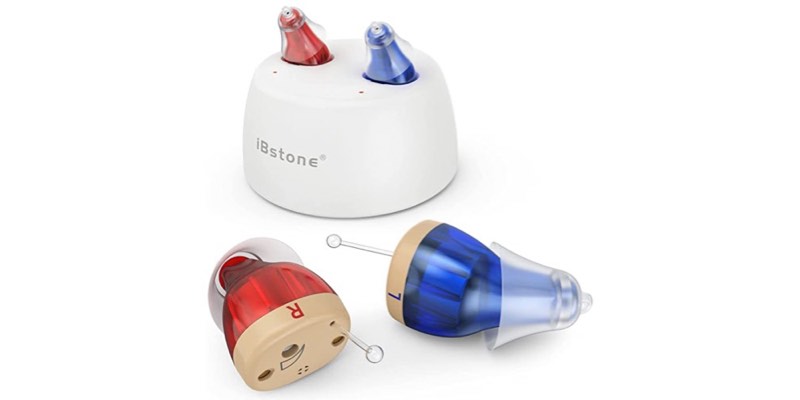
iBstone K17 hearing amplifiers are small enough to fit in most ear canals. The devices are blue and red to make it easier to determine which to insert in the left and right ears. The outer shell is beige.
- Great Design
- Color-coded ears
- Clear pull wire for easy removal
Banglijian ZIV-206
4.4
Banglijian stands behind ZIV-206 hearing amplifiers with an 18-month warranty. You get crisp sound quality across four channels, and you have 45 days to try Banglijian hearing amplifiers.
- Great Award
- 18-month warranty
- 45-day return policy
Enjoyee Hearing Amplifiers
4.4
Enjoyee offers hearing amplifiers to match most skin tones. Five dome sizes customize the fit, and these water-resistant hearing amplifiers are ideal for an active lifestyle.
- Great Color Selection
- Choose from skin tone options
- Sweatproof for use during exercise
R&L C20 Hearing Amplifiers
4.3
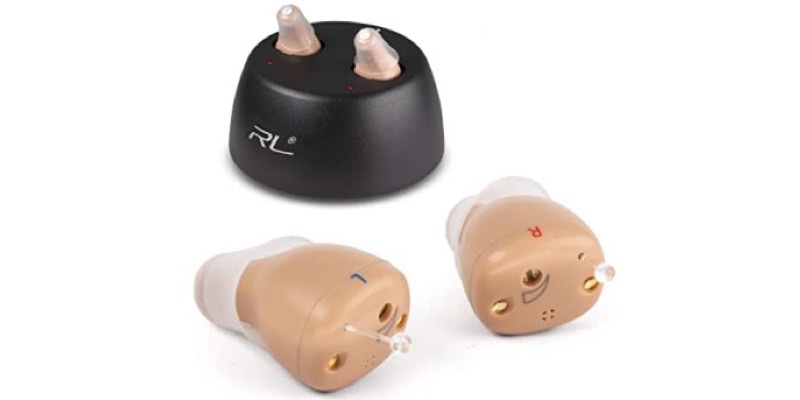
R&L customer support is available Monday through Friday from 8 a.m. to 5 p.m. PST. The R&L C20 hearing amplifiers are ideal for many who need a bit more volume and don’t want to bother with tweaking sound profiles.
- Great Customer Service
- U.S. based customer service
- Best for those who just want a volume boost
Neosonic NW 10 Hearing Amplifier
4.3
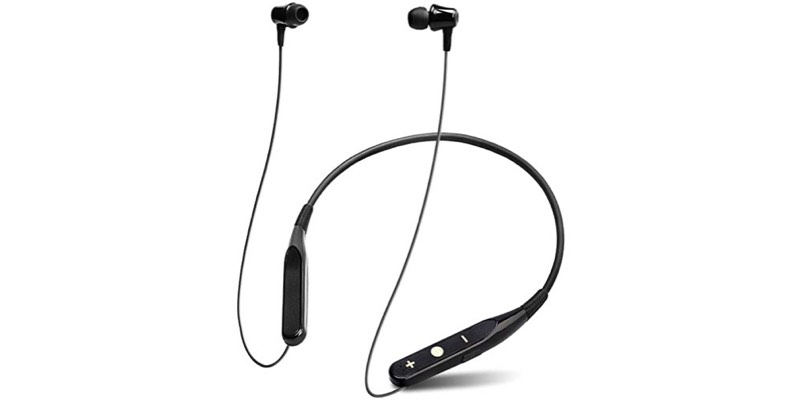
Neosonic’s NW10 hearing amplifier has a built-in microphone and a remote microphone, making it useful for one-to-one conversations, group meetings, classrooms, television listening, and more. This hearing amplifier looks like a regular Bluetooth wireless headset, making it comfortable for most people to wear.
- Great Distance Enhancement
- Mic features increase hearing distance
- Stream audio from devices
BeHear SMARTO
4.6
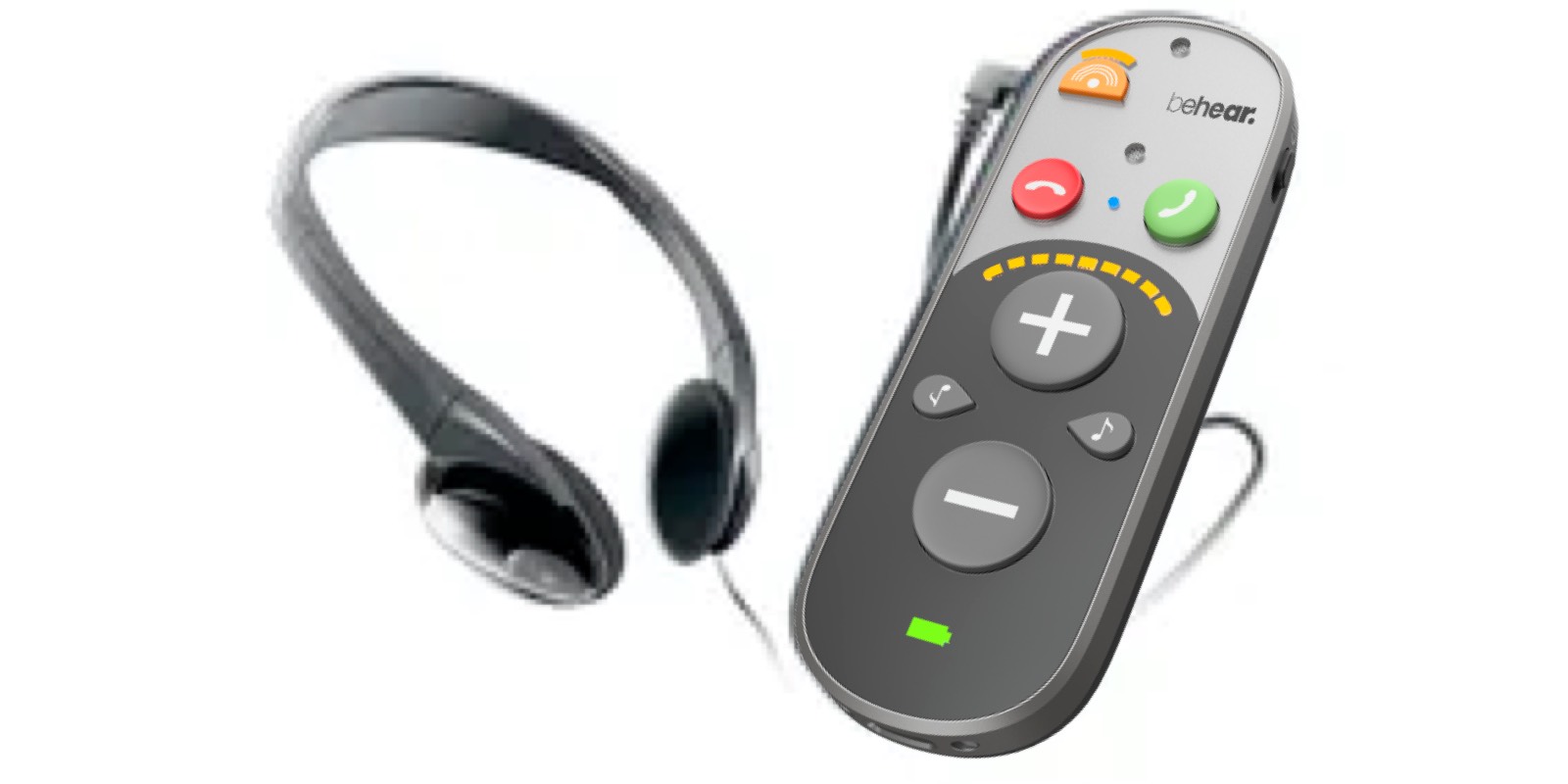
The behear SMARTO is a simple and easy-to-use hearing amplifier. The device features Bluetooth connectivity and can be used for live conversation, phone calls, or audio streaming from other devices.
- Great handheld device
- Up to 70dB boost
- Built-in tinnitus sound therapy
BeHear Hearing Amplifiers
4.6
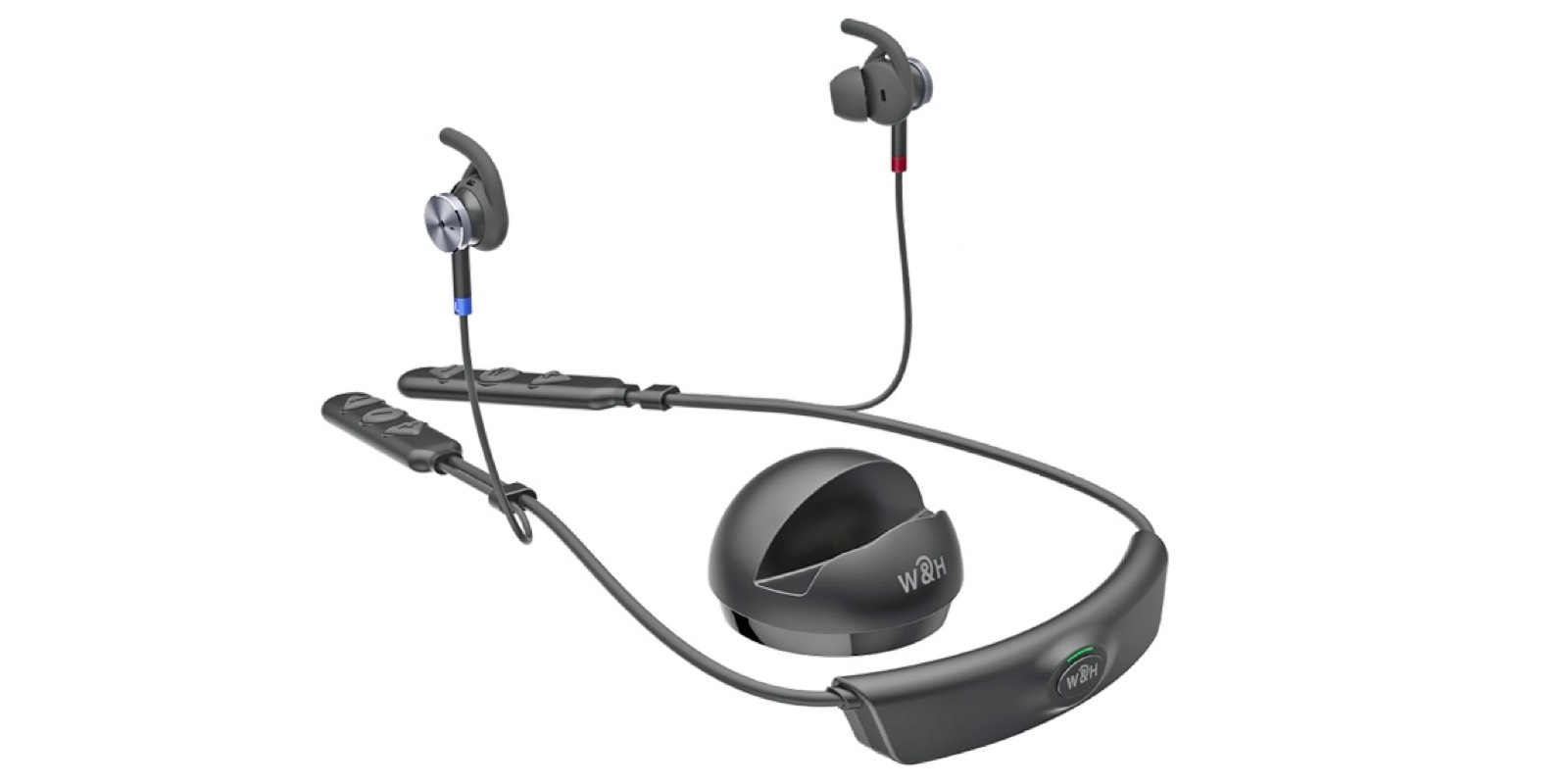
BeHear headsets enhance your day-to-day conversations and phone calls by amplifying and adapting sounds to your selected preferences.
- Affordable Option
- Full-day battery life
- Mobile Application for personalization
Compare Top Hearing Amplifiers
Impaired hearing can make conversations, meetings, social gatherings, and other settings frustrating. Hearing amplifiers capture sound and increase the volume you hear. While they are often confused with hearing aids, hearing amplifiers are simpler and provide less sound customization. These personal sound amplifiers (PSAPs) are effective for individuals with mild to moderate hearing loss and can be purchased over the counter without a prescription from an audiologist or hearing professional.
Use this guide to learn how digital hearing amplifiers work, your style options, and how to choose the best hearing amplifier for your needs.
We evaluated 28 hearing amplifiers to help you find highly rated products. We considered consumer reviews, technology, cost, and comfort. Our six best hearing amplifier providers are iBstone K17, Banglijian ZIV-206, Enjoyee Hearing Amplifiers, R&L C20, Neosonic NW 10, and BeHear.
Top tips:
- Plan for limited wear for a couple of weeks to get used to hearing devices.
- Consider how many hours you will wear hearing amplifiers each day and choose a model that will be a comfortable fit.
- If the hearing amplifier is uncomfortable, use the return policy and try a different design.
Our Search For The Best Hearing Amplifiers
Shop for hearing amplifiers, and you’ll find dozens of models. Many hearing amplifiers are marketed as hearing aids, which can cause confusion, but the difference is important. We reviewed 28 hearing amplifiers to help you narrow down your choices.
We followed these steps to create our list of the six best hearing amplifiers for your consideration:
- We took consumer reviews for hearing amplifiers very seriously.
A hearing amplifier company can make claims about how well the product works without doing much testing. We read dozens of consumer reviews to gauge whether a hearing amplifier performed as advertised and filtered out ones that didn’t live up to their claims.
- We evaluated hearing amplifier technology.
We chose devices with varying levels of technology. Some of our top hearing amplifiers are simple but effective for mild hearing loss. Others cost more but have the technology to deliver customized hearing experiences. Every listed hearing amplifier includes rechargeable batteries.
- We considered the cost of hearing amplifiers.
Almost all hearing amplifiers cost significantly less than hearing aids. People who have trouble hearing often avoid treatment due to the cost. We ensured that the price of each of our best hearing amplifiers aligns with the features offered.
- We chose hearing amplifiers that are easy to buy and return.
All the hearing amplifiers we selected offer a 30-day or longer trial period. You will receive a refund if you return the amplifiers before the trial period ends. Many of our best hearing amplifiers are available on Amazon, making them easy to buy, ship quickly, and return hassle-free.
Best Hearing Amplifiers Reviews
We used our hearing amplifier buying recommendations in this guide to select devices for our list. We evaluated 28 hearing amplifiers to help you find highly rated products. We considered consumer reviews, technology, cost, and comfort.
iBstone K17 Review
Great Design
|
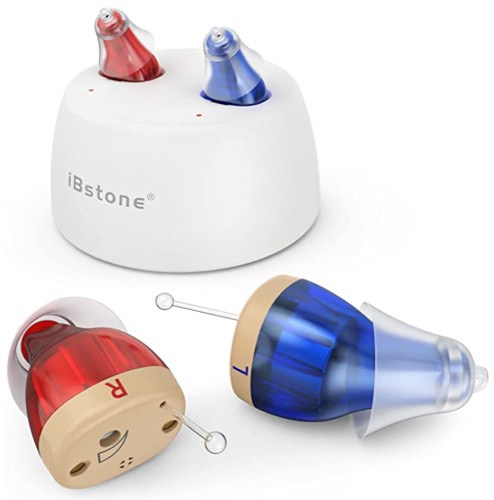
iBstone’s K17 hearing amplifiers are completely-in-canal (CIC) devices, making them less noticeable than some other amplifiers. You get a variety of domes to ensure comfortable wear and to reduce feedback.
The iBstone devices feature Ear Protection Output to prevent sudden loud noises from being amplified. The left hearing amplifier is blue, and the right is red for quick identification. The outer surface is beige for discreet wear. iBstone K17 amplifiers fully charge in three to four hours and keep the charge for around 24 hours.
The power switch is easy to access while the iBstone K17 hearing amplifiers are in your ear. However, you must remove the devices from your ear canal to adjust the volume. The CIC design makes iBstone K17 hearing amplifiers ideal for use when wearing glasses, a hat, or a mask.
Warranty: 1 Year
Return Policy: 30 Days
Includes: Case, charger, power cord and adapter, assorted ear domes, extra filters, volume adjustment tool
Price: $139
Banglijian ZIV-206 Review
Great Award
|
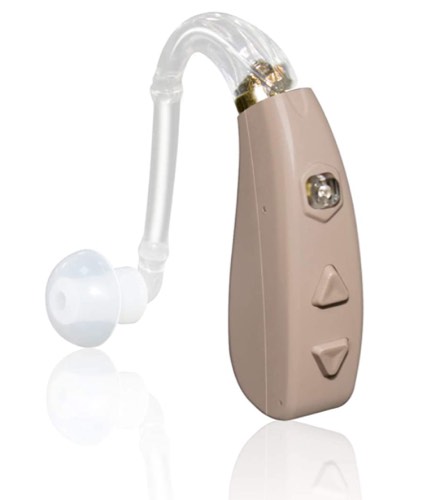
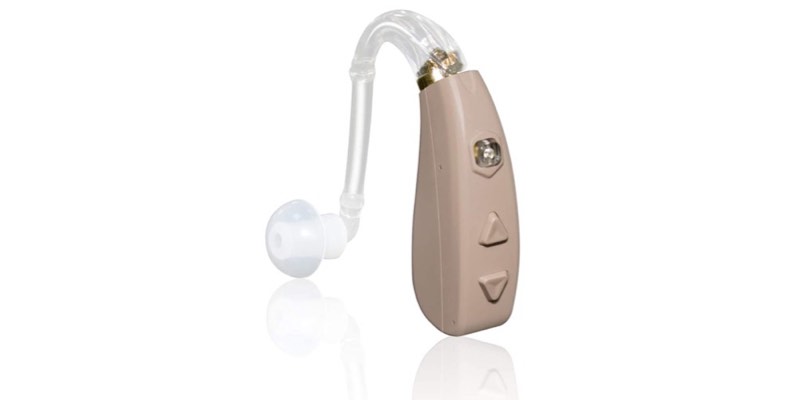
Banglijian ZIV-206 hearing amplifiers are over-the-ear models with transparent sound tubes. The company sells individual amplifiers, and you can use one device in either ear after swapping out sound tubes. However, you get two ZIV-206 amplifiers for a much better price than one. The adjustable 25 -53 dB gain range benefits individuals with moderate hearing loss and some with severe hearing loss.
The Bangliijian ZIV-206 is a behind-the-ear (BTE) model that comes with slim and thick tubes and multiple ear domes for the proper fit. Charging time ranges from one to four hours. Power and volume controls are easy to use while wearing ZIV-206 amplifiers. You get 20 to 24 hours of run time on a full charge.
Banglijian designed ZIV-206 hearing amplifiers with a chip upgrade for solid sound quality across four channels. Use three listening programs and five volume settings to adjust the amplifiers to your environment. You also get speech sound optimization, feedback cancellation, and adaptive noise reduction with these hearing amplifiers.
Warranty: 18 Months
Return Policy: 45 Days
Includes: Case, four slim sound tubes with 10 ear domes, three thick sound tubes and 12 ear domes, power adapter and cable, cleaning brush
Price: $139.99 for one device / $169.99 for a pair
Enjoyee Hearing Amplifiers Review
Great Color Selection
|
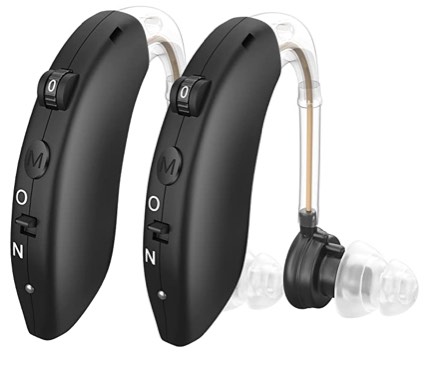
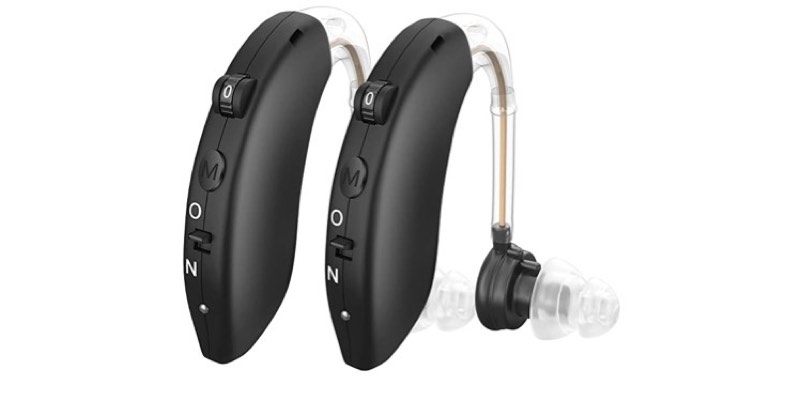
Enjoyee hearing amplifiers come in light and dark skin tones, plus blue and black. The earbuds feature adjustable angles and include five dome sizes to ensure a good fit.
Enjoyee hearing amplifiers are water-resistant (not waterproof), making them ideal for active individuals. The company recently upgraded the chip in its amplifiers to provide 30% greater noise reduction. Enjoyee says the amplifiers help all levels of hearing loss, but our research suggests it’s unlikely a hearing amplifier will be adequate for profound hearing loss.
Choose from three frequency modes and four volume levels to adjust to your surroundings. The modes and volume controls are on the BTE unit and are easy to use while wearing. Enjoyee hearing amplifiers fully charge in two to four hours. The company says you’ll get 80 hours of use from each charge. There is no charging case or stand, only a cable that plugs directly into an outlet.
Warranty: Not Available
Return Policy: 30 Days
Includes: 10 ear domes, power adapter and cable, two power adapters with USB cables, and a cleaning brush
Price: $67.99 to $99.95, depending on selected shade
R&L C20 Hearing Amplifiers Review
Great Customer Service
|
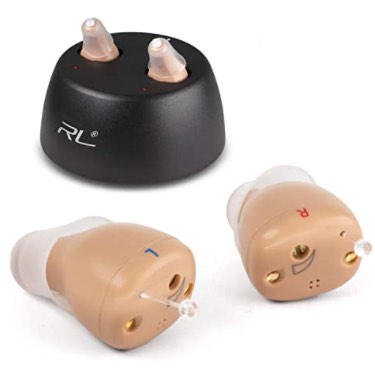
R&L C20 hearing amplifiers are small CIC models that sit in the ear canal. These devices are the simplest on our list of the best hearing amplifiers because you just set the volume and go. R&L C20 amplifiers charge in three to six hours, then function for 24 hours.
R&L provides unlimited phone support with U.S.-based customer service weekdays from 8 a.m. until 5 p.m. PST. The company ensures that someone will answer your call. C20 hearing amplifiers are a good choice for those who just need a boost in volume to hear well. If you’re looking for an amplifier with more technology, browse others on our list.
Warranty: 1 Year
Return Policy: 45 Days
Includes: Charging base, bell-shaped and round domes, power adapter and cable, cleaning brush, and volume adjustment tool
Price: $139
Neosonic NW 10 Hearing Amplifier Review
Great Distance Enhancement
|
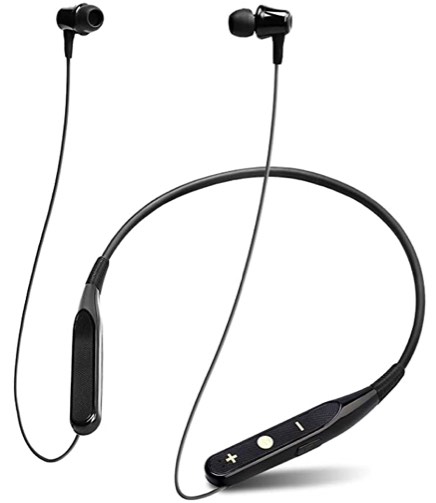
Neosonic’s NW10 hearing amplifiers consist of a thin, flexible neckband with earbuds for each ear. The mic on the neckband amplifies sounds near you, while the included remote microphone extends sounds up to 20 yards away. The remote mic looks like a small, lightweight box.
The design is similar to BeHear amplifiers with HearLink Plus, but the level of technology is very different. Neosonic recommends you use the amplifiers with the remote mic in most situations. You pay less for a Neosonic NW10 setup, but BeHear offers more convenience and likely serves a broader range of hearing loss.
The Neosonic NW10 remote mic uses a 2.4 GHz wireless Bluetooth connection. Place the mic in the middle of a table during a meeting to hear all participants or near the TV to hear without disturbing others. You can ask a speaker at an event to wear the small mic on their shirt or place it on their podium.
A three-hour charge provides up to 20 hours of use with the Neosonic NW 10 neckband and 10 hours of use with the remote mic. Neosonic includes an audio cable that connects the remote mic to a mobile phone or tablet, allowing you to stream music, podcasts, and more to the headset.
Warranty: 1 Year
Return Policy: 45 Days
Includes: Carrying case, dual wall charger, two charging cables, remote amplifier, multiple dome sizes, bands for adjusting earbud wire length, 3.5 mm audio cable
Price: $149.60
BeHear Hearing Amplifiers Review
Affordable Option
|
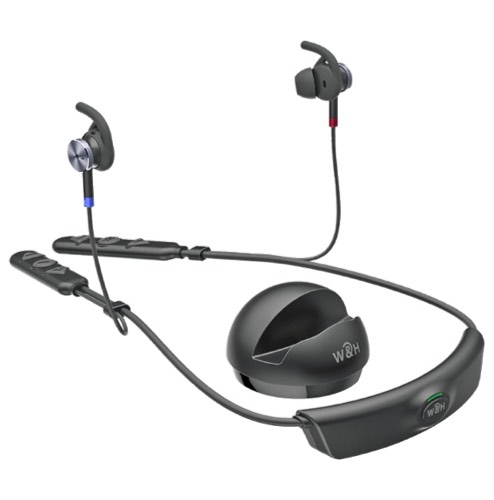
BeHear amplifiers cost more than our other top picks but utilize more technology. BeHear ACCESS II looks like a stereo headset with earbuds. BeHear ACCESS II has a telecoil, a feature you won’t find in many other hearing amplifiers.
BeHear PROXY wraps around the shoulders with speakers near the ear. Those who wear hearing aids can benefit from this design for situation-specific sound enhancement. You can also use BeHear PROXY with the included earbuds to watch TV, listen to music, or make private hands-free phone conversations.
BeHear devices use a mobile app to conduct a hearing assessment and create custom profiles for the indoors, outdoors, crowds, and live music. You can fine-tune profiles and update your hardware at any time via the mobile app. A notable accessory is HearLink PLUS, a transmitter that streams analog and digital audio for distortion-free music and TV.
Warranty: 1 Year
Return Policy: 30 Days
Includes: Travel case, charging cradle, USB power cord, three types of tips in multiple sizes, wind protection covers, three pairs of ear hooks
Price: $189 to $399 / $10 for additional sets of silicone earbuds and hooks
Tips For A Wise Buyer
The World Health Organization reported in February 2021 that nearly 2.5 billion people worldwide will experience some degree of hearing loss by 2050. Not everyone in this projection will need to wear hearing aids. Many will discover hearing amplifiers as an affordable alternative, just as many people do today.
Those with mild to moderate hearing loss are often pleased with hearing amplifiers and save thousands of dollars compared to those who buy prescription or OTC hearing aids. Today’s hearing amplifiers are lightweight, may offer Bluetooth streaming, and some are small enough to wear entirely in the ear.
What is a Hearing Amplifier?
Hearing amplifiers capture sound from your surroundings, then use digital processing to produce the same sound at a level you can hear. While there are a few differences between hearing aids and hearing amplifiers, the most notable is that amplifiers are less sound-selective.
While hearing aids can increase specific sounds, like high-pitched noises, hearing amplifiers (in most cases) increase all sounds, not just the ones you struggle to hear. As a result, some people may find hearing amplifiers overstimulating or frustrating, especially early on. However, there are hearing amplifiers equipped with technology that allows for more customized hearing assistance.
The Journal of the American Medical Association (JAMA) and the National Academy of Sciences performed studies comparing hearing aids to hearing amplifiers. Both studies revealed there is a place for both devices in the treatment market.
Hearing Amplifier Styles
Most hearing amplifiers resemble a type of hearing aid. All of the products we selected are small or slim enough not to be obvious when worn. However, those with small ears may find it challenging to find a discreet hearing amplifier.
| Design | Use and Benefits |
| Behind-the-ear | – Resembles a hearing aid with a receiver worn securely behind the ear lobe. – Many have slim receivers that are barely noticeable. – BTE hearing amplifiers typically fit left and right ears differently. |
| Completely-in-canal | – CIC hearing amplifiers fit directly in the ear. – Less noticeable during wear. – Small enough to be difficult to handle if you don’t see well. |
| Headsets with earbuds | – Amplifier processor is enclosed in a flexible neckband. – Small earbuds are comfortable for most people. – Bluetooth hearing amplifiers can stream music from smartphones and may work with external microphones to enhance hearing in groups or while watching TV. |
| Shoulder wrap | – Flexible shoulder wrap with embedded speakers. – Choose a model that also works with earbuds for private listening. – Helpful for those who want to use an amplifier with hearing aids or who only need amplification. |
| Standard Headphones | – Fits like a standard pair of headphones worn over the head. – Sound transmits via cushioned speakers worn over the ear. |
Many hearing amplifier designs are available in a single beige shade. However, some manufacturers offer hearing devices in a range of skin tones, such as Enjoyee, one of our top picks.
Pros and Cons of Hearing Amplifiers
You get what you pay for with hearing amplifiers. If you need a high level of amplification, you’ll have to spend more to get the right technology. Amplifiers with the latest technology can cost hundreds of dollars; however, devices from the best hearing aid manufacturers can cost thousands, making amplifiers an affordable alternative, especially for those with mild hearing loss.
While affordable for many people, hearing amplifiers aren’t covered by insurance. Medicare doesn’t pay for amplifiers, and Medicare Supplement plans provide no coverage. Additionally, the devices aren’t eligible for reimbursement through an HSA.
If you have severe to profound hearing loss, we recommend that you consider hearing aids, as these provide more specialized sound amplification and can address your specific needs. It’s crucial to see a doctor or healthcare provider to and determine the main cause of your hearing loss.
Getting Started with Hearing Amplifiers
Hearing amplifiers take some getting used to, just like hearing aids. Most people assume that once they buy hearing amplifiers, they just insert the devices and adjust the volume, treating them like headphones or airpods. However, hearing amplifiers take time to get used to and typically have a break-in period before you feel comfortable wearing them.
Sound levels: You will hear sounds that you may not have heard for years, which can be distracting at first. Start with the lowest volume and gradually increase to your optimal setting while you adjust to hearing well again. Sound canceling reduces sharp, loud noises and is essential when you need to use higher volume levels.
Feedback noise: Hearing whistling or other feedback from hearing amplifiers usually indicates a poor fit. Try using a different size dome or ear tip. If this doesn’t resolve the issue, return the amplifiers and try a different design. We recommend avoiding any hearing amplifier that claims to be a perfect fit for everyone.
There is no one-size-fits-all hearing amplifier. Unlike with prescription hearing aids, amplifiers are self-fitted, and it may take a few tries to find the right style for your ear. Take advantage of the return policy if the hearing amplifiers are uncomfortable after several wearings. The product should never hurt your ears. If one type of hearing amplifier isn’t comfortable, try a different style. For example, if CIC or in-ear amplifiers irritate your ear canal after a couple of weeks, try a model with soft earbuds or a BTE design.
Frequently Asked Questions about Hearing Amplifiers
Many hearing amplifiers increase sounds very effectively and, without filtering technology, have the potential to damage the inner ear. It’s a good idea to buy hearing amplifiers with noise-canceling technology to avoid this problem.
The main reason companies advertise hearing amplifiers as hearing aids is marketing. Hearing aids are more well-known, so referring to an amplifier as such boosts appeal, perceived legitimacy, and targets people seeking lower-cost alternatives to medical-grade devices. However, the FTC notes that hearing aids and hearing amplifiers are two distinct tools that serve different purposes. Hearing aids are FDA-regulated and for diagnosed hearing loss, while amplifiers aren’t meant for treatment.
Hearing amplifier comfort level depends on the fit and type of device. What works well for one person may not be the best choice for another. Plan to take a couple of weeks to get used to wearing hearing amplifiers. If models styled like hearing aids don’t feel comfortable, you’ll probably prefer a hearing amplifier earbud set.
Every hearing amplifier on our list is rechargeable. Charging overnight gets your hearing amplifiers ready to work for a full day. While replaceable batteries last multiple days, the cost adds up, and the tiny hearing aid batteries can be difficult to handle. With rechargeable hearing aids and hearing amplifiers, you never run out of batteries.
Hearing loss can be caused by various factors, including damage to the inner ear, aging, chronic exposure to loud noises, or genetic factors. Other factors may include ear infections, earwax buildup, certain medications, head trauma, or underlying medical conditions like diabetes or heart disease.
You do not need a hearing test or a prescription from an Au.D (Doctor of Audiology) to buy and use hearing amplifiers. However, there are many causes for hearing loss, and we recommend seeing a doctor to rule out health problems. If your hearing loss requires more than simple amplification but your budget is a concern, we recommend considering over-the-counter hearing aids, which are available at some drugstores and retailers like Costco.
Conclusion
Bottom line:
If you frequently ask yourself if you need a hearing amplifier, you probably do.
Struggling with hearing loss is frustrating, leads to miscommunication, and reduces the quality of your social life. Plus, difficulty hearing while driving or walking can be dangerous. While hearing aids can improve hearing, many people are concerned about the cost. Hearing amplifiers are affordable, easy to use, and come in many comfortable styles.