
Retirement Living takes an unbiased approach to our reviews. We may earn money when you click a partner link. Learn More
Best Invisible Hearing Aids of 2026
Discover the best invisible hearing aid for your lifestyle and budget.


Updated:
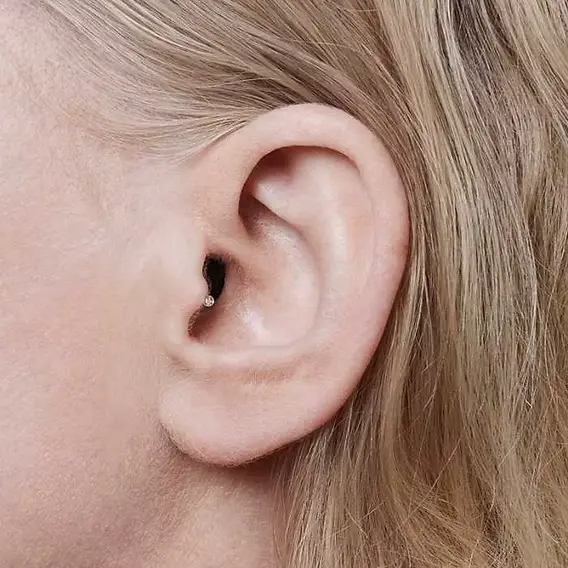
Invisible hearing aids offer ultimate discretion without sacrificing comfort or sound quality. Based on Retirement Living’s research and expert consultations, we identified the six best invisible hearing aid providers for those with mild-to-moderate hearing loss.

4.7
Eargo hearing aids treat mild to moderate hearing loss. Consumers can buy breathable, rechargeable hearing aids online. No hearing test or prescription is needed. Eargo provides unlimited phone support from licensed hearing professionals.
- Innovative Products
- Expedited process
- 2 hearing aid models available
Phonak is an award-winning leader in hearing aid technology. The company offers 12 hearing devices plus accessories to provide the right fit. Phonak produces crisp, natural sound that adjusts to your environment.
- Broad Product Line
- Has an extended wear option
- Models for all types of hearing loss
4.4
Oticon is a tech leader. Its high-quality products are pricey but seen as top-notch.
- Innovative Products
- Various styles of hearing aids
- Mobile application
4.7
Audicus offers affordable RIC hearing aids. Customers receive free lifetime audiology support, fully customized hearing aids, and a 100-day risk-free trial.
- Fully customized hearing aids starting at $62/mo
- Lifetime audiology support
- 45 Day Risk-Free Trial

4.6
MDHearing is a Midwestern hearing aid company that creates affordable hearing solutions. There are four models to choose from in two different styles. All models are smartphone-compatible and feature advanced feedback cancellation technology.
- Great Value Hearing Aid
- Smart and rechargeable options
- Free lifetime support

Starkey is a U.S. manufacturer. They blend advanced sound processing with health and wellness tracking features. Its current lineup features different styles for customization. It also works well with easy-to-use apps.
- Great variety available
- Health and wellness tracking available
- Large, well-known hearing aid manufacturer
How We Chose the Best Invisible Hearing Aids
The Retirement Living research team evaluated 32 well-known hearing aid brands, examining factors such as cost, features, reputation, and more. From there, we identified the providers that offered invisible hearing aids, which include invisible-in-the-canal (IIC) and completely-in-canal (CIC) styles. We considered the available options, features, and costs to create our list.
Below, we review the best hearing aid companies that manufacture invisible hearing aids, highlighting important features and factors of their discreet hearing aid models.
Invisible Hearing Aids Reviews
Read our reviews below for a detailed look at our top picks.
Eargo Review
Innovative Products
|
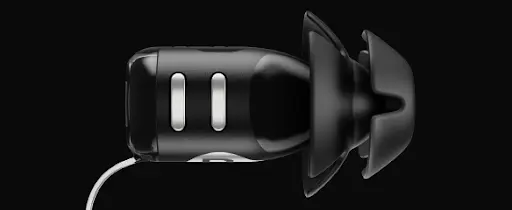
Eargo sells two invisible hearing aid models: Eargo 8 and Eargo SE. Both devices provide up to 16 hours of listening time, all-day hearing with on-the-go charging, a water-resistant design, four listening presets, and sound match tools. With smart technology, the Eargo 8 delivers faster, more effective noise reduction, automatically adjusting to your sound environment.
The Eargo 8 is currently the newest model and offers advanced features such as Premium Environmental Adaptation, which improves sound quality for music, phone conversations, and TVs.
Eargo devices cost between $1,699 and $2,699 (or $55–$78 per month) and have a warranty of 1-2 years, depending on the model. Eargo also offers a 45-day risk-free return policy and lifetime support.
For more information, read our full Eargo review.
Phonak Hearing Aids Review
Broad Product Line
|
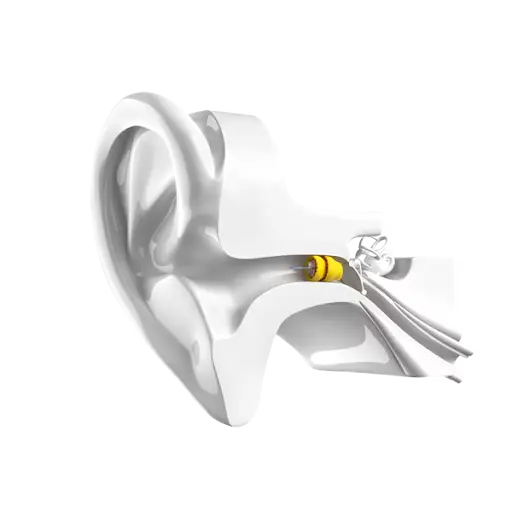
Phonak manufactures two discreet hearing aid models: Phonak Virto and Phonak Lyric.
The Phonak Virto is a discreet In-the-ear device, custom-made to fit the curve of your ears, while using Phonak SmartSpeech™ technology that senses and adapts to sound, providing improved speech understanding and reduced listening effort.
The Phonak Lyric is essentially invisible and can be worn 24/7 while still offering a natural sound. It uses an analogue chip with ultra-low power consumption, enabling uninterrupted use for months at a time. It’s also designed to be durable, withstanding the ear environment for extended periods without major maintenance. Additionally, Phonak Lyric can provide tinnitus relief through 24/7 amplification.
For more information, read our full Phonak review.
Oticon Review
Innovative Products
|

Oticon manufactures a wide variety of invisible in-the-canal (IIC) and completely-in-canal (CIC) hearing aids. They are custom-made to fit the unique shape of your ear, and most models can be colored to match your skin for maximum discretion.
The Oticon Own and Oticon Own SI both come in IIC and CIC styles, with the Oticon Own also coming in an in-the-canal (ITC) style for those who prefer telecoil or Bluetooth connectivity over maximum invisibility.
Oticon also has an app that gives you easy control over your hearing aids, letting you make adjustments, consult with your hearing care specialist, monitor progress, and even find your hearing aids if they get lost.
For more information, read our full Oticon review.
Audicus Review
Fully customized hearing aids starting at $62/mo
|
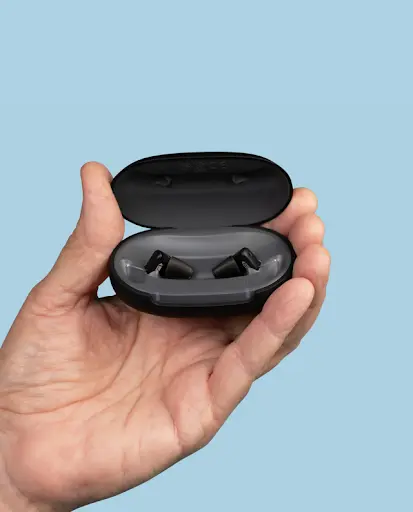
The Audicus Mini 2 fits completely in your ear canal and features advanced software and custom programming, auto-adjusting to your environment and blocking out unwanted background noise. The earbud-like hearing aids can be recharged, with batteries lasting all day.
The Mini 2 comes with one automatic preset program and three different listening environments—noise/party, music enhancer, and outdoor/traffic. Using the Audicus app, you can easily control your hearing aids with one tap. And with convenient at-home support, you can get on-demand audiologist adjustments sent directly to your phone.
You can purchase a pair or just one Mini hearing aid for either your right or left ear. For one hearing aid, the Mini 2 costs $1,249. For both, the cost is $2,498. Plus, enjoy a 100-day risk-free trial and lifetime audiology support.
For more information, read our full Audicus review.
MDHearing Review
Great Value Hearing Aid
|
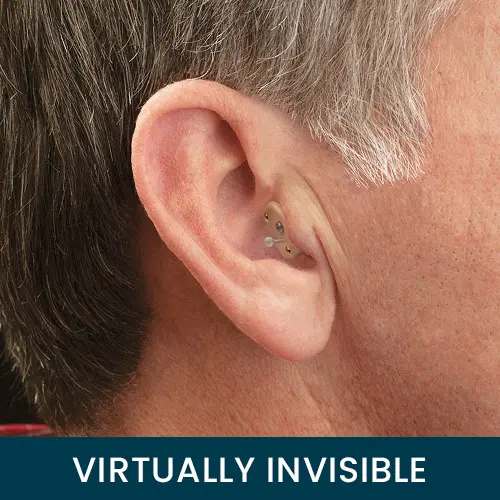
The MDHearing NEO is an FDA-registered over-the-counter (OTC) hearing aid that comes with free telehealth care from licensed hearing professionals. They sit deep within your ear and have flexible silicone domes to provide a secure, natural feel.
The MDHearing NEO offers background noise reduction and feedback cancellation. The batteries are rechargeable, so you don’t have to worry about replacing tiny ones. Sound adjustment controls can be found on the device for easy adjustments, and it comes with a convenient charging case that provides over 17 hours of reliable hearing.
You can purchase hearing aids for both ears or just one, depending on your needs. A single hearing aid costs $147, while a pair costs $197. MDHearing offers financing options, a 60-day risk-free trial, a 100% money-back guarantee, and a 1-year warranty.
For more information, read our full MDHearing review.
Starkey Hearing Aids Review
Great variety available
|
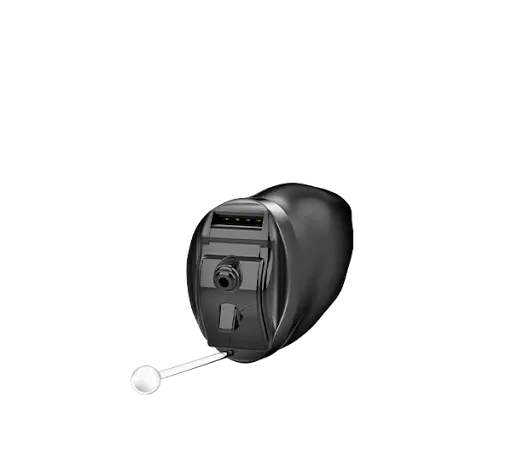
Starkey creates both CIC and IIC hearing aids. Both are custom-fit to your ear, offering discreet hearing support. Additionally, Starkey’s invisible hearing aids come in a variety of colors and skin tones, allowing you to find a model that meets your needs.
Starkey’s Signature Series is virtually invisible while offering transparent sound and exceptional durability. The Series is available in three models: Completely-In-Canal, Invisible-In-Canal, and Completely-In-Canal Rechargeable. The CIC Rechargeable model is also waterproof to a depth of 1 meter (roughly 3 feet) and has 38 hours of battery life.
For more information, read our full Starkey review.
What are Invisible Hearing Aids?
Invisible hearing aids sit within the ear canal, offering a discreet design that makes them hard to notice without sacrificing sound quality. Often, invisible hearing aids are custom-molded to your ears, ensuring a secure, custom fit. However, it’s important to remember that, in general, the smaller the hearing aid, the less severe hearing loss it’ll be able to support.
When people discuss invisible hearing aids, they are typically referring to one of two types of in-the-ear hearing aids:
- Invisible in-the-Canal (IIC): IIC hearing aids are the smallest and most discreet style. They sit deep within the ear canal, with the thin removal cord often the only noticeable piece of the device. Due to their small size, they can support mild-to-moderate hearing loss. However, IIC hearing aids may not include directional microphones, making them less ideal for background noise reduction.
- Completely-in-Canal (CIC): CIC hearing aids mostly sit in the ear canal, but some parts may be visible in the outer ear. The CIC style is similar to in-the-canal (ITC) hearing aids (which are like earbud-style hearing aids) but is smaller, resulting in a virtually invisible design.
Invisible hearing aids use microphones, processors, and speakers to detect and amplify sound directly toward the eardrum. They’re best for those with mild-to-moderate hearing loss, but some models may support higher degrees of hearing loss, depending on the manufacturer.
Additionally, some have rechargeable batteries, while others may use disposable batteries. If you struggle with dexterity or with seeing small components, be sure to confirm what type of batteries the hearing aids use.
Invisible Hearing Aids: Pros & Cons
Discreet hearing aids are wonderful solutions for those with mild-to-moderate hearing loss who want an unobtrusive device that provides sound amplification without sacrificing quality. While invisible hearing aids have many benefits, there are some limitations and drawbacks to be aware of.
Pros
- Discreet: Because they sit deep within the ear canal, invisible hearing aids are nearly impossible for others to see.
- Comfortable Fit: Because these hearing aids are custom-molded to your ears, they fit smoothly and comfortably.
- Natural Sound: Custom-fit hearing aids can use the outer ear’s natural shape to capture sound, providing a more natural listening experience. Additionally, as they do not have any parts that sit outside the ear, they may feel less foreign.
- Clean Look: Because of their small, discreet design, they have very few parts visible in the outer ear, usually just a small, thin wire for removal, resulting in a clean, natural look.
- Reduced Wind Noise: Because the microphone and receiver sit deep in the ear, invisible hearing aids are less susceptible to wind noise compared to behind-the-ear (BTE) models.
- Improved Mental Wellbeing: Comfortable devices that provide a natural hearing experience can reduce mental fatigue and make social situations easier to navigate, without others noticing the device, thereby improving well-being.
Cons
- Shorter Battery Life: Many modern invisible hearing aids use rechargeable batteries, but due to their size, they tend to have shorter battery life than larger models.
- Prone to Moisture & Earwax: Invisible hearing aids often require more maintenance because they sit deep in the ear and are exposed to moisture and earwax buildup.
- Limited Hearing Range Support: Invisible hearing aids are best suited for those with mild-to-moderate hearing loss and are often insufficient for those with severe-to-profound hearing loss.
- Limited Features: Smaller size often means they have limited room for advanced features like Bluetooth streaming or directional microphones.
Compare Invisible Hearing Aid Styles
Below, we compare the functionality of both invisible in-the-canal and completely-in-canal hearing aids to help you determine which style may be best for you.
| Invisible-in-the-Canal (IIC) | Completely-in-Canal (CIC) | |
|---|---|---|
| Visibility | Almost invisible | Slightly visible |
| Fit & Comfort | Custom-molded to deeper in the ear canal (may cause occlusion effect) | Custom-molded to fit higher in the ear canal |
| Ideal Hearing Loss Range | Mild-to-moderate | Mild-to-moderate |
| Bluetooth Connectivity | Limited due to size | Available in advanced models |
How Much Do Invisible Hearing Aids Cost?
The cost of invisible hearing aids can range between $100 and $4,000, on average, depending on the provider, model, included features, and whether you’re buying a single hearing aid or a pair. Over-the-counter models tend to fall on the cheaper end compared to prescription hearing aids, but OTC hearing aids may not offer advanced features or fit your ear canal as well. Though, many of the providers on our list do offer custom molding.
The companies in our guide that share pricing list their hearing aids at $197 to $2,699 per set. MDHearing is the most affordable, with a single hearing aid costing $147 and a pair just $197. Eargo offers more advanced, premium hearing aids priced from $1,699 to $2,699, with financing available.
Are Invisible Hearing Aids Right for You?
Invisible hearing aids provide a nearly invisible design and are custom-fit to each person’s ear, creating a natural hearing experience. They’re especially beneficial for active adults because these devices sit deep within the ear canal and are less obtrusive during exercise. However, they are prone to moisture and earwax buildup, so active individuals will need to clean them regularly to ensure they continue to function properly.
However, while these models are great for those who prioritize discreet hearing aids, they do have some limitations. For instance, they are suited for those with mild-to-moderate hearing loss, nothing more severe. As such, depending on your preferences and hearing needs, they may not be ideal for you.
Below are other types of hearing aids that can typically accommodate greater hearing loss and offer more advanced features due to their larger size.
- Behind-the-Ear (BTE) Hearing Aids: Largest available style; speaker sits behind the ear; often offers Bluetooth connectivity; for mild-to-severe hearing loss.
- Receiver-in-Canal (RIC) Hearing Aids: Similar to BTEs, but the speaker sits in the ear; enhanced amplification; for mild-to-moderate hearing loss.
- In-the-Ear (ITE) Hearing Aids: Biggest, custom-fit option; speaker sits in outer ear; for mild-to-severe hearing loss.
If you’re unsure which type of hearing aid is best for you, ask your hearing care provider for advice and recommendations. They can conduct a hearing test, determine the extent of your hearing loss, and recommend the best styles based on your needs and preferences.
Frequently Asked Questions (FAQs) about Invisible Hearing Aids
Invisible hearing aids are generally considered worth it for individuals with mild-to-moderate hearing loss who don’t want to advertise the fact that they’re wearing them. They offer a natural sound experience and can be more comfortable than traditional hearing aids.
In most cases, true invisible hearing aids (IIC & CIC) do not offer Bluetooth capabilities due to their small size, which leaves little space for the necessary antennas and batteries. However, some in-the-ear models that are slightly larger and more noticeable can offer Bluetooth features.
In general, invisible hearing aids should be charged every night to ensure they last through a full day of use. Some invisible hearing aids may come with replaceable batteries, in which case those need to be replaced every few days or so. However, premium invisible hearing aids may last days per charge but will likely cost more than the average invisible device.
Expensive hearing aids are worth the investment for those with active lifestyles or complex, severe hearing loss. This is because more expensive models can come with directional microphones, superior background noise reduction, tinnitus relief features, enhanced speech isolation, Bluetooth connectivity, automatic adjustments based on the environment, better sound quality, and more.
Concluding Thoughts on Invisible Hearing Aids
If you wear hearing aids for mild-to-moderate hearing loss and would prefer more discreet solutions, invisible hearing aids are a great option. These small devices fit snugly in your ear canal and are often custom-molded to your ear, providing maximum comfort and natural sound enhancement.
When people discuss invisible hearing aids, they usually mean invisible-in-the-canal (IIC) and completely-in-canal (CIC) styles. Which style fits you best depends on your budget, preferences, and needs. Be sure to discuss the available options with your healthcare provider.