
Retirement Living takes an unbiased approach to our reviews. We may earn money when you click a partner link. Learn More
Best Hearing Aids for Severe Hearing Loss of 2026
Our research identifies the hearing aid brands that meet the powerful needs of those with severe hearing loss.


Updated:
Through extensive research and consultations with professionals, we’ve narrowed down a list of 14 hearing aid brands to the four best for severe hearing loss. These four brands, including Phonak and Oticon, offer models designed to deliver stronger amplification, better clarity, and reliable performance.
Phonak is an award-winning leader in hearing aid technology. The company offers 12 hearing devices plus accessories to provide the right fit. Phonak produces crisp, natural sound that adjusts to your environment.
- Broad Product Line
- Has an extended wear option
- Models for all types of hearing loss
4.4
Oticon is a tech leader. Its high-quality products are pricey but seen as top-notch.
- Innovative Products
- Various styles of hearing aids
- Mobile application
Signia Assistant AI and TeleCare support keep your hearing aids performing well everywhere. The company offers hearing aids for active people. They have a discreet design and elegant styles, among other features.
- Great Mobile Apps
- Hearing aids for mild to profound hearing loss
- Large selection of models to choose from
Starkey is a U.S. manufacturer. They blend advanced sound processing with health and wellness tracking features. Its current lineup features different styles for customization. It also works well with easy-to-use apps.
- Great variety available
- Health and wellness tracking available
- Large, well-known hearing aid manufacturer
How We Chose the Best Hearing Aids for Severe Hearing Loss
To identify the best hearing aids for those diagnosed by a healthcare professional with severe hearing loss, we started with our top picks in the best hearing aids category. This list was determined by the Retirement Living Review team, who researched popular brands and then had one of our own team members with mild hearing loss personally test each. This allowed us a baseline of 14 brands that meet our established standards of comfort, price, technology, fit, and support.
Of those 14 brands, we took a deeper dive to see which brands offered the advanced features needed for those with severe hearing loss. To determine which features are necessary, we consulted an audiologist and conducted our own in-depth research. In this way, we were able to select four brands that provide powerful features like background noise reduction, sound amplification, and telecoil and tinnitus technology.
Our results include the following four brands of hearing aids, which are highly rated and recommended for severe hearing loss.
Comparing the Best Hearing Aids for Severe Hearing Loss
The following chart details hearing aid features that support those with severe hearing loss.
Hearing Aids for Severe Hearing Loss Comparison
| Feature | Phonak | Oticon | Signia | Starkey |
|---|---|---|---|---|
| Background Noise Reduction | Yes | Yes | Yes | Yes |
| Sound Amplification | Yes | Yes | Yes | Model dependent |
| Bluetooth | Yes | Yes | Yes | Yes |
| Telecoil | Model dependent | Model dependent | Model dependent | Model dependent |
| Tinnitus Management | Yes | Yes | Yes | Yes |
Hearing Aids for Severe Hearing Loss Reviews
Phonak Hearing Aids Review
Broad Product Line
|
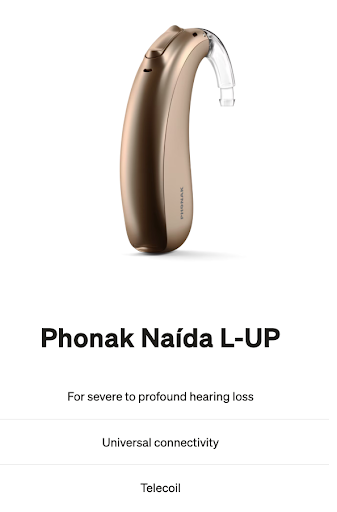
Phonak has a broad range of hearing devices, specifically, some that provide strong amplification and advanced sound processing. They’re an excellent option for severe hearing loss. The brand focuses on improving speech clarity in noisy environments through features like AutoSense OS, which automatically adjusts settings based on your surroundings.
For severe hearing loss, Phonak’s Naída models are the best option. These are power behind-the-ear (BTE) devices that work with custom earmolds for a secure fit. The Naída Lumity UP model stands out as the best fit for severe-to-profound hearing loss, offering the higher amplification needed for clearer communication.
Phonak hearing aids also include Bluetooth for streaming calls and audio directly to your hearing aids. Many models include frequency-lowering technology that makes high-pitched sounds easier to hear, along with directional microphones that improve the hearing experience in challenging listening environments.
For more information, read our full Phonak review.
Oticon Review
Innovative Products
|
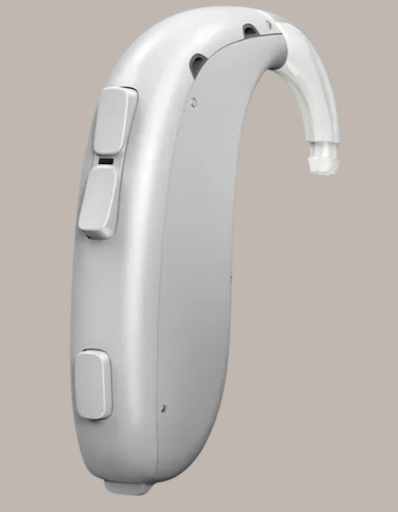
Oticon hearing aids do more than simply increase volume. BrainHearing™ technology from Oticon is designed to support how the brain processes sound, helping users follow conversations more easily in real-world listening experiences.
Oticon’s Xceed models are the best models for those with severe hearing loss. They’re BTE hearing aids that provide high levels of amplification and work with custom earmolds to deliver sound more effectively.
Other features include OpenSound Navigator, which reduces background noise in noisy places while maintaining access to speech from different directions. Many models also have Bluetooth for streaming calls and audio, along with tinnitus support through tinnitus SoundSupport.
For more information, read our full Oticon review.
Signia Hearing Aids Review
Great Mobile Apps
|
Signia hearing aids improve speech clarity in real-time, which is especially important for people with severe hearing loss. It uses technology that adapts as your environment changes. This helps users follow conversations more easily, even in noisy settings.
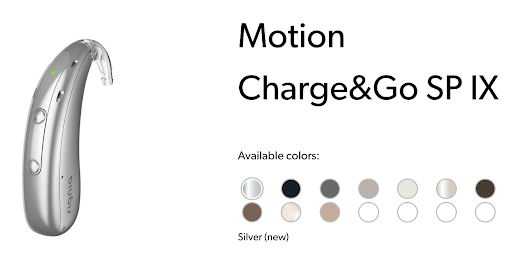
The best Signia models for severe hearing loss are Signia’s Motion Charge&Go BTE models, including the Motion Charge&Go SP IX, one of the only superpower hearing aids that use a rechargeable battery. We like this line because they have higher levels of amplification and are compatible with custom earmolds—both recommended by hearing care professionals for severe hearing loss, while using a newer technology that keeps the power consistent throughout the life of the charge.
Signia hearing aids include features, like directional microphones and background noise reduction, and many have Bluetooth, along with tinnitus therapy options that support those with severe hearing loss.
The Signia app allows you to adjust volume, change programs, and personalize settings directly on your smartphone. This level of control makes it easier to fine-tune your hearing aids based on different environments without needing in-office adjustments.
For more information, read our full Signia review.
Starkey Hearing Aids Review
Great variety available
|
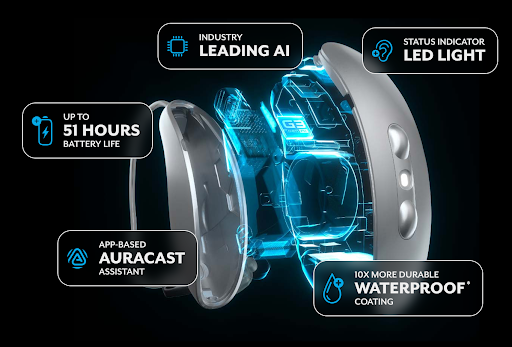
Starkey offers a range of hearing aid styles, including the BTE models Omega AI and Edge AI, that provide a combination of power, advanced features, and user control needed for more advanced hearing needs. These models can also be paired with custom earmolds for a more secure fit and better sound delivery.
With strong amplification and AI-driven sound processing, Starkey hearing aids improve speech clarity in real time through features like Edge Mode AI, which automatically adjusts settings based on your environment.
Starkey hearing aids include features like background noise reduction, directional microphones, and Bluetooth streaming. Some models also offer tinnitus support. The My Starkey app allows users to adjust volume, switch programs, and personalize settings directly from their smartphone.
For more information, read our full Starkey review.
What is Severe Hearing Loss?
Over 48 million Americans have some degree of hearing loss, and your chance of developing hearing loss, even severe hearing loss, increases with age. Severe hearing loss means you have a degree of hearing loss that makes it difficult to hear most speech, even at higher volumes. “Clinically speaking, hearing thresholds plotted between 71-90 dB on an audiogram would be considered severe,” says Eileen Clark, Au.D. (Doctor of Audiology) and Practice Owner of Integral Audiology. This means every day sounds, like conversations, may sound faint or unclear. At this level, basic amplification is not enough, and most people need powerful, prescription hearing aids that are professionally fitted to improve speech clarity and communication disorders. “Super power behind-the-ear (BTE) hearing aids would be most appropriate,” Clark says.
Types of Hearing Aids for Severe Hearing Loss
If you have severe hearing loss, the type of hearing aid you choose matters. The following options highlight which styles are designed to provide enough power and support.
Prescription vs. Over-the-Counter (OTC) Hearing Aids
For severe hearing loss, prescription hearing aids are ideal. Over-the-counter hearing aids for severe hearing loss are not recommended because they’re designed for mild to moderate hearing loss and do not provide enough power or customization for the higher level of hearing loss needs. Prescription hearing aids are also professionally fitted using your audiogram. This allows for stronger amplification, better hearing and speech clarity, and features tailored to your specific hearing profile.
Hearing Aid Styles Explained
Hearing aids come in a variety of styles based on how they sit in or on your ear canal. The styles are:
- Behind-the-ear (BTE)
- In-the-ear (ITE)
- In-the-canal (ITC)
- Completely-in-canal (CIC)
- Receiver-in-canal (RIC)
- Invisible-in-the-canal (IIC)
For those with severe hearing loss, BTE devices are best because they deliver more power. They also work with custom earmolds for a secure fit. Smaller styles, like the ITE and ITC styles, are more discreet but don’t have the power needed to amplify sound enough to meet the needs of someone with severe hearing loss.
Then there are cochlear implants. They’re different from hearing aids in that they are surgically implanted devices. “Hearing aids amplify sound, while cochlear implants bypass the damaged inner ear and send sound signals directly to the hearing nerve,” Clark says. “They’re usually recommended for people with severe to profound hearing loss who aren’t getting enough clarity or benefit from hearing aids.”
Superpower Hearing Aids
Power and superpower are designed with hearing aid technology that delivers the highest level of amplification for people with severe to profound hearing loss. They’re typically larger BTE models that work with custom earmolds for a secure fit that maximizes hearing. Compared to standard hearing aids, power and superpower devices offer stronger output, better speech clarity, and more support in challenging listening environments. Aside from cochlear implants, they’re the most effective option for severe levels of hearing loss.
“For individuals with a severe hearing loss or individuals with a profound loss who either choose not to go the cochlear implant route or are not good candidates, super power behind-the-ear (BTE) hearing aids would be most appropriate,” Clark says. The brands Clark recommends are Oticon (Xceed BTE) and Phonak (Naida BTE).
Battery Type
The battery type in hearing aids for severe hearing loss matters more than most people realize. You need a powerful battery to power the features that meet the needs of severe hearing loss. While models with rechargeable batteries are convenient and all the rage right now, they don’t deliver the same level of output as battery-powered devices. For severe hearing loss, disposable battery (non-rechargeable) hearing aids are the better choice. They provide more consistent power throughout their battery life and support higher-level features like telecoil and high amplification. In the best hearing aids for severe hearing loss, disposable battery-powered models are the better option.
Features to Look for in Hearing Aids for Severe Hearing Loss
Technology with the right features makes a noticeable difference in how clearly you hear and how well you communicate when you have severe hearing loss. Here are the key hearing aid features to look for that address severe hearing loss:
- Background noise reduction: Helps filter out surrounding noise, making speech clearer, especially in busy environments like restaurants or group settings.
- Bluetooth streaming: Allows you to stream phone calls, TV audio, and music directly to your hearing aids for better sound quality.
- Sound amplification: Provides the level of volume needed to hear speech and everyday sounds, which is especially important for severe hearing loss and in noisy environments.
- Telecoil: Connects your hearing aids directly to loop systems in public places, improving clarity by reducing distance and background noise.
- Tinnitus management: Uses sound therapy features to help reduce the perception of ringing or buzzing in your ears.
Costs of Hearing aids for Severe Hearing Loss
Prescription hearing aids work better for severe hearing loss and are typically more expensive than OTC hearing aids due to the advanced technology and higher power they require. Most prescription devices range from $2,000 to $7,000 per pair, though we found some priced as high as $9,000 per pair. The price here depends on the brand, features, and level of professional support included. Our conversations with professionals in the field support our research.
“You are not just purchasing a product, you are investing in the clinical expertise and specialized equipment required to fit and verify the devices properly,” Clark points out. This cost typically covers the hearing test, hearing aids, fitting appointments, adjustments, warranties, and follow-up care to preserve overall hearing health. While the upfront investment is higher, properly fitted devices make a significant difference in daily communication—especially for those with severe hearing loss.”
And don’t be fooled by the term prescription. “The term ‘prescription’ does not automatically mean the devices are covered by insurance,” Clark explains. Here’s a quick rundown on what coverage to expect:
- Commercial insurance: Some offer partial coverage depending on the insurance.
- Medicare: Does not cover hearing aids.
- Medicare Advantage plans: Some provide partial coverage, but the types of hearing aids covered are limited.
- Medicaid: Coverage varies by state.
- FSA/HSA: Hearing aids are eligible expenses under these plans.
Frequently Asked Questions (FAQs) about Hearing Aids for Severe Hearing Loss
Yes, people with severe hearing loss can use hearing aids. But they need powerful, superpower-grade hearing aid technology that delivers stronger amplification than standard models.
Severe hearing loss is treated with prescription hearing aids that are professionally fitted and programmed. In more advanced cases, cochlear implants are an option if hearing aids don’t provide enough benefit.
Hearing aids help with severe hearing loss when they’re properly fitted and programmed. While they won’t restore normal hearing, ear hearing aids significantly improve speech understanding and daily communication.
The best hearing aids for profound hearing loss are typically superpower BTE hearing aids from brands like Phonak and Oticon. These devices are designed to deliver the highest level of amplification and support custom fittings for maximum performance.
Concluding Thoughts on Hearing Aids for Severe Hearing Loss
Bottom Line: If you have severe hearing loss, prescription power or superpower BTE hearing aids are the most effective option.
These devices are built to deliver the high level of amplification needed for clear speech, especially in real-world environments. Choosing the right style, battery type, and features—along with professional fitting—makes a big difference in how well your hearing aids perform.
While OTC and smaller styles seem more affordable and convenient, they’re not designed to meet the needs of those with severe hearing loss. Look for hearing aids for severe hearing loss with high power, customizations, and the unique features you need for better functionality, communication, and more consistent results.