
Retirement Living takes an unbiased approach to our reviews. We may earn money when you click a partner link. Learn More
Best Hearing Aids for Mild Hearing Loss of 2026
Our top picks for natural sound, simple controls, and everyday comfort.


Updated:
We reviewed 14 trusted hearing aid brands and models to identify the best hearing aid for mild hearing loss. Our research included consulting experts, testing products in person, and conducting online research. The following five brands are affordable and offer the features needed to improve mild hearing loss.
Jabra Enhance offers online tools that begin with a virtual consultation. This helps you find the right hearing aid for your needs. After receiving them, the company provides support as needed. Jabra Enhance offers a great choice for those seeking affordable hearing aids. You don’t need to visit an office to get them.
- Trained audiology care team support
- 100-day free trial
- 3-year warranty

4.6
Lexie Hearing aids are affordable and offer easy access to customer service. The company sells directly to consumers. This allows for lower costs. You can also choose Lexie Hearing subscription payment plans.
- Great Technology
- 45-day free trial
- Affordable subscription available
4.6
MDHearing is a Midwestern hearing aid company that creates affordable hearing solutions. There are four models to choose from in two different styles. All models are smartphone-compatible and feature advanced feedback cancellation technology.
- Great Value Hearing Aid
- Smart and rechargeable options
- Free lifetime support
4.7
Eargo hearing aids treat mild to moderate hearing loss. Consumers can buy breathable, rechargeable hearing aids online. No hearing test or prescription is needed. Eargo provides unlimited phone support from licensed hearing professionals.
- Innovative Products
- Expedited process
- 2 hearing aid models available
4.4
Widex hearing aids provide unmatched high-definition sound. They reduce distortion, especially in complex settings. The SmartRIC has an L-shaped design. This shape improves the microphone’s angles, leading to clearer sound.
- Great Natural Sound
- Noise suppression for enhanced clarity
- Provides tinnitus relief
How We Chose the Best Hearing Aids for Mild Hearing Loss
To narrow down our search for the best hearing aid for mild hearing loss, we started with our established list of the 14 best hearing aids. This list was determined by the Retirement Living review team through research, in-person testing, and consultations with healthcare and hearing experts. The 14 we started with have already proven a comfortable fit, an affordable price point, suitable technology, and excellent customer support.
With those 14 brands in mind, we researched what makes the best hearing aid for mild to moderate hearing loss. We spoke with an audiologist and conducted further research, which narrowed our list of 14 to the 5 best options for mild hearing loss.
These five brands highlight the most desired features, including background noise reduction, feedback suppression, natural sound quality, and Bluetooth connectivity. They’re also highly rated by users, approved by the Food and Drug Administration (FDA), and respected in the industry.
| Brand | Type | Background Noise Reduction | Feedback Suppression | Sound Quality | Bluetooth | Battery Type |
|---|---|---|---|---|---|---|
| Jabra | RIC | Yes | Yes | Yes | Yes | Rechargeable |
| Lexie | BTE | Yes | Yes | Yes | Model specific | Rechargeable |
| MDHearing | BTE, ITE | Yes | Yes | Yes | Model specific | Rechargeable |
| Eargo | ITE | Yes | Yes | Yes | No | Rechargeable |
| Widex | RIC, BTE, ITE | Yes | Yes | Yes | Yes | Both available |
Hearing Aids for Mild Hearing Loss Reviews
Jabra Enhance Hearing Aids Review
Trained audiology care team support
|
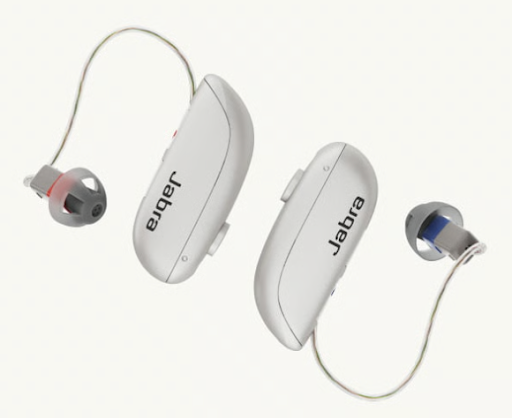
Jabra Enhance is a line of RIC hearing aids that place the receiver in the ear canal rather than the outer ear. They stand out for their simplicity and clear sound. The brand focuses on easy setup and remote support, allowing users to manage their hearing health and hearing care without the inconvenience of in-person visits.
These devices include background noise reduction and use a directional microphone to help focus on speech. Feedback suppression technology reduces whistling sounds. As a result, sound processing keeps audio clear without over-amplifying.
Bluetooth streaming is built in, and a rechargeable battery keeps them charged all day. The Jabra Enhance Select app allows users to adjust the volume and settings from their smartphone. Jabra hearing aids also include a 100-day risk-free trial, 3 years of audiology support, and a 3-year warranty.
For more information, read our full Jabra Enhance review.
Lexie Hearing Review
Great Technology
|
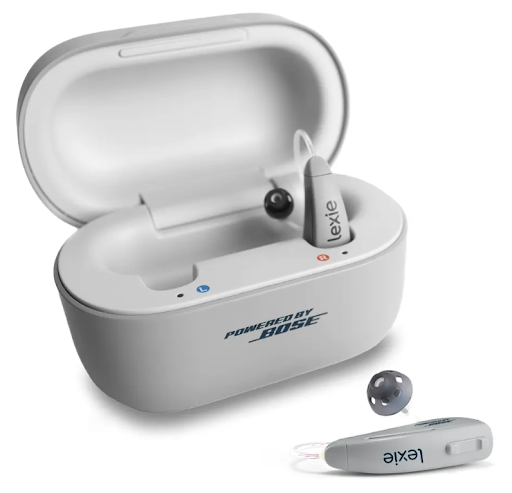
Lexie hearing aids are affordable and easy to use, with slim tube BTE designs, making them a good choice for people with mild hearing loss. The brand uses self-fitting technology that allows users to adjust their devices without needing in-person appointments. But if you do need extra help, Lexie offers additional support through the Lexie mobile app and remote support team.
Lexie devices include background noise reduction and feedback suppression to reduce whistling. Sound processing is designed to keep audio clear and balanced for everyday needs. The Lexie app allows users to adjust volume, customize settings, and fine-tune their hearing experience based on their environment.
Some Lexie models offer Bluetooth connectivity for streaming calls and audio. These are particularly compatible with iPhones and select Android devices.
For more information, read our full Lexie review.
MDHearing Review
Great Value Hearing Aid
|
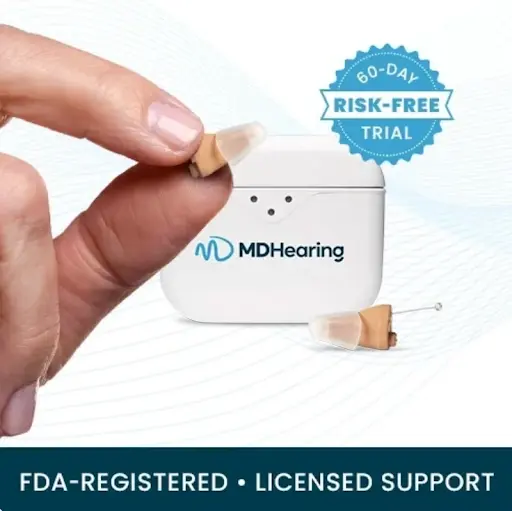
MDHearing devices are BTE and ITE hearing aids. The brand focuses on making hearing aids at a lower price point for those on tight or fixed incomes. The devices offer straightforward functionality rather than advanced features, making them a more affordable choice.
MDHearing devices are easy to handle and adjust. They include basic background noise reduction and feedback suppression to improve clarity and sound quality in everyday environments.
While MDHearing models feature rechargeable batteries, some sacrifice Bluetooth connectivity for a lower price point. While they may miss some convenience features, if you’re on a tight or fixed income, MDHearing aids are a reputable, quality hearing aid for mild hearing loss. Financing options are also available to keep costs manageable.
For more information, read our full MDHearing review.
MDHearing Review
Great Value Hearing Aid
|
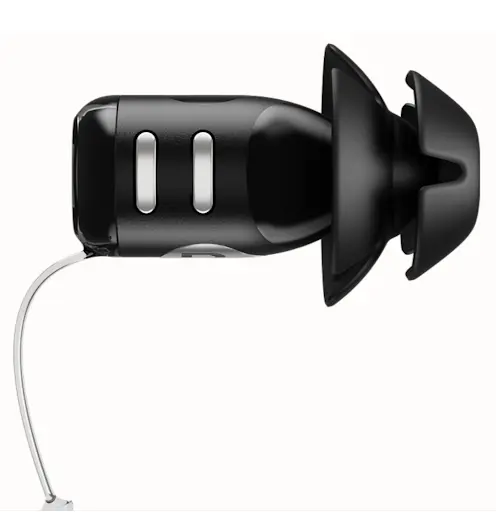
Eargo offers ITE hearing aids with an innovative petal tip that allows air to flow through, creating a more natural sound than a typical ear-mold tip. The petal tip prevents the ‘clogged’ feeling of some hearing aids. The hearing aids sit fully inside the ear canal and are lightweight for discreet, everyday comfort.
Eargo focuses on natural sound quality with built-in noise reduction and feedback cancellation to improve clarity and reduce whistling. Smart Sound Adjust technology automatically adjusts to your environment. The devices are rechargeable and come with a portable charging case. The Eargo app allows users to adjust volume and settings. While Eargo does not offer Bluetooth streaming, it provides simple, easy-to-use features for mild hearing loss. Eargo hearing aids have a two-year warranty.
For more information, read our full Eargo review.
Widex Review
Great Natural Sound
|
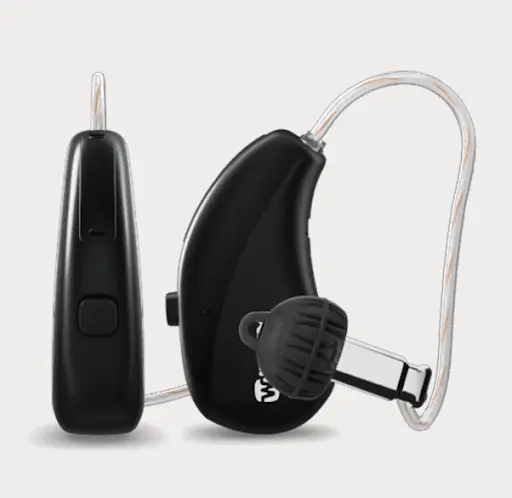
Widex hearing aids are known for their natural sound quality, making them a strong option for people with mild hearing loss. The brand uses patented PureSound technology to reduce processing delay and create a more natural listening experience. It helps speech and environmental sounds come across more clearly and less artificial.
Widex devices come in RIC, ITE, and BTE styles, although the models suitable for mild to moderate hearing loss are RIC, such as the Widex Moment Sheer RIC. Features include background noise reduction, feedback suppression, Bluetooth connectivity, and the Widex app that allows users to adjust volume and personalize settings.
Widex hearing aids are prescription hearing aids and therefore offer higher power and additional features like Zen Therapy for tinnitus support – a good option as your needs progress. With both rechargeable and battery-powered options, Widex provides flexibility while maintaining a focus on clear, natural sound.For more information, read our full Widex review.
What Is Mild Hearing Loss?
Mild hearing loss is a type of hearing loss that means you miss softer sounds or parts of conversations, especially in noisy environments. It falls within the 26-40 dB range on an audiogram. In this range, speech sounds faint or unclear at times. While you can still hear most everyday sounds, you may find yourself asking people to repeat themselves or struggling to follow conversations in groups.
When Should You Consider Hearing Aids for Mild Hearing Loss
Even if you have mild hearing loss, you should still use hearing aids. “In most cases, even individuals with mild hearing loss should be wearing hearing aids, especially if they’re noticing any difficulty,” says Eileen Clark, Au.D. (Doctor of Audiology) and Practice Owner of Integral Audiology. “Even mild hearing loss can impact communication, increase listening effort, and lead to mental fatigue. Mild hearing loss can also increase the risk of falls and balance issues. Addressing it early often leads to a much easier adjustment and better long-term outcomes.” So, if you find yourself asking people to repeat themselves, are struggling to follow conversations in noisy settings, or are turning up the TV volume, hearing aids will improve your symptoms, well-being, and quality of life.
Types of Hearing Aids for Mild to Moderate Hearing Loss
Unlike the specialized, high-powered BTE hearing aids for severe hearing loss, mild to moderate hearing loss offers many more options. There are six types of hearing aids: behind-the-ear (BTE), in-the-ear (ITE), completely-in-canal (CIC), receiver-in-canal (RIC), in-the-canal (ITC), and invisible-in-canal (IIC). The degree of hearing loss determines which type works best for you. All six types work for mild hearing loss. The best style, though, for mild-to-moderate hearing loss is RIC. “RICs are the most popular type of hearing aid, especially for mild losses because they sound the most natural,” Clark explains. The other options will work too, if your anatomy allows it.
Over-the-Counter Hearing Aids vs. Prescription Hearing Aids for Mild Hearing Loss
For mild hearing loss, both over-the-counter (OTC) and prescription hearing aids are effective, but they serve different needs.
“I would recommend OTC only for mild hearing loss, and even then, prescription hearing aids will be significantly better at how they are actually correcting that hearing loss,” Clark says. That said, if your hearing loss is mild and straightforward, OTC devices are a good starting point. They’re more affordable than prescription hearing aids, and you don’t need a hearing exam to purchase them, making them a convenient option.
On the other hand, prescription hearing aids require a hearing test, after which they are professionally fitted and programmed based on the results. While they require more work and cost up front, they’re highly customized and offer greater success. “Most hearing losses are not just ‘flat’ losses, meaning most people have different amounts of hearing loss at different frequencies, and the more precise you are with programming the devices, the better the outcomes will be,” says Clark.
Battery Type for Mild Hearing Loss
Unlike with severe or profound hearing loss, with mild hearing loss, the battery type in your hearing aids is completely your preference. Both rechargeable and disposable battery hearing aids work well at this stage, but rechargeable batteries are usually preferred due to their convenience. They’re easy to use and eliminate the need for frequent battery changes due to battery life.
What To Look For in Hearing Aids for Mild Hearing Loss
Fewer features are required for mild hearing loss than for tinnitus, high-frequency hearing loss, or severe hearing loss. No need for a telecoil or an ear mold, here. Still, the right features in hearing devices for mild hearing loss will improve your comfort and make listening feel more natural. Here are the features to prioritize:
- Natural sound quality: Allows voices and environmental sounds to sound clearer and less processed.
- Bluetooth: Lets you stream phone calls, music, and TV sounds directly to your hearing aids.
- Feedback suppression: Prevents high-pitched squealing, whizzing, and buzzing sounds, especially when adjusting fit or volume.
- Background noise reduction: Filters out ambient noise, making speech easier to understand in busy environments.
Cost of Hearing Aids for Mild Hearing Loss
Hearing aids for moderate hearing loss are more affordable than prescription hearing aids for more severe hearing loss. In our research, we found that OTC devices cost between $100 to $4,500 per pair, depending on features and level of support, while prescription hearing aids ranged from $2,000 to $9,000 per pair. Lower amplification needs often mean more flexibility in pricing, but factors like Bluetooth connectivity, app controls, and professional fitting will increase the overall cost.
It’s important to point out that Medicare does not cover hearing aids. Some Medicare Advantage plans offer partial coverage, and Medicaid coverage varies by state. If you have an FSA or HSA plan, hearing aids are usually an eligible expense.
How To Buy Hearing Aids for Mild Hearing Loss
If you suspect you have mild hearing loss and want to explore hearing aids, there are easy ways to get started. The following steps will guide you through the evaluation and buying process.
Step 1: Take a Hearing Test
Many brands offer free online or in-person hearing tests to help you understand your level of hearing loss. While some OTC hearing aid purchases don’t require a hearing test, we still recommend one, as it will help you choose a model that best fits your needs.
Step 2: Decide Where to Buy
For mild hearing loss, you can often buy hearing aids online. This eliminates the need to schedule appointments or visit a clinic.
Step 3: Compare Models and Features
This part is just like shopping online for any other item: browse models, compare features, and check out with shipping and payment details. Some companies also offer financing options. Be sure to check that the brands you are researching are also registered with the FDA.
Step 4: Make Your Purchase
Once you’ve selected a device, complete your purchase. Be sure to check the return policy, trial period, and warranty coverage before finalizing your order.
Step 5: Set Up and Adjust
After receiving your hearing aids, use the built-in app or support service to adjust the settings for comfort and clarity.
Frequently Asked Questions (FAQs) About Hearing Aids for Mild Hearing Loss
Yes, hearing aids are worth it even for mild hearing loss. If you are using hearing aids for the first time, early use improves clarity, reduces strain, and improves your overall well-being.
The best hearing aids for mild to moderate hearing loss are RIC models because they deliver more natural sound quality while still reducing background noise. Many OTC options work well. We recommend the FDA-registered brands presented in this guide, such as Jabra and Lexie.
The cost of hearing aids typically includes the devices, setup, app access, warranties, and follow-up support. Prescription models often bundle professional services, while OTC options typically include fewer services but lower upfront costs.
You may benefit from a hearing aid even if hearing loss is only in one ear. A single device can improve sound balance, enhance directionality, and make conversations easier to follow across different environments.
Concluding Thoughts on Hearing Aids for Mild Hearing Loss
Bottom Line: By improving clarity and reducing listening strain, hearing aids, even for mild hearing loss, will benefit your well-being and improve your quality of life.
The right device depends on your type of hearing loss, preferences, and how much support you want. OTC hearing aids are a convenient and affordable starting point, while prescription options offer more customization as your needs change and progress. Focusing on comfort, ease of use, and features like natural sound and noise reduction will help you get the most benefit from your hearing aids.