
Retirement Living takes an unbiased approach to our reviews. We may earn money when you click a partner link. Learn More
Home Elevator Sizes: Standard Dimensions & Space Requirements
Traditional home elevators require 5’ x 5’ (25 square feet) of floor space for proper installation, but it is possible for homeowners to find pneumatic or shaftless solutions with a smaller footprint.


Updated:
At a glance:
- The average home elevator installation requires a pit depth of 6″-12″, a hoistway measuring 5′ x 5′ to 5′ x 7′, and a cab measuring 3′ x 4′ (12 sq. ft.).
- Home lift dimensions depend on the type of residential elevator, with pneumatic elevators being as little as 30” in diameter and requiring no machine room. Hydraulic elevators are among the most space-demanding, typically requiring a deep pit and a separate machine room.
- Home elevators that require a machine room need an additional 4′ x 4′ to 5′ x 7′ (16–35 sq. ft.) of space and a minimum ceiling height of 7’.
Standard Residential Elevator Dimensions
The average home elevator requires 5’ x 5’ (25 sq. ft.) of floor space for installation. However, models come in a range of sizes depending on type, your home’s layout, and local building requirements. The four main components to wrap your head around are the shaft (hoistway), pit, cab, and machine room:
Home Elevator Shaft Dimensions
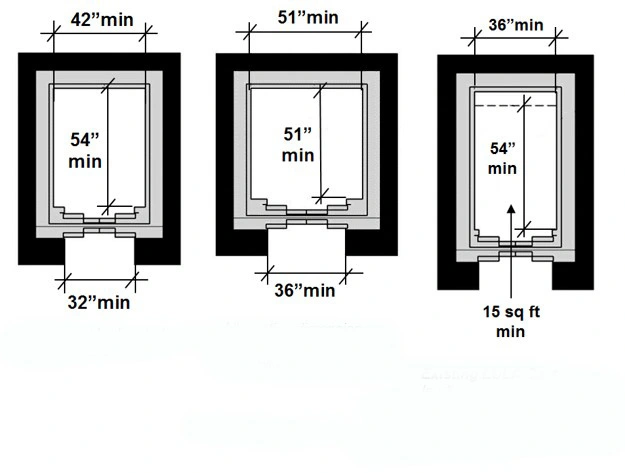
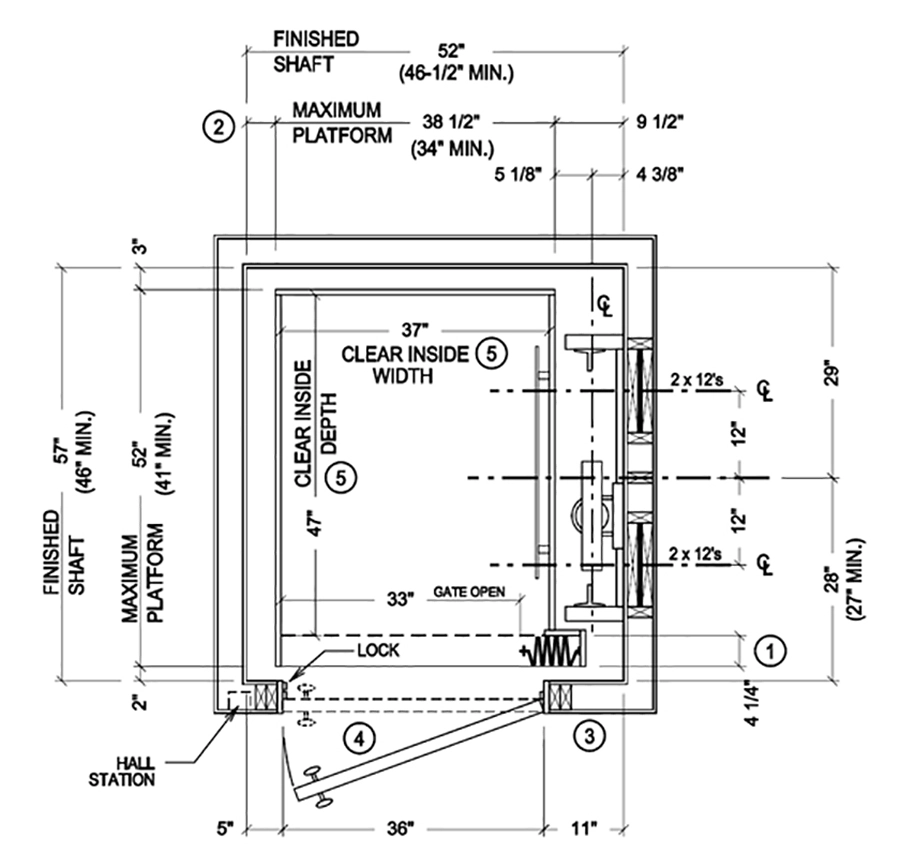
Many local building codes prevent residential elevators from rising over 50’ or higher than 4 floors. However, these limitations don’t usually affect the shaft’s width or depth. Typically, the hoistway will measure between 5′ x 5′ and 5′ x 7′, requiring roughly 25–35 sq. ft. of space on each floor. The shaft must be structurally sound and properly aligned from floor to floor, so your chosen elevator company will let you know the exact measurements early on.
Pneumatic (vacuum) elevators and shaftless elevators are exceptions to this rule, as they rely on self-supporting tubes or small cutouts in the floor rather than a dedicated shaft.
Elevator Pit Depth
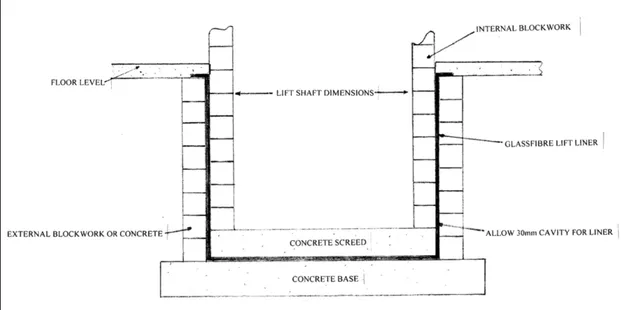
Most home elevator models will require a pit—a recessed area beneath the lowest landing that’s essential for safety, structural integrity, and maintenance. Depending on the elevator, standard pit depths for residential installations range from 6″ to 12″, with some hydraulic systems requiring deeper pits.
If digging a pit isn’t feasible due to your home’s foundation or slab construction, there are pit-less elevator options available. Though these may impact the overall shaft height requirements.
Elevator Cab Size
The elevator car/cab is the part of the system you ride in, with standard residential sizes ranging from 3’ x 4’ (12 sq. ft.) on the smaller end to 5′ x 6′ (30 sq. ft.) for larger installations. However, most states have residential building codes that require in-home cabs to be 18 sq. ft. or less. In these cases, larger cab sizes would classify the unit as a commercial elevator and trigger more stringent regulatory requirements.
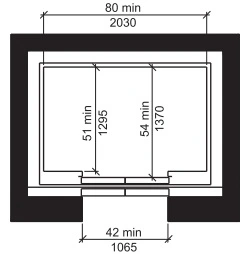
The average automatic door width for cabs is 32”, but can be anywhere from 28″ to 36″. Wider doors are ideal for wheelchair users, and your specific location may require them to comply with accessibility guidelines.
Machine Room Dimensions
Not every elevator type requires a machine room, but machine rooms are common for hydraulic or traction installations. It holds the drive system, control panel, and pump (hydraulic). These rooms typically need between 4′ x 4′ and 5′ x 7′ of floor space (16–35 sq. ft.) and a minimum ceiling height of 7′.
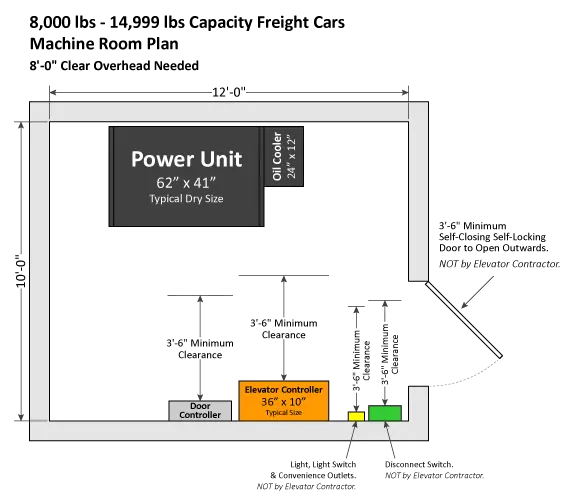
As for location, the machine room is often adjacent to the shaft on the lowest floor, in the basement, or on an upper floor. Your elevator company can help you determine the best location based on your home layout.
The Best Elevator Models When Working with Limited Available Space
If you’re trying to retrofit a new lift system into a space with less than 25 sq. ft. available, some types of elevators work better than others. For example, hydraulic elevators might be effective wheelchair lifts due to their impressive load capacity, but they typically require more space than pneumatic or shaftless models.
Both pneumatic and shaftless elevators are a great option for seniors with limited space, with their key characteristics including:
- Pneumatic vacuum elevators: Instead of requiring hoistway construction, these elevators use a self-supporting tube installed with minimal structural modifications. They require an average of 12 sq. ft. (3’ x 4’) of available space, with some having a footprint as small as 7 sq. ft. Luckily, they’re still capable of being wheelchair-accessible.
- Shaftless elevators: Similarly, and as the name would suggest, these elevators don’t require a hoistway or pit. They travel along an open rail system through a small cutout in the floor. Required space often ranges between 3’ x 4’ and 4′ x 4′ (12 to 16 sq. ft.), but some can be as small as 7 sq. ft.
The Importance of Safety Regulations & Local Building Codes
While the Americans with Disabilities Act (ADA) sets the baseline accessibility standards at the federal level, the size of your new home elevator also varies significantly depending on where you live. For example, some states cap residential elevator cab sizes at 18 sq. ft., while others may have stricter rules regarding pit depth, hoistway construction, or minimum door widths for wheelchair accessibility.
For seniors aging in place, the most important codes to be aware of generally cover:
- Cab size limits that determine if your elevator is classified as residential or commercial.
- Door width minimums that affect wheelchair and mobility aid accessibility.
- Pit and hoistwayrequirements that may limit which elevator types work for your space.
Because home elevator regulations are often highly local, you should consult with a licensed elevator company and the nearby building authority before you follow through with an installation plan. Permits are required in most jurisdictions, and your new system needs to be inspected before use. Failing to comply can result in fines or require costly post-installation modifications.
The Bottom Line: Home Elevators Fit in 7–25 sq. ft., but Setup Varies By Model
Home elevators typically require 25 sq. ft. of space for installation, though some pneumatic and shaftless models require only 7 to 16 sq. ft. When preparing for your installation, it’s important to understand whether a shaft, pit, or machine room is needed, as well as the cab size and weight capacity. When in doubt, reaching out to a local manufacturer or company can help you determine the best home elevator based on exact measurements.
Frequently Asked Questions (FAQs) About Home Elevator Sizes
The average dimensions of a traditional home elevator are between 5′ x 5′ and 5′ x 7′, or 25 to 35 sq. ft. However, many pneumatic or shaftless models average around 12 sq. ft., with some as small as 7 sq. ft.
Yes. Many elevator companies offer custom measurements and installations to fit the elevator model to your existing home. However, keep in mind that the more personalized the installation, the more expensive it will typically be.
While pneumatic and shaftless elevators have limited weight capacity compared to hydraulic systems, they can still be designed for wheelchair accessibility.
No, home elevator dimensions are not uniform across the US; some regions have residential cab size limits, height restrictions, and more. Be sure to research your local building codes before you start a new project.
Whether you should choose a stairlift or a home elevator depends on your home layout, budget, and mobility needs. Stairlifts are ideal for short travel distances and a great temporary solution for existing stairways. Conversely, home elevators provide greater accessibility for wheelchair users or seniors with severe health issues but are more costly to install and maintain.
Help us improve our data! Email your latest home elevator quote to [email protected] or submit a review about your experience. Your personal details will remain completely confidential.