
Retirement Living takes an unbiased approach to our reviews. We may earn money when you click a partner link. Learn More
Best Hearing Aids for High-Frequency Hearing Loss of 2026
Our research focuses on hearing aid brands that effectively address the challenges of high-frequency hearing loss.


Updated:
After reviewing top manufacturers and key features, we narrowed our list to four leading brands, Phonak, Oticon, Starkey, and Widex, that offer models designed to improve speech clarity, target high-frequency sounds, and perform reliably in everyday situations.
4.4
Oticon is a tech leader. Its high-quality products are pricey but seen as top-notch.
- Innovative Products
- Various styles of hearing aids
- Mobile application
Phonak is an award-winning leader in hearing aid technology. The company offers 12 hearing devices plus accessories to provide the right fit. Phonak produces crisp, natural sound that adjusts to your environment.
- Broad Product Line
- Has an extended wear option
- Models for all types of hearing loss
4.4
Widex hearing aids provide unmatched high-definition sound. They reduce distortion, especially in complex settings. The SmartRIC has an L-shaped design. This shape improves the microphone’s angles, leading to clearer sound.
- Great Natural Sound
- Noise suppression for enhanced clarity
- Provides tinnitus relief
Starkey is a U.S. manufacturer. They blend advanced sound processing with health and wellness tracking features. Its current lineup features different styles for customization. It also works well with easy-to-use apps.
- Great variety available
- Health and wellness tracking available
- Large, well-known hearing aid manufacturer
How We Chose the Best Hearing Aids for High-Frequency Loss
To identify the best hearing aids for high-frequency hearing loss, we began with our top-rated brands from the broader hearing aid category. These brands were selected based on hands-on testing and evaluations of comfort, cost, technology, fit, and customer support.
From there, we narrowed the list by focusing on features that specifically improve high-frequency hearing loss, such as targeted amplification, frequency compression, and open-fit designs. Our research is verified and supported with input from hearing care professionals. The four brands we selected stand out for consistently delivering strong speech clarity and reliable performance.
Hearing Aids for High-Frequency Hearing Loss Reviews
At a quick glance, here’s how our top hearing aid brands stack up to treat high-frequency hearing loss.
Best Hearing Aids for High-Frequency Hearing Loss Comparison
| Feature | Oticon | Phonak | Widex | Starkey |
|---|---|---|---|---|
| Frequency Compression | Yes | Yes | Yes | Yes |
| High-Frequency Amplification | Yes | Yes | Limited | Yes |
| Open-Fit Design | Yes | Yes | Yes | Yes |
Oticon Review
Innovative Products
|
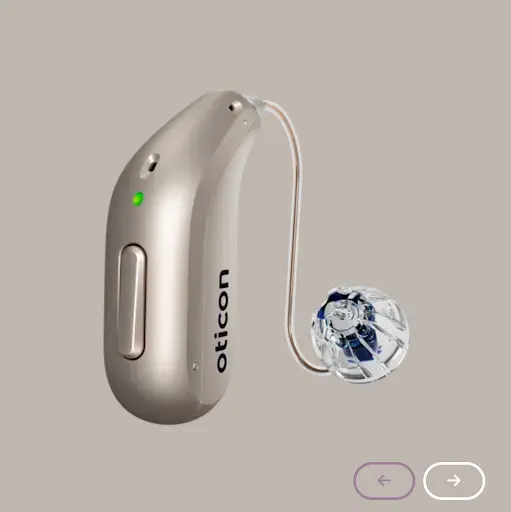
Oticon hearing aids improve speech clarity by supporting the brain’s processing of sound. This is especially helpful for high-frequency hearing loss. The brand’s devices provide targeted, high-frequency amplification and use Speech Rescue, a technology that shifts high-pitched sounds into a more digestible range when needed. Most Oticon models are available in RIC styles with open-fit designs that allow low-frequency sounds to pass through naturally while enhancing higher-pitched speech sounds.
The Oticon Real miniRITE is one of the best options for high-frequency hearing loss. It combines frequency compression, directional microphones, and noise reduction to help you hear conversations in noisy environments. Additional features include feedback cancellation, customizable settings, and Bluetooth.
For more information, read our full Oticon review.
Phonak Hearing Aids Review
Broad Product Line
|
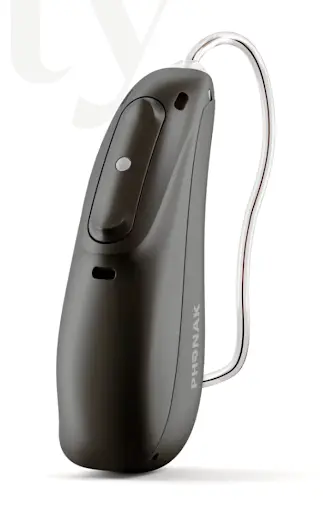
Phonak hearing aids are known for their excellent speech clarity for people with high-frequency hearing loss. The brand offers precise high-frequency amplification along with SoundRecover technology, which compresses high-pitched sounds into a lower, clearer range. Many models have an RIC design and open-fit options for a more natural sound.
The Phonak Audéo Lumity is a top choice here. It combines effective frequency compression with advanced directional microphones and noise reduction to improve speech clarity in high-background-noise environments. Phonak devices also include feedback cancellation, customizable listening programs, and Bluetooth.
For more information, read our full Phonak review.
Widex Review
Great Natural Sound
|
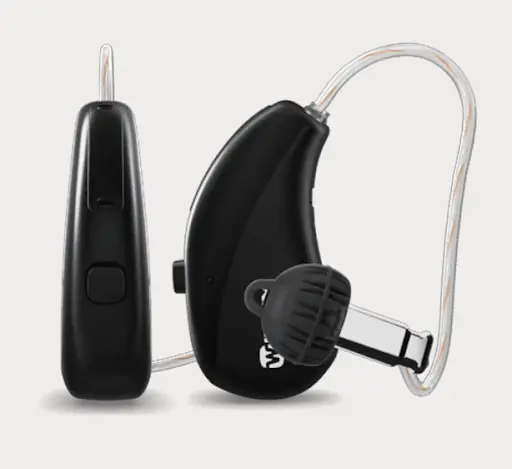
Widex’s strength is in delivering a more natural listening experience. The brand provides high-frequency amplification but uses more subtle frequency compression. The focus is on preserving natural sound quality rather than aggressively compressing frequencies and altering sound too much.
Widex devices are commonly available in RIC styles with open-fit designs for a more comfortable listening experience for those with moderate hearing loss. The Widex Moment sRIC is one example. It offers directional microphones, noise reduction, and feedback cancellation. Widex also offers customizable sound settings via its app and Bluetooth streaming.
Widex provides an online hearing test – convenient to determine your degree of hearing loss and the hearing care you need.
For more information, read our full Widex review.
Starkey Hearing Aids Review
Great variety available
|
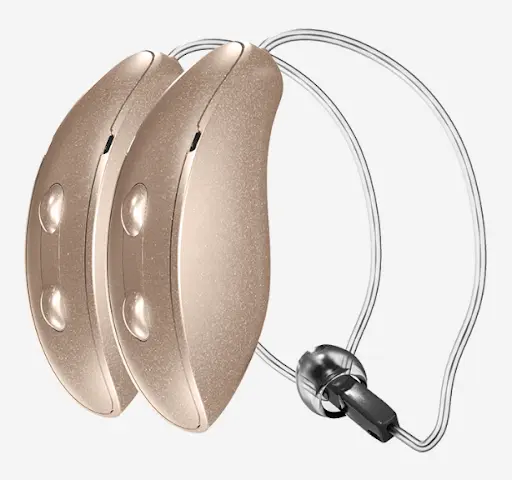
Starkey hearing aids offer reliable high-frequency amplification along with frequency-lowering technology that makes speech sounds clearer. The devices are available in RIC styles with open-fit designs that allow for natural low-frequency sounds.
The Starkey Genesis AI RIC RT is a strong option that provides both clarity and customization. It includes directional microphones, noise reduction, and feedback cancellation. Starkey also offers robust app-based controls that let users adjust settings to suit their environment. Bluetooth is also included.
Starkey offers a free online hearing test to assess your hearing health and help you decide how to improve it.
For more information, read our full Starkey review.
What Is High-Frequency Hearing Loss?
High-frequency hearing loss is a common type of hearing loss, especially as you age. It affects your ability to hear higher-pitched sounds. Specifically, consonant sounds, such as “s,” “f,” “th,” and “k,” become harder to hear. This is unfortunate because they’re essential for understanding speech clearly. As a result, conversations may sound muffled or unclear, even if you can still hear lower-pitched sounds like vowels.
“As a result, people will often say they can hear others talking, but words may sound muffled or unclear, especially in background noise. People will often accuse others of mumbling,” says Eileen Clark, Au.D. (Doctor of Audiology) and Practice Owner of Integral Audiology.
How Do You Get High-Frequency Hearing Loss?
This type of hearing loss is often related to aging or long-term noise exposure. You might not realize you have it at first because voices are still audible—they’re just harder to understand, especially in environments with a lot of background noise.
The best hearing aids for high-frequency loss don’t just make things louder. They specifically target those missing high-pitched sounds so speech becomes clear again.
Symptoms of High-Frequency Hearing Loss
High-frequency hearing loss sort of sneaks up on you. It often starts with trouble following conversations or turning up the TV volume before you realize what’s happening. It can also present as a ringing in your ears (tinnitus) before you notice a loss of sound. It’s even more confusing because while you still hear low-frequency sounds, you can still hear people talking, but lack speech clarity. Symptoms that could signal high-frequency hearing loss include:
- Muffled speech
- Missed consonants
- Trouble in busy environments
- Frequently asking people to repeat themselves
- Misheard words
- Difficulty understanding women’s and children’s voices
- Loud TV volume
- Missing high-pitched alarms
- Persistent ringing in the ears: tinnitus
How Do Hearing Aids for High-Frequency Hearing Loss Work?
Hearing aid technology for high-frequency hearing loss doesn’t simply make everything louder. Instead, they selectively amplify the high-frequency sounds you’re missing, such as /sh/, /th/, /s/, and /f/. “This targeted approach ensures that softer, higher-pitched sounds become clearer while keeping lower-pitched sounds comfortable and natural,” says Clark. “Many modern hearing aids also use advanced processing to enhance speech while reducing background noise, helping you focus on what matters most.” This helps you hear important details in conversations, even in noisy environments.
Types of Hearing Aids for High-Frequency Hearing Loss
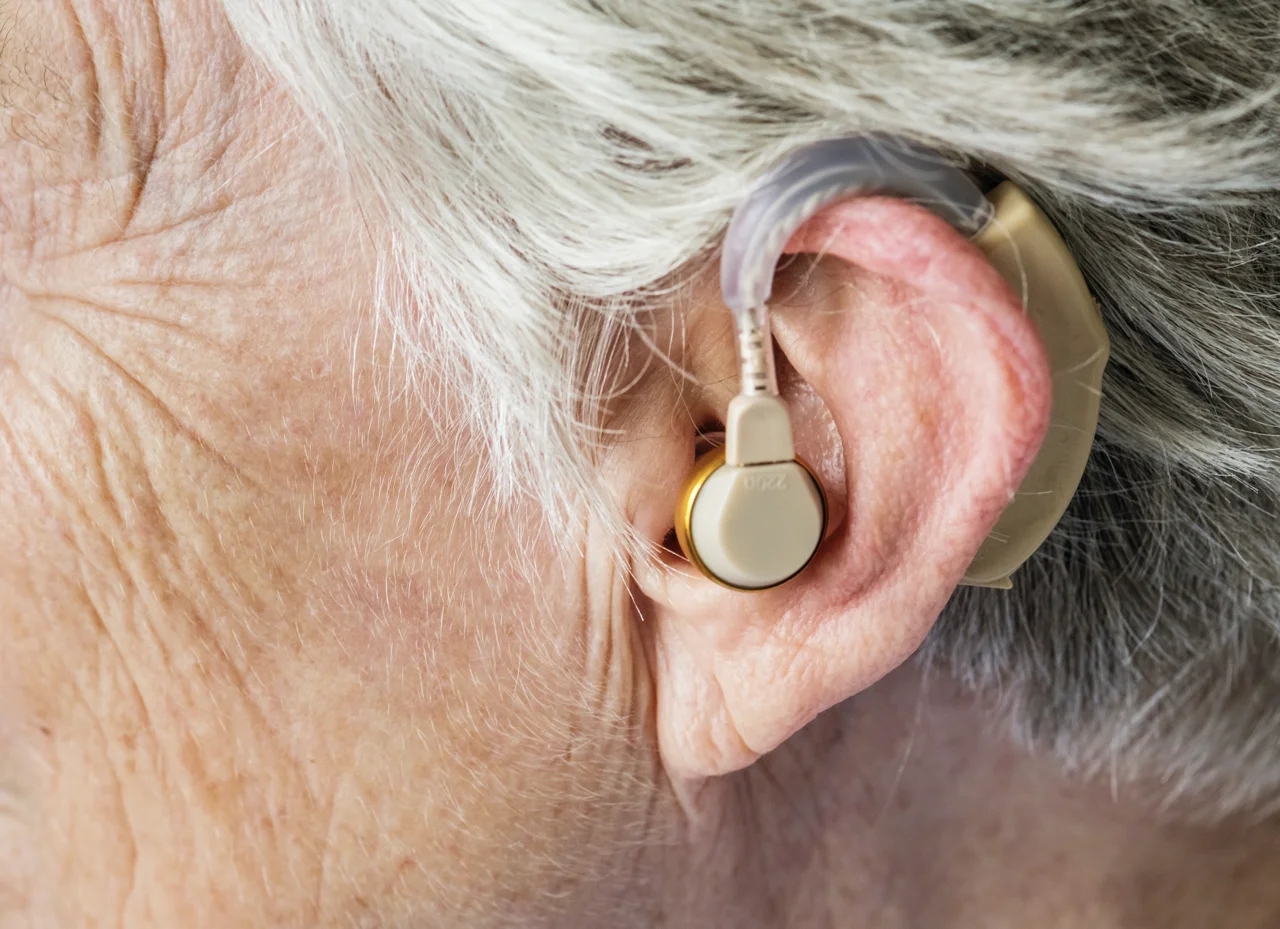
There are many types of hearing aids to choose from, but not all are created equal when it comes to high-frequency hearing loss. Types of hearing aids include behind-the-ear (BTE), in-the-ear (ITE), in-the-canal (ITC), completely-in-canal (CIC), receiver-in-canal (RIC), and invisible-in-the-canal (IIC).
“RIC hearing aids are the preferred hearing aid for this type of hearing loss,” says Clark. “You want a RIC with an open-fit dome or a custom ear mold with a lot of ventilation because you want to allow the low frequencies in naturally and trap the high frequencies for amplification.” This makes them one of the most comfortable and natural-sounding choices for everyday use.
Behind-the-ear (BTE) models are another option, especially if you have advanced hearing loss, but they may feel less natural due to a tighter fit. On the other hand, smaller styles that sit in the inner ear, like ITE, ITC, CIC, and IIC, while discreet, are not ideal for high-frequency loss because they can block natural sound and offer less precise high-frequency amplification.
Features to Look For in Hearing Aids for High-Frequency Hearing Loss
The right hearing aid features can make a noticeable difference in how clearly you hear speech. Focus on the following three features that specifically help with high-frequency hearing loss.
- High-frequency amplification: Boosts higher-pitched sounds to improve speech clarity.
- Frequency compression: Shifts high-pitched sounds into a lower, easier-to-hear range.
- Open-fitdesign: Allows natural low-frequency sounds to enter the ear while amplifying higher ones.
Other features to consider that are nice to have in any hearing aid include:
- Directional microphones: Focus on speech in front of you while reducing background noise.
- Noise reduction: Minimizes steady background noise, such as fans or traffic.
- Feedback cancellation: Prevents whistling or squealing from the hearing aid.
- Custom sound settings: Allows you to adjust sound based on your hearing needs and environment.
- Bluetoothconnectivity: Connects your hearing aids to phones or TVs for direct audio streaming.
Cost of Hearing Aids for High-Frequency Hearing Loss
Just as hearing aids for severe hearing loss are ideally prescription devices, so are hearing aids for high-frequency hearing loss. Prescription devices tend to cost more than over-the-counter (OTC) options, but you get more customization. “The key is how accurately the device is programmed to your specific hearing loss,” says Clark. “The most important part is making sure the hearing aids are properly fit and verified, so you’re getting the right amount of amplification in those higher frequencies without over-amplifying sounds you already hear well.”
Prescription hearing aids range from roughly $2,000 to $7,000 per pair, with some premium models reaching $9,000. The price often includes more than just the hearing aids. Many providers bundle in a hearing test (an audiogram), professional fitting, follow-up adjustments, warranties, and ongoing support.
Insurance coverage varies. Traditional Medicare does not cover hearing aids, though some Medicare Advantage plans offer partial benefits. Private insurance might cover a portion of the cost, depending on the plan, and Medicaid coverage depends on your state. You can also use HSA or FSA funds to help pay for hearing aids and related services.
Frequently Asked Questions (FAQs) about Hearing Aids for High-Frequency Hearing Loss
Yes. Hearing aids are among the most effective ways to address high-frequency hearing loss. Since they target the specific sounds you’re missing, speech sounds clearer and conversations sound more natural. A win for your hearing health and overall quality of life.
Receiver-in-canal (RIC) hearing aids are the best option because they use an open-fit design that allows natural low-frequency sounds in, while amplifying higher-pitched sounds. This makes speech easier to understand and sound more natural.
No. Some styles, especially fully in-the-ear canal models, block out natural sound and aren’t ideal. Hearing aids with open-fit options and frequency compression tend to work best for this type of hearing loss.
Concluding Thoughts on Hearing Aids for High-Frequency Hearing Loss
Bottom Line: If you have high-frequency hearing loss, RIC hearing aids with an open-fit design or custom ear molds are the most effective option.
Hearing aid manufacturers build these devices to target the high-pitched sounds you’re missing while preserving natural low-frequency sounds. Features like frequency compression and high-frequency amplification further improve speech clarity, especially in environments with a lot of background noise.
While smaller in-ear styles or lower-cost options may seem appealing, they don’t always provide the same level of precision for high-frequency hearing loss. Look for hearing aids that focus on speech clarity, customization, and a comfortable fit to improve communication and overall hearing quality.