
Retirement Living takes an unbiased approach to our reviews. We may earn money when you click a partner link. Learn More
Alternatives To Walk-In Tubs
There are several alternatives to walk-in tubs that provide safer bathing, including full walk-in showers, various shower chairs, enhanced bathtub safety features (grab bars, anti-slip mats, etc.), and even medical alert systems.


Updated:
At a glance:
- If you have the finances for full bathroom remodeling, walk-in showers, hydrotherapy installations, and wheelchair-accessible upgrades, provide the safest bathing experience alternative to walk-in bathtubs.
- Basic shower chairs, grab bars, and other simple bathtub safety add-ons, as well as medical alert devices, are typically the least expensive upgrades—addressing limited mobility at an affordable cost.
- Popular and well-reviewed producers of bathroom safety products include Safe Step, Independent Home, American Standard, Kohler, and Medical Guardian.
If you or a senior loved one struggles with mobility issues, you may have considered installing a walk-in tub. However, when walk-in tubs are either too expensive or unavailable, there are other DIY and professional options out there that can improve bathing safety. From simple shower chairs to hydrotherapy tubs featuring massage jets, there’s an alternative for every budget and medical need.
Luckily, our team analyzed a variety of different walk-in tub alternatives, so senior homeowners can find a cost-effective way to age in place. Read on to find the best solution for your situation.
1. Traditional Bathtub Accessories and Upgrades
Not every bathroom accessibility solution needs to be a major renovation or expense. The options below highlight simple accessories and upgrades that improve bathing safety. Consider these if you have a small bathroom or only minor mobility concerns.
Non-slip mats and coatings
Trying to make a slippery acrylic tub less hazardous? Depending on how permanent you want the solution to be, you can choose either a low-cost mat or a slip-resistant coating. Most shower mats cost less than $100, with many costing as little as $20. A non-slip coating will likely cost more, though there are both professional and DIY options.
Handrails and grab bars
For a few hundred dollars or with DIY expertise, homeowners can install wall or tub-mounted fixtures that provide a secure way to reposition without the risk of slipping or falling. Tub-mounted grab bars are designed to help people with disabilities enter and exit the tub, while wall-mounted handrails provide steady support during bathing. They come in a variety of materials, shapes, and sizes, all of which impact the price.
Handheld shower heads
Turn a basic soaking tub into a tub-shower combo with a simple handheld shower head installation. These sprayers allow seniors and their caregivers to rinse and bathe while seated, reducing the fall risk. Most models cost between $20 and $100, with higher-end versions offering multiple spray settings, longer hoses, and easier-grip handles for added comfort.
2. Bathroom Safety Equipment
Bathroom safety equipment can range from inexpensive shower chairs to more complex bath lifts, but they are all standalone solutions that don’t require home renovations.
Basic shower chairs
As the name suggests, basic shower chairs are simply waterproof seats that help disabled seniors avoid standing while bathing. You can find them anywhere—Amazon, Lowe’s, or Home Depot—at affordable prices between $30 and $200. Keep in mind that the chair’s structure and material impact weight limits, so always check that the product you’re viewing is strong and durable before you buy.
Transfer benches
To avoid slips and falls when stepping over the tub wall, seniors can invest in a transfer bench—typically priced between $50 and $200. These extendable contraptions make transitioning in and out of the tub simple and easy by allowing users to pivot around without leaving the bench. They can be adjusted to fit multiple different-sized tubs.
Roll-in shower chairs
As long as you have a low-threshold shower or bath, roll-in shower chairs are a great wheelchair-accessible solution for seniors with severe mobility issues. They include a water-resistant design and secure locking mechanisms. While roll-in options provide more safety than a basic shower chair or transfer bench, they’re usually more expensive, costing anywhere from a few hundred dollars to over a thousand.
Bath lifts
Bath lifts allow seniors to lower and raise themselves into the tub with the touch of a button, enabling them to bathe safely without a caregiver. They come in a variety of types and price points, with the most common being motor-driven ($1,000–$3,000), battery-powered ($400–$800), or hand-crank systems ($300–$500). They often come with warranties and can further enhance your bathing experience with add-ons like floating hand controls and adjustable recline positions.
3. Walk-in Showers & Other Bathroom Remodels
If cost isn’t an issue, there are a few other home improvements (besides walk-in tubs) that can help with safe bathing. Trusted brands for solutions such as walk-in showers and specialized tubs include Safe Step, Independent Home, American Standard, and Kohler. However, please note that the availability of the installation you want depends on where you live.
Walk-in showers
Walk-in showers can be cheaper than walk-in tubs, costing between $800 and $15,000 on average, compared to $2,000 and $20,000. Realistically, though, the two often have similar prices post-installation. Walk-in showers generally offer more design options, but they also require a shower chair for safe, comfortable sitting. However, this can also be a plus for wheelchair users who require low thresholds to enter.
Slide-in tubs
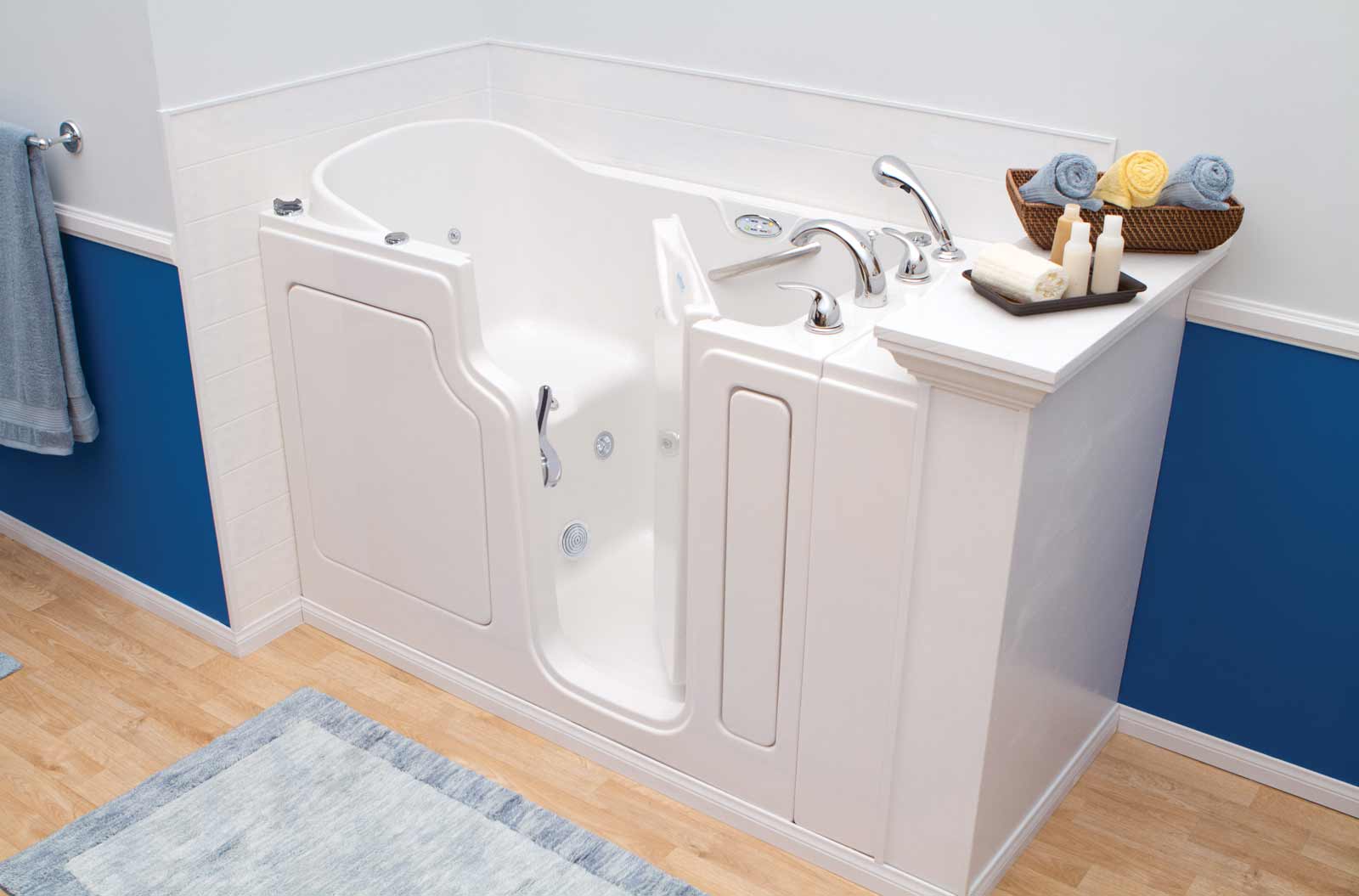
Similar to traditional walk-in tubs, but with more accessibility, slide-in options are great for seniors who don’t want to purchase a separate shower chair. The tub features a wide doorway that opens to a built-in tub seat, simplifying bathing for wheelchair-bound seniors or those with other severe mobility issues. Users can sit on the edge of the seat with ease while they bathe.
Some slide-in tubs also offer hydrotherapy upgrades, depending on the brand and model, but these upgrades significantly increase the overall cost.
Hydrotherapy tubs
Hydrotherapy tubs take your typical soaking experience to the next level, with popular models featuring massage jets, air jets, and built-in remote control panels. These extra features are more expensive, sometimes costing upwards of $20,000, but create a unique bathing experience that’s not only safe but also therapeutic. They can be used to promote joint health, ease muscle tension, and simply relax after a long day.
Additional Ways to Make In-Home Senior Bathing Safer
Aside from other bathroom remodels and accessories, some additional ways to foster a safer bathing experience at home include:
- Medical alert systems: Some Medical Guardian, MobileHelp, and Bay Alarm Medical wearable help buttons offer waterproof designs, allowing seniors to wear them in the shower or bath. This is especially useful for seniors living alone, as the device calls for help when they slip or fall.
- In-home caregivers: Hiring a professional caregiver or accessing one through specific programs can help seniors bathe with peace of mind. Caregivers are trained to help with transferring, bathing, and grooming while preventing falls.
Are Walk-In Tub Alternatives Covered by Health Insurance?
Most walk-in tub alternatives, including grab bars, shower chairs, bath lifts, and walk-in showers, are not covered by Original Medicare (Parts A and B) because none are considered Durable Medical Equipment (DME).
However, almost all of them can be funded by Medicare Advantage (Part C), Medicaid, or Veterans Administration (VA) health care plans if you can provide a doctor’s note proving they’re a medical necessity. It’s also possible to receive full or partial funding through local programs and nonprofits, such as Rebuilding Together or Habitat for Humanity.
Ultimately, the best way to get your walk-in tub alternative covered is to understand the options available to you in your region. We recommend getting started on your state’s website or visiting your local Area Agency on Aging (AAA) for more information.
Our Takeaway
Regardless of your specific mobility needs, there are a variety of walk-in tub alternatives to choose from. Seniors on a budget should consider basic quality-of-life upgrades, like grab bars, shower chairs, and medical alert devices, as they provide much-needed safety at a fraction of the cost.
If wheelchair accessibility is your primary concern, transfer benches, bath lifts, or a full walk-in shower/slide-in tub installation may be a better option. These solutions are more costly but provide unmatched safety and ease of use—especially for seniors who live alone.
In the end, the best walk-in tub alternative for you will depend on your unique budget, bathroom size/layout, and mobility concerns.
Walk-In Tub Alternatives FAQs
The best alternative to walk-in tub installation will depend on your budget and specific mobility needs. For example, seniors with low to moderate mobility concerns can purchase anti-slip mats and shower chairs as a simple safety alternative to full bathroom remodels.
Conversely, wheelchair users and seniors with severe mobility issues might need something more robust, such as transfer benches, bath lifts, or specialized tub installations.
Yes, there are several walk-in tub alternatives designed specifically for wheelchair accessibility. Equipment such as transfer benches, roll-in shower chairs, and bath lifts helps senior wheelchair users navigate their bathtubs safely. Specific walk-in tub variations, such as slide-in tubs, are also designed to make bathing with a wheelchair safer and easier.
Unfortunately, most walk-in tub alternatives are not covered by Original Medicare, as they’re not considered Durable Medical Equipment (DME). However, other insurances like Medicare Advantage and Medicaid will cover many of these solutions if you can prove they’re a medical necessity.
Both walk-in tubs and showers make bathing safer and more accessible for seniors, but they differ in size, shape, and features. If you need a low-threshold at an affordable cost, walk-in showers are your best bet. However, tubs can come with additional safety and hydrotherapy features that a shower’s design doesn’t allow for.
As for getting either installation funded, most health insurance and assistance programs don’t distinguish between the two. Both usually fall under the banner “home modifications for accessible bathing.”
Traditional tubs are not particularly safe for seniors when unmodified, as they’re slippery and require tricky maneuvering to get in and out. Walk-in features, sitting spaces, and anti-slip mats/coatings can all make the bathing experience safer.
Help us improve our cost data! Email your latest walk-in tub quote to [email protected]. Rest assured, your personal details will remain completely confidential.