
Retirement Living takes an unbiased approach to our reviews. We may earn money when you click a partner link. Learn More
Home Elevator Alternatives
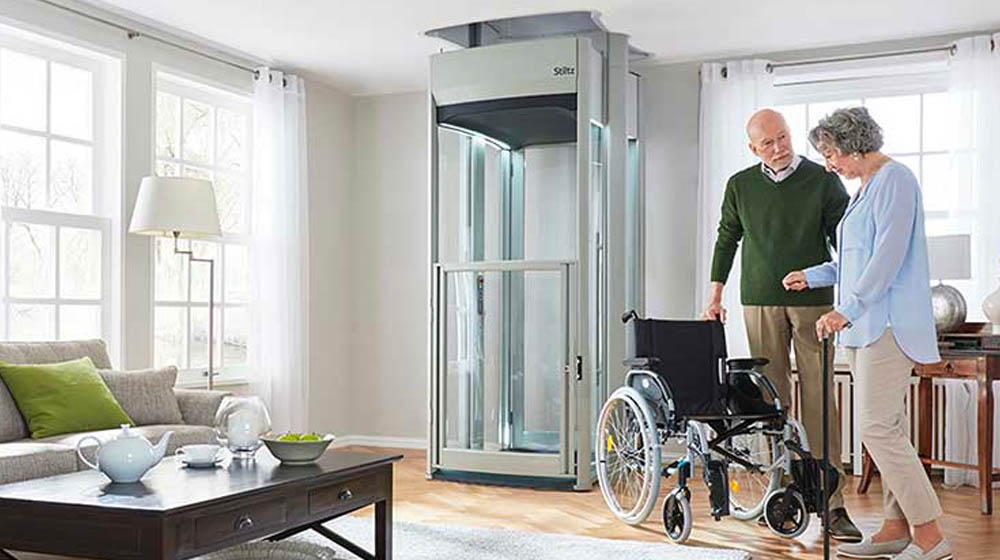
While home elevator alternatives can reduce cost and complexity, choosing the right solution and ensuring proper installation is key to long-term safety, reliability, and usability.


Updated:
At a glance:
- Home elevator alternatives such as stair lifts, vertical platform lifts, and ramps provide safer mobility without major renovations.
- Most alternatives cost significantly less than full elevators, with options starting under $5,000 depending on your needs.
- The right choice depends on mobility level, home layout, and whether wheelchair access is required.
Many home modifications can improve safety and independence while avoiding the complexity of a full system that requires a hoistway or machine room. Some solutions, like wheelchair lifts, offer a cost-effective way to improve functionality without major reconstruction, especially in varied home designs.
Below, our team breaks down the most common home elevator alternatives, their pros and cons, and what to consider when choosing the right solution.
What Are Home Elevator Alternatives?
Home elevator alternatives assist safe movement up and down the staircase or between floors of a home without using an actual home elevator.
However, since various solutions address different issues, there can’t be a universal alternative that can replace an elevator in all cases. In some cases, simple and inexpensive alternatives may be appropriate, while in others, accessible and functional alternatives may be more fitting. Being familiar with how different types of alternatives work and who is best suited to use them will help you choose a solution that fits you perfectly.
They’re especially useful for:
- Seniors aging in place
- Individuals recovering from injury or surgery
- Wheelchair users needing vertical access
- Homes with limited space for an elevator shaft
Stair Lifts
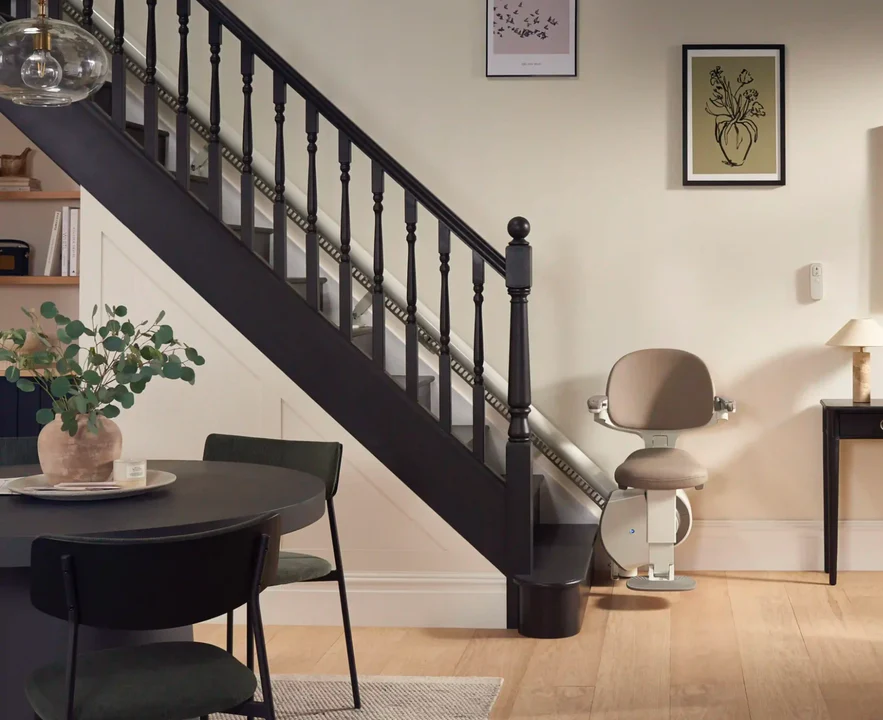
Among the many mobility devices for the home, stairlifts are one of the most common solutions. Stairlifts involve mounting a motorized seat on a track that follows your staircase; you simply press a button to move up or down. Today’s stairlift systems are designed with maximum comfort in mind, featuring cushioned seats, swivel capabilities for easy entry and exit, and user-friendly control panels.
Since the rail is mounted to the staircase itself and not the wall, there’s usually little to no modification involved in the installation process. This makes stairlifts an ideal option for people seeking a fast and efficient solution to navigating their homes without making any drastic changes to their living space.
Cost
The cost of a standard stairlift for straight stairs ranges from $2,000 to $5,000. The price of curved stairlifts depends on rail customization and ranges from $8,000 to $15,000.
Best For
- Individuals who can sit upright independently
- Homes with straight or curved staircases
- Quick, non-invasive installation
Key Benefits
- Affordable compared to elevators
- Minimal construction required
- Can be installed in a few hours
Limitations
- Not wheelchair accessible
- Requires the ability to transfer into the seat
Vertical Platform Lifts (VPLs)
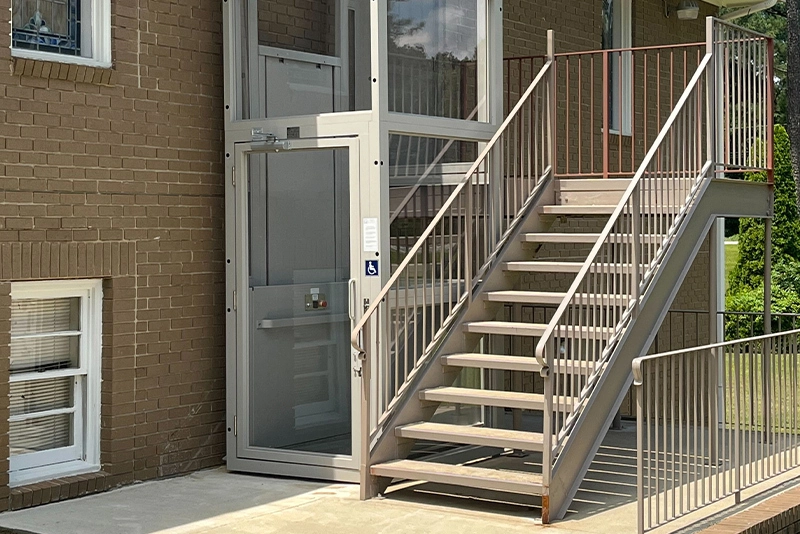
Like an elevator but with a much simpler design, vertical platform lifts have an unenclosed platform that can take either a standing individual or one in a wheelchair up or down a few floors. Vertical platform lifts are usually used in houses when there is a need to access different levels, but the house does not allow the installation of an elevator. They can sometimes be discussed alongside compact lift solutions, especially in showroom environments or manufacturer showrooms, where customers can request a free consultation to compare options.
These pneumatic-style lifts work best when moving a person between levels, even a small one, such as from a basement to the ground floor, from a parking lot into the house, or from the ground floor to a porch. These lifts can be installed indoors or outdoors, depending on the specific model, and are commonly chosen for improving accessibility in homes where weight capacity, space limitations, or structural constraints make traditional elevators impractical.
Cost
The average cost of vertical lifts is typically between $5,000 and $20,000, depending on the lift’s height, whether it is installed indoors or outdoors, and its capacity. Outdoor units and higher-capacity units are likely to be more expensive.
Best For
- Wheelchair or scooter users
- Short vertical distance (typically up to 14 feet)
- Indoor or outdoor use
Key Benefits
- Fully wheelchair accessible
- Safer than ramps for steep elevations
- Lower cost than elevators
Limitations
- Slower travel speed
- Requires some space for the platform
Inclined Platform Lifts
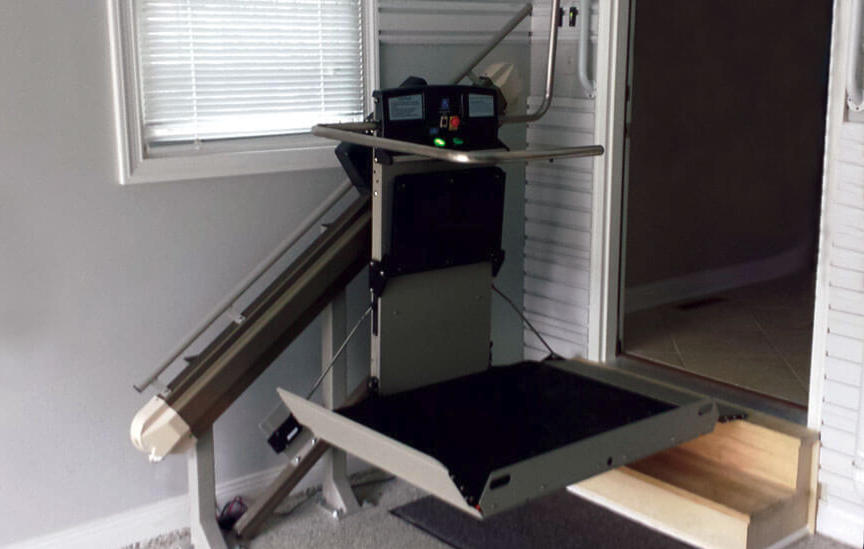
Like a stairlift, inclined platform lifts will have to conform to the contours of the staircase that already exists in your home. However, unlike stairlifts, which use a chair, inclined platform lifts have a flat platform on which you can place your wheelchair. The system is ideal for individuals who find it difficult to get off their mobility devices yet need help accessing different floors via the staircase.
As much as they are very good accessibility equipment, inclined platform lifts are larger than stairlifts. They take up more space when installed in a staircase because they can only be folded in certain situations, when others need to use the stairs. Like most accessibility equipment, inclined platform lifts are designed to be slow-moving.
Cost
The cost of inclined platform lifts may range from $10,000 to $25,000. Since these lifts require more installation work than stairlifts, installation and customization costs play a key role in determining the overall price.
Best For
- Wheelchair users in homes with limited space
- Situations where vertical lifts aren’t feasible
Key Benefits
- Uses existing staircase path
- No need for major structural changes
Limitations
- Takes up stairway space
- Slower and more mechanical than stair lifts
Home Ramps
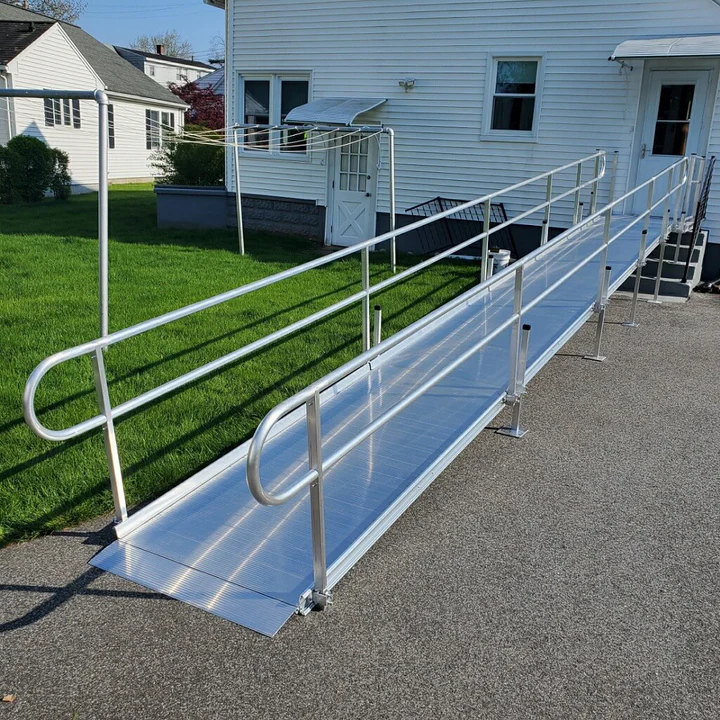
The ramp is considered the least complicated and cheapest option compared to the residential lift, since it is non-mechanical. The ramp is widely used when there is a need to access the house entrance, garage, or any other level change within the home.
Although the ramp is very easy to understand and operate, its practicality depends heavily on the available space. Longer ramps will be needed to ensure the slope is safe for movement. In spite of this, the ramp is considered a great alternative in low-rise situations.
Cost
Ramps are the most economical choice, with costs ranging from $100 for portable ramps to $5,000 or more for permanent modular ramps. The ultimate cost will depend on the ramp’s length, material (aluminum, wood, or concrete), and whether it is temporary or permanent.
Best For
- Entryways or single-step transitions
- Wheelchair or walker users
Key Benefits
- No mechanical parts or maintenance
- Most affordable options
- Can be temporary or permanent
Limitations
- Requires significant space for longer rises
- Not practical for multiple indoor floors
Through-the-Floor Lifts
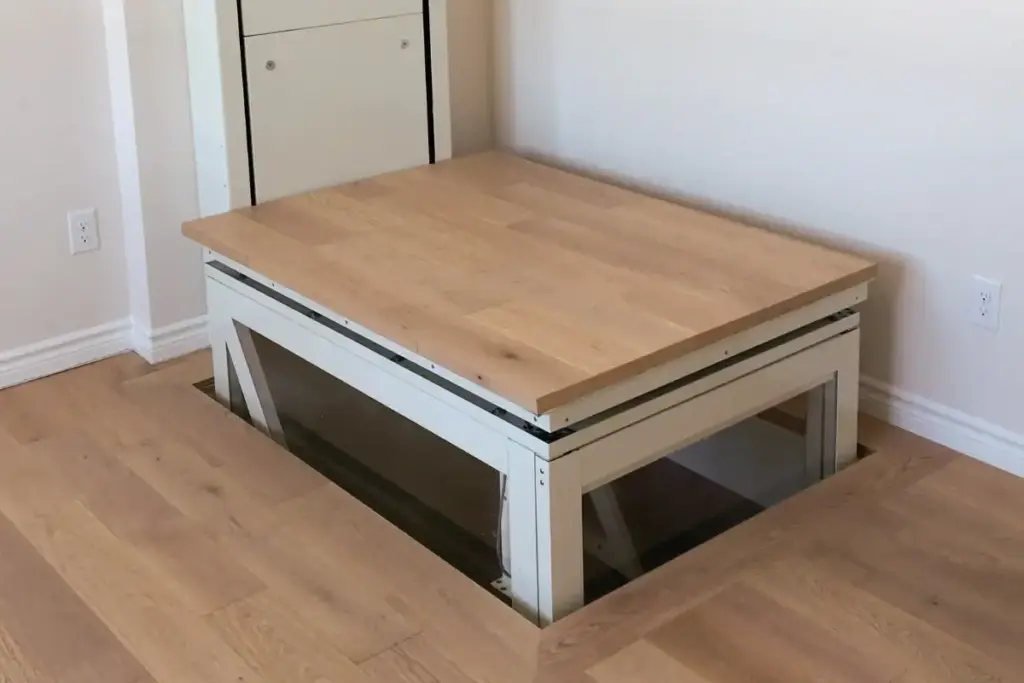
Through-the-floor lifts are a compromise solution, somewhere between conventional elevators and other devices designed to improve mobility around the house. These lifts run vertically between levels through openings in the floor. They are usually stored in place after use; therefore, the floor opening should be properly covered when the lift is inactive.
These lifts are a good choice for those who need more privacy than a platform lift while using a mobility aid, but do not have enough budget or space to install a complete elevator system. Despite their high price, these lifts offer a high degree of convenience and resemble conventional elevators.
Cost
Through-the-floor lifts are a moderately priced to relatively expensive option, typically ranging from $15,000 to $35,000, with prices fluctuating based on the lift’s specifications and the number of floors it will serve, which is usually just two.
Best For
- Homes needing a compact, semi-permanent solution
- Users wanting something closer to an elevator experience
Key Benefits
- Takes up less space than full elevators
- Easier installation than shaft-based systems
Limitations
- Typically limited to two floors
- Higher cost than other alternatives
How to Choose the Right Option
Choosing the right residential elevator is not only a matter of affordability and convenience but also of selecting the option that best meets your current physical needs while keeping future possibilities in mind. Making a careful decision regarding your residential elevator will prevent you from having to make expensive alterations in the future.
1. Assess Mobility Needs
First, determine the physical capacity of the individual who will use the equipment frequently. For instance, if the person can sit, stand, and transfer without any problems, a stair lift is the easiest and most efficient option. However, if there are mobility difficulties or the person uses a wheelchair, the solution is to select platform-based lifts, such as vertical and inclined lifts.
Also, it is important to consider balance, coordination, and the possible need for a caregiver’s assistance with specific tasks. Features such as swivel seats, seat belts, controls, and backup systems are significant. The professional assessment will help you determine the product’s efficiency and its applicability to you and your home.
2. Evaluate Your Home Layout
The design of your house will determine which types of solutions are available to you. First, take a close look at your stairs, whether they are straight, curved, narrow, or split-level, because this will help you determine what type of lift is possible and how much it will cost. Curved staircases often require custom rails, which increase costs and installation time.
In addition to your stairs, the floor space available on both the upper and lower landings is important to consider when installing platform lifts, through-the-floor lifts, or ramps. The height of the ceilings, the positioning of the walls, and the proximity of the doors all come into play as well. Measuring in advance or having a professional assessment done early can save you a lot of time later.
3. Set a Realistic Budget
Even though the cost of alternative elevators is usually lower than that of traditional elevators, there are still different costs to consider based on the chosen type and other factors related to the installation process. You should consider not only the price but also the cost of electrical work, building permits, construction changes, and potential elevator maintenance costs.
A straight stairlift can be quite cheap, while a curved or platform version will significantly affect your overall budget. In addition, you can consider the issue from a different angle: perhaps it’s better to spend more money initially and get a product that will serve you for many years rather than purchase an elevator at a lower price only to replace it later.
4. Think Long-Term
Changes in your mobility requirements can happen gradually; therefore, you have to look ahead rather than focusing only on present needs. The accessibility solution that suits you now might become restrictive in the future, especially if it does not provide provisions for wheelchair use and other security measures.
If you use a cane now but will need a walker or wheelchair in the future, installing the vertical platform lift now would help you avoid incurring extra expenses for another modification later. Also, consider how much time you expect to spend in your current house.
Installation & Cost Considerations
Although installing a replacement elevator in the house may not be as complicated or demanding as a complete system installation, it still requires considerable care and consideration. Failure to consider all necessary aspects, such as electrical needs and local regulations, may lead to problems and complications.
Permits & Codes
Permits and inspections will be necessary depending on the type of system and the location where it’s being installed. Vertical and inclined platform lifts, for example, will most likely have weight-rating requirements and other features, such as safety features and structural specifications. The permit and inspection process depends on whether it’s an indoor installation and the type of lift you want.
You should consult your municipal government or work with a professional to assist with the permits and inspections. This step is important if you want to avoid problems and penalties arising from noncompliance with the law and the requirements governing your mobility solutions.
Electrical Requirements
Most alternatives to elevators in homes have power issues, as they require a reliable power supply to operate. The best thing to do is install a new circuit, as using the existing one would cause an overload. Although some stairlifts can run off the mains from a standard electrical outlet, the more sophisticated ones require more power than the existing circuit can supply.
Consider the power backup plan as well, since most new units have a built-in backup battery. This ensures the user can still use their equipment during a power outage. A trained electrician can come in handy when choosing what works best for you.
Professional vs. DIY Installation
Modular ramps, for instance, may be installed as DIY projects; however, most elevator alternatives should be installed by professionals. The correct installation process is very important because, in addition to ensuring the proper functioning of the equipment, it ensures user safety, since even a slight error may lead to malfunction or accelerated wear and tear.
The installation by qualified professionals ensures that the equipment is properly fixed, correctly adjusted, and thoroughly tested before use. Professionals may also assist you in operating the equipment safely and explain how to maintain it properly. Although it increases installation costs, professional installation proves more economical over time due to lower maintenance costs and fewer accidents.
In many cases, especially where weight capacity and safety systems are involved, professional installation is recommended. Many providers offer free consultations to evaluate home modifications and determine the best stairlift alternatives or lift systems.
Bottom Line: Choosing the Right Home Accessibility Solution for Safety, Cost, and Long-Term Use
Although there are other ways to bring the convenience of an elevator to your home without incurring the significant expenses and complications involved, the best outcomes will always result from selecting the option best suited to your needs and, where necessary, installing it correctly.
In cases where you want greater control over costs or installation procedures, some suppliers offer flexible installation arrangements in which you prepare the home end while professionals install the product.
For families dealing with limited mobility or ongoing mobility issues, choosing the right system is about balancing cost-effective solutions with long-term peace of mind and safety in existing homes.
Frequently Asked Questions (FAQs) About Home Elevator Alternatives
Stair lifts, vertical platform lifts, inclined platform lifts, and ramps are common alternatives people consider when deciding against installing elevators in their homes. The decision on which to choose will depend on factors such as individual requirements, available space, and budget.
The approximate cost of installing a home elevator ranges from $15,000 to $50,000, though top-of-the-range models can exceed $70,000. The cost will depend on several factors, including the type of elevator, the number of floors, the house’s design, and any extra features.
Lifts can be installed indoors or outdoors in various locations in your home, depending on your needs and space constraints. Some popular indoor locations for lift installation include garages, doorways, and split-levels, whereas outdoor lifts are typically installed in front porches or on patios. Lifts can ascend and descend only short vertical distances, making them suitable when a full-scale elevator cannot be installed.
The space required for an elevator in the house depends on the type of elevator used, but generally, it will require a dedicated area of about 10 to 20 square feet for the car, plus additional space for the shaft. Compact elevators, such as through-the-floor elevators, may take up less space and require only a small opening between floors, but shaft elevators and platform elevators would require more structural space.
The installation period for a home mobility solution depends on the type of product you have chosen and how prepared your house is for installation. For example, a straightforward home mobility solution, such as a straight stair lift, can be installed in a couple of hours, whereas a curved stair lift will take between one and three days. Installation times could range from a few days to two weeks for through-the-floor lifts.
It’s possible to create accessibility in a two-story house without an elevator through a combination of physical and spatial changes. Stairlifts, vertical or inclined platform lifts, and ramps are among the options available for floor-to-floor accessibility based on physical limitations. Other easy changes that can be made to a house include installing grab bars, ensuring proper lighting in stairways, removing obstacles, and moving frequently used spaces to the first floor.
Yes, several space-saving alternatives to traditional home elevators are available, especially for homes where a full shaft system isn’t practical. Options like stairlifts, inclined platform lifts, and through-the-floor lifts are designed to take up far less space while still improving accessibility between levels. Vertical platform lifts can also be relatively compact compared to elevators, making them a good choice for tight areas like entryways or garages.
Help us improve our data! Email your latest home elevator quote to [email protected] or submit a review about your experience. Your personal details will remain completely confidential.