
Retirement Living takes an unbiased approach to our reviews. We may earn money when you click a partner link. Learn More
Hydraulic vs. Machine Room-Less (MRL) Elevators: Which is Best for Your Home?
Traditional hydraulic elevators have lower maintenance costs and the highest weight capacity of any elevator type, but require a separate machine room, are less energy efficient, and have a greater environmental impact.


Updated:
At a glance:
- Both MRL elevators and MR hydraulic systems cost between $25,000 – $70,000+ on average, but installations without a machine room often have more expensive elevator maintenance requirements.
- MR hydraulic lifts can travel up to 60 feet, giving them a higher travel distance compared to most MRL designs and making them ideal for mid-rise buildings. MRL traction elevators are the only exception; they are capable of tackling high-rise buildings (100+ feet).
- For installations in existing buildings, MRL systems are more space-saving than hydraulic systems that require a machine room.
Why Do Traditional Hydraulic Elevators Have a Machine Room?
Like other elevator models, traditional hydraulic lifts are powered by an electric motor. However, instead of powering a pulley and counterweight system, the motor forces hydraulic fluid (usually oil) into a cylinder with a piston. Pushing the piston upwards creates the hoisting motion that lifts the elevator cab.
Holed systems are the most common and drill a deep hole beneath the elevator shaft to house the piston. This structure allows them to rise up to 60 feet. Holeless options don’t require a hole; instead using pistons mounted on the sides of the cab to push the elevator up to 40 feet, making them easier to install in low-rise buildings.
In both cases, most hydraulic systems require a separate machine room to house the power unit, which includes the hydraulic oil reservoir, electric motor, pump, and control valve assembly. This room is typically located below or adjacent to the elevator shaft (hoistway).
Ultimately, the machine room is vital for this setup because it protects essential, large equipment and makes it easier to access than it would be in an MRL design. That way, maintenance is simpler and more affordable.
Are There MRL Hydraulic Lifts?
Yes, there are machine room-less (MRL) hydraulic systems, though they’re much rarer than MRL traction systems and expensive to install. They use the same fluid and piston system to achieve lift, but instead of housing essential equipment in a machine room, it’s stored directly within the hoistway. This equipment, including the pump unit and controller, is also smaller and more compact than it otherwise would be to fit in the elevator pit or side alcove. In turn, they can be harder to access and maintain.
What Are Machine Room-Less Elevators?
As the name would suggest, machine room-less (MRL) elevators achieve vertical transportation without needing a separate room to house essential equipment. MRL systems can be both traditional types of elevators that have undergone modernization (i.e., hydraulic and traction systems) and newer models that are designed to never need a machine room (i.e., pneumatic and through-the-floor systems).
Every type of elevator has its own unique pros and cons, but all MRL designs are more space-saving and energy-efficient compared to traditional hydraulic elevators. Below, we’ve outlined a few of the most common types of MRL elevators, as well as what makes them unique.
Examples of MRL Elevator Systems
MRL Traction Elevators
Average cost: $26,500 – $85,000+
Like MR hydraulic elevators, traditional traction systems have both an elevator shaft and a separate machine room. However, MRL traction elevators have become more common and are one of the best solutions for taller buildings. They still have an elevator shaft featuring a system of pulleys (sheave) and counterweights, but instead of housing the hoisting motor, controller, and drive in a separate room, they’re also stored inside the shaft.
MRL traction systems are one of the best elevators for seniors living in high-rise buildings, as they can travel over 100 feet. Just keep in mind that MRL designs have shorter lifespans (10–20+ years) compared to their machine room counterparts (20–35+ years) due to more complex maintenance requirements.
Pneumatic Elevators
Average cost: $35,000 – $60,000+
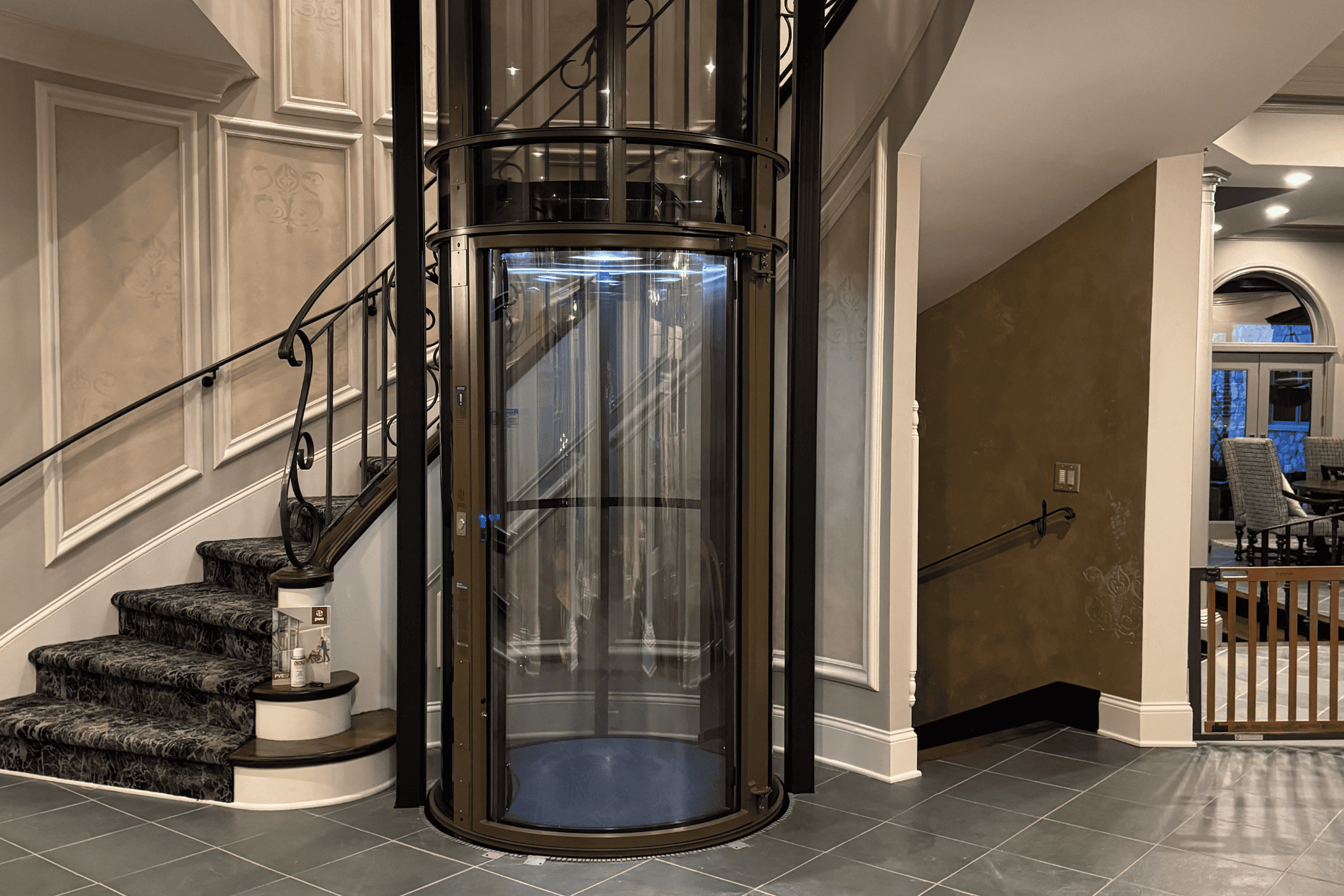
All pneumatic vacuum elevator (PVE) systems are machine room-less and highly energy-efficient, making them a great choice for senior homeowners who only need to travel between a few floors. Instead of cables or pistons, these systems use a vacuum pump to change the air pressure above the cab, pushing it upwards. Then, air is slowly reintroduced to help gravity safely lower it.
Because the motor and vacuum equipment are built directly into the top of the tube, no separate machine room or pit is required. This design makes pneumatic lifts highly adaptable and quick to install in homes with limited space. They’re also quiet and necessitate minimal maintenance compared to systems with hydraulic fluids or lubrication requirements.
Through-the-Floor Elevators
Average cost: $15,000 – $30,000+
One of the most affordable MRL elevator options, these lifts are designed specifically for two-story homes. Rather than requiring a full hoistway, they move through a cut-out in the floor, parking either upstairs or downstairs when not in use.
These elevators are powered by fully self-contained drive systems that are integrated into the lift structure. Due to this, they don’t require a machine room or overhead space. This makes them especially popular with seniors looking to improve accessibility without major construction.
Machine Room-Less vs. Hydraulic Elevators: Pros and Cons
While every elevator company offers models with their own unique pros and cons, there are a few major differences we can compare between traditional hydraulic and MRL elevators. These key differences include:
Installation & Space Requirements
- MR Hydraulic: Requires significant space for the elevator pit, shaft, and machine room, making it a less ideal option for homes with limited space. They can also take anywhere from a few weeks to several months to install.
- MRL Systems: No separate machine room is needed, helping to save space. Aside from traction systems, which require structural changes for an elevator shaft, most MRL models are quick and easy to retrofit within a week or so. PVE and through-the-floor models, in particular, demand only simple holes cut into the floor.
Maintenance Costs & Lifespan
- MR Hydraulic: After the initial installation cost, which may or may not be higher than MRL options, the shaft, machine room, cab, and fluid-based lifting mechanisms need to be checked every six months to a year. This recommended schedule is more frequent than many MRL models. With proper maintenance, systems last between 20 and 25+ years.
- MRL Systems: MRL traction elevators also require annual maintenance and have a shortened lifespan due to complex equipment (10–20+ years). On the other hand, pneumatic and through-the-floor lifts may only need professional maintenance every five years, and can last over 20 years when properly maintained.
Energy Efficiency
- MR Hydraulic: Consumes far more energy on average than MRL systems (1.0–5.0 kWh/day), which can increase monthly utility bills for senior homeowners.
- MRL Systems: Traction systems might consume up to 3.0 kWh/day, but most MRL systems consume less than 2.0 kWh/day. Pneumatic lifts are one of the most energy-efficient, with some consuming less than 1.0 kWh/day.
Weight Capacity
- MR Hydraulic: Have one of the most impressive weight limits of any home elevator type, allowing them to lift wheelchairs, several passengers, and other heavy loads.
- MRL Systems: While some models are wheelchair accessible, most have a lower weight capacity than hydraulic systems.
Travel Distance & Speed
- MR Hydraulic: Travel distance is higher than most MRL options (up to 60 feet), except for traction elevators. Travel speeds are also slower.
- MRL Systems: MRL traction elevators can still travel over 100 feet, but most models are designed for in-home transportation between two floors. They generally travel at higher speeds.
Our Takeaway: Machine room-less elevators are a simpler, space-saving option for aging in place
While MR hydraulic elevators are one of the oldest in-home mobility solutions, that doesn’t mean they’re the best. Many new machine room-less models, including traction, pneumatic, and through-the-floor systems, provide the same vertical transportation with minimal space requirements, maintenance, and energy consumption.
If you live in a two-story home and don’t need to lift heavy loads, MRL elevators are the perfect solution for seniors looking to age in place.
Frequently Asked Questions (FAQs) About Hydraulic vs. MRL Elevators
MR hydraulic elevator price ranges are similar to both MRL traction and pneumatic elevators, but more expensive than through-the-floor options. However, keep in mind that actual costs will vary based on the region, home layout, and elevator company.
MR hydraulic elevators and MRL traction elevators may take equally long to install (potentially several months), due to the elevator shaft. Pneumatic and through-the-floor systems don’t modify the building’s underlying structure, and can take as little as a week to install. Always reach out to a professional technician for installation services.
Hydraulic elevators are usually more expensive to maintain and need more frequent maintenance for oil checks and replacements. MRL systems also need regular maintenance, which can be complicated by the lack of a machine room, but eliminates risks associated with oil leaks, line failures, or fluid replacement.
Pneumatic elevators are the most energy-saving MRL design, only consuming 0.5–1.5 kWh/day. Traction systems consume more energy on average (1.0–3.0 kWh/day), but those numbers are still lower than hydraulic systems (1.0–5.0 kWh/day).
Yes, traditional hydraulic systems are less environmentally friendly than MRL traction, pneumatic, or through-the-floor elevators because their oil-based fluid is a hazard if it leaks.
Help us improve our cost data! Email your latest Hydraulic or MRL elevator quote to [email protected]. Rest assured, your personal details will remain completely confidential.