
Retirement Living takes an unbiased approach to our reviews. We may earn money when you click a partner link. Learn More
A Breakdown of Key Elevator Components
A practical guide explaining the structure, movement, controls, doors, and safety components that make home elevators work.


Updated:
At a glance:
- Home elevators rely on structural, drive, control, door, and safety components working together to move passengers safely between floors.
- Different elevator systems, including traction, hydraulic, and pneumatic designs, use different drive components to raise and lower the elevator car.
- Safety features such as brakes, buffers, door interlocks, and backup systems play a critical role in preventing accidents during normal and emergency operation.
In this guide, we break down elevator components, explain how elevator systems work, and highlight key elevator safety components to make your elevator last.
The Basic Structure of an Elevator
Here are the structural parts that support the elevator and guide its movement.
Elevator Shaft & Hoistway
The elevator shaft is the vertical space built into a home or building that allows the elevator to move between floors. The hoistway is the enclosed interior of the elevator shaft. It provides a guided space for the elevator car and the components that support its movement.
Guide Rails
Guide rails are vertical tracks installed inside the hoistway that guide the elevator car as it moves between floors. They keep the elevator car aligned and stable during travel, helping prevent swaying or uneven movement.
The Elevator Car and Passenger Area
Here are the parts of the elevator that carry passengers and items.
Elevator Car
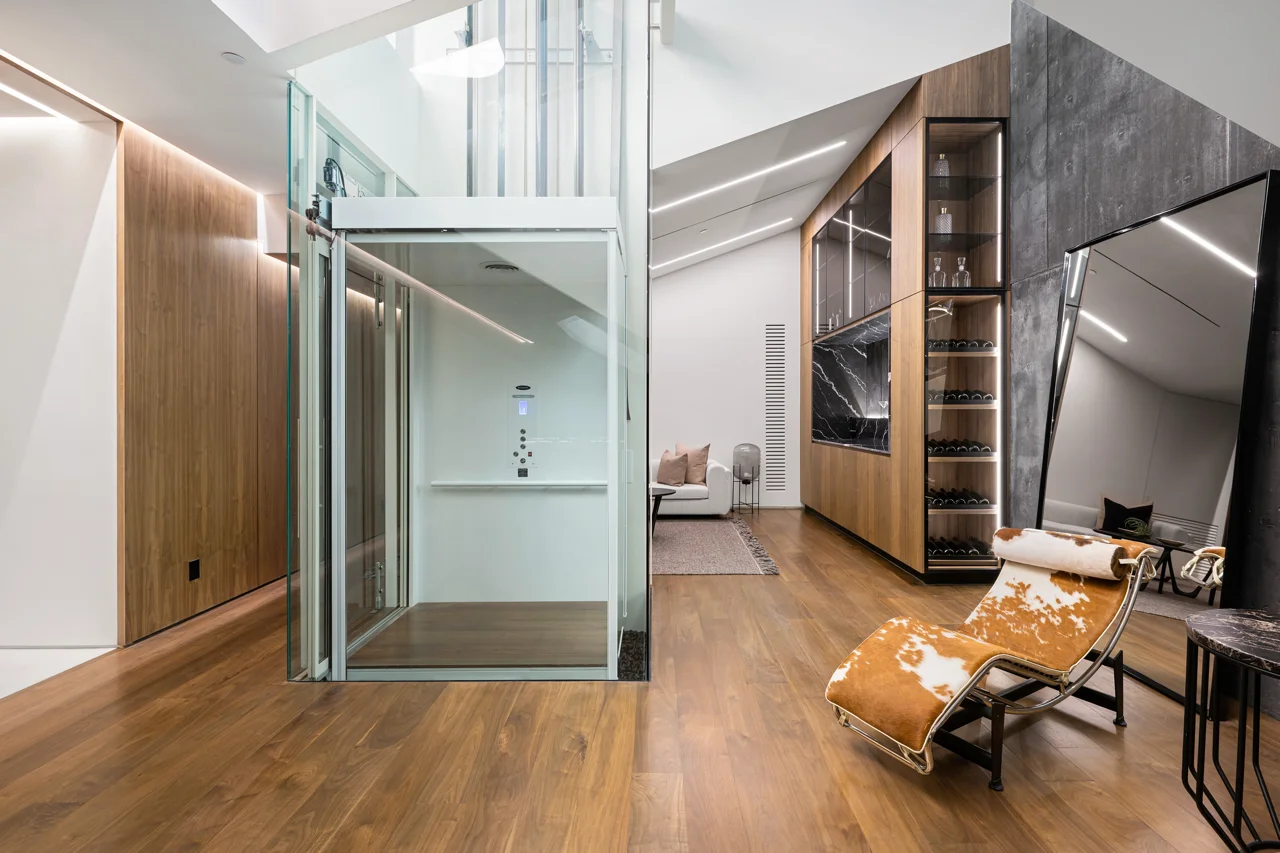
The elevator car is the enclosed space that carries people or items between floors.
Here are two types of elevator cars designed for different purposes:
- A passenger elevator car is built to carry people and includes features such as handrails and control panels.
- Dumbwaiters use a smaller car intended only for moving items and are not designed for passengers.
Interior Features
Elevator cars typically include the following interior features:
- Handrails: Installed inside the elevator car to provide support and balance for passengers while the elevator is moving.
- Lighting: Built-in lighting allows passengers to see controls and move safely inside the elevator car.
- Space: The interior space of a home elevator is designed to allow standing or seated use, depending on the size of the elevator car.
Elevator Door Components
These components control access to the elevator car and the elevator shaft.
Elevator Doors
Elevator doors control access to the elevator car and separate passengers from the hoistway during travel. They open and close at each floor to allow safe entry and exit.
Elevator doors are either automatic or manual:
- Automatic doors: Open and close using a motor and sensors. These doors are common in home elevators and reduce the need for manual operation.
- Manual doors: Require users to open and close the door by hand. These doors are typically used in older or custom elevator installations.
Hoistway Doors
Hoistway doors are fixed doors installed at each floor opening of the elevator shaft. They block access to the hoistway when the elevator car is not present.
Door Sensors and Safety Mechanisms
Sensors prevent elevator doors from closing when something is in the way and keep doors locked while the elevator is moving.
Common sensors and safety devices used in elevator doors include:
- Infrared light sensors: Detect people or objects in the doorway and stop doors from closing.
- Pressure sensors: Sense resistance when doors meet an object and cause them to reopen.
- Mechanical safety edges: Trigger door reopening when contact is made.
- Door interlock systems: Keep elevator doors locked unless the elevator car is stopped at a floor.
- Position sensors: Confirm the elevator car is aligned correctly before doors open.
Drive and Motion Components
Here are the main types of elevators and the drive components they use.
Traction Drive Components
Traction elevators use a motor-driven system to move the elevator car using steel cables powered by a motor system.
Traction elevator systems include the following components:
- Traction machine: The motor system that provides the power needed to move the elevator car. It pulls the cables to raise or lower the car.
- Sheave: A large, grooved wheel connected to the traction machine. The elevator cables wrap around the sheave, allowing the motor to move the car.
- Pulley: A wheel placed along the cable path to guide the cables and keep them aligned as they move.
- Counterweight: A heavy weight attached to the opposite end of the cables. It balances the weight of the elevator car to make movement easier and more controlled.
- Braking system: A mechanical brake connected to the traction machine that slows and stops the elevator car by controlling kinetic energy when the car is descending.
Hydraulic Drive Components
Hydraulic elevators use liquid pressure to raise and lower the elevator car. A hydraulic piston is a solid metal rod installed beneath or beside the elevator car. When pressurized fluid enters the cylinder, the piston pushes the elevator car upward.
The power unit supplies the pressure needed for movement. It includes a motor, pump, and fluid reservoir that work together to send hydraulic fluid to the piston and control the elevator’s motion.
Pneumatic Drive Components
Pneumatic elevators move the elevator car using air pressure instead of cables or hydraulic fluid. These systems rely on a sealed vertical tube that allows controlled air movement above and below the elevator car.
A pneumatic drive system uses a vacuum pump and air valves to change air pressure inside the tube. This pressure difference raises or lowers the elevator car in a controlled manner.
Choosing the right drive system depends on factors such as space, mobility needs, and budget. For side-by-side comparisons, pricing information, and detailed reviews, visit our best home elevators guide.
Control and Electrical Components
These components manage elevator operation, movement, and stopping.
Control System and Elevator Controller
The control system manages how the elevator operates as a whole. It receives signals from buttons inside the elevator car and at each floor, then directs the elevator to move, stop, and open doors at the correct locations.
The elevator controller is the main unit within the control system. It processes input from sensors and control panels, then sends commands to the drive system, brakes, and doors. This coordination allows the elevator system to move smoothly and stop accurately at each floor.
Control Panel
The control panel is the interface passengers use to operate the elevator. It allows users to select floors and view basic status information during travel.
Common control panel components include:
- Floor selection buttons: Used to choose the desired floor.
- Call buttons: Located inside the elevator car to request movement.
- Door open button: Holds doors open longer at a floor.
- Door close button: Closes doors after entry or exit.
- Emergency stop button: Stops elevator movement in an emergency.
- Alarm button: Alerts for assistance if help is needed.
- Floor indicator: Displays the current floor number.
- Direction indicator: Shows whether the elevator is moving up or down.
Elevator Safety Components
The following components help keep home elevators safe:
Safety Brakes
Safety brakes are mechanical devices designed to stop the elevator car if it begins to move too fast or loses control. They are separate from the normal braking system used during everyday stops.
These brakes activate automatically when sensors detect unsafe movement. Once engaged, they grip the guide rails and bring the elevator car to a controlled stop.
Buffers
Buffers are devices installed at the bottom of the elevator shaft. They are designed to absorb impact if the elevator car travels beyond its intended stopping point. Their purpose is to reduce force and prevent damage during rare overtravel situations.
Additional Safety Systems
Elevators include additional safety systems designed to respond to abnormal or emergency conditions.
- Overspeed protection: Detects excessive speed and triggers safety brakes to stop the elevator car.
- Emergency stop system: Stops elevator movement when an emergency condition is detected or activated.
- Door interlock system: Prevents the elevator from moving unless all doors are fully closed and locked.
- Emergency alarm system: Allows passengers to signal for help if the elevator stops unexpectedly.
- Backup power system: Provides limited operation or safe stopping during a power outage.
Help us improve our guides! If you’ve recently installed or used a home elevator or have insights on how yours works, we’d love to hear from you. Share your experience with us at [email protected]. Your personal details will stay completely confidential.