
Retirement Living takes an unbiased approach to our reviews. We may earn money when you click a partner link. Learn More
Preventing Falls Through Fitness
Regular balance and strength exercises can lower fall risk by up to 30%, helping older adults stay active and independent longer.


Updated:
At a glance:
- Falls are common but preventable: About 1 in 4 adults over 65 falls each year, and exercise is one of the most effective ways to reduce risk.
- Key risk factors: Muscle weakness, medications, vision changes, and home hazards are leading causes of falls in older adults.
- Fitness as prevention: Balance, flexibility, and strength exercises—like chair stands, marching in place, and gentle stretches—help improve stability and confidence.
A fall can be a traumatic experience for anyone, but it is especially dangerous for older adults. According to the Centers for Disease Control and Prevention (CDC), about one in four adults age 65 and older falls each year, and one out of five of those falls causes serious injury such as a fracture or head trauma.
While fall risk increases with age due to balance problems, decreased muscle strength, or other health issues, falls do not have to be an inevitable part of aging. Regular exercise and movement, or working with a physical therapist, can help you stay strong, steady, independent, and improve your overall wellness.
What causes falls in seniors?
To prevent falls, it’s important to first understand the most common causes. Some are age-related, while others can affect anyone regardless of age. As you age, falls may be caused by:
- Muscle weakness: Age-related muscle loss, known as sarcopenia, affects about one in three adults over 60 and can lead to poor balance, slower reaction times, and mobility issues.
- Medications and health conditions: Certain prescriptions–especially when combined with chronic health conditions–can cause dizziness, drowsiness, or low blood pressure, increasing the risk of falling.
- Vision changes: Aging can affect depth perception, contrast sensitivity, and clarity. Wearing outdated or incorrect eyeglasses prescriptions can also increase fall risk.
- Environmental hazards: Many falls are caused by clutter or obstacles in the home, like loose rugs, poor lighting, slippery surfaces, pets, toys, or electrical cords.
Some of these risks are easy to address, like removing loose rugs, improving lighting, or securing power cords. However, many people overlook one of the most powerful fall-prevention strategies: regular physical fitness. Research published in journals such as the American College of Sports Medicine’s Health and Fitness Journal confirms that exercise programs focusing on strength, balance, and flexibility can significantly reduce falls among older adults.
Preventing falls through fitness
Here are eight home exercises recommended for seniors. By improving strength, dexterity, flexibility, and balance training, these movements can lower the risk of falls and improve overall mobility. Some of these exercises begin with a set number of repetitions, while others can be gradually increased as your strength and confidence improve.
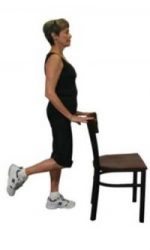
Standing On One Leg
Something as simple as standing on one leg can make a significant improvement in your balance. To do this exercise, stand with your feet about shoulder-width apart. Hold on to a chair, countertop, or wall for stability. Lift one foot a few inches off the ground, keeping your back straight. Hold for 10-15 seconds, then slowly lower it. Switch to the other leg, and repeat. Aim for five repetitions on each foot, and increase your hold time as you get stronger.
Chair stands
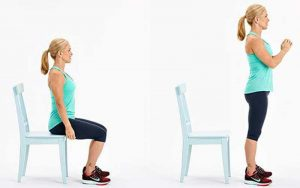
This sit-to-stand strengthening exercise works the muscles used when standing up from a chair–a common movement where falls can occur. Sit in a sturdy chair. Cross your arms in front of you or place your hands on the chair for support if needed. Lean forward slightly and push your heels to stand up. Slowly sit back down with control. Repeat 10 times, resting as needed. As you progress, try using less arm support until you can stand using just your legs.
Kickbacks
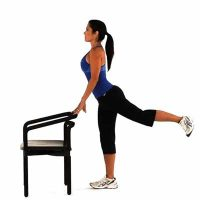
Stand on one side of a sturdy chair or kitchen counter, holding a light weight or water bottle in one hand. Keep your back straight and bend forward slightly, resting your opposite hand on the chair for support. With your weighted arm bent at the elbow and close to your side, slowly extend your arm backward until it is straight. Return to the starting position and repeat 10 times. Switch sides and repeat with the other arm. Begin without weights if needed, and gradually increase up to 3-5 pounds as you get stronger.
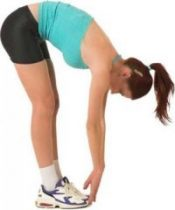
Toe Touches
Stand tall with your feet hip-width apart. Keeping your back straight, slowly bend forward at the hips and reach toward your knees, shins, or toes–only as far as is comfortable. Keep your legs straight but not locked. Repeat 10 times. (Tip: Avoid rolling your back down, as that can strain the spine. Focus on hinging at the hips for a safer stretch.)
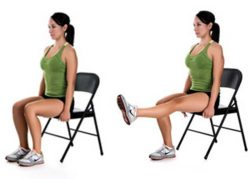
Seated leg lifts
Sit in a sturdy chair with your feet flat on the ground. Hold the sides of the chair for support. Slowly extend one leg straight out in front of you and hold for 2-3 seconds. Once it’s straight out, bend your knee inward towards your chest as much as you comfortably can (keeping your upper body still). Lower it back down and switch to the other leg. As your leg strength increases, try lifting both legs at once for an added challenge.
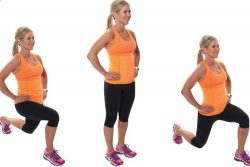
Lunges
Although lunges can be challenging, they are excellent for building lower-body and core strength, which supports better balance. Stand with your feet hip-width apart and place a chair nearby for balance. Step one foot forward and bend both knees slightly, lowering your body while keeping your back straight. Make sure your front knee does not go past your toes. Push through your front heel to return to standing. Start with 5 repetitions on each leg. As you improve, work up to 10 repetitions per side, and only go as low as feels comfortable.
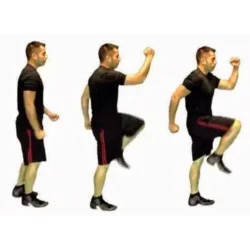
Marching in place
Marching in place is often used in rehabilitation programs and is excellent for improving balance and endurance. Stand tall and lift one knee as high as you comfortably can, then lower it. Switch to the other leg and continue marching in place. Aim for 20 steps total, gradually increasing to 1-2 minutes. For an added challenge, swing your arms gently as you march.
Non-dominant hand tasks
While it may not feel like an exercise routine, practicing tasks with your non-dominant hand can boost coordination and brain health by creating new neural connections. Try simple activities like eating, brushing your teeth, or writing short notes with your non-dominant hand a few times a week. This type of strength training supports both cognitive function and dexterity.
Conclusion
Regular physical activity is one of the best ways to maintain health and independence as you age. While no method can completely eliminate the risk of falling, regularly practicing exercises that target balance, strength, and flexibility at home or in physical therapy can greatly reduce your chances, help you stay confident in your daily activities, and improve overall quality of life.