
Retirement Living takes an unbiased approach to our reviews. We may earn money when you click a partner link. Learn More
How Long Does It Take To Install A Stair Lift?
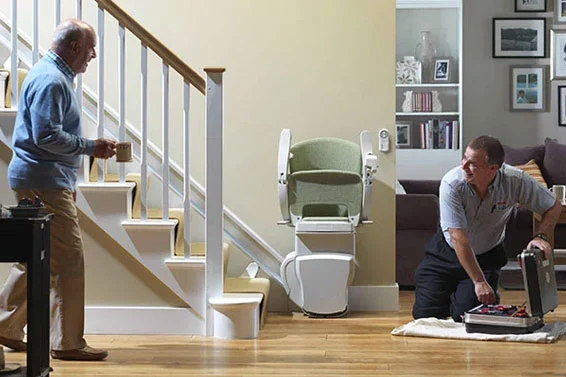
Stairlift installation takes an average of 4 hours, depending on the type of stairlift.


Updated:
At a glance:
- Installing a straight stairlift usually takes between 2 and 4 hours; a curved stairlift takes 3 to 8 hours, or a full day’s worth of labor, on average.
- Some areas may require permits for stairlift installations, so make sure your provider is aware of local permit laws, especially for same-day installations.
- To ensure stairlifts are installed in a decent timeframe, make sure the stairs are clear of clutter, decorations, and potential safety hazards.
If you or a loved one has limited mobility and struggles to safely navigate the stairs, installing a stairlift is worth considering. Not only are they a cost-effective accessibility solution, but the right stairlift model also increases independence and comfort in one’s own home.
If you’re interested in adding a stairlift to your home, you should be aware of how long stairlift installation takes and what preparations are required.
How Long Does it Take to Fit a Staircase?
Stairlifts can be installed in a single day, usually within a couple of hours. However, ordering a lift, manufacturing the parts, and scheduling the install can take anywhere from a few days to several weeks, depending on the type of stairlift and the provider.
Below, we provide an overview of the installation process, from preparation to installation, and what to expect afterwards.
Pre-Installation Considerations
To begin the stairlift installation process, you will need to have your home evaluated by an accessibility expert. After scheduling a home assessment with your stairlift provider, answer these questions to help the technician fully understand your needs and preferences.
- Do you live alone or with family members?
- What mobility challenge is the stairlift aiding? (Balance issue, joint pains, etc.)
- How long will you need the stairlift for? (If it’s only a temporary need, consider stair lift rentals.)
- Where do you want the stairlift installed? (Outdoor stairlifts cost more and may take longer to install.)
- Who will use the stairlift?
- What weight capacity do you need?
Once the technician fully understands your mobility needs and home situation, they will walk you through your options and offer a free quote, so you can decide whether to move forward.
Preparing the Space for Installation
Once you decide to install a stairlift, make sure the space is free of any loose clutter or obstructions, and a team of licensed technicians will handle the rest, taking note of the following:
- Staircase width
- Staircase length
- Tread construction
- Number of steps
- Permanent obstructions
- Nearby power outlets
- Height and weight of the user
For curved staircases, technicians will use advanced tools, such as digital cameras, to measure the length, width, angles, and obstructions, like doors or handrails, so the rail can be built to the exact curve of your stairs.
Stair Lift Permits
Some residential areas may require a permit for stairlift installation. Most providers will be aware of these local permit requirements and ensure everything is in place prior to installation. However, be sure to ask your provider if they are aware of any local permit requirements, especially if they offer same-day installation. If they don’t know what the local requirements are, call an experienced local provider instead to ensure all legal aspects are met.
Installing a Straight Stairlift
Installing a straight stairlift usually takes between 2 and 4 hours; however, some models can be installed in as little as 1 hour.
Straight staircases do not require rail customization, so the time from ordering your stairlift to the actual day of install can take a few days to a couple of weeks. Once on site, technicians can quickly and easily attach standard-sized rails to your stair treads, thread the carriage onto the rail, attach the chair, and clean up the space in a short time.
Installing a Curved Stairlift
Curved stairlift installation is a bit more complex than straight stairlifts, so installation time takes anywhere from 3 to 8 hours, or a full day’s worth of labor.
Because the curved rail system is custom-made for your specific staircase, the time between ordering and the day of installation can take weeks to a month since each piece is manufactured to meet your stairs’ exact curves. Additionally, the process of fitting the pieces together, securing supports, and testing is more complex on curved staircases, extending installation time.
After Installation
Once the new stairlift is installed, your licensed technician will perform a final safety check, provide a breakdown of the safety features, demonstrate how to use the stairlift, and provide instructions for maintaining it.
Afterwards, they will share all the relevant paperwork with you, ensure you’re fully comfortable with operating your lift, and answer any final questions.
Some providers offer service and maintenance plans that ensure continued service in compliance with the manufacturer’s stairlift warranty, helping extend the lifespan of your lift.
Stairlift Installation Requirements
To properly install a stairlift in a decent timeframe, certain requirements must be met.
- Clean the space: Before technicians arrive for the consultation, remove any photos, plants, bins, decorations, or other loose items from the stairwell.
- Take photos before installation: If you’re concerned about potential damage, you can take photos of the stairs before the technicians arrive for evidence. However, stairlifts are added to the stair treads themselves; they do not attach to the wall. If you ever remove your stairlift, the only marks left behind will be the holes, which can be easily filled.
- Identify nearby outlets: Stairlifts must be plugged into a power outlet, usually within ten feet of the staircase. While your stairlift is battery-powered, keeping it plugged in ensures the battery remains charged and operational during a power outage.
- Additional safety features: During inspection, your technician will make a list of which stair lift features are needed to provide the safest ride and ensure peace of mind. They may recommend options, like powered footrests, power swivel seats, folding rails, seat belts, and advanced sensors.
Bottom Line: Professional Stairlift Installation Takes a Few Hours to Complete
Stairlift installation takes only a couple of hours, typically between 2 and 4 hours for straight stairlifts and 3 to 8 hours for curved models. However, the entire process of consulting, purchasing, manufacturing, and shipping the stairlift can take an average of a couple of weeks.
However, once you place the initial order, the provider will handle any required permits and provide on-site installation, ensuring a stress-free experience.
Stair Lift Installation FAQs
Stair lift costs can range anywhere from $2,900 to $14,000, depending on the type of staircase, stairlift model, safety features, and more. Installation typically costs around $2,000; however, this price is usually included in the initial quote.
Stairlifts can be installed practically anywhere there are stairs. Residential locations, both indoor and outdoor, are the most common places. However, commercial buildings can install stairlifts, which are typically more heavy-duty than residential models. Public spaces such as churches, schools, and event centers are also great places for stairlift installation.
No, in most cases, your home won’t need to be modified to install a stairlift. This is because stairlifts are attached to the stair treads, ensuring stability while reducing the risk of damage to your walls. If your stairs are narrower or you have a low-hanging ceiling, your technician can discuss options with you to avoid potential modifications.
Yes, stairlifts only take up about 29 to 34 inches of space, depending on the type of lift. Most modern American staircases are at least 36 inches wide. Additionally, modern stairlifts can fold up when not in use, taking up only 12 to 18 inches, leaving plenty of room for others to use the stairs unobstructed.
If you’re not sure a stairlift is what’s best for your specific needs, then you have many alternatives to consider. The most common alternatives include home elevators, wheelchair ramps, platform lifts, and stair-climbing canes.
Help us improve our data! Email your latest stair lift quote to [email protected] or submit a review about your experience. Your personal details will remain completely confidential.