
Retirement Living takes an unbiased approach to our reviews. We may earn money when you click a partner link. Learn More
Wheelchair Lift Installation: Cost & What To Expect
On average, wheelchair lifts cost $14,650 to install, while vehicle lifts cost as little as $500, and IPLs and home elevators can exceed $30,000.


Updated:
At a glance:
- The average cost of a wheelchair lift installation ranges between $500 – $35,000+, depending on the type of system, stair length, number of floors, additional safety features, and more.
- There are several wheelchair lift options you can install, including home elevators and stair lifts. Examples of the former include vertical platform lifts (VPLs) and through-the-floor elevators, while inclined platform lifts (IPLs) fall under the latter category.
- IPLs are typically the most expensive to install, at $23,500 on average, while vehicle lifts cost only $2,750 on average.
In this article, we’ll cover the average installation process and costs for different wheelchair lift options, so you can choose the most cost-effective solution for your home.
Wheelchair Lift Installation Costs
For senior homeowners, the cost to install a wheelchair lift varies greatly by type and home layout. For instance, seniors with a straight staircase can often install an affordable, wheelchair-accessible stair lift, while homes with several floors or complex layouts might benefit from installing a through-the-floor home elevator. Another factor that can influence the final price is your location, as areas with higher demand typically offer lower prices.
Overall, vertical platform lifts (VPLs) and through-the-floor elevators are more expensive to install but can be cheaper in the long run, with VPLs costing $14,500 on average and through-the-floor elevators costing $22,500. Inclined platform lifts (IPLs)—stair lifts designed for scooter and wheelchair users—cost an average of $23,500. IPL prices vary a lot depending on the type of staircase.
Vehicle lifts and ceiling-mounted patient lifts are the most affordable options, but they have limited, specialized uses. You can pay less than $10,000 for many of these options.
| Wheelchair lift type | Total cost |
|---|---|
| Vertical platform lifts (VPLs) | $9,000 – $20,000 |
| Inclined platform lifts (IPLs) | $12,000 – $35,000 |
| Through-the-floor elevators | $15,000 – $30,000 |
| Ceiling-mounted patient lifts (Hoyer lifts) | $5,000 – $15,000 |
| Vehicle lifts | $500 – $5,000 |
Costs Depend on the Type of Wheelchair Lift
With several wheelchair lift options available to you, it’s important to understand how each lift works and how its functionality affects costs. Some of the most common wheelchair lifts you can choose from include:
- Vertical platform lifts (VPLs): While more open than a traditional elevator, they work similarly and are more affordable. These chair lifts use either a hydraulic or electric system, such as a ball screw drive, to move wheelchair users vertically. Due to their limited travel height, they’re often installed alongside decks, porches, or short staircases as outdoor wheelchair lifts. They’re a convenient alternative to wheelchair ramps, offering additional safety features like emergency stop buttons, guardrails, and battery backups for power outages.
- Through-the-floor elevators: These shaftless elevators offer all the convenience of a traditional home elevator without the high costs of installing a full hoistway or machine room. However, they’re still one of the more expensive options for wheelchair users. They utilize a simple floor cutout to electrically push the elevator car between two floors. This equates to limited travel height, but it’s worth noting that these elevators have a high weight capacity—making them ideal for seniors who have caretakers or struggle with obesity.
- Inclined platform lifts (IPLs): These are wheelchair-accessible stair lifts that can be installed on both straight and curved staircases. Straight options are much more affordable, while customized curved installations are one of the most expensive wheelchair lift options. Regardless of type, these installations work via an electric motor and drive system that travels along the staircase. They often include additional safety features like handrails, emergency stop, and battery backups.
- Ceiling-mounted patient lifts (Hoyer lifts): Designed specifically for transferring from your wheelchair to your bed or bathroom area, these installations are essential for seniors with severe mobility issues and dedicated caregivers. Installed systems are mounted to ceiling tracks and don’t require any major construction. This makes them one of the most affordable options, but also means that they can’t help you move between floors.
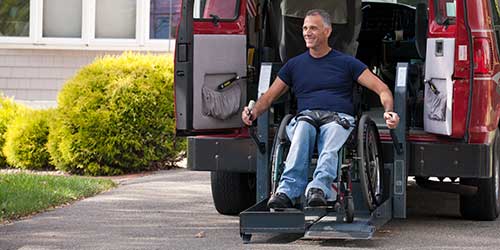
- Vehicle Lifts: The most affordable, but also one of the most specialized wheelchair lifts, these installations specifically help load and unload wheelchairs, power chairs, or scooters into a car, van, or SUV. They’re available in both interior and exterior designs, and help wheelchair users maintain accessibility beyond their property.
The Wheelchair Lift Installation Process
Installing an ADA-compliant wheelchair-accessible stair lift or home elevator requires professional assistance, as these systems rely on precise measurements and complex machinery. Most installations take between one and three days, but through-the-floor elevators and IPLs may take up to several weeks due to permitting and inspection requirements.
Installing Wheelchair-Accessible Stair Lifts
Inclined platform lifts (IPLs) are designed to carry wheelchairs up and down staircases. Because every staircase is different, installation must be customized to the slope, length, and curvature of each staircase.
- Initial measurements: The technician first measures your staircase to determine the ideal fit. Standard straight staircases need at least 36 inches of clear width, while curved options require a custom rail design.
- Structural preparation: As long as the staircase is strong enough to support the lift, the next step is screwing in brackets and railings along the treads. The steel or aluminum track is then secured using bolts or anchors.
- Motor installation: Once the lift platform is mounted, the drive system that powers the lift is installed. It’s usually 110V or 220V electric with battery backup for power outages.
- Final Inspection: The lift is tested multiple times to confirm safe functionality. This includes checking weight limits and verifying emergency lowering functions.
Installing Vertical Wheelchair Lifts
Vertical wheelchair lifts—including VPL porch lifts and through-the-floor elevators—are ideal for homes with multiple floors or raised entries. Here’s how the installation process works for both options:
VPL Installation
- Site preparation: The landing area is leveled by pouring a four to six-inch concrete pad. Functionality requires at least five by five feet of clearance around the lift.
- Platform and tower placement: The lift tower and wheelchair-accessible platform are assembled on the prepared concrete base. The tower must be plumb and properly aligned for smooth vertical movement.
- Power Connection: The lift is connected to a dedicated 110V or 220V power supply, depending on the model. Many models include battery backups or manual lowering systems to keep you safe during power outages.
- Final Inspection: The installer confirms weight capacity, safety feature functionality, and emergency lowering capabilities by running the lift a few times.
Through-the-Floor Elevator Installation
- Measurements and floor cutout: After carefully measuring the space, a professional installer will cut a hole in the floor of the upper level (typically four to six square feet) to fit the elevator car.
- Cab setup: After a structurally secure cutout is made, the elevator cab is installed into the carefully measured space.
- Drive system installation: The elevator cab is connected to an electric drive system (110V or 220V). Battery backups are common.
- Final Testing: The installer tests load limits, door sensors, travel between floors, and any emergency features to guarantee safe and reliable operation.
Wheelchair Lift For Car Installation
Vehicle lifts help seniors load and unload their wheelchairs, power chairs, or scooters into accessible vans or SUVs. They can be mounted at the trunk, on a rear hitch, or through a side-entry door. We recommend checking with the manufacturer to confirm the best option for your vehicle.
After the mount is installed, a lift frame is securely attached using bolts or hitch connections that can support the wheelchair user’s weight. Then, the lift platform or swing arm is attached and aligned for smooth operation. Most connect to the vehicle’s 12V electrical system or a separate battery for power.
New Construction vs. Retrofitting Wheelchair Lift Installations
New construction installations are generally quicker, easier, and less expensive. There’s flexibility in where the lift, electrical wiring, and structural support are placed. On the other hand, retrofitting requires the lift to adapt to existing structures. This process is especially expensive for IPLs. However, through-the-floor elevators can be a great, compact option for homeowners looking to minimize renovations.
Bottom Line
The cost and installation process for wheelchair lifts depend on the type of lift, the available space, travel height, safety features, and more. If you’re a senior in need, you should consider the best wheelchair lift for your mobility needs, home layout, and budget.
Frequently Asked Questions
The average wheelchair lift costs around $14,650. Costs vary based on type, home layout, travel height, safety features, and more. Prices for vehicle lifts start as low as $500, while IPLs and through-the-floor elevators can cost over $30,000.
Inclined platform lifts may cost the most to install, especially if you have a curved staircase. However, through-the-floor elevators are usually the most expensive option for seniors with straight staircases.
Wheelchair lifts are typically covered by Original Medicare (Parts A and B), Medicare Advantage (Part C), Medicaid, and some private insurance plans. We recommend contacting your insurer or an Area Agency on Aging (AAA) for more information about financial assistance in your area.
Installing a wheelchair lift can take anywhere from a few hours to a few days, depending on the lift type and home layout. For example, vehicle lifts and patient lifts typically have quick, same-day installations, while IPLs and through-the-floor elevators may take a few weeks to properly install.
Wheelchair lifts can have add-ons like safety gates, guardrails, emergency stop buttons, sensors, and battery backups, to name a few.
Whether you choose a home elevator or a stair lift depends largely on your current staircase and mobility needs. Stair lifts can be easily installed on most straight staircases, while home elevators may be the better choice for homes with curved staircases or limited space. While more invasive, home elevators can boost property values, too.
With regular maintenance, wheelchair lifts can last up to 15 years. Screw drive IPLs are generally the most reliable, while hydraulic VPLs will likely require the most maintenance. Regardless, routine inspections, cleanings, and battery checks are all crucial for longevity.
Help us improve our cost data! Email your latest wheelchair lift quote to [email protected]. Rest assured, your personal details will remain completely confidential.