
Retirement Living takes an unbiased approach to our reviews. We may earn money when you click a partner link. Learn More
What to Consider When Choosing a Walk-In Tub
Walk-in tubs offer safety and comfort, but factors like door type, size, water heater capacity, and installation costs should guide your decision.


Updated:
At a glance:
- Door type and threshold height matter: Inward doors are common but require draining before emergency exit; outward doors allow faster exit but need more space and strength to operate. Low-step thresholds improve safety.
- Therapeutic jets offer health benefits: Basic tubs are affordable, but models with hydrotherapy jets help manage arthritis, muscle pain, and circulation issues.
- Size, installation, and cost vary: Walk-in tubs range from $3,000–$20,000 installed. Ensure your home’s layout, flooring, and water heater can support the tub you choose.
As walk-in tub technology advances, the safety features have also improved. Walk-in tubs are common aging-in-place home additions because they allow you to bathe independently and privately. Each model has different price points and a range of comfort and safety features, making it harder to choose the best walk-in tub and bathing option for your specific bathroom.
How To Choose a Walk-In Tub
After consulting an accessibility expert, we identified the factors and features as the most important to consider when choosing the type of walk-in tub that will enhance your bathing experience.
Decide If The Walk-In Tub Door Should Swing Inward Or Outward
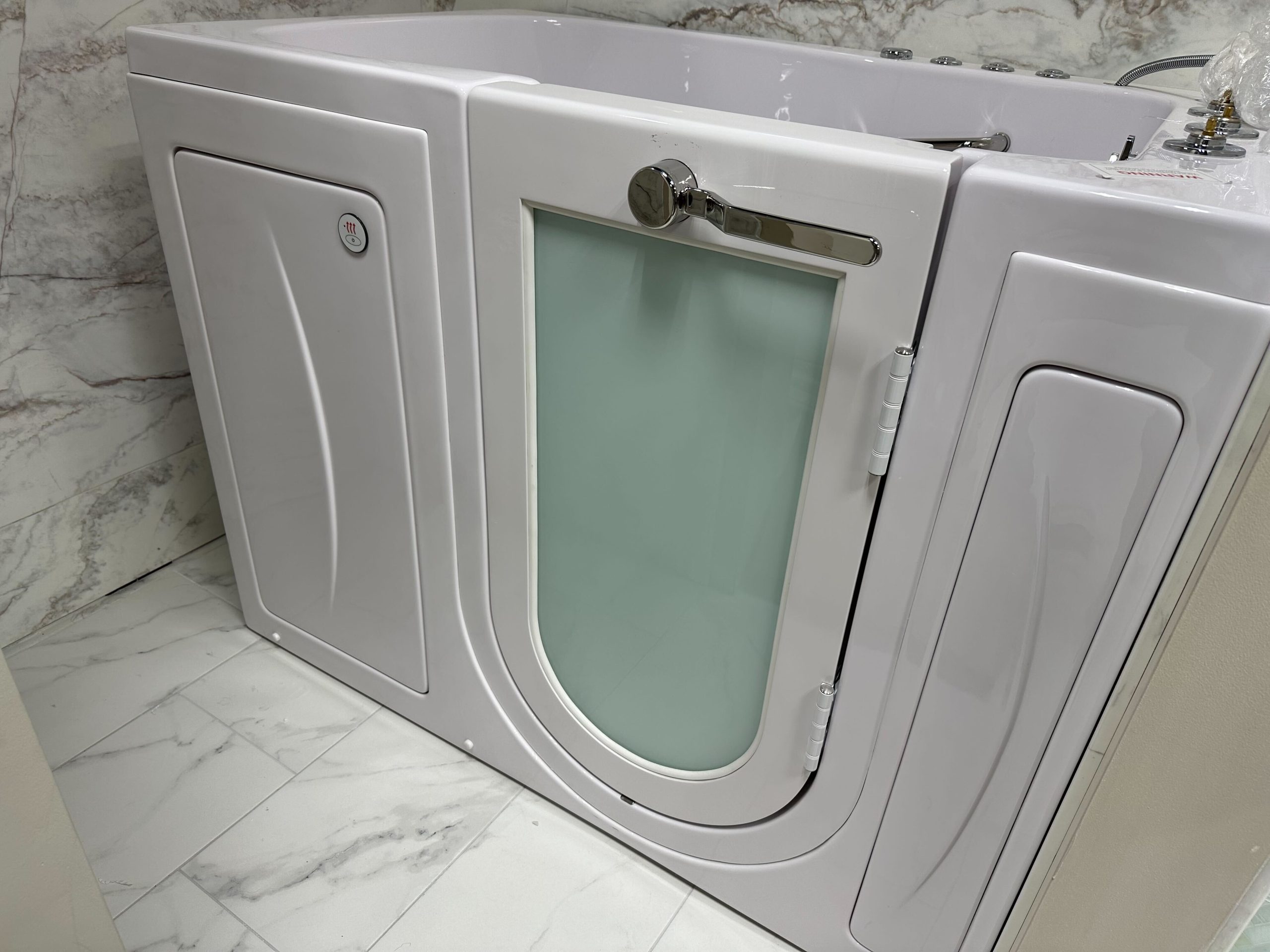
Walk-in tub doors are sealed to contain water and help you stay steady when entering the tub. While most tubs have inward-swinging doors, outward-swinging doors are also available. Inward-swinging doors are the most common, but their design prevents them from opening in an emergency unless the tub is drained first.
Outward-swinging walk-in tub doors have a latching mechanism to stay watertight. These doors open quickly in an emergency without having to drain the entire bath, reducing drain time, but the door handle can be tricky for someone with limited hand strength.
The bathroom must be wide enough to accommodate the door, and outward-swinging models are typically more expensive than those with inward-opening doors. Some models have extra-wide doors to accommodate different transfer techniques and assistive devices like wheelchairs, and many tub doors can open left or right to accommodate safety handrails.
Thresholds beneath the doors aren’t all the same, either. When shopping for a walk-in tub, consider the threshold height and ensure it’s low enough to step over safely. If the threshold height is a concern, ultra-low step-in profiles (about two inches high) are available on some models.
Decide Whether You Want Jets or No Jets?
If cost is an issue, you can save by purchasing a walk-in tub that doesn’t have jets. These basic soaker models usually include safety bars, easy-to-reach faucets, and a handheld shower sprayer, but lack additional features.

If you or a loved one has mobility issues or conditions like osteoarthritis, rheumatoid arthritis, back pain, a knee or hip replacement, fibromyalgia, or other neurological conditions, consider your daily pain level. While soaking in a traditional tub helps reduce pain, buying a walk-in tub with whirlpool or air jets offers therapeutic features like hydrotherapy. There is a long list of health benefits of a walk-in tub, including reducing muscle spasms, strengthening weak muscles, healing sore muscles, increasing joint range of motion, re-educating paralyzed muscles, and improving coordination and circulation.
Look for tubs with targeted massaging and hydrotherapy jets aimed at problem areas like the back, legs, or feet.
From Our Expert
“Hydrotherapy has been shown to reduce pain and increase self-efficacy. However, bathers typically see the best results when paired with a plan of care created with your doctor that outlines the frequency and length of tub use and a physical routine guided by a rehab professional.”

Dawn Heiderscheidt
OTR/L, ECHM, CAPS
Walk-in tubs with therapeutic jets also promote skin exfoliation, which may benefit those with skin conditions—after consulting with a doctor. Medicated or moisturizing lotions tend to be absorbed well after a jetted bath.
Determine What Size Walk-In Tub You Need
The average walk-in bathtub measures 60 inches long and 32 inches wide, though some come as small as 36 1/2 inches long and 33 inches wide. Some manufacturers offer larger models for people weighing more than 250 pounds or accommodating wheelchair transfers and lift chairs.
Walk-in tubs come with several home installation requirements. When deciding what size tub you should get, measure your home’s hallways, stairs, and doorways to ensure installers can move the tub to your bathroom space. If your doors and hallways are very narrow or you have many steps in a narrow staircase, you might have to shop around to find one that fits. Your installer may suggest home renovations—such as building a new bathroom or widening doorways—to accommodate the tub.
For these reasons, it’s essential to get multiple quotes from walk-in tub companies that compare installers and models that may work better for your home and situation.
From Our Expert
“Walk-in tubs benefit many people, but sometimes, a walk-in tub is not the best option due to your medical conditions, limited mobility, condition progression, or environmental limitations. If you find this to be the case, contact a rehab professional who focuses on environmental modifications, as they may suggest a walk-in shower with multiple shower heads, hot tubs, or other ways to receive similar physical benefits.”
Dawn Heiderscheidt
OTR/L, ECHM, CAPS
Safe Step

Great standard safety features
All products meet ADA standards
Lifetime warranty
Kohler Walk-in Bath

Great warranty
Low threshold
Large number of add-on features
Ask About Walk-In Tub Installation Requirements
Keep in mind that walk-in tubs hold significantly more gallons of water than a standard bathtub, so the total weight will be substantially higher. You’ll need to make sure your bathroom’s subfloor can support the tub when it’s filled with water, so be sure to ask your walk-in tub dealer if any structural changes will be needed. Your contractor can check the subfloor to determine if modifications are necessary.
Most walk-in tubs are designed to fit in the same space as your existing bathtub. If you need a larger walk-in tub than your existing one, budget for additional renovation costs.
Compare Walk-In Tub Costs
Walk-in tubs are more expensive than standard bathtubs, so it’s important to choose one that meets both the homeowner’s current and future needs. Walk-in tubs almost always require professional installation, which can add between $2,500 and $8,000 to your bill. Some companies include installation costs in their final prices. Our research shows walk-in tubs typically cost between $2,300 and $25,000, including installation.
| Brand | Price Range | Brand Features |
|---|---|---|
| American Standard | $6,000 – $14,000 | • Variety of choices • Limited warranty |
| Kohler | $2,000 – $20,000 | • Includes installation and old tub removal |
| Premier Care | $4,000 – $10,000 | • Variety of models • Low shipping costs |
| Safe Step | $2,500 – $20,000 | • Lifetime warranty |
| Universal | $1,900 – $8,500 | • Wheelchair accessible • ADA compliant |
When budgeting for the total cost of a walk-in tub, you’ll also need to consider water capacity. If your current water heater can’t adequately heat the water in the new tub, you may need to upgrade it.
Unfortunately, Medicare does not classify walk-in tubs as durable medical equipment, meaning you’ll have to cover the cost yourself. Still, many seniors find the health and comfort benefits outweigh the cost—especially after reviewing personalized recommendations from accessibility specialists or doctors.
Expert Tips for Choosing a Walk-In Bathtub
Walk-in tubs are expensive, and many require minor installation renovations. Therefore, it’s essential to do thorough research before investing. Here are additional tips from our home accessibility expert to help you choose wisely:
- Schedule an in-home consultation with both the dealer and installer. Most manufacturers will send a specialist to your home to assess your bathroom setup, tub needs, and installation requirements. Before signing a contract, ensure the company provides a detailed cost estimate, includes warranty options, return policies, and care instructions.
- Identify your essential safety and health needs versus optional luxury features. Walk-in tubs have many safety and luxury features—some more applicable to your needs than others. Without a clear budget and list of “must-have” features, your final price quote could exceed what you’re willing to spend. Our expert recommends prioritizing features like a handheld shower head, low thresholds, wide doors, grab bars, a dual drain system, a built-in backrest, a seat cushion or riser for shorter users, and adjustable water jets for both pressure and direction.
- Be sure to consult a licensed plumber. Have a plumber assess your existing plumbing and water heater before selecting a walk-in tub. Many walk-in tub models include quick-drain technology, but its effectiveness depends on whether your plumbing system can handle the increased water flow and hot water. Depending on how the plumbing is set up, you might need to budget for additional work.
Bottom Line: Choose a Walk-In Tub That Fits Your Home, Health Needs, and Budget
With door-based entryways and low step thresholds, walk-in tubs are a safer, more accessible way to age in place for both users and their caregivers. Walk-in tubs also feature many additional luxury spa features, like aromatherapy, that can help with certain medical conditions. And because many walk-in tubs are made from durable acrylic, the tubs can resist stains and are easy to clean for long-lasting performance.
When buying a walk-in tub, shop the different manufacturers, models, and add-on features to determine the right walk-in tub for you. Additionally, consult professionals who can help determine whether a walk-in tub is the right investment for you.
Help us improve our cost data! Email your latest walk-in tub quote to [email protected]. Rest assured, your personal details will remain completely confidential.